Your new post is loading...

|
Scooped by
Gerd Moe-Behrens
May 12, 2016 4:53 PM
|
The CRISPR–Cas9 gene-editing system could be harnessed to speed up the search for DNA sequences linked to specific traits.
Researchers can identify genomic regions that are linked to traits, but pinpointing the responsible snippet of DNA within that region is difficult. T
|
|
Scooped by
Gerd Moe-Behrens
May 12, 2016 7:22 AM
|
A new educational resource for the growing field of synthetic biology, the "Synthetic Biology Handbook," has just been released. The chapter on mammalian synthetic biology was co-authored by Dr.
|
|
Scooped by
Gerd Moe-Behrens
May 12, 2016 7:19 AM
|
Concordia grad students prepare their peers for the future with a new workshop series.
|
|
Scooped by
Gerd Moe-Behrens
May 11, 2016 4:08 PM
|
iGEM blogs: Protecting 18000 year old paintings by iGEM Toulouse
|
|
Scooped by
Gerd Moe-Behrens
May 10, 2016 9:52 AM
|
Synthetic biology pioneer explains advances that could address significant health problems
|
|
Scooped by
Gerd Moe-Behrens
May 9, 2016 4:52 PM
|
CRISPR gene drives allow scientists to change sequences of DNA and guarantee that the resulting edited genetic trait is inherited by future generations, opening up the possibility of altering entire species forever. More than anything, the technology has led to questions: How will this new power affect humanity? What are we going to use it to change? Are we gods now? Join journalist Jennifer Kahn as she ponders these questions and shares a potentially powerful application of gene drives: the development of disease-resistant mosquitoes that could knock out malaria and Zika
|
|
Scooped by
Gerd Moe-Behrens
May 9, 2016 6:25 AM
|
DNA-based nanomotor and chemomechanical crosstalk Curators: Larry H.
|
|
Scooped by
Gerd Moe-Behrens
May 9, 2016 6:22 AM
|
The Turing instability was proposed more than six decades ago as a mechanism leading to spatial patterning, but it has yet to be exploited in a synthetic biology setting. Here we characterize the Turing instability in a specific gene circuit that can be implemented in vitro or in populations of clonal cells producing short-range activator N-Acyl homoserine lactone (AHL) and long-range inhibitor hydrogen peroxide (H2O2) gas. Slowing the production rate of the AHL-degrading enzyme, AiiA, generates stable fixed states, limit cycle oscillations and Turing patterns. Further tuning of signaling parameters determines local robustness and controls the range of unstable wavenumbers in the patterning regime. These findings provide a roadmap for optimizing spatial patterns of gene expression based on familiar quorum and gas sensitive E. coli promoters. The circuit design and predictions may be useful for (re)programming spatial dynamics in synthetic and natural gene expression systems.
|
|
Scooped by
Gerd Moe-Behrens
May 6, 2016 9:33 AM
|
Shaping San Francisco, a community history project, hosts a forum on human genetic engineering and synthetic biology. They also discuss the ethics of…
|
|
Scooped by
Gerd Moe-Behrens
May 6, 2016 9:27 AM
|
Synthetic biology follows the traditional engineering paradigm of designing, building, testing and learning to create new biological systems. While such approaches have enormous potential, major challenges still exist in this field including increasing the speed at which this workflow can be performed. Here, we present recently developed microfluidic tools that can be used to automate the synthetic biology workflow with the goal of advancing the likelihood of producing desired functionalities. With the potential for programmability, automation, and robustness, the integration of microfluidics and synthetic biology has the potential to accelerate advances in areas such as bioenergy, health, and biomaterials.
|
|
Scooped by
Gerd Moe-Behrens
May 5, 2016 7:29 AM
|
This week, scientists will gather in Washington, D.C., for an annual meeting devoted to gene therapy—a long-struggling field that has clawed its way back to respectability with a string of promising results in small clinical trials. Now, many believe the powerful new gene-editing technology known as CRISPR will add to gene therapy’s newfound momentum. But is CRISPR really ready for prime time? Science explores the promise—and peril—of the new technology.
How does CRISPR work?
Traditional gene therapy works via a relatively brute-force method of gene transfer. A harmless virus, or some other form of so-called vector, ferries a good copy of a gene into cells that can compensate for a defective gene that is causing disease. But CRISPR can fix the flawed gene directly, by snipping out bad DNA and replacing it with the correct sequence. In principle, that should work much better than adding a new gene because it eliminates the risk that a foreign gene will land in the wrong place in a cell's genome and turn on a cancer gene. And a CRISPR-repaired gene will be under the control of that gene’s natural promoter, so the cell won’t make too much or too little of its protein product.
What has CRISPR accomplished so far?
Researchers have published successes with using CRISPR to treat animals with an inherited liver disease and muscular dystrophy, and there will be more such preclinical reports at this week’s annual meeting of the American Society of Gene and Cell Therapy (ASGCT). The buzz around CRISPR is growing. This year’s meeting includes 93 abstracts on CRISPR (of 768 total), compared with only 33 last year. What’s more, investors are flocking to CRISPR. Three startups, Editas Medicine, Intellia Therapeutics, and CRISPR Therapeutics, have already attracted hundreds of millions of dollars.
So why isn’t CRISPR ready for prime time?
CRISPR still has a long way to go before it can be used safely and effectively to repair—not just disrupt—genes in people. That is particularly true for most diseases, such as muscular dystrophy and cystic fibrosis, which require correcting genes in a living person because if the cells were first removed and repaired then put back, too few would survive. And the need to treat cells inside the body means gene editing faces many of the same delivery challenges as gene transfer—researchers must devise efficient ways to get a working CRISPR into specific tissues in a person, for example.
CRISPR also poses its own safety risks. Most often mentioned is that the Cas9 enzyme that CRISPR uses to cleave DNA at a specific location could also make cuts where it’s not intended to, potentially causing cancer.
With these caveats, do you even need CRISPR?
Conventional gene addition treatments for some diseases are so far along that it may not make sense to start over with CRISPR. In Europe, where one gene therapy is already approved for use for a rare metabolic disorder, regulators are poised to approve a second for an immune disorder known as adenosine deaminase–severe combined immunodeficiency (SCID). And in the United States, a company this year expects to seek approval for a gene transfer treatment for a childhood blindness disease called Leber congenital amaurosis (LCA).
At the ASCGT meeting, researchers working with the company Bluebird Bio will present interim data for a late-stage trial showing that gene addition can halt the progression of cerebral adrenoleukodystrophy, a devastating childhood neurological disease. Final results could help pave the way for regulatory approval. Bluebird will also report on trials using gene transfer for two blood disorders, sickle cell disease and β-thalassemia, bringing these treatments closer to the clinic.
Except for LCA, in which gene-carrying viruses are injected directly into eyes, these diseases are treated by removing bone marrow cells from patients, adding a gene to the cells, and reinfusing the cells back into the patient. New, safer viral vectors have reduced risks of leukemia seen in a few patients in some early trials for immunodeficiency diseases. Researchers are seeing “excellent clinical responses,” says Donald Kohn of the University of California, Los Angeles.
Although Kohn and other researchers have used an older gene-editing tool known as zinc finger nucleases to repair defective genes causing sickle cell disease and a type of SCID in cells in a dish, only a tiny fraction of immature blood cells needed for the therapy to work end up with the gene corrected—far below the fraction altered by now standard gene transfer methods. One reason is because the primitive blood cells aren’t dividing much (more on this below). Because gene-editing methods such as CRISPR are so much less efficient than gene addition, for several diseases, “I don’t think there will be a strong rationale for switching to editing,” says Luigi Naldini of the San Raffaele Telethon Institute for Gene Therapy in Milan, Italy.
CRISPR also has other issues
Using CRISPR to cut out part of a gene—not correct the sequence—is relatively easy to do. In fact, this strategy is already being tested with zinc finger nucleases in a clinical effort to stop HIV infection. In this treatment, the nucleases are used to knock out a gene for a receptor called CCR5 in blood cells that HIV uses to get into cells.
But when CRISPR is used to correct a gene using a strand of DNA that scientists supply to cells, not just to snip out some DNA, it doesn’t work very well. That’s because the cells must edit the DNA using a process called homology-directed repair, or HDR, that is only active in dividing cells. And unfortunately, most cells in the body—liver, neuron, muscle, eye, blood stem cells—are not normally dividing. For this reason, “knocking out a gene is a lot simpler than knocking in a gene and correcting a mutation,” says Cynthia Dunbar, president-elect of ASGCT and a gene therapy researcher at the National Heart, Lung, and Blood Institute in Bethesda, Maryland.
Researchers are working on ways to get around this limitation. The genes for HDR are present in all cells, and it’s a matter of turning them on, perhaps by adding certain drugs to the cells, says CRISPR researcher Feng Zhang of the Broad Institute in Cambridge, Massachusetts. Another avenue is to find alternatives to the Cas9 system that don’t rely on the HDR process, Zhang says.
But the low rate of HDR in most cells is one reason why the first use of CRISPR in the clinic will likely involve disrupting genes, not fixing them. For example, several labs have shown in mice that CRISPR can remove a portion of the defective gene that causes Duchenne muscular dystrophy, so that the remaining portion will produce a functional, albeit truncated protein. Editas hopes to start a clinical trial next year to treat a form of LCA blindness by chopping out part of the defective gene. One proposed gene-editing treatment for sickle cell disease would similarly snip out some DNA, so that blood cells produce a fetal form of the oxygen-carrying protein hemoglobin.
And CRISPR still has big safety risks
The most-discussed safety risk with CRISPR is that the Cas9 enzyme, which is supposed to slice a specific DNA sequence, will also make cuts in other parts of the genome that could result in mutations that raise cancer risk. Researchers are moving quickly to make CRISPR more specific. For example, in January, one lab described a tweak to Cas9 that dramatically reduces off-target effects. And in April in Nature, another team showed how to make the enzyme more efficient at swapping out single DNA bases.
But immediate off-target cuts aren’t the only worry. Although it’s possible to deliver CRISPR’s components into cells in a dish as proteins or RNA, so far researchers can usually only get it working in tissue inside the body by using a viral vector to deliver the DNA for Cas9 into cells. This means that even after Cas9 has made the desired cuts, cells will keep cranking it out. “The enzyme will still hang around over 10, 20 years,” Zhang says. That raises the chances that even a very specific Cas9 will still make off-target cuts and that the body will mount an immune response to the enzyme.
This may not truly be a problem, Zhang suggests. His team created a mouse strain that is born with the gene for Cas9 turned on all the time, so it expresses the enzyme in all cells for the animal’s entire life. Even after interbreeding these mice for about 20 generations, the mice “seem to be fine” with no obvious abnormal health effects, Zhang says. All the same, “the most ideal case is, we want to shut off the enzyme.” And that may mean finding nonviral methods for getting Cas9 into cells, such as ferrying the protein with lipids or nanoparticles—delivery methods that biologists have long struggled to make work in living animals.
Other long-standing obstacles to gene therapy will confront efforts using CRISPR, too. Depending on the disease, any gene-edited cells may eventually die and patients could have to be treated multiple times. Researchers using gene transfer and editing approaches are also both hindered by limits on how much DNA a viral vector can carry. Right now CRISPR researchers often must use two different viruses to get CRISPR’s components into cells, which is less efficient than a single vector.
So what’s the bottom line?
Gene therapists remain excited by CRISPR, in part because it could tackle many more inherited diseases than can be treated with gene transfer. Among them are certain immune diseases where the amount of the repaired protein must be precisely controlled. In other cases, such as sickle cell disease, patients won’t get completely well unless a defective protein is no longer made by their cells, so just adding a gene isn’t enough. “It opens up a lot of diseases to gene therapy because gene addition wasn’t going to work,” Dunbar says.
After more than 2 decades of seeing their field through ups and downs, veterans of the gene therapy field are wary of raising expectations about CRISPR for treating diseases. “Whenever there’s a new technology, there’s a huge amount of excitement and everybody thinks it will be ready tomorrow to cure patients,” says gene therapy researcher Mark Kay of Stanford University in Palo Alto, California. “It’s going to take some time.”
|
|
Scooped by
Gerd Moe-Behrens
May 4, 2016 9:34 AM
|
CRISPR/Cas9 in drug discovery:
Applications in target discovery, validation, and hit screening
|
|
Scooped by
Gerd Moe-Behrens
May 4, 2016 7:03 AM
|
It looks like just another science puzzle. In reality, it is part of a broader goal to enable non-scientists to contribute to synthetic biology research.
|
|
|
Scooped by
Gerd Moe-Behrens
May 12, 2016 7:49 AM
|
While other graduates were starting their first jobs, in the summer of 2013 Mary Tsang and Ben Welmond, having completed their degrees at Carnegie Mellon, took to the road. Their plan: to film a series about people using biotechnology in homes, hacker spaces, and art studios. The duo raised $9,000 on Kickstarter for gas and equipment, borrowed Welmond’s parents’ Honda Civic, and crisscrossed the country conducting interviews.
But what started as a three-month road trip has turned into a three-year odyssey. The two have produced five episodes in their DIYSECT series that offer thoughtful meditations on the troubling, sometimes bizarre landscape of biohackers, artists, and their relationships with commerce, law enforcement, and the rest of us.
The BDC Blog interviewed Welmond and Tsang about their experiences making the series.
|
|
Scooped by
Gerd Moe-Behrens
May 12, 2016 7:21 AM
|
by Aditya Kunjapur When did you first hear the phrase “synthetic biology”? Was it many years ago, or did it just happen when you clicked on this blog
|
|
Scooped by
Gerd Moe-Behrens
May 12, 2016 7:14 AM
|
Cell-free protein synthesis based on E. coli cell extracts has been described for the first time more than 50 years ago. To date, cell-free synthesis is widely used for the preparation of toxic proteins, for studies of the translation process and its regulation as well as for the incorporation of artificial or labeled amino acids into a polypeptide chain. Many efforts have been directed towards establishing cell-free expression as a standard method for gene expression, with limited success. In this chapter we will describe the state-of-the-art of cell-free expression, extract preparation methods and recent examples for successful applications of cell-free synthesis of macromolecular complexes.
|
|
Scooped by
Gerd Moe-Behrens
May 10, 2016 9:56 AM
|
Synthetic biology follows the traditional engineering paradigm of designing, building, testing and learning to create new biological systems. While such approaches have enormous potential, major challenges still exist in this field including increasing the speed at which this workflow can be performed. Here, we present recently developed microfluidic tools that can be used to automate the synthetic biology workflow with the goal of advancing the likelihood of producing desired functionalities. With the potential for programmability, automation, and robustness, the integration of microfluidics and synthetic biology has the potential to accelerate advances in areas such as bioenergy, health, and biomaterials.
|
|
Scooped by
Gerd Moe-Behrens
May 10, 2016 9:51 AM
|
The ability of alternative nucleic acids, in which all four nucleobases are substituted, to replicate in vitro and to serve as genetic templates in vivo was evaluated. A nucleotide triphosphate set of 5-chloro-2'-deoxyuridine, 7-deaza-2'-deoxyadenosine, 5-fluoro-2'-deoxycytidine, and 7-deaza-2'deoxyguanosine successfully underwent polymerase chain reaction (PCR) amplification using templates of different lengths (57 or 525mer) and Taq or Vent (exo-) DNA polymerases as catalysts. Furthermore, a fully morphed gene encoding a dihydrofolate reductase was generated by PCR using these fully substituted nucleotides and was shown to transform and confer trimethoprim resistance to E. coli. These results demonstrated that fully modified templates were accurately read by the bacterial replication machinery and provide the first example of a long fully modified DNA molecule being functional in vivo.
|
|
Scooped by
Gerd Moe-Behrens
May 9, 2016 4:51 PM
|
|
|
Scooped by
Gerd Moe-Behrens
May 9, 2016 6:24 AM
|
At Autodesk, Hessel’s team is designing software that may help crowdsource a cancer cure
|
|
Scooped by
Gerd Moe-Behrens
May 8, 2016 1:26 PM
|
Suzanne Lee (the speaker) is a fashion designer and she has always tended to think of materials something like this, or this, or maybe this.
|
|
Scooped by
Gerd Moe-Behrens
May 6, 2016 9:29 AM
|
The Turing instability was proposed more than six decades ago as a mechanism leading to spatial patterning, but it has yet to be exploited in a synthetic biology setting. Here we characterize the Turing instability in a specific gene circuit that can be implemented in vitro or in populations of clonal cells producing short-range activator N-Acyl homoserine lactone (AHL) and long-range inhibitor hydrogen peroxide (H2O2) gas. Slowing the production rate of the AHL-degrading enzyme, AiiA, generates stable fixed states, limit cycle oscillations and Turing patterns. Further tuning of signaling parameters determines local robustness and controls the range of unstable wavenumbers in the patterning regime. These findings provide a roadmap for optimizing spatial patterns of gene expression based on familiar quorum and gas sensitive E. coli promoters. The circuit design and predictions may be useful for (re)programming spatial dynamics in synthetic and natural gene expression systems.
|
|
Scooped by
Gerd Moe-Behrens
May 5, 2016 8:15 AM
|
Synthetic biology is one of the most exciting strategies for the investigation of living organisms and lies at the intersection of biology and engineering. Originally developed in prokaryotes, the idea of deciphering biological phenomena through building artificial genetic circuits and studying their behaviors has rapidly demonstrated its potential in a broad range of fields in the life sciences. From the assembly of synthetic genomes to the generation of novel biological functions, yeast cells have imposed themselves as the most powerful eukaryotic model for this approach. However, we are only beginning to explore the possibilities of synthetic biology, and the perspectives it offers in a genetically amenable system such as yeast are endless.
|
|
Scooped by
Gerd Moe-Behrens
May 4, 2016 9:36 AM
|
Highlights
•
Synthetic biology creates cell-based solutions for important biomedical problems.
•
Applications range from drug discovery and molecular diagnostics to cell-therapies.
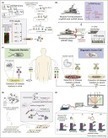
Synthetic biology applies engineering principles to biological systems and reprograms living cells to perform novel and improved functions. In this review, we first provide an update of common tools and design principles that enable user-defined control of mammalian cell activities with spatiotemporal precision. Next, we demonstrate some examples of how engineered mammalian cells can be developed towards biomedical solutions in the context of real-world problems.
|
|
Scooped by
Gerd Moe-Behrens
May 4, 2016 7:09 AM
|
The Dutch designer redefines what it means to be fashion forward
|


 Scoop.it!