A computer has solved one of biology's biggest mysteries - how a sliced up flatworm can regenerate into new organisms, and it only took it a matter of days. However, years of programming went into the tech.
A passion for biology is one of the driving forces behind the research of Chinese American synthetic biologist Feng Zhang (張鋒), one of the three recipients of the Tang Prize in Biopharmaceutical Science for the development of groundbreaking gene editing technology.
It's a passion that began in junior high school, where biology teachers inspired Zhang's enduring love for the science by telling him about the many breakthroughs in biology and biochemistry that could be of great benefit to many people.
Biology later remained at the center of his student life, whether as an undergraduate at Harvard University or as a graduate student at Stanford University, and the 34-year-old is now the youngest head of a lab at the Broad Institute in Cambridge, a high-powered genomics research center affiliated with MIT and Harvard.
"Biology is an amazing and profound system. Progress in biotechnology can improve people's health and life," Zhang said.
The CRISPR/Cas9 technology for which Zhang won the Tang Prize along with Emmanuelle Charpentier of the Max Planck Institute and Jennifer Doudna of the University of California at Berkeley, could provide some of the health breakthroughs Zhang envisions.
While the two female scientists are credited with achieving the key CRISPR breakthrough that enable researchers to edit parts of the genome, Zhang has made his mark by showing how the technology could be adapted to deal with disease by applying it to edit animal genomes and get it to work in human cells.
"CRISPR, or genome editing, is a very powerful tool," Zhang said. "We can use it to understand how genes work and how different kinds of genetic variations underlie disease."
Zhang said he is hoping that this understanding will lead to new treatments for genetic disorders, fight cancer and even develop better plants with higher yields in the long-term.
Acknowledging that gene editing technology "is still very young," the biologist said he and his team are attempting to "make it more perfect and precise" in the hope of using it to provide the "greatest benefits" to people in the future.
Zhang, who also teaches in MIT's Brain and Cognitive Sciences and Biological Engineering departments, is originally from Hebei province in China, and emigrated to the United States with his family at the age of 11 and settled in Des Moines, Iowa.
For a person like Zhang with such a fertile mind, getting an education in the U.S. had real benefits.
Talking about the National Higher Education Entrance Examination that exists in China, Zhang said he found the education system in the U.S. to be more flexible and offered more "opportunities."
"It is a very good opportunity to develop one's own interests," Zhang said.
That educational freedom and a passion for his research -- Zhang spends much of his time in the lab -- have fueled his rise in the biological engineering field, helping him earn a Tang Prize.
Zhang and the two other winners of the category will share a cash prize of NT$40 million (US$1.23 million) and a research grant of up to NT$10 million to be used within five years, and will receive medals and certificates.
The Tang Prize is only the latest of a series of honors Zhang has won.
Earlier this year, he shared the Canada Gairdner International Award with Doudna and Charpentier, often said to be a precursor to winning a Nobel prize.
In 2014, he won the National Science Foundation's Alan T. Waterman Award, the Jacob Heskel Gabbay Award in Biotechnology and Medicine (shared with Doudna and Charpentier) and the Society for Neuroscience Young Investigator Award (shared with Diana Bautista).
The biennial Tang Prize was established by Taiwanese entrepreneur Samuel Yin (尹衍樑) in 2012 to complement the Nobel Prize and to honor top researchers and leaders in four fields -- sustainable development, biopharmaceutical science, Sinology, and the rule of law.
Engineered T cells are currently in clinical trials to treat patients with cancer, solid organ transplants, and autoimmune diseases. However, the field is still in its infancy. The design and manufacturing of T cell therapies is not standardized and is performed mostly in academic settings by competing groups. Reliable methods to define dose and pharmacokinetics of T cell therapies need to be developed. As of mid-2016, there are no FDA approved T cell therapeutics on the market and FDA regulations are only slowly adapting to the new technologies. Further development of engineered T cell therapies requires advances in immunology, synthetic biology, manufacturing processes, and government regulation. In this review, we outline some of these challenges and discuss the contributions that pathologists can make to this emerging field.
Hackathons are ‘hacking’ ‘marathons’, and traditionally bring people together to try and solve a defined problem in the field of software development over a period of several days. The term first came in to use in 1999 and hackathons are now widespread, they have even been proposed as a great way for scientists to work on new ideas, form collaborations and forward their careers. However, software problems are not the only issues to be tackled by hackathons; next week the first ‘DIYBio style’ biohackathon will convene in Cambridge, UK funded by the Cambridge Synthetic Biology Research Initiative. We will be covering the event via twitter, but to find out more I went to talk to the organiser Thomas Meany. SJB: Can you tell us about your background, and how you came to be involved? TM: I’m originally trained as a physicist and recently joined the Haseloff SynBio Lab in Cambridge. We are a highly interdisciplinary lab with a grand vision of learning how cells differentiate and make stuff. The lab is very diverse and it is not at all weird to have a background in computer science or physics. It was very encouraging to see challenges in biology that I thought I might be able to help solve. For instance, automation and reproducibility by incorporating low volume lab-on-a-chip devices has enormous potential. However, there is no clear definition of synbio or standard route to entry apart from initiatives like the iGEM competition. This is a chance for people from all walks of life to spend a short period of time working on an interdisciplinary team to help them decide how they could fit into the synbio ecosystem.
IN THE EARLY 1970s, at Silicon Valley’s Xerox PARC, Alan Kay envisioned computer software as something akin to a biological system, a vast collection of small cells that could communicate via simple messages. Each cell would perform its own discrete task. But in communicating with the rest, it would form a more complex whole. “This is an almost foolproof way of operating,” Kay once told me. Computer programmers could build something large by focusing on something small. That’s a simpler task, and in the end, the thing you build is stronger and more efficient.
The result was a programming language called SmallTalk. Kay called it an object-oriented language—the “objects” were the cells—and it spawned so many of the languages that programmers use today, from Objective-C and Swift, which run all the apps on your Apple iPhone, to Java, Google’s language of choice on Android phones.
RNA thermometers (RNATs) are cis-regulatory elements that change secondary structure upon temperature shift. Often involved in the regulation of heat shock, cold shock and virulence genes, RNATs constitute an interesting potential resource in synthetic biology, where engineered RNATs could prove to be useful tools in biosensors and conditional gene regulation. RESULTS: Solving the 2-temperature inverse folding problem is critical for RNAT engineering. Here we introduce RNAiFold2T, the first Constraint Programming (CP) and Large Neighborhood Search (LNS) algorithms to solve this problem. Benchmarking tests of RNAiFold2T against existent programs (adaptive walk and genetic algorithm) inverse folding show that our software generates two orders of magnitude more solutions, thus allowing ample exploration of the space of solutions. Subsequently, solutions can be prioritized by computing various measures, including probability of target structure in the ensemble, melting temperature, etc. Using this strategy, we rationally designed two thermosensor internal ribosome entry site (thermo-IRES) elements, whose normalized cap-independent translation efficiency is approximately 50% greater at 42 °C than 30 °C, when tested in reticulocyte lysates. Translation efficiency is lower than that of the wild-type IRES element, which on the other hand is fully resistant to temperature shift-up. This appears to be the first purely computational design of functional RNA thermoswitches, and certainly the first purely computational design of functional thermo-IRES elements.
In molecular electronics, researchers combine atomic control of molecular structure with high-precision nanofabrication techniques to connect individual molecules to tiny electrodes (1). The aim is to understand electrical transport, such as conductivity in individual molecules, and to uncover phenomena with practical utility in nanoelectronic devices. On page 1443 of this issue, Jia et al. (2) report robust, room-temperature optoelectronic switching of a single molecule connected to conducting carbon (graphene) contacts. In terms of the magnitude of the switching effect, its reversibility, and stability at room temperature, the results represent the state of the art for single-molecule electronics.
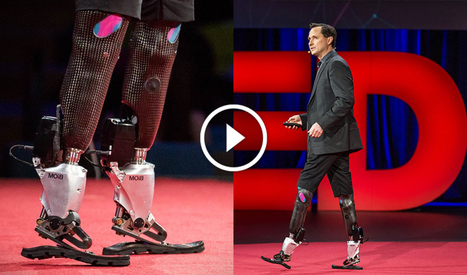
Hugh Herr was only seventeen when he lost both his legs due to frostbite and gangrene after being trapped in a blizzard while ice-climbing at the Huntingto
Artemisinin-based therapies are the only effective treatment for malaria, the most devastating disease in human history. To meet the growing demand for artemisinin and make it accessible to the poorest, an inexpensive and rapidly scalable production platform is urgently needed. Here we have developed a new synthetic biology approach, combinatorial supertransformation of transplastomic recipient lines (COSTREL), and applied it to introduce the complete pathway for artemisinic acid, the precursor of artemisinin, into the high-biomass crop tobacco. We first introduced the core pathway of artemisinic acid biosynthesis into the chloroplast genome. The transplastomic plants were then combinatorially supertransformed with cassettes for all additional enzymes known to affect flux through the artemisinin pathway. By screening large populations of COSTREL lines, we isolated plants that produce more than 120 milligram artemisinic acid per kilogram biomass. Our work provides an efficient strategy for engineering complex biochemical pathways into plants and optimizing the metabolic output.
For applications in synthetic biology, for example, the bottom-up assembly of biomolecular nanofactories, modules of specific and controllable functionalities are essential. Of fundamental importance in such systems are energizing modules, which are able to establish an electrochemical gradient across a vesicular membrane as an energy source for powering other modules. Light-driven proton pumps like proteorhodopsin (PR) are excellent candidates for efficient energy conversion. We have extended the versatility of PR by implementing an on/off switch based on reversible chemical modification of a site-specifically introduced cysteine residue. The position of this cysteine residue in PR was identified by structure-based cysteine mutagenesis combined with a proton-pumping assay using E. coli cells overexpressing PR and PR proteoliposomes. The identified PR mutant represents the first light-driven proton pump that can be chemically switched on/off depending on the requirements of the molecular system.
The biggest beneficiary of a plan to fabricate a human genome from scratch could be a Massachusetts startup called Gen9 that has close ties to the authors of the still-secretive proposal.
It's time for tech investors to acknowledge the potential of sneaky R&D projects in synthetic biology at Autodesk, Intel, and Microsoft. | Limitless learning Universe
Synthetic biology is opening up new opportunities for the sustainable and efficient production of valuable chemicals in engineered microbial factories. Here we review the application of synthetic biology approaches to the engineering of monoterpene/monoterpenoid production, highlighting the discovery of novel catalytic building blocks, their accelerated assembly into functional pathways, general strategies for product diversification, and new methods for the optimization of productivity to economically viable levels. Together, these emerging tools allow the rapid creation of microbial production systems for a wide range of monoterpenes and their derivatives for a diversity of industrial applications.
BioMason is inching closer to commercially debuting its eco-friendly “grown” bricks, which they say could be on the market as early as next year. Since its founding in 2012, the North Carolina startup has been pushing to revolutionize the world of building materials in a way that slashes carbon emissions by using bricks grown from sand and bacteria, instead of firing traditional bricks. An increasing number of architects and builders are looking to sustainable construction materials in response to the growing demand for green buildings, and BioMason’s emission-saving biobricks fill a unique niche in the market.
Synthetic biology is opening up new opportunities for the sustainable and efficient production of valuable chemicals in engineered microbial factories. Here we review the application of synthetic biology approaches to the engineering of monoterpene/monoterpenoid production, highlighting the discovery of novel catalytic building blocks, their accelerated assembly into functional pathways, general strategies for product diversification, and new methods for the optimization of productivity to economically viable levels. Together, these emerging tools allow the rapid creation of microbial production systems for a wide range of monoterpenes and their derivatives for a diversity of industrial applications.
Roles of cellular nicotinamide adenine dinucleotide (NAD+) in metabolism, aging, and disease have garnered much interest, but methods have been lacking to measure the amounts of NAD+ in living cells. Cambronne et al. developed a genetically encoded biosensor that can be used to monitor concentrations of free NAD+ in various compartments of a cell (see the Perspective by Guarente). Such concentrations of NAD+ appear to be important in regulating the activity of NAD+-consuming enzymes such as sirtuins and ADP-ribosyltransferases. The authors used the sensor to demonstrate that NAD+ concentrations in mitochondria of cultured human cells can be controlled by multiple mechanisms.
The evolutionary biologist and lead singer for the punk rock band Bad Religion explains why there are no good songs about science and how evolution can be a guide to life
In this brief, we consider the problem of finding a probabilistic Boolean network (PBN) based on a network structure and desired steady-state properties. In systems biology and synthetic biology, such problems are important as an inverse problem. Using a matrix-based representation of PBNs, a solution method for this problem is proposed. The problem of finding a BN has been studied so far. In the problem of finding a PBN, we must calculate not only the Boolean functions, but also the probabilities of selecting a Boolean function and the number of candidates of the Boolean functions. Hence, the problem of finding a PBN is more difficult than that of finding a BN. The effectiveness of the proposed method is presented by numerical examples
To get content containing either thought or leadership enter:
To get content containing both thought and leadership enter:
To get content containing the expression thought leadership enter:
You can enter several keywords and you can refine them whenever you want. Our suggestion engine uses more signals but entering a few keywords here will rapidly give you great content to curate.


 Your new post is loading...
 Scoop.it!