Your new post is loading...

|
Scooped by
Gerd Moe-Behrens
August 16, 2016 5:42 AM
|
Dr Chih-Chun Chen and Dr Nathan Crilly investigate the premise that design and engineering principles can be applied to biological entities and ask what synthetic biology could learn from and contribute to other groups tackling complex design problems...
|
|
Scooped by
Gerd Moe-Behrens
August 16, 2016 5:37 AM
|
The chassis is the cellular host used as a recipient of engineered biological systems in synthetic biology. They are required to propagate the genetic information and to express the genes encoded in it. Despite being an essential element for the appropriate function of genetic circuits, the chassis is rarely considered in their design phase. Consequently, the circuits are transferred to model organisms commonly used in the lab, such as Escherichia coli, that may be suboptimal for a required function. In this review we discuss some of the properties desirable in a versatile chassis and summarize some examples of alternative hosts for synthetic biology amenable for engineering. These properties include a suitable life style, a robust cell wall, good knowledge of its regulatory network as well as of the interplay of the host components with the exogenous circuits, the possibility of developing whole-cell models and tunable metabolic fluxes that could allow a better distribution of cellular resources (metabolites, ATP, nucleotides, amino acids, transcriptional and translational machinery). We highlight Pseudomonas putida, widely used in many different biotechnological applications as a prominent organism for synthetic biology due to its metabolic diversity, robustness and ease of manipulation.
|
|
Scooped by
Gerd Moe-Behrens
August 13, 2016 3:43 PM
|
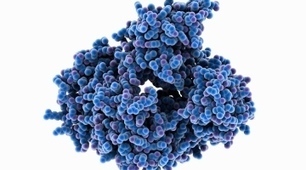
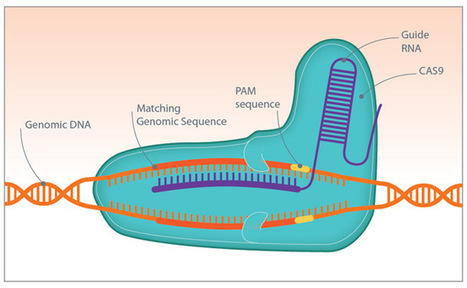
For something that’s been called “a household name for molecular biologists,” many of you have probably never heard of CRISPR, and don’t know why you should be excited (or, possibly, terrified). It’s all about advanced gene therapy and splicing – and it’s bringing sci-fi ideas straight into reality. Here’s a quick FAQ on the science behind CRISPR and why the world is paying such close attention.
Okay, what is CRISPR and what does it stand for?
CRISPR refers to unusual DNA sequences that help protect organisms by identifying threats – especially viruses – and attacking them. The name stands for Clustered Regularly Interspaced Short Palindromic Repeats. Yes, that sounds a little ridiculous, but it’s actually a very accurate description when looking at the DNA sequences themselves. They are clustered, they are spaced out at clear intervals, and when assigned letter values they do look like short palindromes repeating over and over with slight variations.
|
|
Scooped by
Gerd Moe-Behrens
August 13, 2016 11:06 AM
|
For more than fifty years, Escherichia coli has represented a remarkable success story in industrial biotechnology. Traditionally known as a producer of l-amino acids, E. coli has also entered the precious market of high-value molecules and is becoming a flexible, efficient production platform for various therapeutics, pre-biotics, nutraceuticals and pigments. This tremendous progress is enabled by systems metabolic engineering concepts that integrate systems biology and synthetic biology into the design and engineering of powerful E. coli cell factories.
|
|
Scooped by
Gerd Moe-Behrens
August 12, 2016 5:18 PM
|
|
|
Scooped by
Gerd Moe-Behrens
August 11, 2016 2:02 PM
|
Nature Collections: CRISPR-Cas9 Genome Editing
|
|
Scooped by
Gerd Moe-Behrens
August 10, 2016 9:59 AM
|
Over the last few decades, an increased demand has emerged for integrating biosensors with microfluidic- and nanofluidic-based lab-on-chip (LOC) devices for point-of-care (POC) diagnostics, in the medical industry and environmental monitoring of pathogenic threat agents. Such a merger of microfluidics with biosensing technologies allows for the precise control of volumes, as low as one nanolitre and the integration of various types of bioassays on a single miniaturized platform. This integration offers several favorable advantages, such as low reagent consumption, automation of sample preparation, reduction in processing time, low cost analysis, minimal handling of hazardous materials, high detection accuracy, portability and disposability. This review provides a synopsis of the most recent developments in the microfluidic-integrated biosensing field by delineating the fundamental theory of microfluidics, fabrication techniques and a detailed account of the various transduction methods that are employed. Lastly, the review discusses state-of-the-art DNA biosensors with a focus on optical DNA biosensors.
|
|
Scooped by
Gerd Moe-Behrens
August 10, 2016 8:33 AM
|
Making Science and Genetic Engineering Accessible
|
|
Scooped by
Gerd Moe-Behrens
August 9, 2016 3:33 PM
|
The researchers report making a simplified method for testing different sequences of a gene essential for life. The gene makes 16S ribosomal RNA, needed for making proteins. Other essential genes can be tested with the shortcut, researchers said.
This method allows for a quick yes-or-no answer about whether an engineered gene will work, said Daniel Gibson, of both JCVI and SGI. Gibson was senior author of the paper, published in Scientific Reports. The research is part of a years-long quest by non-profit JCVI and for-profit SGI to uncover the fundamental workings of life, and to adapt them for commercial uses and human benefit.
|
|
Scooped by
Gerd Moe-Behrens
August 9, 2016 1:57 PM
|
Normally, individual molecules of genetic material repel each other. However, when space is limited DNA molecules must be packed together more tightly. This case arises in sperm, cell nuclei and the protein shells of viruses. An international team of physicists has now succeeded in artificially recreating this so-called DNA condensation on a biochip.
Recreating important biological processes in cells to better understand them currently is a major topic of research. Now, physicists at TU Munich and the Weizmann Institute in Rehovot have for the first time managed to carry out controlled, so-called DNA condensation on a biochip. This process comes into play whenever DNA molecules are closely packed into tight spaces, for example in circumstances that limit the available volume.
This situation arises in cell nuclei and in the protein shells of viruses, as well as in the heads of sperm cells. The phenomenon is also interesting from a physical perspective because it represents a phase transition, of sorts. DNA double helices, which normally repel each other because of their negative charges, are then packed together tightly. "In this condensed state they take on a nearly crystalline structure," says co-author and TU professor Friedrich Simmel.
Nano hairs
The international team led by Simmel and his Israeli colleague Roy Bar-Ziv managed to bond DNA molecules only one thousandth of a millimeter long (i.e. several thousand base pairs long each) tightly to nanostructures of varying widths on a chip. The result looks as though the researchers had planted tiny hairs onto the chip surface.
Due to their negative charge, DNA molecules repel each other, giving the appearance of tiny nanohairs standing on end. The process of condensation was initiated when the researchers added an agent called spermidine, whose molecules have multiple positive charges. The previously upright DNA threads collapsed one after the other, dropping systematically onto the fine structures of the next thread.
This is like a domino cascade at the nanoscale. The result was compact layers of DNA molecules, packed as densely as they are in cell nuclei. All DNA molecules fell along the predefined path. "This is a very dramatic process," says Simmel. "The DNA is instantly bundled in a single direction."
Condensation and decondensation, i.e. the renewed unpacking of DNA strands, play an important role in processes like gene expression. When the DNA molecules are densely packed, for example, the information coded in them cannot be read.
New insight from the DNA chip
The researchers thus have a further building block for creating artificial cells on the surface of chips and studying all associated phenomena. "It is quite plausible to implement cell-like systems with densely packed DNA on a chip," says Simmel. DNA condensation could then be used to improve the control of gene expression and copying of genetic information in these kinds of artificial cells.
In principle, it is also possible to use the densely packed DNA molecules to relay and distribute signals and information via a kind of conducting path on such biochips. Condensation and decondensation could be used as on/off switches with good temporal control.
Friedrich Simmel would not be a passionate researcher if he did not, in addition to technical application perspectives, have his eye on basic physics. "We also want to understand the conditions of the phase transition during condensation," says Simmel. "For this we have ideal conditions on the chip. We can precisely control where the condensation occurs and how long it takes."
This is somewhat like supercooled water or beer in the freezer box, in which the liquid freezes abruptly starting at a specific point with a crystallization seed and then spreads outwards from there. The only difference is that the phase transition is not controlled by temperature, but rather the concentration of positively charged molecules. The research was funded by the Volkswagen Foundation, the German Research Foundation via the Excellence Cluster Nanosystems Initiative Munich (NIM), the Israel Science Foundation and the Minerva 80 Foundation.
Explore further: The art of stabilizing entangled spaghetti-like materials
More information: Günther Pardatscher et al, DNA condensation in one dimension, Nature Nanotechnology (2016). DOI: 10.1038/nnano.2016.142
Journal reference: Nature Nanotechnology
|
|
Scooped by
Gerd Moe-Behrens
August 9, 2016 6:53 AM
|
The aim of this paper is to propose that current robotic technologies cannot have intentional states any more than is feasible in the sensorimotor account of embodied cognition. It argues that anticipation is an emerging concept that can provide a bridge between both the deepest philosophical theories about the nature of life and cognition and the empirical biological and cognitive sciences steeped in reductionist and Newtonian conceptions of causality. The paper advocates that in order to move forward, cognitive robotics needs to embrace new platforms and a conceptual framework that will enable it to pursue, in a meaningful way, questions about autonomy and purposeful behaviour. We suggest that hybrid systems, part robotic and part cultures of neurones, offer experimental platforms where different dimensions of enactivism (sensorimotor, constitutive foundations of biological autonomy, including anticipation), and their relative contributions to cognition, can be investigated in an integrated way. A careful progression, mindful to the deep philosophical concerns but also respecting empirical evidence, will ultimately lead towards unifying theoretical and empirical biological sciences and may offer advancement where reductionist sciences have been so far faltering.
|
|
Scooped by
Gerd Moe-Behrens
August 8, 2016 12:50 PM
|
A team of University of Pennsylvania researchers has developed a computer model that will aid in the design of nanocarriers, microscopic structures used to guide drugs to their targets in the body.
|
|
Scooped by
Gerd Moe-Behrens
August 8, 2016 6:50 AM
|
The Office of Scholarly Communication report on their event as part of Open Technology Week, where 50 researchers can together to discuss Open Research ideas and moving beyond compliance with funders’ policies on Open Access and research data...
|
|
|
Scooped by
Gerd Moe-Behrens
August 16, 2016 5:40 AM
|
Human exploration off planet is severely limited by the cost of launching materials into space and by re-supply.
|
|
Scooped by
Gerd Moe-Behrens
August 15, 2016 9:47 AM
|
A simple guide RNA modification allows CRISPR/Cas to differentiate targets that differ by a single nucleotide. Lear
|
|
Scooped by
Gerd Moe-Behrens
August 13, 2016 11:25 AM
|
Did you ever hear about synthetic biology? No? Imagine that we could alter and produce DNA from scratch just like an engineer. Doesn’t it sound like one of the greatest interdisciplinary achievements in recent history?
Think about it, a bio-technologist is doing more or less the work of a programmer but instead of using a computer language he’s doing it by arranging molecules embedded in every living cell. The outcome, if ever mastered, could reshape the world around us dramatically.
The fully developed technology could be used to grow anything from furniture to buildings by bio-engineering mushrooms, moss and even bacteria. In fact, glowing bacteria are thought to become incorporated into city design and provide “natural” light wherever it’s needed.
There’s even more upside to synthetic biology as bringing back extinct species, wiping out diseases that have been a scourge of humanity or even terraforming Mars are becoming a possibility.
A new mini-documentary Web series called Explorations focuses on transformative areas of scientific research. Bryan Johnson, founder of OS Fund and the payments processing company Braintree, is using the latest installment in the series to shine a light on this very technology, adding that:
“The most stunning and consequential development of our time is this: we have built tools of creation that increasingly have the power to literally code any kind of world we imagine, […] Synthetic biology allows us to program organisms to grow objects. Genomics is starting to allow us to program our bodies. A.I. allows us to build new forms of intelligence.”
Have a look at the video and find out, why cutting-edge fields like synthetic biology promises to inspire young people in particular to build a truly visionary future world.
|
|
Scooped by
Gerd Moe-Behrens
August 12, 2016 5:21 PM
|
Because human-computer interactions are increasingly important, touch panels may require stretchability and biocompatibility in order to allow integration with the human body. However, most touch panels have been developed based on stiff and brittle electrodes. We demonstrate an ionic touch panel based on a polyacrylamide hydrogel containing lithium chloride salts. The panel is soft and stretchable, so it can sustain a large deformation. The panel can freely transmit light information because the hydrogel is transparent, with 98% transmittance for visible light. A surface-capacitive touch system was adopted to sense a touched position. The panel can be operated under more than 1000% areal strain without sacrificing its functionalities. Epidermal touch panel use on skin was demonstrated by writing words, playing a piano, and playing games.
|
|
Scooped by
Gerd Moe-Behrens
August 12, 2016 9:14 AM
|
|
|
Scooped by
Gerd Moe-Behrens
August 10, 2016 1:23 PM
|
The ability to quickly alter the code of life has given us unprecedented power over the natural world. Should we use it?
|
|
Scooped by
Gerd Moe-Behrens
August 10, 2016 9:58 AM
|
Portable, one-step, and rapid GMR biosensor platform with smartphone interface
|
|
Scooped by
Gerd Moe-Behrens
August 10, 2016 7:33 AM
|
|
|
Scooped by
Gerd Moe-Behrens
August 9, 2016 1:58 PM
|
DNA can be programmed to assemble into a variety of shapes and patterns on the nanoscale1, 2, 3, 4, 5 and can act as a template for hybrid nanostructures6 such as conducting wires7, 8, 9, protein arrays8 and field-effect transistors10, 11. Current DNA nanostructures are typically in the sub-micrometre range, limited by the sequence space and length of the assembled strands. Here we show that on a patterned biochip12, DNA chains collapse into one-dimensional (1D) fibres that are 20 nm wide and around 70 µm long, each comprising approximately 35 co-aligned chains at its cross-section. Electron beam writing on a photocleavable monolayer was used to immobilize and pattern the DNA molecules, which condense into 1D bundles in the presence of spermidine. DNA condensation can propagate and split at junctions, cross gaps and create domain walls between counterpropagating fronts. This system is inherently adept at solving probabilistic problems and was used to find the possible paths through a maze and to evaluate stochastic switching circuits. This technique could be used to propagate biological or ionic signals13 in combination with sequence-specific DNA nanotechnology or for gene expression in cell-free DNA compartments14.
|
|
Scooped by
Gerd Moe-Behrens
August 9, 2016 6:54 AM
|
The nascent field of mammalian synthetic biology holds the promise to revolutionize personalized medicine. The use of engineered genetic circuits for genome-wide screens, detecting and reporting molecular signatures, and targeting genetic mutations can redefine personalized medicine with specific applications ranging from discovery to therapy.
Genome-wide screens and experiments have been instrumental in unraveling cellular and disease properties. Here, we designed and validated a methodology for assembling transcription-activator like effector (TALE) libraries to target any DNA sequence of interest. Our method allows rapid library construction and genome-wide screens.
Combinations of molecular signals such as transcription factors and microRNAs (miRNAs) in cells are a reliable indicator of multi-gene disorders. A system capable of detecting these conditions in-situ may be used as a tool for diagnosis and monitoring of disease. Here, we engineered genetic sensors for combinations of endogenous transcription factors and miRNA. We interfaced our genetic sensors with colorimetric ELISA test strips. Our system allows low-cost, combinatorial, and in-situ reporting of molecular signatures.
Genome editing based on the clustered regularly interspaced short palindromic repeats (CRISPR) system has been expanding at a rapid pace and holds the promise of revolutionizing our ability to probe and edit the genome. We introduce a novel therapeutic technique to target a heterozygous gain-of-function mutation in KRAS. Disrupting the mutation caused the reversal of drug resistance to a MEK small-molecule inhibitor. This technology creates new opportunities for the treatment of a broad range of cancers and genetic diseases.
To summarize, we combine mammalian synthetic biology and genome editing to produce new technologies that advance the field of mammalian synthetic biology bringing us closer to personalized medicine applications in the areas of genetic screening, in-situ sensing, and finally therapeutic targeting.
|
|
Scooped by
Gerd Moe-Behrens
August 9, 2016 6:51 AM
|
Sensor morphology, the morphology of a sensing mechanism which plays a role of shaping the desired response from physical stimuli from surroundings to generate signals usable as sensory information, is one of the key common aspects of sensing processes. This paper presents a structured review of researches on bioinspired sensor morphology implemented in robotic systems, and discusses the fundamental design principles. Based on literature review, we propose two key arguments: first, owing to its synthetic nature, biologically inspired robotics approach is a unique and powerful methodology to understand the role of sensor morphology and how it can evolve and adapt to its task and environment. Second, a consideration of an integrative view of perception by looking into multidisciplinary and overarching mechanisms of sensor morphology adaptation across biology and engineering enables us to extract relevant design principles that are important to extend our understanding of the unfinished concepts in sensing and perception.
|
|
Scooped by
Gerd Moe-Behrens
August 8, 2016 7:58 AM
|
|