Your new post is loading...

|
Scooped by
Gerd Moe-Behrens
October 5, 2017 1:17 PM
|
The gut microbiome plays a crucial role in maintaining human health. Functions performed by gastrointestinal microbes range from regulating metabolism to modulating immune and nervous system development. Scientists have attempted to exploit this importance through the development of engineered probiotics that are capable of producing and delivering small molecule therapeutics within the gut. However, existing synthetic probiotics are simplistic and fail to replicate the complexity and adaptability of native homeostatic mechanisms. In this review, we discuss the ways in which the tools and approaches of synthetic biology have been applied to improve the efficacy of therapeutic probiotics, and the ways in which they might be applied in the future. Simple devices, such as a bistable switches and integrase memory arrays, have been successfully implemented in the mammalian gut, and models for targeted delivery in this environment have also been developed. In the future, it will be necessary to introduce concepts such as logic-gating and biocontainment mechanisms into synthetic probiotics, as well as to expand the collection of relevant biosensors. Ideally, this will bring us closer to a reality in which engineered therapeutic microbes will be able to accurately diagnose and effectively respond to a variety of disease states.
|
|
Scooped by
Gerd Moe-Behrens
October 2, 2017 1:04 PM
|
A few kilograms of DNA could theoretically store all of humanity’s data, but there are practical challenges to overcome.
|
|
Scooped by
Gerd Moe-Behrens
September 30, 2017 10:34 AM
|
Can biohacking cure cancer, or lead to personalised medicines?
|
|
Scooped by
Gerd Moe-Behrens
September 29, 2017 1:50 PM
|
Leaping DNA read-and-write technologies, and extensive automation and miniaturization are radically transforming the field of biological experimentation by providing the tools that enable the cost-effective high-throughput required to address the enormous complexity of biological systems. However, standardization of the synthetic biology workflow has not kept abreast with dwindling technical and resource constraints, leading, for example, to the collection of multi-level and multi-omics large data sets that end up disconnected or remain under- or even unexploited.
PURPOSE:
In this contribution, we critically evaluate the various efforts, and the (limited) success thereof, in order to introduce standards for defining, designing, assembling, characterizing, and sharing synthetic biology parts. The causes for this success or the lack thereof, as well as possible solutions to overcome these, are discussed.
CONCLUSION:
Akin to other engineering disciplines, extensive standardization will undoubtedly speed-up and reduce the cost of bioprocess development. In this respect, further implementation of synthetic biology standards will be crucial for the field in order to redeem its promise, i.e. to enable predictable forward engineering.
|
|
Scooped by
Gerd Moe-Behrens
September 28, 2017 4:28 PM
|
Designed with 'artificial leaves' of glass filled with algae, this lighting fixture is made to produce extra oxygen.
|
|
Scooped by
Gerd Moe-Behrens
September 28, 2017 3:54 PM
|
How fast can a cell locate a specific chromosomal DNA sequence specified by a single-stranded oligonucleotide? To address this question, we investigate the intracellular search processes of the Cas9 protein, which can be programmed by a guide RNA to bind essentially any DNA sequence. This targeting flexibility requires Cas9 to unwind the DNA double helix to test for correct base pairing to the guide RNA. Here we study the search mechanisms of the catalytically inactive Cas9 (dCas9) in living Escherichia coli by combining single-molecule fluorescence microscopy and bulk restriction-protection assays. We find that it takes a single fluorescently labeled dCas9 6 hours to find the correct target sequence, which implies that each potential target is bound for less than 30 milliseconds. Once bound, dCas9 remains associated until replication. To achieve fast targeting, both Cas9 and its guide RNA have to be present at high concentrations.
|
|
Scooped by
Gerd Moe-Behrens
September 28, 2017 3:44 PM
|
One fundamental challenge in synthetic biology is the lack of quantitative tools that accurately describe and predict the behaviours of engineered gene circuits. This challenge arises from multiple factors, among which the complex interdependence of circuits and their host is a leading cause. Here we present a gene circuit modelling framework that explicitly integrates circuit behaviours with host physiology through bidirectional circuit-host coupling. The framework consists of a coarse-grained but mechanistic description of host physiology that involves dynamic resource partitioning, multilayered circuit-host coupling including both generic and system-specific interactions, and a detailed kinetic module of exogenous circuits. We showed that, following training, the framework was able to capture and predict a large set of experimental data concerning the host and its foreign gene overexpression. To demonstrate its utility, we applied the framework to examine a growth-modulating feedback circuit whose dynamics is qualitatively altered by circuit-host interactions. Using an extended version of the framework, we further systematically revealed the behaviours of a toggle switch across scales from single-cell dynamics to population structure and to spatial ecology. This work advances our quantitative understanding of gene circuit behaviours and also benefits the rational design of synthetic gene networks.An integrative modelling framework is developed to predict the behaviours of synthetic circuits and theirimpacts on host physiology.
|
|
Scooped by
Gerd Moe-Behrens
September 27, 2017 5:45 PM
|
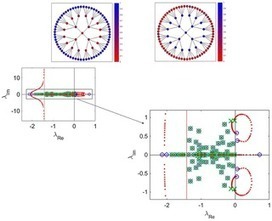
Multidimensional systems coupled via complex networks are widespread in nature and thus frequently invoked for a large plethora of interesting applications. From ecology to physics, individual entities in mutual interactions are grouped in families, homogeneous in kind. These latter interact selectively, through a sequence of self-consistently regulated steps, whose deeply rooted architecture is stored in the assigned matrix of connections. The asymptotic equilibrium eventually attained by the system, and its associated stability, can be assessed by employing standard nonlinear dynamics tools. For many practical applications, it is however important to externally drive the system towards a desired equilibrium, which is resilient, hence stable, to external perturbations. To this end we here consider a system made up of N interacting populations which evolve according to general rate equations, bearing attributes of universality. One species is added to the pool of interacting families and used as a dynamical controller to induce novel stable equilibria. Use can be made of the root locus method to shape the needed control, in terms of intrinsic reactivity and adopted protocol of injection. The proposed method is tested on both synthetic and real data, thus enabling to demonstrate its robustness and versatility.
|
|
Scooped by
Gerd Moe-Behrens
September 26, 2017 1:16 PM
|
The engineering of future generations of nanodelivery systems aims at the creation of multifunctional vectors endowed with improved circulation, enhanced targeting and responsiveness to the biological environment. Moving past purely bio-inert systems, researchers have begun to create nanoparticles capable of proactively interacting with the biology of the body. Nature offers a wide-range of sources of inspiration for the synthesis of more effective drug delivery platforms. Because the nano-bio-interface is the key driver of nanoparticle behavior and function, the modification of nanoparticles' surfaces allows the transfer of biological properties to synthetic carriers by imparting them with a biological identity. Modulation of these surface characteristics governs nanoparticle interactions with the biological barriers they encounter. Building off these observations, we provide here an overview of virus- and cell-derived biomimetic delivery systems that combine the intrinsic hallmarks of biological membranes with the delivery capabilities of synthetic carriers. We describe the features and properties of biomimetic delivery systems, recapitulating the distinctive traits and functions of viruses, exosomes, platelets, red and white blood cells. By mimicking these biological entities, we will learn how to more efficiently interact with the human body and refine our ability to negotiate with the biological barriers that impair the therapeutic efficacy of nanoparticles.
|
|
Scooped by
Gerd Moe-Behrens
September 26, 2017 1:11 PM
|
At the interface of materials science and synthetic biology, several concepts were recently developed for the production of functional materials by living cells. Selected recent strategies for this are highlighted here with a focus on bioactive, electronic and fluorescent materials.
|
|
Scooped by
Gerd Moe-Behrens
September 23, 2017 10:52 AM
|
One of the potentially most far reaching and revolutionary ideas in cog-neuro is the suggestion that brain computations are largely intr
|
|
Scooped by
Gerd Moe-Behrens
September 21, 2017 5:32 PM
|
Xenotransplantation is a promising strategy to alleviate the shortage of organs for human transplantation. In addition to the concerns about pig-to-human immunological compatibility, the risk of cross-species transmission of porcine endogenous retroviruses (PERVs) has impeded the clinical application of this approach. We previously demonstrated the feasibility of inactivating PERV activity in an immortalized pig cell line. We now confirm that PERVs infect human cells, and we observe the horizontal transfer of PERVs among human cells. Using CRISPR-Cas9, we inactivated all of the PERVs in a porcine primary cell line and generated PERV-inactivated pigs via somatic cell nuclear transfer. Our study highlights the value of PERV inactivation to prevent cross-species viral transmission and demonstrates the successful production of PERV-inactivated animals to address the safety concern in clinical xenotransplantation.
|
|
Scooped by
Gerd Moe-Behrens
September 20, 2017 2:44 PM
|
Established at the University of Cambridge in 2001, the Centre for Research in the Arts, Social Sciences and Humanities (CRASSH) works actively with the Schools and Faculties across the University undertaking collaborations that cross faculties and disciplines in order to stimulate fresh thinking and dialogue in and beyond the humanities and social sciences and to reach out to new collaborators and new publics.
|
|
|
Scooped by
Gerd Moe-Behrens
October 3, 2017 3:31 PM
|
Transcriptional enhancers specify the precise time, level, and location of gene expression. Disentangling and characterizing the components of enhancer activity in multicellular eukaryotic development has proven challenging because enhancers contain activator and repressor binding sites for multiple factors that each exert nuanced, context-dependent control of enhancer activity. Recent advances in synthetic biology provide an almost unlimited ability to create and modify regulatory elements and networks, offering unprecedented power to study gene regulation. Here we review several studies demonstrating the utility of synthetic biology for studying enhancer function during development and evolution. These studies clearly show that synthetic biology can provide a way to reverse-engineer and reengineer transcriptional regulation in animal genomes with enormous potential for understanding evolution.
|
|
Scooped by
Gerd Moe-Behrens
September 30, 2017 10:39 AM
|
Our ability to rewire cellular metabolism for the sustainable production of chemicals, fuels and therapeutics based on microbial cell factories has advanced rapidly during the last two decades. Especially the speed and precision by which microbial genomes can be engineered now allow for more advanced designs to be implemented and tested. However, compared to the methods developed for engineering cell factories, the methods developed for testing the performance of newly engineered cell factories in high-throughput are lagging far behind, which consequently impacts the overall biomanufacturing process. For this purpose there is a need to develop new techniques for screening and selection of best-performing cell factory designs in multiplex. Here we review the current status of the sourcing, design, and engineering of biosensors derived from allosterically regulated transcription factors (aTFs) applied to the biotechnology work-horse budding yeast Saccharomyces cerevisiae. We conclude by providing a perspective on the most important challenges and opportunities lying ahead in order to harness the full potential of biosensor development for increasing both the throughput of cell factory development and robustness of overall bioprocesses.
|
|
Scooped by
Gerd Moe-Behrens
September 29, 2017 5:21 PM
|
bioRxiv - the preprint server for biology, operated by Cold Spring Harbor Laboratory, a research and educational institution
|
|
Scooped by
Gerd Moe-Behrens
September 29, 2017 1:49 PM
|
Precise and efficient manipulation of genes is crucial for understanding the molecular mechanisms that govern human hematopoiesis and for developing novel therapies for diseases of the blood and immune system. Current methods do not enable precise engineering of complex genotypes that can be easily tracked in a mixed population of cells. We describe a method to multiplex homologous recombination (HR) in human hematopoietic stem and progenitor cells and primary human T cells by combining rAAV6 donor delivery and the CRISPR/Cas9 system delivered as ribonucleoproteins (RNPs). In addition, the use of reporter genes allows FACS-purification and tracking of cells that have had multiple alleles or loci modified by HR. We believe this method will enable broad applications not only to the study of human hematopoietic gene function and networks, but also to perform sophisticated synthetic biology to develop innovative engineered stem cell-based therapeutics.
|
|
Scooped by
Gerd Moe-Behrens
September 28, 2017 4:28 PM
|
|
|
Scooped by
Gerd Moe-Behrens
September 28, 2017 3:47 PM
|
Biofilm morphogenesis not only reflects the physiological state of bacteria but also serves as a strategy to sustain bacterial survival. In this paper, we take the Bacillus subtilis colony as a model system to explore the morphomechanics of growing biofilms confined in a defined geometry. We find that the growth-induced stresses may drive the occurrence of both surface wrinkling and interface delamination in the biofilm, leading to the formation of a labyrinthine network on its surface. The wrinkles are perpendicular to the boundary of the constraint region. The variation in the surface undulations is attributed to the spatial stress field, which is isotropic in the inner regime but anisotropic in the vicinity of the boundary. Our experiments show that the directional surface wrinkles can confer biofilms with anisotropic wetting properties. This study not only highlights the role of mechanics in sculpturing organisms within the morphogenetic context but also suggests a promising route toward desired surfaces at the interface between synthetic biology and materials sciences.
|
|
Scooped by
Gerd Moe-Behrens
September 27, 2017 5:46 PM
|
Over the last 17 years, scientists and engineers have developed synthetic gene circuits that can program the functionality, performance, and behavior of living cells. Analogous to integrated circuits that underlie myria
|
|
Scooped by
Gerd Moe-Behrens
September 27, 2017 1:46 PM
|
Scientists and engineers have developed synthetic gene circuits that program the functionality, performance, and behavior of living cells. These gene circuits hold great promise in medical and biotechnological applications, but to date, most circuits are constructed through a manner, which relies on a designer's intuition and is often inefficient. Researchers have addressed the challenge by constructing an integrated modeling framework for quantitatively describing and predicting gene circuit behaviors.
|
|
Scooped by
Gerd Moe-Behrens
September 26, 2017 1:12 PM
|
DNA-based logic gates can be assembled into computational devices that generate a specific output signal in response to oligonucleotide input patterns. The ability to interface with biological and chemical environments makes DNA computation a promising technology for monitoring cellular systems. However, DNA logic gate circuits typically provide a single-stranded oligonucleotide output, limiting the ability to effect biology. Here, we introduce a novel DNA logic gate design capable of yielding a small molecule output signal. Employing a Staudinger reduction as a trigger for the release and activation of a small molecule fluorophore, we constructed AND and OR logic gates that respond to synthetic microRNA (miRNA) inputs. Connecting the gates in series led to more complex DNA circuits that provided a small molecule output in response to a specific pattern of three different miRNAs. Moreover, our gate design can be readily multiplexed as demonstrated by simultaneous small molecule activation from two independent DNA circuits.
|
|
Scooped by
Gerd Moe-Behrens
September 23, 2017 10:53 AM
|
[+]Enlarge A synthetic GPCR-like system uses hydroxide first messengers (orange) to deprotonate a receptor end group (blue), causing the receptor to move down into the vesicle membrane. The other end group (pink) binds a zinc cofactor (green) to catalyze a reaction that produces a second...
|
|
Scooped by
Gerd Moe-Behrens
September 23, 2017 10:08 AM
|
Cutaneous leishmaniasis is the most common form of leishmaniasis, caused by Leishmania major and is spread by the bite of a sandfly .This species infects the macrophages and dendritic cells Due to multi-drug resistance, there is a need for a new therapeutic technique. Recently, a novel molecular motor of Leishmania, Myosin XXI, was classified and characterized. In addition, the drug resistance in this organism has been linked with the overexpression of ABC transporters. Systems biology aims to study the simulation and modeling of natural biological systems whereas synthetic biology deals with building novel and artificial biological parts and devices Together they have contributed enormously to drug discovery, vaccine design and development, infectious disease detection and diagnostics. Synthetic genetic regulatory networks with desired properties, like toggling and oscillation have been proposed to be useful for gene therapy. In this work, a nanocircuit with coupled bistable switch - repressilator has been designed, simulated in the presence and absence of inducer, in silico, using Tinker Cell. When inducer is added, the circuit has been shown to produce reporter at high levels, which will impair the activity of Myosin XXI and ABC transporters. Validation of the circuit was also performed using GRENITS and BoolNet. The influence of inducer on the working of the circuit, i.e., the type of gene expression, response time delay, the steady states formed by the circuit and the quasipotential landscape of the circuit were performed. It was found that the addition of inducer reduced the response time delay in the graded type of gene expression and removed the multiple intermediate attractors of the circuit. Thus, the inducer increased the probability of the circuit to be present in the dominant stable state with high reporter concentration and hence the designed nanocircuit may be used for the treatment of leishmaniasis .
|
|
Scooped by
Gerd Moe-Behrens
September 21, 2017 1:36 PM
|
Mark Bathe merges design and biology at the nanoscale
|


 Scoop.it!