


"Knowledge societies rest on a foundation of educational and research excellence. The Internet, advances in communications technology, and the rapidly expanding global fiber optic network are necessary, but not sufficient. It takes people to train, to educate, to collaborate, and to innovate. Building the global knowledge society is the theme of the 2012 American Association for the Advancement of Science (AAAS) Annual Meeting in Vancouver (16 to 22 February). Bringing together scientists and educators from more than 50 nations, the meeting tackles global issues and new ways of building connections between developed and developing nations."

SynBioFromLeukipposInstitute
130.0K views |
+1 today
 Your new post is loading...
 Scoop.it! 
"Google's Richard DeVaul, who goes by the title, Rapid Evaluator (mad scientist) posted on Google+: The “solve for x” conference continues to be really interesting. Today we have had talks on transforming education, 5x improvements in agriculture through better decision support, synthetic biology and carbon-negative biofuels." 
Scoop.it!

Singularity University is partnering with Triple Ring Technologies to mentor and develop select synthetic biology teams between May and August 2012. We are looking for promising biotechnology entrepreneurs who we can help to incorporate and develop products and services that can be made and tested in a short amount of time (three months), and with little capital (on average less than $50k). Biotechnology is poised to follow this trend because of synthetic biology: genetic engineering done with software-based design tools coupled with DNA synthesis and assembly. While it is still the early days for this field of biological engineering and it is still largely under the radar, the evidence for a paradigm shift in biotechnology is mounting. Using synthetic biology, undergraduate students are developing everything from DNA data storage systems to new biofuels or gene therapies in just months; DIYbio enthusiasts are making DNA testing kits, PCR machines and more; and graduate scientists are bootstrapping innovative synbio companies like Ginkgo Bioworks (custom-made organisms), Geneweave Biosciences (phage-based diagnostics), and Genome Compiler Corporation (genome design software). We want to see great biotech ideas turn into startup biotech companies. What’s a great idea? A product or service that: What we’re looking for
Scoop.it!

The researcher rebellion against the closed research-and-publishing system, tallied most explicitly in a petition boycotting publisher Elsevier, continues to expand. (The Economist covers it here, and I covered the complaints last year in a feature.) The big question, of course, is whether this noisy riot will engender something like a real revolution. Will it replace the old regime with a new?
Scoop.it!
Videos on lab techniques for synthetic biology
Scoop.it!
"Personalized cancer medicine is based on increased knowledge of the cancer mutation repertoire and availability of agents that target altered genes or pathways. Given advances in cancer genetics, technology, and therapeutics development, the timing is right to develop a clinical trial and research framework to move future clinical decisions from heuristic to evidence-based decisions. Although the challenges of integrating genomic testing into cancer treatment decision making are wide-ranging and complex, there is a scientific and ethical imperative to realize the benefits of personalized cancer medicine, given the overwhelming burden of cancer and the unprecedented opportunities for advancements in outcomes for patients."
Scoop.it!

University education moves into the 21st century:
Today I had an awesome conversation with David Stavens UDACITY connected the greatest teachers to thousands of students all over the world - free courses "We believe university-level education can be both high quality and low cost. Using the economics of the Internet, we've connected some of the greatest teachers to hundreds of thousands of students in almost every country on Earth. Udacity was founded by three roboticists who believed much of the educational value of their university classes could be offered online for very low cost. A few weeks later, over 160,000 students in more than 190 countries enrolled in our first class, "Introduction to Artificial Intelligence." The class was twice profiled by the New York Times and also by other news media. Now we're a growing team of educators and engineers, on a mission to change the future of education." CS 101: BUILDING A SEARCH ENGINE Taught by Professor David Evans (Professor of Computer Science at the University of Virginia) and Professor Sebastian Thrun (Professor of Computer Science at Stanford University, a Google Fellow) CS 373: PROGRAMMING A ROBOTIC CAR
Scoop.it!

"At long last, researchers may be able to sequence the genomes of any microbe, even ones they can't grow in the lab. Until now, researchers had just two main ways to sequence their genomes. They could sequence the genome directly, but that required growing the organism in culture to a manageable level, and that has not been possible for most microbes. Alternatively, they could use a technique known as metagenomics, and try to pick out DNA that belongs to the microbe from the vast amount of genetic material present in an environmental sample. That method, however, works only if the organism is the dominant member of a simple community or if it or a close relative has had its genome sequenced before that could serve as a blueprint."
Scoop.it!

Guide reviews regulations (in their infancy) on synthetic bio http://t.co/ncEWH8St #gmo...
Scoop.it!
"Auxin is a key plant morphogenetic signal but tools to analyse dynamically its distribution and signalling during development are still limited. Auxin perception directly triggers the degradation of Aux/IAA repressor proteins. Here we describe a novel Aux/IAA-based auxin signalling sensor termed DII-VENUS that was engineered in the model plant Arabidopsis thaliana. The VENUS fast maturing form of yellow fluorescent protein was fused in-frame to the Aux/IAA auxin-interaction domain (termed domain II; DII) and expressed under a constitutive promoter. We initially show that DII-VENUS abundance is dependent on auxin, its TIR1/AFBs co-receptors and proteasome activities. Next, we demonstrate that DII-VENUS provides a map of relative auxin distribution at cellular resolution in different tissues. DII-VENUS is also rapidly degraded in response to auxin and we used it to visualize dynamic changes in cellular auxin distribution successfully during two developmental responses, the root gravitropic response and lateral organ production at the shoot apex. Our results illustrate the value of developing response input sensors such as DII-VENUS to provide high-resolution spatio-temporal information about hormone distribution and response during plant growth and development."
|
Scoop.it!

Google is working on top secret robot stuff, according to a report. The robot science lab.
Scoop.it!

This guest post was written by Richard Price, founder and CEO of Academia.edu — a site that serves as a platform for academics to share their research papers and to interact with each other.
Scoop.it!
Script by Claudia Vickers, Animation by Orlando Mee, Produced by Stephan Kern...
Scoop.it!
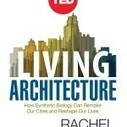
New TED Book – Living Architecture – Releases 7 FebruaryGreen Building ElementsRachel Armstrong is the co-director of AVATAR (Advanced Virtual and Technological Architectural Research) specializing in Architecture and Synthetic Biology at the...
Scoop.it!

A pilot programme will use latest tumour-sequencing techniques to help guide cancer care.
Scoop.it!

Synbiota is building a bio-lab in a browser. Synthetic Biology promises to revolutionize the world in ways we have yet to imagine. Synbiota is working towards this revolution by developing powerful, standards-based, open and free tools for synthetic biology design. We need your help! HTML5 developers with vision Stay connected with Synbiota and get updated about our progress. Join our spam-free mailing list, and don't forget to add @Synbiota on Twitter!
Scoop.it!
"Ecosystems are shaped by complex communities of mostly unculturable microbes. Metagenomes provide a fragmented view of such communities, but the ecosystem functions of major groups of organisms remain mysterious. To better characterize members of these communities, we developed methods to reconstruct genomes directly from mate-paired short-read metagenomes. We closed a genome representing the as-yet uncultured marine group II Euryarchaeota, assembled de novo from 1.7% of a metagenome sequenced from surface seawater. The genome describes a motile, photo-heterotrophic cell focused on degradation of protein and lipids and clarifies the origin of proteorhodopsin. It also demonstrates that high-coverage mate-paired sequence can overcome assembly difficulties caused by interstrain variation in complex microbial communities, enabling inference of ecosystem functions for uncultured members."
Scoop.it!

"Yeast species such as Saccharomyces cerevisiae have been exploited by humans for millennia and so it is therefore unsurprising that they are attractive cells to re-engineer for industrial use. Despite many beneficial traits yeast has for synthetic biology, it currently lags behind Escherichia coli in the number of synthetic networks that have been described. While the eukaryotic nature of yeast means that its regulation is not as simple to predict as it is for E. coli, once initial considerations have been made yeast is pleasingly tractable. In this review we provide a loose guide for constructing and implementing synthetic regulatory networks in S. cerevisiae using examples from previous research to highlight available resources, specific considerations and potential future advances."
Scoop.it!
"Synthetic Biology is in a critical phase of its development: it has finally reached the point where it can move from proof-of-principle studies to real-world applications. Secondary metabolite biosynthesis, especially the discovery and production of antibiotics, is a particularly relevant target area for such applications of synthetic biology. The first international conference to explore this subject was held in Spain in October 2011. In four sessions on General Synthetic Biology, Filamentous Fungal Systems, Actinomyces Systems, and Tools and Host Structures, scientists presented the most recent technological and scientific advances, and a final-day Forward Look Plenary Discussion identified future trends in the field."
Scoop.it!
"Protein pathways are dynamic and highly coordinated spatially and temporally, capable of performing a diverse range of complex chemistries and enzymatic reactions with precision and at high efficiency. Biotechnology aims to harvest these natural systems to construct more advanced in vitro reactions, capable of new chemistries and operating at high yield. Here, we present an efficient Multiplex Automated Genome Engineering (MAGE) strategy to simultaneously modify and co-purify large protein complexes and pathways from the model organism Escherichia coli to reconstitute functional synthetic proteomes in vitro. By application of over 110 MAGE cycles, we successfully inserted hexa-histidine sequences into 38 essential genes in vivo that encode for the entire translation machinery. Streamlined co-purification and reconstitution of the translation protein complex enabled protein synthesis in vitro. Our approach can be applied to a growing area of applications in in vitro one-pot multi-enzyme catalysis (MEC) to manipulate or enhance in vitro pathways such as natural product or carbohydrate biosynthesis."
|






