


Video - Professor Giuseppe Battaglia takes a debate by a molecular biology as well as dungeon biology laboratories during a University of Sheffield as well as explains a purpose of a dilettante analytic apparatus accessible to students as well as researchers to capacitate world-class training as well as research.

SynBioFromLeukipposInstitute
130.0K views |
+2 today
 Your new post is loading...
 Scoop.it! 
Groundbreaking research into the development of new medicines from the earth’s natural resources will be the focus of a symposium in March, hosted by the University of Aberdeen.... 
Scoop.it!

Bacteria don’t normally take photographs. Nor do they attack tumor cells or produce chemicals. But with some help from biological engineer Chris Voigt, they can do all that and more. "Voigt, who joined MIT’s faculty in July as an associate professor of biological engineering, likes to tinker with bacteria and other microbes to get them to perform myriad useful tasks that nature never intended — an approach known as synthetic biology.
Scoop.it!

A new product announced today could help doctors pinpoint pathogens, or identify the origins of fossilised bones in the field...
Scoop.it!
Chen YY, Galloway KE and Smolke CD
Scoop.it!

Man-made photosynthesis Can researchers make the natural process of photosynthesis more efficient, in order to design new biofuels or boost crop production? Given that the natural process boasts less than 1 percent efficiency in many important crops, some scientists see plenty of room for improvement. “We are facing global challenges in food and energy security that must be addressed,” Douglas Kell, Chief Executive of Biotechnology and Biological Sciences Research Council (BBSRC), said in a press release. “Improving photosynthesis within plants, or externally using synthetic biology, would bring huge benefits.” Underside of taro leaf growing in a backyard in Auckland, New Zealand One person hoping to make such improvements is Richard Cogdell of the University of Glasgow. Using synthetic biology, Cogdell is attempting to build an artificial “leaf” that could converting the sun’s energy into liquid fuel.
Scoop.it!
J. Craig Venter is a biologist most known for his contributions, in 2001, of sequencing the first draft human genome and in 2007 for the first complete diploid human genome. In 2010 he and his team announced success in constructing the first synthetic bacterial cell. His present work focuses on creating synthetic biological organisms and applications of this work, and discovering genetic diversity in the world's oceans. About TEDx, x = independently organized event: In the spirit of ideas worth spreading, TEDx is a program of local, self-organized events that bring people together to share a TED-like experience. At a TEDx event, TEDTalks video and live speakers combine to spark deep discussion and connection in a small group. These local, self-organized events are branded TEDx, where x = independently organized TED event. The TED Conference provides general guidance for the TEDx program, but individual TEDx events are self-organized. (Subject to certain rules and regulations.) On January 14, 2011, Caltech hosted TEDxCaltech, an exciting one-day event to honor Richard Feynman, Nobel Laureate, Caltech physics professor, iconoclast, visionary, and all-around "curious character." Visit TEDxCaltech.com for more details.

Enterey's curator insight,
July 10, 2015 3:53 PM
Hearing Dr. Venter speak yesterday on the power of genomics and what's possible in the future made me know that this is a great time to be living. Precision medicine is on the verge of heightening the quality of our lives. Although the topic of yesterday's discussion varied slightly, I would highly recommend watching a clip of J. Craig Venter.
Scoop.it!

Oxford Nanopore has announced it will be selling its rackmounted DNA sequencing machines this year, adding to the competition for fast, cheap genomes.
Scoop.it!

Researchers push for wider use of community-generated data in science and policy-making.
Scoop.it!
Nature Focus Nanopores addition to: The Next DNA Disruptor? - Forbes http://www.forbes.com/sites/matthewherper/2012/02/17/the-next-dna-disruptor/
Scoop.it!

Pearltrees is a place to collect, organize and share everything you like on the web.
Scoop.it!
Scientists have found a way to generate and maintain stem cells much more efficiently by amplifying the effect of an essential protein.
Scoop.it!
It Takes 30 a blog from the Department of Systems Biology@Harvard Medical School "It depends on your definition of “understand”… and possibly your definition of “build”. Thanks to Pam Silver, I’ve belatedly become aware of the CAGEN competition. CAGEN, which somehow trips off the tongue less elegantly than iGEM (but perhaps I’m just not used to it yet) stands for Critical Assessment of Genetically Engineered Networks, and the competition sets challenges for the synthetic biology community that “if achieved, would imply that significant improvements in the state of the art have been made”. This year, the challenge is to design a circuit that provides a robust gene response: rapid expression of a fluorescent protein at a controlled level (moving rapidly from 1x to 10x) upon the introduction of a chemical inducer, with minimal variation in expression between cells. It should work both in E. coli and S. cerevisiae, be sustained over time, and have minimal temperature-dependent variation. Specifics, including the metrics to be used, are on the Challenge page. Think you have a design that will work? You have until June 15 to submit it."
|
Scoop.it!

A team of chemists from the Universities of Southampton and Oxford have been awarded over £4 million to develop a new technique for 'clicking' DNA and RNA segments together. Their project, which is being funded by a strategic Longer and Larger (sLoLa) grant from the Biotechnology and Biological Sciences Research Council (BBSRC) could make biotechnology research cheaper and more efficient.
Scoop.it!

"Karmella Haynes jokes that she has opened up career opportunities for herself by being “a proactive, pragmatic bigmouth.” Haynes, who joined Arizona State University last year as an assistant professor in the School of Biological and Health Systems Engineering, one of ASU’s Ira A. Fulton Schools of Engineering, was recently elected for a two-year term as a councilor for the Institute of Biological Engineering (IBE). She’s now one of five councilors who serve as liaisons between IBE members nationwide and the organization’s executive committee. The position gives her a role in setting the agenda for the IBE’s annual conferences – gatherings that have an impact on shaping the course of education and research endeavors in the biological engineering field."
Scoop.it!
FEBS Letters, Volume null, Issue null, Pages null, null, Authors:Quoc-Thai Nguyen; M. Elena Merlo; Marnix H. "Many microbial secondary metabolites are of high biotechnological value for medicine, agriculture, and the food industry. Bacterial genome mining has revealed numerous novel secondary metabolite biosynthetic gene clusters, which encode the potential to synthesize a large diversity of compounds that have never been observed before. The stimulation or “awakening” of this cryptic microbial secondary metabolism has naturally attracted the attention of synthetic microbiologists, who exploit recent advances in DNA sequencing and synthesis to achieve unprecedented control over metabolic pathways. One of the indispensable tools in the synthetic biology toolbox is metabolomics, the global quantification of small biomolecules. This review illustrates the pivotal role of metabolomics for the synthetic microbiology of secondary metabolism, including its crucial role in novel compound discovery in microbes, the examination of side products of engineered metabolic pathways, as well as the identification of major bottlenecks for the overproduction of compounds of interest, especially in combination with metabolic modeling. We conclude by highlighting remaining challenges and recent technological advances that will drive metabolomics towards fulfilling its potential as a cornerstone technology of synthetic microbiology."
Scoop.it!

"First, a warning about synthetic biology from historian Jim Thomas of the ETC Group, which includes mentions of Jay Keasling [previously], the UC Berkeley bioengineer who launched Amyris [previously] with money from Bill Gates to develop a microbe to produce an antimalaria drugl, then repurposed the company as a for-profit would-be agrofuel business. Keasling has since left Amyris to head the Department of Energy-funded Joint BioEnergy Institute, which is set to relocate to Lawrence Berkeley National Laboratory’s billion-dollar-plus corporate/academic bioengineering campus planned for the nearby Richmond shoreline: In light of Thomas’s prescient warning, consider the following story, published yesterday, from Meredith Wadman of Nature News Blog: More than one report from an august body of experts has gathered dust in Washington, D.C. But the Woodrow Wilson International Center for Scholars, a public policy think tank based in the U.S. capital, today is setting out to make sure that does not happen when the subject is synthetic biology. The center today launched a “scorecard” that will monitor the progress made on 18 recommendations proposed in December, 2010 by the Presidential Commission for the Study of Bioethical Issues. That report, New Directions: The Ethics of Synthetic Biology and Emerging Technologies , was requested by President Barack Obama in May of 2010, after J. Craig Venter and colleagues published the first synthetic bacterial genome. The Wilson center’s new scorecard makes it clear that progress implementing the commission’s proposals – several of which are on an 18-month timeline– has been middling, if that. For instance, the scorecard reports “no activities identified” in the Executive Office of the President on the first recommendation: that the US government compile a comprehensive inventory of its current funding for synthetic biology research, complete it and publish it by June, 2012. “They said they haven’t been able to work on it,” David Rejeski, director of the Wilson Centers’ Synthetic Biology Project, told Nature. “We couldn’t find any evidence that there was any activity going on.” Read the rest. UC Berkeley’s other major bioengineering project with global implications is the Energy Biosciences Institute [previously], funded by a $500 million grant from BP to develop microbes and crops to produce “next generation” synthetic fuels derived from crops planted on vast Third World plantations. EBI scientists bitterly opposed California legislation requiring evaluations of so-called indirect land use effects caused by agrofuels, effects including loss of habitat and livelihoods as well as production of additional carbon emissions as a result of forest- and grassland-clearing. And it was only after significant protests by a large minority of faculty that EBI even included research of impacts on local populations impacted by their ambitious program. In light of what we’ve seen here in Berkeley, Thomas’s warnings seem comparatively modest."
Scoop.it!

The cure for cancer comes down to this: video games. Scientists have made highly realistic video game images that simulate the inner workings of human cells. Playing these 'games' helps medical researchers see exactly how cells live, divide and die.
Scoop.it!

Opposition to the technologies that make life longer, healthier, and happier creates strange bedfellows. The Body Politic: The Battle Over Science in America, by Jonathan D. Moreno, Bellevue Literary Press, 224 pages, $18.95 "We are now living in the age of biopolitics, claims University of Pennsylvania bioethicist Jonathan Moreno in his new book The Body Politic: The Battle Over Science in America. “Biopolitics is the nonviolent struggle for control over the actual and imagined achievements of the new biology and the new world it symbolizes,” he writes. “The stakes are about as big as they can get.” Moreno is right. Our biopolitical and bioethical struggles span human concerns from birth to death. Should embryos be tested genetically in vitro, allowing parents to implant only those they choose? What about using embryos to produce stem cells that can be transformed into tissues to repair damaged hearts and brains? Is it OK to create mice endowed with human brain cells? When is it appropriate to halt medical care for people who show no signs of minimal consciousness?"
Scoop.it!

From
io9

Researchers today unveiled a DNA nanorobot that can track down leukemia cells and kill them on sight, unleashing a therapeutic payload that causes the cancerous cells to self-destruct.
Scoop.it!
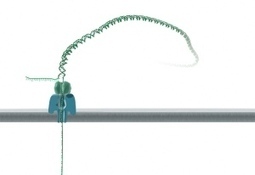
Technique promises it will produce a human genome in 15 minutes.
Scoop.it!
"Scientists at The University of Nottingham are leading an ambitious research project to develop an in vivo biological cell-equivalent of a computer operating system.
Scoop.it!

"Emerging technologies are crucial to continuing global prosperity. As technologies age, they are replaced by newer ones that offer greater performance, efficiency, or other important advantages. Recently, the World Economic Forum’s Global Agenda Council on Emerging Technologies conducted a survey of their network to discover which technology trends would have the greatest short term impact on the world. Informatics to add value to information took the top spot. This is hardly a surprising result. We’re bombarded with information these days and filtering signal from noise is important. The process is not unlike mining and refining, only the raw material is data, not mineral ore. Synthetic biology and metabolic engineering made number two on the list. This result reflects a growing appreciation for biology and how intrinsic it is to our lives. It’s been my view that understanding biology as a technology, one that can provide benefits beyond raw materials, is an important step to creating human infrastructure that can be sustainable in the long term. Other technologies include green technology, nanoscale design, systems biology, carbon, wireless energy, personalized medicine, and enhanced education technology. Why is it that education always ends up near the bottom of such lists, when we know that people are the most powerful force for changing the world? If I had input on this list, it would be number one...."
Scoop.it!

Clinical trial of the programmable, implantable device shows promise in treating osteoporosis.
|





