


$25 computer, Raspberry Pi, officially launched today

 Your new post is loading...
 Scoop.it! $25 computer, Raspberry Pi, officially launched today 
No comment yet.
Sign up to comment
Scoop.it!

Flatworms could hold the key to immortality, scientists claim. "British researchers believe that the worms, which live in ponds and lakes, could live forever after examining their ability to repeatedly regenerate.
Scoop.it!

"From the moment humans and wolves first decided to play nice with one another, humans have been directing the development of other animals. After 30,000 years, we have tiny chihuahuas, angora rabbits puffed like pompoms, and Belgian blue cattle with ‘double-muscling.’ Our best friends are just as carefully designed as the latest piece of technology. There’s no doubt that we will bring whole ecosystems of manufactured animals into the world. Where selective breeding stops, genetic modification begins. Next nature will be overrun with next animals..."
Scoop.it!

Synthetic biologists predict artificially fabricated or modified life forms will have extensive benefits in the near future. They predict synthetic life will be able to produce pharmaceuticals, chemicals and fuel among other things. It will be used as a central instrument to overcome demographic and economic challenges. However, synthetic life requires power, a food source. Regarding an evolved biological life adapted to use power from the sun through photosynthesis, chemicals through chemosynthesis, or by digesting other organisms. But now there is a manmade power source; a source that spans the globe and biology hasn’t had time to evolutionarily adapt to: the electrical grid.
Scoop.it!

"The marriage of art and modern biology has produced both great beauty and great controversy. The goal of this class is to introduce you to the world of BioArt through lecture and hands-on experience. The end of the 20th century saw artists grappling with the role of modern science in society as they witnessed animals cloned, crops genetically engineered, and artificial living organs produced. They responded with edgy works such as “GFP Bunny” by artist Eduardo Kac, a genetically engineered fluorescent green rabbit. In this workshop we will cover the groundbreaking work of Kac and others including SymbioticA and Joe Davis, and discuss where the current state of BioArt is headed. Participants will learn about working with the breadth of new materials available through advances in synthetic biology and tissue engineering. We will cover safety and feasibility issues, costs, and what is possible in a studio setting versus those projects that require the resources of a standard laboratory.Genetically engineered organisms, plants and mammalian cells will be compared while working with DNA and bacteria from different sources. Students will have the opportunity to explore potential project ideas and draw upon the scientific expertise of the instructors. The workshop will end with participation in a simple gel electrophoresis exercise where students will learn to “paint” with DNA...."
Scoop.it!

The BioBricks Foundation is pleased to announce The BioBricks Foundation Synthetic Biology 6.0 Conference (SB6.0), which will take place on July 9-11, 2013 at Imperial College, London, UK.
Scoop.it!

As an undergraduate in the mid-1990s, Neil Renninger was part of an MIT blackjack team that won millions at casinos by using card counting to beat the house. Yet the stakes were low compared with what he tried next: he cofounded Amyris, a synthetic-biology company that attempted to take on the oil companies by making biofuels.
Scoop.it!

Biology is moving from the study of isolated parts to the study of dynamic and integrated systems.
Scoop.it!
Dr Aziz Aboobaker on his latest breakthrough studying planarians - or immortal worms. Read the paper at http://www.pnas.org/cgi/doi/10.1073/pnas.1118885109 T...
Scoop.it!
Paris, June 11-12, 2012 Gilles Charvin (IGMBC, France): Continuous monitoring of the transition to replicative senescence in single yeast cells, Hidde de Jong (INRIA, France): Local and global regulators of the dynamic adaptation of gene expression in bacteria, Diego di Bernardo (Tigem, Italy): Modelling and control of gene networks: from yeast to mammals, In yeast, we describe the development and application of a method to control at will the dynamic behavior of a gene network in a growing population cells. We designed and implemented an integrated platform based on a microfluidic device, a time-lapse microscopy apparatus, and a set of actuated syringes, all controlled by a computer. We tested the platform to force yeast cells to express a desired time-varying amount of a reporter gene, part of a complex gene network, over thousands of minutes, by automatically switching the type of sugar administered to the cells, its concentration and its duration. In mammalian cells, we used a modified microfludics platform to characterise the dynamical properties and robustness to noise of a circuit we synthetically engineered in mammalian cells. The circuit mimics a common motif found in transcriptional regulation, consisting of a transcription factor regulating its own transcription (Positive Feedback Loop) as well as, transcription of a microRNA against itself (Negative Feedback Loop). Alfonso Jaramillo (ISSB, France): Engineering transcriptional and post-transcriptional circuits with targeted behavior in E. coli, The design and implementation of small synthetic genetic circuits for cell reprogramming is propelling the emerging field of Synthetic Biology. We will describe our recent results on the engineering of small synthetic circuits and their characterization in E. coli. We will show our recent results on the design of circuits made of either RNA or transcription factors. In the first case, we will describe the first fully automated design methodology and experimental validation of synthetic RNA interaction circuits in living cells. We tested our methodology in E. coli by designing several positive riboregulators with diverse structures and interaction models. The designed sequences exhibit very low similarity to any known non-coding RNA sequence. Our riboregulatory devices can work independently and in combination with transcription regulation to create complex logic circuits. In the second case, we describe the construction and characterisation in E. coli of minimal gene networks with oscillatory behaviour. We use microfluidic techniques to track the single-cell dynamics for several days. We have also engineered two coupled oscillators in a single cell. Coupling of two oscillators is known in physics to generate a number of interesting dynamical behaviours. The resulting function could represent a simple super-position of the dynamical behaviour or it could lock into several possible characteristic frequencies, or even it could have several characteristic properties, depending on the conditions of the experiment. To analyse these effects in vivo we designed and constructed several genetic parts that allow us characterizing the dynamical behaviour of coupled oscillator systems in bacteria. Eric Klavins (U. Washington, USA): Toward engineered multi-cell behaviors, A combination of internal logic, control of growth and division, and cell-cell communication must coordinate the behaviors of a growing organism so that it differentiates correctly in time and space, in spite of environmental perturbations, and intrinsic or extrinsic noise. Although several formalisms have been defined to describe development, the relationship between high level programs and the possible biochemical implementation of those programs in micro-organisms is tenuous. Said differently, it is unknown whether the basic mechanisms available to the synthetic biologist are sufficient to implement the pattern formation algorithms defined at higher levels. In my talk I will describe (1) our progress toward a framework for engineering multi-celled behaviors based on formal methods; (2) several pattern formation algorithms that may be simple enough to implement in cells; (3) experimental results with yeast and E. coli in which we demonstrate modules that control state, transduce signals, or use noise to implement aspects of the multi-cellular control systems systems we envisage. Heinz Koeppl (ETHZ, Switzerland)Optimal perturbations for the identification of stochastic reaction dynamics, Identification of stochastic reaction dynamics inside the cell is hampered by the low- dimensional readouts available with todays measurement technology. Moreover, such processes are poorly excited by standard experimental protocols, making identification even more ill-posed. Recent technological advances provide means to design and apply complex extra-cellular stimuli. Based on an information-theoretic framework we provide novel Monte Carlo sampling techniques to determine optimal temporal excitations profiles for such processes. These optimal control policies should aid in alleviating the ill-posedness in identification but moreover provide new means to control cell environments for synthetic biology. We give a new result for the controlled birth-death process, present numerical results for a simple model of regulated gene expression and discuss the experimental challenges. Wendell Lim (UCSF, USA): Learning to program cell signaling, Ariel Lindner (INSERM, France), John Lygeros (ETHZ, Switzerland): In silico control of gene expression in yeast, Feedback mechanisms are at the heart of many cell functions, including genetic regulation. Engineering such mechanisms synthetically has proved to be a challenging task, however. This is partly due to the difficulties associated with making the process robust against cell-to-cell variability, cross-talk and antagonism from other cell functions, etc. Here we show how the performance of synthetic biological circuits can be improved by the addition of an external feedback loop, closed over the computer. We demonstrate this in silico feedback concept by using it to robustly regulate the expression of a gene in yeast, exploiting a light source and a light-sensitive transcription factor as a control input and flow cytometry measurements of protein concentration to close the loop. The in silico controller is based on Model Predictive Control and a Kalman filter to estimate unmeasured states. Brian Munsky (LANL, USA): Using spatial and temporal fluctuations to identify predictive quantitative models of gene regulatory pathways, Despite vast amounts of biochemical information, it remains difficult to quantitatively capture (let alone understand or predict) the spatiotemporal responses of signal transduction and gene regulatory pathways. In this talk, I will discuss recent results to integrate single-molecule and single-cell experiments with simple spatial stochastic analyses, with the resulting goal of identifying and validating quantitatively predictive models of transcriptional dynamics. I will use a couple simple computational studies to show how different fluctuations over time, over space, and from cell-to-cell each contain unique and useful information that helps improve the identification procedure. I will illustrate our integrated experimental and computational identification approach on a stress response pathway in yeast as well as on a host-pathogen interaction in mammalian cells. In each case study, I will show how we can generate large numbers of different model structures and use parameter estimation and uncertainty quantification analyses to determine the best model with the greatest predictive capability. I will discuss how these models yield new insight into biological dynamics, illustrate how these models can be used to predict the transcriptional responses in new conditions, and comment on the use of such models to help optimize or control gene regulatory behaviors. Guy-Bart Stan (Imperial college, UK): Taking a systems control approach in biology, In this talk I will give an overview of some of the research activities in my group, the "Control Engineering Synthetic Biology" group at Imperial College London. In particular, I will cover two lines of research (if time allows): (a) exogenous data-based optimal control of synthetic gene circuits, and (b) endogenous control of metabolic pathways through the design of enzymatic gene regulation networks. Ron Weiss (MIT, USA): Integrated computational and experimental approach to engineering complex behavior in living systems, Synthetic biology is revolutionizing how we conceptualize and approach the engineering of biological systems. Recent advances in the field are allowing us to expand beyond the construction and analysis of small gene networks towards the implementation of complex multicellular systems with a variety of applications. In this talk Ron Weiss will describe his integrated computational and experimental approach to engineering complex behavior in living systems ranging from bacteria to stem cells. In his research, he appropriates useful design principles from electrical engineering and other well established fields. These principles include abstraction, standardization, modularity, and computer aided design. But he also spends considerable effort towards understanding what makes synthetic biology different from all other existing engineering disciplines and discovering new design and construction rules that are effective for this unique discipline.
Scoop.it!

"To many, the question “What do you want to be when you grow up?” can be difficult to answer. As children, some dreamed of careers as astronauts, teachers, rock stars or scientists. But growing up, these aspirations are often exchanged for more feasible applications.
Scoop.it!
A synthetic biology documentary by Kelly Neaves and Dominic Rees-Roberts, following the Imperial College IGEM team (International Genetically Engineered Mach...
Scoop.it!

Video: Dig the three minute introduction. Script by Claudia Vickers, Animation by Orlando Mee, Produced by Stephan Kern
|
Scoop.it!

MITx will offer a portfolio of MIT courses for free to a virtual community of learners around the world...
Scoop.it!

"The ability to detect and respond to magnetic fields is not a sense we always associate with living things. Yet, a number of organisms ranging from bacteria to mammals possess magnetoreception. Thanks to iron-containing structures called magnetosomes, certain species of bacteria can orient and move along the geomagnetic field. Because these bacteria generally live in water or soil, where the nutrient concentration varies with depth, navigation along geomagnetic field lines enables the bacteria to efficiently move up and down to locate nutrients. The geomagnetic field also appears to provide navigational cues to fish, turtles, birds, and other migratory animals. Magnetic particles in the nervous system may help these animals sense the magnetic field, but the biology of this mechanism is poorly understood..."
Scoop.it!

"At the turn of the millennium, miniaturized canines acquired the cherished status of living, designer handbag ornaments. These teeny tiny photogenic doggies, which had been shrunken from generations of in breeding, were snapped up by fashionistas who pouted alongside them in front of seas of clicking cameras. In just a fragment of evolutionary time, today’s ‘to die for’ bio-couture has been genetically spliced with jellyfish signatures. These trophies are freer to roam and easier to find than their miniaturised predecessors, as they can glow under UV, or ‘black’ light. Although not all varieties can fit in a clutch purse yet, there is an impressive range of designer ‘glo’ organisms available in green and red (blue is possible but isn’t as impressive under UV light). Options include fruit flies, fish, mice, chickens, rabbits, pigs and cats (for glo-cats, see here, here and here). Science justifies these media friendly creations in service of the greater public good. Yet these animals have great popular appeal that speaks little to their ability to fight cancer or other diseases. Despite their ‘freaky’ designer origins, glo pets are undeniably ‘cute’. Genetic modification is part of a spectrum of technological approaches offered by the new science of synthetic biology, which enable us to overcome the apparent lottery of nature. The fundamental ‘vanity’ at the heart of synthetic biology is that we can do ‘better’ than nature, but is this actually possible? If nature is a cosmic force [1] then it simply sets the tolerance limits of what is possible. There is no ‘better’ than nature, since no matter how improbable, or artificially induced – it is a natural occurrence....."
Scoop.it!

"‘ENGINEERABLE' Today, biology could be understood as an “engineerable” science (synthetic biology) with ample scope for research, training and development of technology and infrastructure to address social problems, she said. Biotechnology had made it possible to clean up hazardous wastes more efficiently by harnessing pollution-devouring microbes without the use of caustic chemicals. Industrial biotechnology applications had led to cleaner processes that produced less waste and used less energy and water in many kinds of industries, Ms. Katre said. Scientists must emphasise on promoting efficient translation of research from the laboratory to the community. Ms. Katre said the concept of sustainable development must be incorporated into the work of scientists and researchers who worked in the field of biology."
Scoop.it!

Petrochemicals are found in thousands of everyday products, from clothing to food preservatives to plastics. Imagine if many of those chemicals could be made without petroleum and instead with biological processes. Using the tools of synthetic biology scientists at the Department of Energy’s Joint BioEnergy Institute (JBEI) have done just that, and now a startup company has been formed to commercialize the technology.
Scoop.it!
02-16-12 11am PST, Cynthia Collins from RPI to give virtual seminar. About the initiative Biology on Earth readily demonstrates that life is an efficient user of resources around it, turning those resources into habitats, materials and forms that perform various functions. Synthetic biology in space represents a new challenge, the challenge of designing organisms to perform reliable functions that an astronaut may one day depend on. If the promise of an engineerable biology on Earth is within reach the initiative aims to develop applications for synthetic biology in space.
Scoop.it!

Computational and Structural Biotechnology Journal (ISSN 2001-0370) is an online journal publishing research articles and reviews after full peer review. All articles are published, without barriers to access, immediately upon acceptance. The journal places a strong emphasis on functional and mechanistic understanding of how molecular components in a biological process work together through the application of computational methods. Structural data may provide such insights, but they are not a pre-requisite for publication in the journal. Specific areas of interest include, but are not limited to:
• Structure and function of proteins, nucleic acids and other macromolecules
While all general topics related to Computational and Structural Biology are welcomed, the editors reserve the right to pre-screen submissions based on the suitability of the topic of a submission and, therefore, the right as whether a manuscript will be processed/reviewed or not. Even though experimental validation is not required for publication, reliability and significance of biological discovery are validated and enriched by experimental studies.
The journal welcomes the submission of manuscripts that meet the general criteria of significance and scientific excellence, and enables the rapid publication of papers under the following categories:
• Research articles
Scoop.it!

Yale University is one of three institutions to acquire new DNA sequencing technology that its creator says will allow researchers to sequence the entire human genome within 24 hours at a cost of just...
Scoop.it!
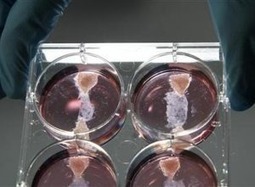
"A number of laboratories around the world are trying to grow meat in a Petri dish. So far we’ve heard about clumps of cells grown from stem cells with the hope that those cells will one day grow into a full-sized, grill-ready chicken fillet or hamburger. Now one researcher says the time to fire up the propane is fast approaching. Researcher Mark Post announced to his in vitro meat producing colleagues that his lab will have a hamburger fit for consumption sometime this fall...."
Scoop.it!
FEBS Letters,Authors:Markus Schmidt; Víctor de Lorenzo... "The plausible release of deeply engineered or even entirely synthetic/artificial microorganisms raises the issue of their intentional (e.g. bioremediation) or accidental interaction with the Environment. Containment systems designed in the 1980s–1990s for limiting the spread of genetically engineered bacteria and their recombinant traits are still applicable to contemporary Synthetic Biology constructs. Yet, the ease of DNA synthesis and the uncertainty on how non-natural properties and strains could interplay with the existing biological word poses yet again the challenge of designing safe and efficacious firewalls to curtail possible interactions. Such barriers may include xeno-nucleic acids (XNAs) instead of DNA as information-bearing molecules, rewriting the genetic code to make it non-understandable by the existing gene expression machineries, and/or making growth dependent on xenobiotic chemicals."
Scoop.it!

model integration from biological databases, * multi-scale modelling and analysis methods, * synthetic biology (this is a new topic for CMSB). Case studies in systems and synthetic biology are especially encouraged.
Scoop.it!

Synthetic biologists are advancing evolution by engineering artificial life. It could lead to new drugs and fuel. But how would the scientists explain synthetic biology to Darwin? We asked 16 of them; here's what they said.
|





