"If economic imperatives produce synthetic biology products that are deliberately engineered to fail — as they did with the products of the past — then a future world full of engineered living artefacts (bio-facts) risks being dominated by self-reproducing ‘bio-spam’...."
Novel advances in the design of three-dimensional bio-scaffolds to control cell fate: translation from 2D to 3D
by Santos E, Hernández RM, Pedraz JL, Orive G. "Recreating the most critical aspects of the native extracellular matrix (ECM) is fundamental to understand and control the processes regulating cell fate and cell function. From the ill-defined complexity to the controlled simplicity, we discuss the different strategies that are being carried out by scientists worldwide to achieve the latest advances in the sophistication of three-dimensional (3D) scaffolds, stressing their impact on cell biology, tissue engineering and regenerative medicine. Synthetic and naturally derived polymers like polyethylene glycol, alginate, agarose, etc., together with micro- and nanofabrication techniques are allowing the creation of 3D models where biophysical and biochemical variables can be modified with high precision, orthogonality and even in real-time."
"The translucent bell-shaped figure pumps rhythmically upward through the water, the rise and fall of its body almost identical to that of the moon jelly, Aurelia aurita. The similarity is no coincidence. The figure in the tank is a prototype of an unmanned undersea vehicle designed to run on hydrogen-powered artificial muscles. The wild A. aurita, because of its relatively simple musculature and swimming movements, was the ideal model for Robojelly’s design."
"Protein engineering, chemical biology and synthetic biology would benefit from toolkits of peptide and protein components that can be exchanged reliably between systems whilst maintaining their structural and functional integrity. Ideally, such components should be highly defined and predictable in all respects of sequence, structure, stability, interactions and function. To establish one such toolkit, here we present a Basis Set of de novo designed α-helical coiled-coil peptides that adopt defined and well-characterised parallel dimeric, trimeric and tetrameric states. The designs are based on sequence-to-structure relationships both from the literature and analysis of a database of known coiled-coil X-ray crystal structures. These give foreground sequences to specify the targeted oligomer state. A key feature of the design process is that sequence positions outside of these sites are considered non-essential for structural specificity; as such, they are referred to as the background, are kept non-descript, and are available for mutation as required later. Synthetic peptides were characterized in solution by circular-dichroism spectroscopy and analytical ultracentrifugation, and their structures determined by X-ray crystallography. Intriguingly, a hitherto widely used empirical rule-of-thumb for coiled-coil-dimer specification does not hold in the designed system. However, the desired oligomeric state was achieved by database-informed redesign of that particular foreground, and confirmed experimentally. We envisage that the Basis Set will be of use in directing and controlling protein assembly, with potential applications in chemical and synthetic biology."
"Acetogenic anaerobic bacteria are defined as organisms employing the Wood–Ljungdahl pathway to synthesize acetyl-CoA from CO2 or CO. Their autotrophic mode of metabolism offers the biotechnological chance to combine use of abundantly available substrates with reduction of greenhouse gases. Several companies have already established pilot and demonstration plants for converting waste gases into ethanol, an important biofuel and a natural product of many acetogens. Recombinant DNA approaches now opened the door to construct acetogens, synthesizing important industrial bulk chemicals and biofuels such as acetone and butanol. Thus, novel microbial production platforms are available that no longer compete with nutritional feedstocks."
An introduction to this software can be found here: http://bit.ly/ISK6f0 Solve for X: Omri Amirav-Drory on synthetic life toolkits "Life may be the software that makes its own hardware, but where is the compiler? If we plan to start programming life itself, we are going to need a radically different and better tool kit than the one available to geneticists today. Omri lays out a concrete vision for how such a tool would work and for how it would be used to create the bio-products our future needs so badly."
Nikolai Eroshenko, Sriram Kosuri, Adam H. Marblestone, Nicholas Conway, George M. Church
"De novo synthesis of long double-stranded DNA constructs has a myriad of applications in biology and biological engineering. However, its widespread adoption has been hindered by high costs. Cost can be significantly reduced by using oligonucleotides synthesized on high-density DNA chips. However, most methods for using off-chip DNA for gene synthesis have failed to scale due to the high error rates, low yields, and high chemical complexity of the chip-synthesized oligonucleotides. We have recently demonstrated that some commercial DNA chip manufacturers have improved error rates, and that the issues of chemical complexity and low yields can be solved by using barcoded primers to accurately and efficiently amplify subpools of oligonucleotides. This unit includes protocols for computationally designing the DNA chip, amplifying the oligonucleotide subpools, and assembling 500- to 800-bp constructs. Curr. Protoc. Chem. Biol. 4:1-17"
MIT OpenCourseWare (OCW) is a web-based publication of virtually all MIT course content. OCW is open and available to the world and is a permanent MIT activity. "A millennial challenge in biology is to decipher how vast arrays of molecular interactions inside the cell work in concert to produce a cellular function. Systems biology, a new interdisciplinary field of science, brings together biologists and physicists to tackle this grand challenge through quantitative experiments and models. In this course, we will discuss the unifying principles that all organisms use to perform cellular functions. We will also discuss key challenges faced by a cell in both single and multi-cellular organisms. Finally, we will discuss how researchers in the field of synthetic biology are using the new knowledge gained from studying naturally-occurring biological systems to create artificial gene networks capable of performing new functions." http://bit.ly/mJWClZ
Kangmin Duan, William M. McCullough, Michael G. Surette, Tony Ware, Jiuzhou Song "To explore gene-environment interactions, based on temporal gene expression information, we analyzed gene and treatment information intensively and inferred interaction networks accordingly. The main idea is that gene expression reflects the response of genes to environmental factors, assuming that variations of gene expression occur under different conditions. Then we classified experimental conditions into several subgroups based on the similarity of temporal gene expression profiles. This procedure is useful because it allows us to combine diverse gene expression data as they become available, and, especially, allowing us to lay the regulatory relationships on a concrete biological basis. By estimating the activation points, we can visualize the gene behavior, and obtain a consensus gene activation order, and hence describe conditional regulatory relationships. The estimation of activation points and building of synthetic genetic networks may result in important new insights in the ongoing endeavor to understand the complex network of gene regulation." http://bit.ly/IULQr1
by Sarah A. Stanley, Jennifer E. Gagner, Shadi Damanpour, Mitsukuni Yoshida, Jonathan S. Dordick, Jeffrey M. Friedman
"Medical applications of nanotechnology typically focus on drug delivery and biosensors. Here, we combine nanotechnology and bioengineering to demonstrate that nanoparticles can be used to remotely regulate protein production in vivo. We decorated a modified temperature-sensitive channel, TRPV1, with antibody-coated iron oxide nanoparticles that are heated in a low-frequency magnetic field. When local temperature rises, TRPV1 gates calcium to stimulate synthesis and release of bioengineered insulin driven by a Ca2+-sensitive promoter. Studying tumor xenografts expressing the bioengineered insulin gene, we show that exposure to radio waves stimulates insulin release from the tumors and lowers blood glucose in mice. We further show that cells can be engineered to synthesize genetically encoded ferritin nanoparticles and inducibly release insulin. These approaches provide a platform for using nanotechnology to activate cells." http://bit.ly/L8uyJS
Bhartiya D, Kapoor S, Jalali S, Sati S, Kaushik K, Sachidanandan C, Sivasubbu S, Scaria V. "Introduction: Long non-coding RNAs (lncRNAs) are a recently discovered class of non-coding functional RNA which has attracted immense research interest. The growing corpus of literature in the field provides ample evidence to suggest the important role of lncRNAs as regulators in a wide spectrum of biological processes. Recent evidence also suggests the role of lncRNAs in the pathophysiology of disease processes. Areas covered: The authors discuss a conceptual framework for understanding lncRNA-mediated regulation as a function of its interaction with other biomolecules in the cell. They summarize the mechanisms of the known functions of lncRNAs in light of this conceptual framework, and suggest how this insight could help in discovering novel targets for drug discovery. They also argue how certain emerging technologies could be of immense utility, both in discovering potential therapeutic targets as well as in further therapeutic development. Expert opinion: The authors propose how the field could immensely benefit from methodologies and technologies from six emerging fields in molecular and computational biology. They also suggest a futuristic area of lncRNAs design as a potential offshoot of synthetic biology, which would be an attractive field, both for discovery of targets as well as a therapeutic strategy."
Controlling promoter strength and regulation in Saccharomyces cerevisiae using synthetic hybrid promoters
by Blazeck J, Garg R, Reed B, Alper H. "A dynamic range of well-controlled constitutive and tunable promoters are essential for metabolic engineering and synthetic biology applications in all host organisms. Here we apply a synthetic hybrid promoter approach for the creation of strong promoter libraries in the model yeast, Saccharomyces cerevisiae. Synthetic hybrid promoters are composed of two modular components- the enhancer element, consisting of tandem repeats or combinations of upstream activation sequences (UAS), and the core promoter element. We demonstrate the utility of this approach with three main case studies. First, we establish a dynamic range of constitutive promoters and in doing so expand transcriptional capacity of the strongest constitutive yeast promoter, P(GPD) , by 2.5-fold in terms of mRNA levels. Second, we demonstrate the capacity to impart synthetic regulation through a hybrid promoter approach by adding galactose activation and removing glucose repression. Third, we establish a collection of galactose-inducible hybrid promoters that span a nearly 50-fold dynamic range of galactose-induced expression levels and increase the transcriptional capacity of the Gal1 promoter by 15%. These results demonstrate that promoters in S. cerevisiae, and potentially all yeast, are enhancer limited and a synthetic hybrid promoter approach can expand, enhance, and control promoter activity."
"In this paper, I discuss the aetiological account of biological interests, developed by Varner (1998), in the context of artefactual organisms envisioned by current research in synthetic biology. In “Sections 2–5”, I present Varner's theory and criticise it for being incapable of ascribing non-derivative interests to artefactual organisms due to their lack of a history of natural selection. In “Sections 6–7”, I develop a new alternative to Varner's account, building on the organisational theory of biological teleology and function. I argue that the organisational account of biological interest is superior to Varner's aetiological account because it (i) can accommodate both artefactual and naturally evolved organisms, (ii) provides a non-arbitrary and practical way of determining biological interests, (iii) supports the claim that organisms have interests in a sense in which artefacts do not, and (iv) avoids the possibility of there being a conflict between what an organismic part is supposed to do and what is in the interest of the organism."
"Atherosclerosis is intimately coupled to blood flow by the presence of predilection sites. The coupling is through mechanotransduction of endothelial cells and approximately 2000 gene are associated with this process. This paper describes a new platform to study and identify new signalling pathways in endothelial cells covering an atherosclerotic plaque. The identified networks are synthesized in primary cells to study their reaction to flow. This synthetic approach might lead to new insights and drug targets."
"A mathematician from the University of Bristol has teamed up with a biologist from the University of Edinburgh to address a major problem in molecular biology. Dr Clive Bowsher, Lecturer at the School of Mathematics, and Professor Peter Swain at Synthetic and Systems Biology Edinburgh co-authored a paper in the Proceedings of the National Academy of Sciences showing how to separate ‘signal’ from ‘noise’ when studying the mechanisms of living cells. Cells make decisions in fluctuating environments using inherently noisy biochemical mechanisms. Such effects create considerable, unpredictable variation – known as ‘stochasticity’– both over time and between genetically identical cells. To understand how cells exploit and control these biochemical fluctuations, scientists must identify the sources of stochasticity, quantify their effects, and distinguish variation that carries information about the biological environment from confounding noise. In their PNAS paper, Dr Bowsher and Professor Swain show how to decompose the fluctuations of biochemical networks into multiple components and how to design experimental ‘reporters’ to measure these components in living cells..."
referring to: Identifying sources of variation and the flow of information in biochemical networks by Clive G. Bowshera, and Peter S. Swain "To understand how cells control and exploit biochemical fluctuations, we must identify the sources of stochasticity, quantify their effects, and distinguish informative variation from confounding “noise.” We present an analysis that allows fluctuations of biochemical networks to be decomposed into multiple components, gives conditions for the design of experimental reporters to measure all components, and provides a technique to predict the magnitude of these components from models. Further, we identify a particular component of variation that can be used to quantify the efficacy of information flow through a biochemical network. By applying our approach to osmosensing in yeast, we can predict the probability of the different osmotic conditions experienced by wild-type yeast and show that the majority of variation can be informational if we include variation generated in response to the cellular environment. Our results are fundamental to quantifying sources of variation and thus are a means to understand biological “design.”.." http://bit.ly/Kv4TpB
Harris H Wang, Hwangbeom Kim, Le Cong, Jaehwan Jeong, Duhee Bang & George M Church
"Multiplex automated genome engineering (MAGE) uses short oligonucleotides to scarlessly modify genomes; however, insertions >10 bases are still inefficient but can be improved substantially by selection of highly modified chromosomes. Here we describe 'coselection' MAGE (CoS-MAGE) to optimize biosynthesis of aromatic amino acid derivatives by combinatorially inserting multiple T7 promoters simultaneously into 12 genomic operons. Promoter libraries can be quickly generated to study gain-of-function epistatic interactions in gene networks."
COURSE SUMMARY Synthetic Biology is an emerging technology that hopes to further develop biology as a substrate for engineering by adapting concepts developed in other fields of engineering. Foundational tools to meet this challenge include: ready access to off-the-shelf standardized biological parts and devices; a reliable and defined cellular chassis in which engineers can assemble and power DNA programs; and computational tools as well as measurement standards that enable the ready integration of simpler devices into many-component functional systems. By applying these engineering foundations to the richness and versatility of biology, some of the world’s most significant challenges can be addressed. For example advanced genome, protein and pathway redesign, metabolic engineering and cell-programmed therapeutics have already benefited from the tools of synthetic biology, and these developments will serve as the point of departure for many of the foundational topics. As synthetic biology matures into a robust engineering discipline, it should be capable of transforming the biotechnology, pharmaceutical, and chemical industries as well as suppliers of biotechnology tools, reagents, and services. This summer course offers an unprecedented opportunity to learn about this emerging field from its leaders as well as engage in hands-on computational and laboratory work using the latest tools and techniques. http://bit.ly/J6SgmJ
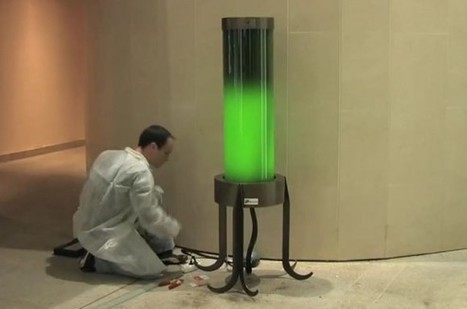
"Our atmosphere is filling up with CO2 and we seem to be the major cause of that. The generally accepted solution seems to be cutting back on emissions as quickly as possible, but implementing such cuts is problematic because everyone has to agree to do more, which essentially ends up costing a lot of time and money.
There is an alternative to such measures, though. Instead of relying entirely on cutting emissions, why don’t we start taking CO2 out of the atmosphere? That’s exactly what biochemist Pierre Calleja is trying to do, and his solution almost sounds too good to be true.
Calleja has developed a lighting system that requires no electricity for power. Instead it draws CO2 from the atmosphere and uses it to produce light as well as oxygen as a byproduct. The key ingredient to this eco-friendly light? Algae."
Shuobing Chen, Haoqian Zhang, Handuo Shi, Weiyue Ji, Jingchen Feng, Yan Gong, Zhenglin Yang, Qi Ouyang Peking University Team for the International Genetically Engineered Machine Competition (iGEM), Peking University, Beijng, 100871, China
"Synthetic biology aims to rationally construct biological devices with required functionalities. Methods that automate the design of genetic devices without post-hoc adjustment, therefore, are highly desired. Here we provide a method to predictably design genetic toggle switches with predetermined bistability. To accomplish this task, a biophysical model that links Ribosome Binding Site (RBS) DNA sequence to toggle switch bistability was first developed by integrating a stochastic model with RBS design method. Then, to parameterize the model, a library of genetic toggle switch mutants was experimentally built, followed by establishing the equivalence between RBS DNA sequences and switch bistability. To test this equivalence, RBS nucleotide sequences for different specified bistability were in silico designed and experimentally verified. Results show that the deciphered equivalence is highly predictive for the toggle switch design with predetermined bistability. This method can be generalized to quantitative design of other probabilistic genetic devices in synthetic biology."
In this insightful interview, Neri Oxman,architect, designer and professor of Media Arts and Sciences and Director of the Mediated Matter group at the MIT Media Lab, explains the differences between 'additive' and 'subtractive' manufacturing. Inspired by things that 'grow' in nature, Oxman uses the world's most advanced 3D printing technology - the Objet Connex500 multi-material 3D printer to produce some incredible models which will be on display at the Pompidou Center until August 6th 2012 at the 'Multiversites Creatives' exhibit. Neri also explains 3D printing within the wider paradigm shift in technology and manufacturing - comparing it to the Gutenberg 2D print revolution of the 1440's.
Elizabeth Pennisi "Oxford Nanopore Technologies is set to achieve the first commercialization of a long-awaited and oft-doubted technology called nanopore sequencing. The technology, based on protein pores so tiny that 25,000 of them can fit on the cross section of a human hair, could be the next big thing in genome sequencing and analysis. Although they've gotten much cheaper and smaller in recent years, machines that read DNA and RNA still usually cost hundreds of thousands of dollars, take up entire lab benches, and require much upfront and postsequencing processing to generate a genome. Nanopore sequencing could change all that. But some scientists say many technical hurdles remain to be overcome before nanopore devices produce actual sequence data."
To get content containing either thought or leadership enter:
To get content containing both thought and leadership enter:
To get content containing the expression thought leadership enter:
You can enter several keywords and you can refine them whenever you want. Our suggestion engine uses more signals but entering a few keywords here will rapidly give you great content to curate.


 Your new post is loading...