Your new post is loading...

|
Scooped by
Gerd Moe-Behrens
July 12, 2012 3:21 PM
|
Synthetic Biology dialogue
"This report presents the findings of a series of public workshops and stakeholder interviews on the science and issues surrounding synthetic biology. The project took place during 2009-2010 and was carried out by the TNS-BMRB, initiated by the Biotechnology and Biological Sciences Research Council (BBSRC) and the Engineering and Physical Sciences Research Council (EPSRC), and with support of the Department for Business, Innovation and Skills’ Sciencewise program me......" http://bit.ly/NkrQS9
|
|
Scooped by
Gerd Moe-Behrens
July 11, 2012 4:22 PM
|
A breakthrough book provides step-by-step protocols for gene synthesis
|
|
Scooped by
Gerd Moe-Behrens
July 11, 2012 3:19 PM
|
|
|
Scooped by
Gerd Moe-Behrens
July 11, 2012 3:11 PM
|
|
|
Scooped by
Gerd Moe-Behrens
July 10, 2012 7:04 PM
|
Biologists’ capacity for generating genomic data is increasing more rapidly than computing power. A new algorithm will help them keep up.
|
|
Scooped by
Gerd Moe-Behrens
July 10, 2012 9:07 AM
|
by Yang G, Wang S, Wei H, Ping J, Liu J, Xu L, Zhang W. "Synthesis of long DNA fragments is often associated with mutations and requires multiple DNA manipulation steps. A novel DNA synthesis method, referred to as patch oligodeoxynucleotide synthesis (POS) to assembly long DNA fragments is presented here. This method involves connection of two types of oligodeoxynucleotides: long constructional oligonucleotides (COs) and short patch oligonucleotides (POs). Long COs were connected by a ligase with the aid of POs, which were complementary to both adjacent COs to help remove secondary structures during assembly. The partial double-stranded DNA template that was formed was then amplified by PCR. Accordingly, we synthesized SV40 polyadenylation signal sequences (187 bp), a codon-optimized yellow fluorescent protein gene (678 bp), and Rattus norvegicus catenin β1 (2,352 bp). This presented method can be broadly applied to synthesize DNA fragments of varying lengths with great convenience."
http://1.usa.gov/NGhfid
|
|
Scooped by
Gerd Moe-Behrens
July 10, 2012 8:37 AM
|
by Malyshev DA, Dhami K, Quach HT, Lavergne T, Ordoukhanian P, Torkamani A, Romesberg FE. "The natural four-letter genetic alphabet, comprised of just two base pairs (dA-dT and dG-dC), is conserved throughout all life, and its expansion by the development of a third, unnatural base pair has emerged as a central goal of chemical and synthetic biology. We recently developed a class of candidate unnatural base pairs, exemplified by the pair formed between d5SICS and dNaM. Here, we examine the PCR amplification of DNA containing one or more d5SICS-dNaM pairs in a wide variety of sequence contexts. Under standard conditions, we show that this DNA may be amplified with high efficiency and greater than 99.9% fidelity. To more rigorously explore potential sequence effects, we used deep sequencing to characterize a library of templates containing the unnatural base pair as a function of amplification. We found that the unnatural base pair is efficiently replicated with high fidelity in virtually all sequence contexts. The results show that, for PCR and PCR-based applications, d5SICS-dNaM is functionally equivalent to a natural base pair, and when combined with dA-dT and dG-dC, it provides a fully functional six-letter genetic alphabet." http://1.usa.gov/NijFVi
|
|
Scooped by
Gerd Moe-Behrens
July 9, 2012 3:05 PM
|
by +Rachel Armstrong "Synthetic biology can play an important role in the future of our cities, via economic benefits, functional benefits, and infusing our social spaces with enjoyable, emotional qualities. We’re living in an age of synthetic biology where we can design and engineer organisms using life’s building blocks such as, fats, proteins, minerals and genetic code. This is a relatively new practice in science and we’re still trying to figure out exactly what kinds of challenges life’s processes are best placed to address and how we can use these ‘technologies of life’ in everyday situations. My work looks at how synthetic biology can be used in the built environment to help our buildings be less like machines and more like natural systems. From a design perspective, the most striking characteristic of synthetic biology is that its materials are uniquely lively - and I wondered how curious it might be if it was possible to invite life’s processes - to be co-authors in an open system of architectural design....." http://bit.ly/PH9iP3
|
|
Scooped by
Gerd Moe-Behrens
July 8, 2012 12:53 PM
|
Iterative capped assembly: rapid and scalable synthesis of repeat-module DNA such as TAL effectors from individual monomers
|
|
Scooped by
Gerd Moe-Behrens
July 8, 2012 9:20 AM
|
A potential #syntheticbiology app:
"Machines" able to monitor body rhythms: *Studying How Body Rhythms Help Diagnose Disease* By SHIRLEY S. WANG
"In an effort to develop new ways of diagnosing and treating diseases, scientists are increasingly tracking the various patterns by which the body senses and reacts to stimuli. Such patterns, commonly referred to as body rhythms, are a constant dynamic. A foot senses a crack in the sidewalk and the brain instructs the muscles to compensate so the person doesn't fall down. Within the body, when cells detect too much carbon dioxide, the lungs respond by taking a breath. To get the right response, neurons, or nerve cells, communicate by emitting electrical impulses that are picked up by other neurons. Researchers are finding that measuring these electrical impulses can reveal the presence of disease. Recent studies have shown that children with autism have significantly different brain-wave patterns than children without the disorder. Other studies have found that brain waves in people with epilepsy behave differently shortly before a seizure. James Collins, a researcher at Harvard University's Wyss Institute for Biologically Inspired Engineering, in Boston, has been investigating what he calls balance-control rhythms to understand why people are less steady on their feet as they get older and what can be done to correct that...."
http://on.wsj.com/N79pQR
|
|
Scooped by
Gerd Moe-Behrens
July 6, 2012 6:43 PM
|
Views on synthetic plant products at the New Phytologist Synthetic Biology Workshop
|
|
Scooped by
Gerd Moe-Behrens
July 6, 2012 6:11 PM
|
Whose ethics of knowledge? Taking the next step in evaluating knowledge in synthetic biology: a response to Douglas and Savulescu by
Pierce RL. "The recent proposal by Douglas and Savulescu for an ethics of knowledge provokes a renewed consideration of an enduring issue. Yet, the concept raises significant challenges for procedural and substantive justice. Indeed, the operationalisation of 'an ethics of knowledge' could be as alarming as what it seeks to prevent. While we can acknowledge that there is, and surely always will be, potential for misuse of beneficial science and technology, a contemplated conception of what we ought to not know, devise or disseminate sets before us an enormously complex task. This essay challenges an ethics of knowledge to respond to concerns of procedural and substantive justice. While the concept has a certain appeal, it does not appear to adequately address certain fundamental issues as it is currently presented. Here, the author invites consideration of two primary points: (1) who should decide, based on whose interests? and (2) could such an exercise actually be effective in achieving its goal?" http://1.usa.gov/Nu0433
|
|
Scooped by
Gerd Moe-Behrens
July 5, 2012 5:23 PM
|
|
|
|
Scooped by
Gerd Moe-Behrens
July 11, 2012 4:42 PM
|
"Paul Solman interviews inventor Ray Kurzweil, who predicts that advancing technology will result in augmented brains, memories recorded on "mind files" and a greatly increased life span..... ...
CARL BASS: I feel exactly the same way you do. I become more optimistic about what's possible, even if a little bit longing about what I may not get to enjoy. PAUL SOLMAN: But wait. Are there no true skeptics in the high-tech universe? What about co-mapper of the human genome and recent creator of a supposedly new form of life Craig Venter? How old are you? CRAIG VENTER, CEO, Synthetic Genomics: About 65. I wouldn't mind getting to 100. (LAUGHTER) PAUL SOLMAN: Are you regretful that you're going to miss the moment of immortality? CRAIG VENTER: I don't think we're going to ever get there. I know a little bit more about biological reality. What I have argued, if you want to be immortal, do something useful in your lifetime. RAY KURZWEIL: Craig Venter is a brilliant, very innovative person, but in this instance, he is not appreciating exponential growth. You really have to think about it and calculate it out, because it's not intuitive......" http://to.pbs.org/PMYE87
|
|
Scooped by
Gerd Moe-Behrens
July 11, 2012 4:02 PM
|
by Fusun Yaman, Swapnil Bhatia, Aaron Adler, Douglas Densmore, and Jacob Beal "Raising the level of abstraction for synthetic biology design requires solving several challenging problems, including mapping abstract designs to DNA sequences. In this paper we present the first formalism and algorithms to address this problem. The key steps of this transformation are feature matching, signal matching, and part matching. Feature matching ensures that the mapping satisfies the regulatory relationships in the abstract design. Signal matching ensures that the expression levels of functional units are compatible. Finally, part matching finds a DNA part sequence that can implement the design. Our software tool MatchMaker implements these three steps."
http://bit.ly/L9BYbZ
|
|
Scooped by
Gerd Moe-Behrens
July 11, 2012 3:15 PM
|
by +Rachel Armstrong "The ultimate design material is one that understands what it is to become. By way of an example, I’d like to think about how we might design a chicken. Think of the creativity of Nature – which, in very real terms can: • Transform an acorn into a giant oak tree
• Change the colour of a chameleon
• Evolve scales into feathers so that a creature can soar. Throughout the ages we have sought to understand how one thing becomes another – and it really isn’t such a difficult thing to do: • Ivy can be trained over frameworks to grow arches
• Trees can be pleached to build fences
• Plants and animals can be selectively bred to particular requirements. The capacity to design things so that they become something else is real – provided we choose the right materials to work with. And now we have sophisticated technologies that can help us do this. Over the last two decades there have been significant developments in the science of synthetic biology – the design and engineering of living things – where we can work at such small scales and with such precision – that we can consider some of life’s processes to actually be technology. This has enabled us to change the course of natural development. To use a very explicit example we could introduce jellyfish genes into pets such as, mice, fish and cats so they can glow under dark light. Matter has never been so strange or creative. Yet because when we design - we use living things in such a limited set of circumstances - such as, gardening and agriculture – we equate design with working with inert materials with predictable properties. Synthetic biology is changing this by bringing living materials – which share some of the qualities of living things – into our everyday manufacturing and social spaces. It is influencing design practice so profoundly that it is even shaping our cities......"
http://bit.ly/PQSVQb
|
|
Scooped by
Gerd Moe-Behrens
July 10, 2012 7:08 PM
|
Algorithms that compute directly on compressed genomic data allow analyses to keep pace with data generation.
|
|
Scooped by
Gerd Moe-Behrens
July 10, 2012 9:10 AM
|
|
|
Scooped by
Gerd Moe-Behrens
July 10, 2012 9:02 AM
|
by Authors: Di Camillo B, Sanavia T, Martini M, Jurman G, Sambo F, Barla A, Squillario M, Furlanello C, Toffolo G, Cobelli C "MOTIVATION: The identification of robust lists of molecular biomarkers related to a disease is a fundamental step for early diagnosis and treatment. However, methodologies for the discovery of biomarkers using microarray data often provide results with limited overlap. These differences are imputable to 1) dataset size (few subjects with respect to the number of features); 2) heterogeneity of the disease; 3) heterogeneity of experimental protocols and computational pipelines employed in the analysis. In this paper, we focus on the first two issues and assess, both on simulated (through an in silico regulation network model) and real clinical datasets, the consistency of candidate biomarkers provided by a number of different methods.
METHODS: We extensively simulated the effect of heterogeneity characteristic of complex diseases on different sets of microarray data. Heterogeneity was reproduced by simulating both intrinsic variability of the population and the alteration of regulatory mechanisms. Population variability was simulated by modeling evolution of a pool of subjects; then, a subset of them underwent alterations in regulatory mechanisms so as to mimic the disease state.
RESULTS: The simulated data allowed us to outline advantages and drawbacks of different methods across multiple studies and varying number of samples and to evaluate precision of feature selection on a benchmark with known biomarkers. Although comparable classification accuracy was reached by different methods, the use of external cross-validation loops is helpful in finding features with a higher degree of precision and stability. Application to real data confirmed these results. " http://bit.ly/MVuwXG
|
|
Scooped by
Gerd Moe-Behrens
July 9, 2012 4:01 PM
|
*Personalized medicine* Second Chance Lukas Wartman, a leukemia doctor and researcher, developed the disease himself. As he faced death, his colleagues sequenced his cancer genome. The result was a totally unexpected treatment. http://nyti.ms/OqPmtn a challenge for #syntheticbiology
|
|
Scooped by
Gerd Moe-Behrens
July 9, 2012 10:59 AM
|
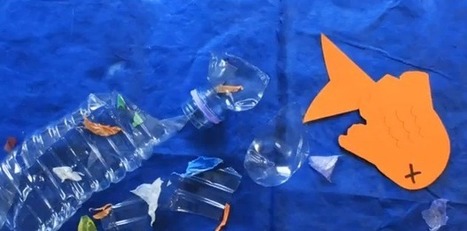
"Entrepreneurial students from University College London are striving to create tropical paradises made from ocean garbage. The aim of the project is to collect tiny pieces of plastic trash floating in the ocean, then stick them all together to create islands of artificial habitat. “After months of planning, we are now rallying to construct a ‘plastic island’ using the principles of synthetic biology. In so doing we hope to provide a solution to one of the world’s major environmental problems – the North Pacific Garbage Patch,” the students write."
http://bit.ly/L3Py0s
|
|
Scooped by
Gerd Moe-Behrens
July 8, 2012 9:23 AM
|
Stable gene targeting in human cells using single-strand oligonucleotides with modified bases by
Rios X, Briggs AW, Christodoulou D, Gorham JM, Seidman JG, Church GM. "Recent advances allow multiplexed genome engineering in E. coli, employing easily designed oligonucleotides to edit multiple loci simultaneously. A similar technology in human cells would greatly expedite functional genomics, both by enhancing our ability to test how individual variants such as single nucleotide polymorphisms (SNPs) are related to specific phenotypes, and potentially allowing simultaneous mutation of multiple loci. However, oligo-mediated targeting of human cells is currently limited by low targeting efficiencies and low survival of modified cells. Using a HeLa-based EGFP-rescue reporter system we show that use of modified base analogs can increase targeting efficiency, in part by avoiding the mismatch repair machinery. We investigate the effects of oligonucleotide toxicity and find a strong correlation between the number of phosphorothioate bonds and toxicity. Stably EGFP-corrected cells were generated at a frequency of ~0.05% with an optimized oligonucleotide design combining modified bases and reduced number of phosphorothioate bonds. We provide evidence from comparative RNA-seq analysis suggesting cellular immunity induced by the oligonucleotides might contribute to the low viability of oligo-corrected cells. Further optimization of this method should allow rapid and scalable genome engineering in human cells."
http://bit.ly/MbNeVW
|
|
Scooped by
Gerd Moe-Behrens
July 7, 2012 6:06 PM
|
|
|
Scooped by
Gerd Moe-Behrens
July 6, 2012 6:36 PM
|
by Nicola Jones
"Three-dimensional printers are opening up new worlds to research.
Christoph Zollikofer witnessed the first birth of a Neanderthal in the modern age. In his anthropology lab at the University of Zurich, Switzerland, in 2007, the skull of a baby Homo neanderthalensis emerged from a photocopier-sized machine after a 20-hour noisy but painless delivery of whirring motors and spitting plastic. This modern miracle had endured a lengthy gestation: it took years for Zollikofer's collaborators to find suitable bones from a Neanderthal neonate, analyse them with a computed-tomography (CT) scanner and digitally stitch them together on the computer screen. The labour, however, was simple: Zollikofer just pressed 'print' on his lab's US$50,000 three-dimensional (3D) printer......"
http://bit.ly/M5Rqff
|
|
Scooped by
Gerd Moe-Behrens
July 6, 2012 6:03 PM
|
The underlying goal of synthetic biology is to make the process of engineering biological systems easier. Recent work has focused on defining and developing standard biological parts.
|


 Scoop.it!