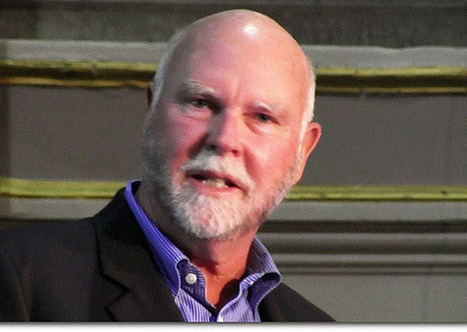
"In this fascinating talk Christopher Bradley shows us that our world is about to change radically thanks to the promise of Synthetic Biology."
"About Christopher Bradley Christopher is a student at NYU Poly, where he studies Computer Science and Biology, two fields that are rapidly converging. He is also the founder of Synthetic Biosystems Inc., a company working on next-generation software applications in the fields of Biotechnology, Healthcare IT, and Synthetic Biology." http://bit.ly/LZjQ9H
"A journal club and author interview about the recent paper "A Whole-Cell Computational Model Predicts Phenotype from Genotype", Karr et al., 2012. Stephen Larson presents a 45 minute overview of the paper and authors Jonathan Karr and Jayodita Sanghvi answer questions and clarify the paper. Organized by the members of OpenWorm.org"
Miller M, Hafner M, Sontag E, Davidsohn N, Subramanian S, Purnick PE, Lauffenburger D, Weiss R.
"Synthetic biology efforts have largely focused on small engineered gene networks, yet understanding how to integrate multiple synthetic modules and interface them with endogenous pathways remains a challenge. Here we present the design, system integration, and analysis of several large scale synthetic gene circuits for artificial tissue homeostasis. Diabetes therapy represents a possible application for engineered homeostasis, where genetically programmed stem cells maintain a steady population of β-cells despite continuous turnover. We develop a new iterative process that incorporates modular design principles with hierarchical performance optimization targeted for environments with uncertainty and incomplete information. We employ theoretical analysis and computational simulations of multicellular reaction/diffusion models to design and understand system behavior, and find that certain features often associated with robustness (e.g., multicellular synchronization and noise attenuation) are actually detrimental for tissue homeostasis. We overcome these problems by engineering a new class of genetic modules for 'synthetic cellular heterogeneity' that function to generate beneficial population diversity. We design two such modules (an asynchronous genetic oscillator and a signaling throttle mechanism), demonstrate their capacity for enhancing robust control, and provide guidance for experimental implementation with various computational techniques. We found that designing modules for synthetic heterogeneity can be complex, and in general requires a framework for non-linear and multifactorial analysis. Consequently, we adapt a 'phenotypic sensitivity analysis' method to determine how functional module behaviors combine to achieve optimal system performance. We ultimately combine this analysis with Bayesian network inference to extract critical, causal relationships between a module's biochemical rate-constants, its high level functional behavior in isolation, and its impact on overall system performance once integrated." http://bit.ly/P3S8nP
Arpino JA, Czapinska H, Piasecka A, Edwards WR, Barker PD, Gajda MJ, Bochtler M, Jones DD.
"The construction of useful functional biomolecular components not currently part of the natural repertoire is central to synthetic biology. A new light capturing ultrahigh efficiency energy transfer protein scaffold has been constructed by coupling the chromophore centres of two normally unrelated proteins; the auto-fluorescent protein EGFP and the heme-binding electron transfer protein cytochrome b562. Using a combinatorial domain insertion strategy, a variant was isolated in which energy transfer was close to 100% as evident by virtually full fluorescence quenching on heme binding. The fluorescence signal of the variant was also sensitive to the reactive oxygen species H2O2, with high signal gain observed due to the release of heme. The structure of holo-protein determined to 2.75 Å resolution revealed that the two domains were arranged side-by-side in a V-shape conformation generating an interchromophore distance of ~17 Å (14 Å edge-to-edge). Critical to domain arrangement is the formation of a molecular pivot point between the two domains caused by differential domain linker sequence lengths and reinforced by predominantly polar interdomain interactions. The retrospective structural analysis has provided an explanation for the basis of the observed highly efficient energy transfer through chromophore arrangement in the directly evolved protein scaffold and provides an insight into the molecular principles by which to design new proteins with coupled functions."
Since the investigation into who we are and where we came from increasingly involves creating a living cell with modern chemicals that may not have existed on early Earth -- should we even continue to call the research origin of life?
"The afternoon after the synthetic biology lecture at NanoLab was BioPlaytime, where we engineered E. coli with genes that produce multicolor pigments, painted with living cells, and designed our own mini-iGEM projects.We engineered bacterial cells with a mixture of DNA coding for multicolor pigments, including fluorescent proteins and the E. chromi genes. Spreading the mixture onto petri dishes created beautiful abstract “paintings” (above).
Touching these cells with a toothpick and spreading them onto empty petri dishes makes invisible paintings that grow overnight. Microbial art like this has a long history, back to the 1930′s when Alexander Fleming–the scientist who discovered penicillin–created “germ paintings” with pigmented bacteria...."
"Synthetic biology relies on engineering concepts such as abstraction, standardization, and decoupling to develop systems that address environmental, clinical, and industrial needs. Recent advances in applying modular design to system development have enabled creation of increasingly complex systems. However, several challenges to module and system development remain, including syntactic errors, semantic errors, parameter mismatches, contextual sensitivity, noise and evolution, and load and stress. To combat these challenges, researchers should develop a framework for describing and reasoning about biological information, design systems with modularity in mind, and investigate how to predictively describe the diverse sources and consequences of metabolic load and stress."
"...There are two big global trends. One is big data. That means in the next ten years we'll produce as many data, or even more data than in the past 1,000 years. The other trend is hyperconnectivity. That means we have networking our world going on at a rapid pace; we're creating an Internet of things. So everyone is talking to everyone else, and everything becomes interdependent. What are the implications of that? Well, first of all, of course, we have wonderful new gadgets like Facebook, for example, so we can network with each other. We have new services, new opportunities, and that is just fantastic..."
"The ‘omics’ era, with its identification of genetic and protein components, has combined with systems biology, which provided insights into network structures, to set the stage for synthetic biology, an emerging interdisciplinary life science that uses engineering principles. By capitalizing on an iterative design cycle that involves molecular and computational biology tools to assemble functional designer devices from a comprehensive catalogue of standardized biological components with predictable functions, synthetic biology has significantly advanced our understanding of complex control dynamics that program living systems. Such insights, collected over the past decade, are priming a variety of synthetic biology-inspired biomedical applications that have the potential to revolutionize drug discovery and production technologies, as well as treatment strategies for infectious diseases and metabolic disorders."
Janna C Nawroth, Hyungsuk Lee, Adam W Feinberg, Crystal M Ripplinger, Megan L McCain, Anna Grosberg, John O Dabiri & Kevin Kit Parker
"Reverse engineering of biological form and function requires hierarchical design over several orders of space and time. Recent advances in the mechanistic understanding of biosynthetic compound materials1, 2, 3, computer-aided design approaches in molecular synthetic biology4, 5 and traditional soft robotics6, 7, and increasing aptitude in generating structural and chemical microenvironments that promote cellular self-organization8, 9, 10 have enhanced the ability to recapitulate such hierarchical architecture in engineered biological systems. Here we combined these capabilities in a systematic design strategy to reverse engineer a muscular pump. We report the construction of a freely swimming jellyfish from chemically dissociated rat tissue and silicone polymer as a proof of concept. The constructs, termed 'medusoids', were designed with computer simulations and experiments to match key determinants of jellyfish propulsion and feeding performance by quantitatively mimicking structural design, stroke kinematics and animal-fluid interactions. The combination of the engineering design algorithm with quantitative benchmarks of physiological performance suggests that our strategy is broadly applicable to reverse engineering of muscular organs or simple life forms that pump to survive."
When Lee Cronin learned about the concept of 3D printers, he had a brilliant idea of his own: why not turn such a device into a universal chemistry set that could make its own drugs?
"To achieve an economical cellulosic ethanol production, a host that can do both cellulosic saccharification and ethanol fermentation is desirable. However, to engineer a non-cellulolytic yeast to be such a host requires synthetic biology techniques to transform multiple enzyme genes into its genome.
Results: A technique, named Promoter-based Gene Assembly and Simultaneous Overexpression (PGASO), that employs overlapping oligonucleotides for recombinatorial assembly of gene cassettes with individual promoters, was developed.
PGASO was applied to engineer Kluyveromycesmarxianus KY3, which is a thermo- and toxin-tolerant yeast. We obtained a recombinant strain, called KR5, that is capable of simultaneously expressing exoglucanase and endoglucanase (both of Trichodermareesei), a beta-glucosidase (from a cow rumen fungus), a neomycin phosphotransferase, and a green fluorescent protein.
High transformation efficiency and accuracy were achieved as ~63% of the transformants was confirmed to be correct. KR5 can utilize beta-glycan, cellobiose or CMC as the sole carbon source for growth and can directly convert cellobiose and beta-glycan to ethanol.
Conclusions: This study provides the first example of multi-gene assembly in a single step in a yeast species other than Saccharomyces cerevisiae...."
Reverse engineering biomolecular systems using -omic data: challenges, progress and opportunities
by Quo CF, Kaddi C, Phan JH, Zollanvari A, Xu M, Wang MD, Alterovitz G.
"Recent advances in high-throughput biotechnologies have led to the rapid growing research interest in reverse engineering of biomolecular systems (REBMS). 'Data-driven' approaches, i.e. data mining, can be used to extract patterns from large volumes of biochemical data at molecular-level resolution while 'design-driven' approaches, i.e. systems modeling, can be used to simulate emergent system properties. Consequently, both data- and design-driven approaches applied to -omic data may lead to novel insights in reverse engineering biological systems that could not be expected before using low-throughput platforms. However, there exist several challenges in this fast growing field of reverse engineering biomolecular systems: (i) to integrate heterogeneous biochemical data for data mining, (ii) to combine top-down and bottom-up approaches for systems modeling and (iii) to validate system models experimentally. In addition to reviewing progress made by the community and opportunities encountered in addressing these challenges, we explore the emerging field of synthetic biology, which is an exciting approach to validate and analyze theoretical system models directly through experimental synthesis, i.e. analysis-by-synthesis. The ultimate goal is to address the present and future challenges in reverse engineering biomolecular systems (REBMS) using integrated workflow of data mining, systems modeling and synthetic biology."
In a study published in the journal Nano Letters, Biodesign immunologist Yung Chang joined forces with her colleagues, including DNA nanotechnology innovator Hao Yan, to develop the first vaccine complex that could be delivered safely and...
"The centromere is a specialized chromosomal region that serves as the assembly site of the kinetochore. At the centromere, CENP-A nucleosomes form part of a chromatin landscape termed centrochromatin. This chromatin environment conveys epigenetic marks regulating kinetochore formation. Recent work sheds light on the intricate relationship between centrochromatin state, the CENP-A assembly pathway and the maintenance of centromere function. Here, we review the emerging picture of how chromatin affects mammalian kinetochore formation. We place particular emphasis on data obtained from Human Artificial Chromosome (HAC) biology and the targeted engineering of centrochromatin using synthetic HACs. We discuss implications of these findings, which indicate that a delicate balance of histone modifications and chromatin state dictates both de novo centromere formation and the maintenance of centromere identity in dividing cell populations."
UC Berkeley joins Harvard and MIT not-for-profit online-learning collaborative; edX broadens free course offerings into public health, computer science and solid-state chemistry; opens registration...
"One of the characteristics of Synthetic Biology is that it often combines mathematical modeling with experimental work. The link between modeling and experiments is carried out by human researchers who have a conceptual understanding of the underlying biological system. At present, there is no method for representing a conceptual description that can be used to connect mathematical models and experimental data, especially sequence annotations, pertaining to the same underlying biological system. One reason for this limitation is that there can exist different mathematical models of the same biological system. In such cases, the same annotation in a DNA sequence would map differently to different models of the same system. In order to enable software support for synthetic biology, a software framework is needed such that it is able to capture a conceptual description of a biological system, including quantitative values, without confining itself to one mathematical model. The novel use of hierarchical modeling inside TinkerCell (www.tinkercell.com) provides one potential software solution for representing a "conceptual diagram" of a biological system. The conceptual diagram does not assume any underlying model. Rather, the diagram is mapped automatically to one of several models. The diagram can then contain information relevant for both modeling and experimental work. Computer-aided design (CAD) can be very useful to synthetic biology. CAD allows engineers to spend more effort at the design stage and less at the construction stage by automatically performing many tasks that are currently performed by human researchers. The ability to automatically link models and experimental results will be one step in the development of a practical CAD systems for synthetic biology."
Building Synthetic Systems to Learn Nature's Design Principles
by Davidson EA, Windram OP, Bayer TS.
"Evolution undoubtedly shapes the architecture of biological systems, yet it is unclear which features of regulatory, metabolic, and signalling circuits have adaptive significance and how the architecture of these circuits constrains or promotes evolutionary processes, such as adaptation to new environments. Experimentally rewiring circuits using genetic engineering and constructing novel circuits in living cells allows direct testing and validation of hypotheses in evolutionary systems biology. Building synthetic genetic systems enables researchers to explore regions of the genotype-phenotype and fitness landscapes that may be inaccessible to more traditional analysis. Here, we review the strategies that allow synthetic systems to be constructed and how evolutionary design principles have advanced these technologies. We also describe how building small genetic regulatory systems can provide insight on the trade-offs that constrain adaptation and can shape the structure of biological networks. In the future, the possibility of building biology de novo at the genome scale means that increasingly sophisticated models of the evolutionary dynamics of networks can be proposed and validated, and will allow us to recreate ancestral systems in the lab. This interplay between evolutionary systems theory and engineering design may illuminate the fundamental limits of performance, robustness, and evolvability of living systems."
Presented by Alok Jha and produced by Jason Phipps
"Alok Jha meets the celebrated scientist Craig Venter, one of the world's leading biologists. Dr Venter has made numerous contributions to genomic research and is a pioneer in the emerging field of synthetic biology. In May 2010, he made headlines around the world after creating what he called "the world's first synthetic life form" by putting together an artificial chromosome and inserting it into a single-celled bacterium.
Venter was the keynote speaker at this year's European Science Open Forum at which he updated a very influential lecture in the history of biology. In 1943, the physicist Erwin Schrödinger gave a series of talks at Trinity College in Dublin entitled "What Is Life?". These were published a year later as a book and focused on an important question posed by Schrödinger: "How can the events in space and time which take place within the spatial boundary of a living organism be accounted for by physics and chemistry?"
Schrödinger's lecture inspired James Watson and Francis Crick in their work unravelling the double-helix structure of DNA, and this discovery in turn kickstarted the field of molecular biology.
Venter's talk was titled "What is Life – a 21st century perspective" and afterwards he spoke to Alok about his lecture and the expanding science of synthetic biology."
"Learning from the Jellyfish: Squishy pumps for biomedical and engineering applications
Most people know jellyfish as a painful nuisance, a beautiful aquarium exhibit or--less commonly--in the form of a marinated snack. Now a team of researchers at Caltech and Harvard University have taken yet another perspective on this simple invertebrate; for them, it constitutes nature's prototype of a flexible, muscle-powered pump that could be used for medicalapplications and soft robotics. Graduate student Janna Nawroth worked with John Dabiri, professor of aeronautics and bioengineering at Caltech, and Kit Parker, Tarr Family Professor of Bioengineering and Applied Physics at Harvard, to elucidate how the jellyfish body creates flows and eddies useful for pumping, propulsion, and feeding. In this video, the teamexplains how and why they developed a technology that turns silicone rubber and lab-grown muscle tissue into jellyfish-like fluid pumps and swimmers--advancing the design of muscular pumps for biomedical applications.
Video by Janna Nawroth Produced by Caltech and Harvard University" http://bit.ly/QsVeYB
To get content containing either thought or leadership enter:
To get content containing both thought and leadership enter:
To get content containing the expression thought leadership enter:
You can enter several keywords and you can refine them whenever you want. Our suggestion engine uses more signals but entering a few keywords here will rapidly give you great content to curate.


 Your new post is loading...