Your new post is loading...

|
Scooped by
Gerd Moe-Behrens
February 10, 2018 6:23 PM
|
Toward programmed therapeutics
Advances in synthetic biology are enabling the development of new gene and cell therapies. Kitada et al. review recent successes in areas such as cancer immunotherapy and stem cell therapy, point out the limitations of current approaches, and describe prospects for using synthetic biology to overcome these challenges. Broader adoption of these therapies requires precise, context-specific control over cellular behavior. Gene circuits can be built to give sophisticated control over cellular behaviors so that therapeutic functions can, for example, be programmed to activate in response to disease biomarkers.
|
|
Scooped by
Gerd Moe-Behrens
February 8, 2018 8:05 AM
|
Quantitative modeling of gene circuits is fundamentally important to synthetic biology, as it offers the potential to transform circuit engineering from trial-and-error construction to rational design and, hence, facilitates the advance of the field. Currently, typical models regard gene circuits as isolated entities and focus only on the biochemical processes within the circuits. However, such a standard paradigm is getting challenged by increasing experimental evidence suggesting that circuits and their host are intimately connected, and their interactions can potentially impact circuit behaviors. Here we systematically examined the roles of circuit-host coupling in shaping circuit dynamics by using a self-activating gene switch as a model circuit. Through a combination of deterministic modeling, stochastic simulation, and Fokker-Planck equation formalism, we found that circuit-host coupling alters switch behaviors across multiple scales. At the single-cell level, it slows the switch dynamics in the high protein production regime and enlarges the difference between stable steady-state values. At the population level, it favors cells with low protein production through differential growth amplification. Together, the two-level coupling effects induce both quantitative and qualitative modulations of the switch, with the primary component of the effects determined by the circuit's architectural parameters. This study illustrates the complexity and importance of circuit-host coupling in modulating circuit behaviors, demonstrating the need for a new paradigm-integrated modeling of the circuit-host system-for quantitative understanding of engineered gene networks.
|
|
Scooped by
Gerd Moe-Behrens
February 2, 2018 9:19 AM
|
Synthetic biology has enabled the creation of biological reconfigurable circuits, which perform multiple functions monopolizing a single biological machine; Such a system can switch between different behaviours in response to environmental cues. Previous work has demonstrated switchable dynamical behaviour employing reconfigurable logic gate genetic networks. Here we describe a computational framework for reconfigurable circuits in E.coli using combinations of logic gates, and also propose the biological implementation. The proposed system is an oscillator that can exhibit tunability of frequency and amplitude of oscillations. Further, the frequency of operation can be changed optogenetically. Insilico analysis revealed that two-component light systems, in response to light within a frequency range, can be used for modulating the frequency of the oscillator or stopping the oscillations altogether. Computational modelling reveals that mixing two colonies of E.coli oscillating at different frequencies generates spatial beat patterns. Further, we show that these oscillations more robustly respond to input perturbations compared to the base oscillator, to which the proposed oscillator is a modification. Compared to the base oscillator, the proposed system shows faster synchronization in a colony of cells for a larger region of the parameter space. Additionally, the proposed oscillator also exhibits lesser synchronization error in the transient period after input perturbations. This provides a strong basis for the construction of synthetic reconfigurable circuits in bacteria and other organisms, which can be scaled up to perform functions in the field of time dependent drug delivery with tunable dosages, and sets the stage for further development of circuits with synchronized population level behaviour.
|
|
Scooped by
Gerd Moe-Behrens
January 31, 2018 8:14 AM
|
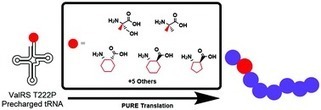
The ability to incorporate non-canonical amino acids (ncAA) using translation offers researchers the ability to extend the functionality of proteins and peptides for many applications including synthetic biology, biophysical and structural studies, and discovery of novel ligands. Here we describe the high promiscuity of an editing-deficient valine-tRNA synthetase (ValRS T222P). Using this enzyme, we demonstrate ribosomal translation of 11 ncAAs including those with novel side chains, α,α-disubstitutions, and cyclic β-amino acids.
|
|
Scooped by
Gerd Moe-Behrens
January 31, 2018 8:04 AM
|
In vivo biosensors can recognize and respond to specific cellular stimuli. In recent years, biosensors have been increasingly used in metabolic engineering and synthetic biology, because they can be implemented in synthetic circuits to control the expression of reporter genes in response to specific cellular stimuli, such as a certain metabolite or a change in pH. There are many types of natural sensing devices, which can be generally divided into two main categories: protein-based and nucleic acid-based. Both can be obtained either by directly mining from natural genetic components or by engineering the existing genetic components for novel specificity or improved characteristics. A wide range of new technologies have enabled rapid engineering and discovery of new biosensors, which are paving the way for a new era of biotechnological progress. Here, we review recent advances in the design, optimization, and applications of in vivo biosensors in the field of metabolic engineering and synthetic biology.
|
|
Scooped by
Gerd Moe-Behrens
January 30, 2018 1:20 PM
|
Antibiotic resistance represents one of the most challenging global health threats in our society. Antimicrobial peptides (AMPs) represent promising alternatives to conventional antibiotics for the treatment of drug-resistant infections. However, they are limited by their high manufacturing cost. Engineering living organisms represents a promising approach to produce such molecules in an inexpensive manner. Here, we genetically modified the yeast Pichia pastoris to produce the prototypical AMP apidaecin Ia using a fusion protein approach that leverages the beneficial properties (e.g., stability) of human serum albumin. The peptide was successfully isolated from the fusion protein construct, purified, and demonstrated to have bioactivity against Escherichia coli. To demonstrate this approach as a manufacturing solution to AMPs, we scaled-up production in bioreactors to generate high AMP yields. We envision that this system could lead to improved AMP biomanufacturing platforms.
|
|
Scooped by
Gerd Moe-Behrens
January 30, 2018 7:18 AM
|
After the discovery that computing chips modelled after neurons can process information faster than the human brain, there is new potential for more natural machine-learning software.
|
|
Scooped by
Gerd Moe-Behrens
January 25, 2018 5:19 PM
|
Human induced pluripotent stem cells (hiPSCs) can be used to mass produce surrogates of human tissues, enabling new advances in drug screening, disease modeling, and cell therapy. Recent developments in clustered regularly interspaced short palindromic repeats (CRISPR)/Cas9 genome editing technology use homology-directed repair (HDR) to efficiently generate custom hiPSC lines harboring a variety of genomic insertions and deletions. Thus, hiPSCs that encode an endogenous protein fused to a fluorescent reporter protein can be rapidly created by employing CRISPR/Cas9 genome editing, enhancing HDR efficiency and optimizing homology arm length. These fluorescently tagged hiPSCs can be used to visualize protein function and dynamics in real time as cells proliferate and differentiate. Given that nearly any intracellular protein can be fluorescently tagged, this system serves as a powerful tool to facilitate new discoveries across many biological disciplines. In this unit, we present protocols for the design, generation, and monoclonal expansion of genetically customized hiPSCs encoding fluorescently tagged endogenous proteins.
|
|
Scooped by
Gerd Moe-Behrens
January 18, 2018 3:46 PM
|
Large-scale gene synthesis in tiny droplets
Gene synthesis technology is important for functional characterization of DNA sequences and for the development of synthetic biology. However, current methods are limited by their low scalability and high cost. Plesa et al. developed a gene synthesis method, DropSynth, which uses barcoded beads to concentrate oligos and subsequently assemble them into synthetic genes within picoliter emulsion droplets. DropSynth allows generation of large libraries of thousands of genes and functional testing of all possible mutations of a particular sequence.
|
|
Scooped by
Gerd Moe-Behrens
January 16, 2018 3:16 PM
|
Recent developments in bottom-up synthetic biology (e.g., lipid vesicle technology integrated with cell-free protein expression systems) allow the generation of semi-synthetic minimal cells (in short, synthetic cells, SCs) endowed with some distinctive capacities of natural cells. In particular, such approaches provide technological tools and conceptual frameworks for the design and engineering of programmable SCs capable of communicating with natural cells by exchanging chemical signals. Here we describe the generation of giant vesicle-based SCs which, via gene expression, synthesize in their aqueous lumen an enzyme that in turn produces a chemical signal. The latter is a small molecule, which is passively released in the medium and then perceived by the bacterium Pseudomonas aeruginosa, demonstrating that SCs and bacteria can communicate chemically. The results pave the way to a novel basic and applied research area where synthetic cells can communicate with natural cells, for example for exploring minimal cognition, developing chemical information technologies, and producing smart and programmable drug-producing/drug-delivery systems.
|
|
Scooped by
Gerd Moe-Behrens
January 13, 2018 11:58 AM
|
The SynBioHub repository (synbiohub.org) is an open-source software project which facilitates the sharing of information about engineered biological systems. SynBioHub provides computational access for software and data integration, and a graphical user interface that enables users to search for and share designs in a Web browser. By connecting to relevant repositories (e.g. the iGEM repository, JBEI ICE, and other instances of SynBioHub), the software allows users to browse, upload, and download data in various standard formats, regardless of their location or representation. SynBioHub also provides a central reference point for other resources to link to, delivering design information in a standardized format using the Synthetic Biology Open Language (SBOL). The adoption and use of SynBioHub, a community-driven effort, has the potential to overcome the reproducibility challenge across laboratories by helping to address the current lack of information about published designs.
|
|
Scooped by
Gerd Moe-Behrens
January 11, 2018 3:39 PM
|
In synthetic biology, researchers assemble biological components in new ways to produce systems with practical applications. One of these practical applications is control of the flow of genetic information (from nucleic acid to protein), a.k.a. gene regulation. Regulation is critical for optimizing protein (and therefore activity) levels and the subsequent levels of metabolites and other cellular properties. The central dogma of molecular biology posits that information flow commences with transcription, and accordingly, regulatory tools targeting transcription have received the most attention in synthetic biology. In this mini-review, we highlight many past successes and summarize the lessons learned in developing tools for controlling transcription. In particular, we focus on engineering studies where promoters and transcription terminators (cis-factors) were directly engineered and/or isolated from DNA libraries. We also review several well-characterized transcription regulators (trans-factors), giving examples of how cis- and trans-acting factors have been combined to create digital and analogue switches for regulating transcription in response to various signals. Last, we provide examples of how engineered transcription control systems have been used in metabolic engineering and more complicated genetic circuits. While most of our mini-review focuses on the well-characterized bacterium Escherichia coli, we also provide several examples of the use of transcription control engineering in non-model organisms. Similar approaches have been applied outside the bacterial kingdom indicating that the lessons learned from bacterial studies may be generalized for other organisms.
|
|
Scooped by
Gerd Moe-Behrens
January 9, 2018 3:42 PM
|
One of the long-term goals of synthetic biology is to develop designable genetic parts with predictable behaviors that can be utilized to implement diverse cellular functions. The discovery of non-coding RNAs and their importance in cellular processing have rapidly attracted researchers’ attention towards designing functional non-coding RNA molecules. These synthetic non-coding RNAs have simple design principles governed by Watson-Crick base pairing, but exhibit increasingly complex functions. Importantly, due to their specific and modular behaviors, synthetic non-coding RNAs have been widely adopted to modulate transcription and translation of target genes. In this review, we summarize various design rules and strategies employed to engineer synthetic non-coding RNAs. Specifically, we discuss how RNA molecules can be transformed into powerful regulators and utilized to control target gene expression. With the establishment of generalizable non-coding RNA design rules, the research community will shift its focus to RNA regulators from protein regulators.
|
|
|
Scooped by
Gerd Moe-Behrens
February 10, 2018 3:54 PM
|
Synthetic biology applies the principles of engineering to biology in order to create biological functionalities not seen before in nature. One of the most exciting applications of synthetic biology is the design of new organisms with the ability to produce valuable chemicals including pharmaceuticals and biomaterials in a greener; sustainable fashion. Selecting the right enzymes to catalyze each reaction step in order to produce a desired target compound is, however, not trivial. Here, we present Selenzyme, a free online enzyme selection tool for metabolic pathway design. The user is guided through several decision steps in order to shortlist the best candidates for a given pathway step. The tool graphically presents key information about enzymes based on existing databases and tools such as: similarity of sequences and of catalyzed reactions; phylogenetic distance between source organism and intended host species; multiple alignment highlighting conserved regions, predicted catalytic site, and active regions; and relevant properties such as predicted solubility and transmembrane regions. Selenzyme provides bespoke sequence selection for automated workflows in biofoundries.
AVAILABILITY AND IMPLEMENTATION:
The tool is integrated as part of the pathway design stage into the design-build-test-learn SYNBIOCHEM pipeline. The Selenzyme web server is available at http://selenzyme.synbiochem.co.uk.
|
|
Scooped by
Gerd Moe-Behrens
February 4, 2018 3:37 PM
|
Computation by natural systems Theo Murphy Meeting The Royal Society
|
|
Scooped by
Gerd Moe-Behrens
February 2, 2018 9:16 AM
|
In this review, we have summarized the research effort into the development of unnatural base pairs beyond standard Watson-Crick (WC) base pairs for synthetic biology. Prior to introducing our research results, we present investigations by four outstanding groups in the field. Their research results demonstrate the importance of shape complementarity and stacking ability as well as hydrogen-bonding (H-bonding) patterns for unnatural base pairs. On the basis of this research background, we developed unnatural base pairs consisting of imidazo[5',4':4.5]pyrido[2,3-d]pyrimidines and 1,8-naphthyridines, i.e., Im : Na pairs. Since Im bases are recognized as ring-expanded purines and Na bases are recognized as ring-expanded pyrimidines, Im : Na pairs are expected to satisfy the criteria of shape complementarity and enhanced stacking ability. In addition, these pairs have four non-canonical H-bonds. Because of these preferable properties, ImNN : NaOO, one of the Im : Na pairs, is recognized as a complementary base pair in not only single nucleotide insertion, but also the PCR.
|
|
Scooped by
Gerd Moe-Behrens
January 31, 2018 8:08 AM
|
Advances in metabolic engineering have led to the synthesis of a wide variety of valuable chemicals in microorganisms. The key to commercializing these processes is the improvement of titer, productivity, yield, and robustness. Traditional approaches to enhancing production use the "push-pull-block" strategy that modulates enzyme expression under static control. However, strains are often optimized for specific laboratory set-up and are sensitive to environmental fluctuations. Exposure to sub-optimal growth conditions during large-scale fermentation often reduces their production capacity. Moreover, static control of engineered pathways may imbalance cofactors or cause the accumulation of toxic intermediates, which imposes burden on the host and results in decreased production. To overcome these problems, the last decade has witnessed the emergence of a new technology that uses synthetic regulation to control heterologous pathways dynamically, in ways akin to regulatory networks found in nature. Here, we review natural metabolic control strategies and recent developments in how they inspire the engineering of dynamically regulated pathways. We further discuss the challenges of designing and engineering dynamic control and highlight how model-based design can provide a powerful formalism to engineer dynamic control circuits, which together with the tools of synthetic biology, can work to enhance microbial production.
|
|
Scooped by
Gerd Moe-Behrens
January 30, 2018 1:24 PM
|
Ribosome queuing is a fundamental phenomenon suggested to be related to topics such as genome evolution, synthetic biology, gene expression regulation, intracellular biophysics, and more. However, this phenomenon hasn't been quantified yet at a genomic level. Nevertheless, methodologies for studying translation (e.g. ribosome footprints) are usually calibrated to capture only single ribosome protected footprints (mRPFs) and thus limited in their ability to detect ribosome queuing. On the other hand, most of the models in the field assume and analyze a certain level of queuing. Here we present an experimental-computational approach for studying ribosome queuing based on sequencing of RNA footprints extracted from pairs of ribosomes (dRPFs) using a modified ribosome profiling protocol. We combine our approach with traditional ribosome profiling to generate a detailed profile of ribosome traffic. The data are analyzed using computational models of translation dynamics. The approach was implemented on the Saccharomyces cerevisiae transcriptome. Our data shows that ribosome queuing is more frequent than previously thought: the measured ratio of ribosomes within dRPFs to mRPFs is 0.2-0.35, suggesting that at least one to five translating ribosomes is in a traffic jam; these queued ribosomes cannot be captured by traditional methods. We found that specific regions are enriched with queued ribosomes, such as the 5'-end of ORFs, and regions upstream to mRPF peaks, among others. While queuing is related to higher density of ribosomes on the transcript (characteristic of highly translated genes), we report cases where traffic jams are relatively more severe in lowly expressed genes and possibly even selected for. In addition, our analysis demonstrates that higher adaptation of the coding region to the intracellular tRNA levels and longer genes are associated with lower queuing levels. Our analysis also suggests that the Saccharomyces cerevisiae transcriptome undergoes selection for eliminating traffic jams. Thus, our proposed approach is an essential tool for high resolution analysis of ribosome traffic during mRNA translation and understanding its evolution.
|
|
Scooped by
Gerd Moe-Behrens
January 30, 2018 7:19 AM
|
I wrote about engineered probiotics at the beginning of 2017, and the field continued throughout 2017 with more papers and startup news using engineered
|
|
Scooped by
Gerd Moe-Behrens
January 28, 2018 4:55 PM
|
A new electronic synapse may improve the ability of artificial brains to respond to external inputs and make decisions much like humans do.
|
|
Scooped by
Gerd Moe-Behrens
January 18, 2018 5:11 PM
|
Generation of induced pluripotent stem cells typically requires the ectopic expression of transcription factors to reactivate the pluripotency network. However, it remains largely unclear what remodeling events on endogenous chromatin trigger reprogramming toward induced pluripotent stem cells (iPSCs). Toward this end, we employed CRISPR activation to precisely target and remodel endogenous gene loci of Oct4 and Sox2. Interestingly, we found that single-locus targeting of Sox2 was sufficient to remodel and activate Sox2, which was followed by the induction of other pluripotent genes and establishment of the pluripotency network. Simultaneous remodeling of the Oct4 promoter and enhancer also triggered reprogramming. Authentic pluripotent cell lines were established in both cases. Finally, we showed that targeted manipulation of histone acetylation at the Oct4 gene locus could also initiate reprogramming. Our study generated authentic iPSCs with CRISPR activation through precise epigenetic remodeling of endogenous loci and shed light on how targeted chromatin remodeling triggers pluripotency induction.
|
|
Scooped by
Gerd Moe-Behrens
January 18, 2018 3:37 PM
|
The use of dynamic, self-assembled DNA nanostructures in the context of nanorobotics requires fast and reliable actuation mechanisms. We therefore created a 55-nanometer–by–55-nanometer DNA-based molecular platform with an integrated robotic arm of length 25 nanometers, which can be extended to more than 400 nanometers and actuated with externally applied electrical fields. Precise, computer-controlled switching of the arm between arbitrary positions on the platform can be achieved within milliseconds, as demonstrated with single-pair Förster resonance energy transfer experiments and fluorescence microscopy. The arm can be used for electrically driven transport of molecules or nanoparticles over tens of nanometers, which is useful for the control of photonic and plasmonic processes. Application of piconewton forces by the robot arm is demonstrated in force-induced DNA duplex melting experiments.
|
|
Scooped by
Gerd Moe-Behrens
January 15, 2018 3:23 PM
|
Within five years, the CRISPR-Cas system has emerged as the dominating tool for genome engineering, while also changing the speed and efficiency of metabolic engineering in conventional (Saccharomyces cerevisiae and Schizosaccharomyces pombe) and non-conventional (Yarrowia lipolytica, Pichia pastoris syn. Komagataella phaffii, Kluyveromyces lactis, Candida albicans and C. glabrata) yeasts.
Especially in S. cerevisiae, an extensive toolbox of advanced CRISPR-related applications has been established, including crisprTFs and gene drives. The comparison of innovative CRISPR-Cas expression strategies in yeasts presented here may also serve as guideline to implement and refine CRISPR-Cas systems for highly efficient genome editing in other eukaryotic organisms.
|
|
Scooped by
Gerd Moe-Behrens
January 13, 2018 11:47 AM
|
Limited treatment options are available for individuals with hereditary hearing loss. CRISPR-Cas9 editing can be used as molecular scissors that snip out mutant DNA sequences to permit gene repair. Gao et al. asked whether the Cas9 cutting enzyme could be used to correct genetic deafness caused by dominant mutations in the Tmc1 gene. The researchers performed a lipid-mediated delivery of Cas9-RNA complexes to the inner ear of neonatal mice. They were able edit the mutant Tmc1 gene within the cochlear hair cells that sense acoustic vibrations. Mice showed signs of improved cochlear function and hearing restoration.
|
|
Scooped by
Gerd Moe-Behrens
January 11, 2018 3:36 PM
|
The SynBioHub repository (synbiohub.org) is an open-source software project which facilitates the sharing of information about engineered biological systems. SynBioHub provides computational access for software and data integration, and a graphical user interface that enables users to search for and share designs in a Web browser. By connecting to relevant repositories (e.g. the iGEM repository, JBEI ICE, and other instances of SynBioHub), the software allows users to browse, upload, and download data in various standard formats, regardless of their location or representation. SynBioHub also provides a central reference point for other resources to link to, delivering design information in a standardized format using the Synthetic Biology Open Language (SBOL). The adoption and use of SynBioHub, a community-driven effort, has the potential to overcome the reproducibility challenge across laboratories by helping to address the current lack of information about published designs.
|


 Scoop.it!