Your new post is loading...

|
Scooped by
Gerd Moe-Behrens
September 27, 2012 5:53 PM
|
By
MIT "Astrobiologists have recreated 500 million year-old bacteria then watched them evolve. The plan? To look for universal laws of biological evolution
Biology is changing so rapidly and fundamentally that it's hard to keep track of the revolutionary transformations that are afoot. Here's one of them. Synthetic biology is the design and construction of biological systems not found in nature. This is engineering-- using molecular building blocks to create new biomolecules, such as genes. Here's another technique. By comparing the DNA of related species, biologists can work out the DNA structure of their common ancestors. Then, using synthetic biology, they can reconstruct these sequences in the lab. In this way, biologists have begun to resurrect all kinds of ancient biomolecules, including hormone receptors and even ancient molecular machines. Today, Betül Kaçar and Eric Gaucher at the Georgia Institute of Technology in Atlanta reveal that they have combined these techniques to perform a remarkable experiment. These guys have reconstructed an ancient gene from an ancestor of the bacterial organism E coli that lived some 500 million years ago. They've then replaced the modern version of this gene with the ancient one in a population of E coli....." http://bit.ly/NTU33R
#syntheticbiology #synbio
|
|
Scooped by
Gerd Moe-Behrens
September 26, 2012 6:57 PM
|
MIT team finds way to manipulate and measure magnetic particles without contact, potentially enabling multiple medical tests on a tiny device. by
David L. Chandler "If you throw a ball underwater, you’ll find that the smaller it is, the faster it moves: A larger cross-section greatly increases the water’s resistance. Now, a team of MIT researchers has figured out a way to use this basic principle, on a microscopic scale, to carry out biomedical tests that could eventually lead to fast, compact and versatile medical-testing devices. The results, based on work by graduate student Elizabeth Rapoport and assistant professor Geoffrey Beach, of MIT’s Department of Materials Science and Engineering (DMSE), are described in a paper published in the journal Lab on a Chip. MIT graduate student Daniel Montana ’11 also contributed to the research as an undergraduate. The balls used here are microscopic magnetic beads that can be “decorated” with biomolecules such as antibodies that cause them to bind to specific proteins or cells; such beads are widely used in biomedical research. The key to this new work was finding a way to capture individual beads and set them oscillating by applying a variable magnetic field. The rate of their oscillation can then be measured to assess the size of the beads." http://bit.ly/PGLwQe
|
|
Scooped by
Gerd Moe-Behrens
September 26, 2012 6:32 PM
|
"Much like the checkout clerk uses a machine that scans the barcodes on packages to identify what customers bought at the store, scientists use powerful microscopes and their own kinds of barcodes to help them identify various parts of a cell, or types of molecules at a disease site. But their barcodes only come in a handful of "styles," limiting the number of objects scientists can study in a cell sample at any one time. Researchers at the Wyss Institute for Biologically Inspired Engineering at Harvard University have created a new kind of barcode that could come in an almost limitless array of styles -- with the potential to enable scientists to gather vastly more vital information, at one given time, than ever before. The method harnesses the natural ability of DNA to self-assemble, as reported today in the online issue of Nature Chemistry....."
|
|
Scooped by
Gerd Moe-Behrens
September 26, 2012 6:08 PM
|
Have a look to this great presentation of how the future with Synthetic Biology might look. *Body monitoring Tattoo* http://bit.ly/SRJdIr
|
|
Scooped by
Gerd Moe-Behrens
September 25, 2012 5:53 PM
|
ArtScience Prize for the 2012-13 Synthetic Biology Program, please fill out this application as soon as possible http://bit.ly/PWUclf
|
|
Scooped by
Gerd Moe-Behrens
September 25, 2012 4:38 PM
|
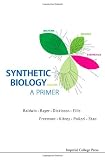
Synthetic Biology: A Primer [Paul S. Freemont,Richard I. Kitney] on Amazon.com. *FREE* super saver shipping on qualifying offers.
|
|
Scooped by
Gerd Moe-Behrens
September 24, 2012 6:04 PM
|
by Katherine A. Riccione, Robert P. Smith, Anna J. Lee, and Lingchong You "The survival of cells and organisms requires proper responses to environmental signals. These responses are governed by cellular networks, which serve to process diverse environmental cues. Biological networks often contain recurring network topologies called “motifs”. It has been recognized that the study of such motifs allows one to predict the response of a biological network and thus cellular behavior. However, studying a single motif in complete isolation of all other network motifs in a natural setting is difficult. Synthetic biology has emerged as a powerful approach to understanding the dynamic properties of network motifs. In addition to testing existing theoretical predictions, construction and analysis of synthetic gene circuits has led to the discovery of novel motif dynamics, such as how the combination of simple motifs can lead to autonomous dynamics or how noise in transcription and translation can affect the dynamics of a motif. Here, we review developments in synthetic biology as they pertain to increasing our understanding of cellular information processing. We highlight several types of dynamic behaviors that diverse motifs can generate, including the control of input/output responses, the generation of autonomous spatial and temporal dynamics, as well as the influence of noise in motif dynamics and cellular behavior."
http://bit.ly/Ph91Os
|
|
Scooped by
Gerd Moe-Behrens
September 24, 2012 5:41 PM
|
Jackson, M and Catts, O and Ginsberg, D and Calvert, J and Ward, PJ "Synthetic Biology is an emerging area of research, which applies engineering principles to biology in order to design and fabricate new biological systems that do not exist in the natural world. It promises new drugs and materials for medical applications, and new routes to make biofuels and chemicals. It could have profound implications for the way we perceive and use living things. Synthesis: synthetic biology in art & society is an intensive exchange laboratory for artists, scientists and other disciplines to collaboratively explore synthetic biology's ideas and techniques, and its social and cultural implications.Participants were selected through an international open call. Two public evening events during the week will broaden the exchange with the public." http://bit.ly/NNm8tu
|
|
Scooped by
Gerd Moe-Behrens
September 24, 2012 4:40 PM
|
By Daphne Koller "Almost exactly a year ago, Stanford University took a bold step. It opened up an online version of three of its most popular Computer Science classes to everyone around the world, for free.
Within weeks, close to 100,000 students or more were enrolled in each of these courses. Cumulatively, tens of thousands of students completed these courses and received a statement of accomplishment from the instructor. This was a real course experience. It started on a given day, and the students would watch videos weekly and do homework assignments. These were real homework assignments for a real grade, with a real deadline.
One of those classes was taught by my co-founder, Andrew Ng. In his on-campus Stanford class, he reaches 400 students a year. It would have taken him 250 years to reach the number of students he reached through that one online course.
The Stanford endeavor showed what is possible. It showed that it is possible to produce a high quality learning experience from some of the top instructors in the world at a very low cost...." http://bit.ly/PSqvSf
|
|
Scooped by
Gerd Moe-Behrens
September 23, 2012 5:30 PM
|
Molecular Machines | MIT Media Lab "*GeneFab*
Bram Sterling, Kelly Chang, Joseph M. Jacobson, Peter Carr, Brian Chow, David Sun Kong, Michael Oh and Sam Hwang
What would you like to "build with biology"? The goal of the GeneFab projects is to develop technology for the rapid fabrication of large DNA molecules, with composition specified directly by the user. Our intent is to facilitate the field of Synthetic Biology as it moves from a focus on single genes to designing complete biochemical pathways, genetic networks, and more complex systems. Sub-projects include: DNA error correction, microfluidics for high throughput gene synthesis, and genome-scale engineering (rE. coli). *NanoFab*
Kimin Jun, Jaebum Joo and Joseph M. Jacobson
We are developing techniques to use the focused ion beam to program the fabrication of nanowires based nanostructures and logic devices.
Synthetic Photosynthesis
Kimin Jun" http://bit.ly/SnguQK
|
|
Scooped by
Gerd Moe-Behrens
September 22, 2012 7:10 PM
|
A Taiwanese research team has reported a breakthrough in carbon dioxide (CO2) capture biotechnology that it hopes to contribute to the reduction of greenhouse gas emissions in an efficient and environmentally friendly way.
|
|
Scooped by
Gerd Moe-Behrens
September 22, 2012 6:57 PM
|
by
Murphy SV, Atala A. "Often the only treatment available for patients suffering from diseased and injured organs is whole organ transplant. However, there is a severe shortage of donor organs for transplantation. The goal of organ engineering is to construct biological substitutes that will restore and maintain normal function in diseased and injured tissues. Recent progress in stem cell biology, biomaterials, and processes such as organ decellularization and electrospinning has resulted in the generation of bioengineered blood vessels, heart valves, livers, kidneys, bladders, and airways. Future advances that may have a significant impact for the field include safe methods to reprogram a patient's own cells to directly differentiate into functional replacement cell types. The subsequent combination of these cells with natural, synthetic and/or decellularized organ materials to generate functional tissue substitutes is a real possibility. This essay reviews the current progress, developments, and challenges facing researchers in their goal to create replacement tissues and organs for patients."
http://1.usa.gov/UqW5uP
|
|
Scooped by
Gerd Moe-Behrens
September 21, 2012 6:08 PM
|
*ACS Synthetic Biology*
September 21st *Compartment Size and Multimeric Protein Synthesis*
All chemical reactions in the cell take place inside a compartment, whose volume is typically in the range of a micro- to femtoliter. While the volume of the compartment is a fundamental physical parameter in such reactions and can affect intracompartmental reaction kinetics, there have been few studies to elucidate the effects of changes in volume. *Test Tube Synthesis of the Bacteriophage T7*
The bottom-up synthesis of living systems in the laboratory is a standing challenge to biology, chemistry, and physics. Although many experimental approaches to synthesize complex biological systems in vitro have been proposed, there has been no demonstration to date of natural genome-sized DNA programs being entirely replicated and expressed in vitro into a self-assembled functioning whole. *Evolutionary Stability of a Refactored Phage Genome*
When engineering a genetic system, only those genetic elements whose functional properties are entirely known are used. This enables elements from diverse genetic backgrounds to be put together to create new pathways and functions. *Unsaturated Lipidoids for Efficient Intracellular Gene Delivery*
Intracellular gene delivery or gene therapy has long been viewed as a method of treatment for genetic disease. However, there is a lack of safe and efficient gene delivery vehicles. *Engineering Functional DNA Translocation*
The “portal connector” of bacteriophage viruses is a pore-like structure that allows for DNA translocation. The high specificity of this connector along with its well-defined structure makes it attractive for use as a DNA-nanopore in synthetic tools. *Synthetic Biology to Explain Cellular Information Processing*
Appropriate responses to environmental signals are essential for the survival of all cells and organisms. These responses are regulated by cellular networks that process these environmental cues. http://bit.ly/Unxym5
|
|
|
Scooped by
Gerd Moe-Behrens
September 26, 2012 6:59 PM
|
Director of MIT's Office of Educational Innovation and Technology (OEIT) discusses some of the key concepts propelling the open education movement. http://bit.ly/QXSbog
|
|
Scooped by
Gerd Moe-Behrens
September 26, 2012 6:51 PM
|
‘Future of Education’ symposium, held before the inauguration of President L. Rafael Reif, examines the evolution of teaching and learning.
|
|
Scooped by
Gerd Moe-Behrens
September 26, 2012 6:15 PM
|
Oct 30 San Francisco George M. Church: Regenesis — How Synthetic Biology Will Reinvent Nature and Ourselves http://bit.ly/Q1aLMS
|
|
Scooped by
Gerd Moe-Behrens
September 26, 2012 5:52 PM
|
Guest blog post by NRP iGEM Team at University of East Anglia, UK During the summer a team of seven undergraduate students from the University of East Anglia (UEA) carried out a summer research pro...
|
|
Scooped by
Gerd Moe-Behrens
September 25, 2012 5:02 PM
|
by Eric E Schadt "Thirty years ago, it was relatively easy to protect one's privacy and remain anonymous. Few computerized systems existed to store our personal information, the internet was so primitive that most were not even aware it existed, and only a few thousand individuals were privileged enough to own a handheld cellular phone. Fast forward to our current day and life—everything has changed. Rapid electronic transactions among individuals and between individuals and entire communities occur on an unprecedented scale, our life stream is continuously digitized and archived—GPS positioning information, cell phone calls, text messages, credit card purchases, e-mails, online social network chatter and even our electronic medical records (Figure 1). In fact, today the marketing department of your neighborhood Target can know before you that your own daughter is pregnant, given changes in purchase patterns (Duhigg, 2012). Long gone are the days of anonymity and privacy." http://bit.ly/SQ5KFy
|
|
Scooped by
Gerd Moe-Behrens
September 24, 2012 6:26 PM
|
Making artificial platelets from the ground up, and turning synthetic biology upside down in the process, are the goals of a Michigan Engineering researcher who has received a $1.5 million New Innovator Award from the National Institutes of Health.
|
|
Scooped by
Gerd Moe-Behrens
September 24, 2012 5:53 PM
|
By Joel Winston "While some may believe that science is better left to scientists, hundreds of amateur biologists around the world have been setting-up makeshift biology labs in their homes, garages and community centres. Some of these "biohackers" or "DIY biologists" have political motivations to open up science for all, a few attempt to address an absence of research in rare genetic diseases, some are curious and have a desire to learn, while others are taking part just for the sheer fun of it all. Although "hacking" can carry negative connotations, it is clear that they are not the pipette-wielding revolutionaries they may sound like, and "hacking" is adopted more in the sense of playfully finding innovative and resourceful ways to build and modify. Groups have already developed novel lab equipment hacks including converting webcams into microscopes, building centrifuges out of drills and incubators out of picnic coolers. But despite such seemingly innocent hobbyist activities, biology as a science is also becoming more "hackable", thanks to the field of synthetic biology. This raises a number of ethical and safety issues, especially if the public were able to access the technology...." http://bit.ly/VzdkIB
|
|
Scooped by
Gerd Moe-Behrens
September 24, 2012 5:36 PM
|
by Alan G Fast, Eleftherios T Papoutsakis "An increasing focus on environmental sustainability has led to an ongoing global effort to better understand and engineer platform organisms that economically convert CO2 and other waste gases into useful biofuels and chemicals. Using stoichiometric and energetic analyses, we assess the efficiencies of four non-photosynthetic CO2 fixation pathways of practical importance, with a focus on engineered strains. The analysis compares the pathways based on their ATP and H2/electron requirements, the number of enzymes required, and the production of three model chemicals: ethanol, acetate, and butanol. Our analysis shows that the Wood–Ljungdahl (WL) pathway is the most efficient, based on the most expensive substrate (i.e. H2 or electrons), for the production of acetate and ethanol. Chemoautotrophically, butanol formation is an ATP-limited process, making anaerobic production from the WL pathway inefficient; however, higher potential butanol titers are predicted for the aerobic pathways. Mixotrophic growth, in which organic substrates are fed alongside H2/CO2, alleviates the ATP limitations and thus improves the yields for both aerobic and anaerobic butanol production. We also calculate maximal yields, both chemoautotrophic and mixotrophic, based on the WL pathway for two other important molecules: 2,3-butanediol and butyrate."
http://bit.ly/RRLA3m
|
|
Scooped by
Gerd Moe-Behrens
September 23, 2012 6:59 PM
|
A team of researchers has developed a novel approach to potentially sequence DNA in nanopores electronically at single molecule level with single-base resolution.
|
|
Scooped by
Gerd Moe-Behrens
September 23, 2012 5:24 PM
|
*Bionic revolution: The tech getting disabled people into work* By Dave Lee "In a job market that is tougher than it has been for a generation, millions are struggling to find - and keep - work. But while huge swathes of society deal with overcoming cutbacks, closing businesses and forced redundancies, another group of job seekers really does have its work cut out. Even after a summer of extraordinary Paralympic achievement, people with disabilities face even greater hurdles into employment - access and mobility, coupled often with prejudice and ignorance. Many believe technology can go some way to addressing this. But it's a complex journey, with many crossroads, and one that's far from finished. At its cutting edge, is Hugh Herr, an associate professor of biometrics at MIT Media Lab. He believes his pioneering technology - known as bionics - has the ability to tap into a under appreciated workforce who, until now, may have been unable to work. "I predict a bionics revolution," he says. "We're entering a bionic era where we actually are beginning to see technology that's sophisticated enough to emulate key physiological functions."....."
http://bbc.in/RamSsB
|
|
Scooped by
Gerd Moe-Behrens
September 22, 2012 7:02 PM
|
by Stakos DA, Gatsiou A, Stamatelopoulos K, Tselepis AD, Stellos K. "Although anucleated, platelets contain megakaryocyte-derived messenger ribonucleic acid (mRNA) which can be translated to produce protein molecules. Recently, platelets have been found to contain small (∼23 base pair) non-coding microRNAs (miRNAs) derived from hairpin-like precursors. MiRNAs can specifically silence their mRNA targets regulating mRNA translation. Platelet miRNAs are reported to bind to important platelet target mRNAs involved in platelet reactivity including P2Y(12) ADP receptor, GPIIb receptor, and cyclic AMP-dependent protein kinase A. They also regulate important functions such as platelet shape change, granules secretion, and platelet activation. Platelet miRNAs were also proposed as biomarkers of arteriosclerosis, although their role in vascular inflammation needs to be elucidated. Further, the possibility of using miRNAs as therapeutic tools has emerged. Using synthetic oligo-nucleotides that antagonize miRNAs binding to their mRNAs-targets or synthetic miRNAs mimics that enhance endogenous miRNAs function potentially will ultimately lead to the manipulation of platelet miRNAs expression and function with significant effects on specific protein levels and overall platelet reactivity." http://1.usa.gov/RKhkHI
|
|
Scooped by
Gerd Moe-Behrens
September 21, 2012 7:10 PM
|
|