


An important discussion. In SynBio we had this discussion too. All research and development might need to be open source. How do we finance it?Physics: Make nanotechnology research open-source

 Your new post is loading...
 Scoop.it! An important discussion. In SynBio we had this discussion too. All research and development might need to be open source. How do we finance it? 
No comment yet.
Sign up to comment
Scoop.it!

A tiny jail that can hold a single biological cell could be a useful tool for studying rare cells...
Scoop.it!
by Ariadna Martos, Mercedes Jiménez, Germán Rivas, Petra Schwille "The components of the bacterial division machinery assemble to form a dynamic ring at mid-cell that drives cytokinesis. The nature of most division proteins and their assembly pathway is known. Our knowledge about the biochemical activities and protein interactions of some key division elements, including those responsible for correct ring positioning, has progressed considerably during the past decade. These developments, together with new imaging and membrane reconstitution technologies, have triggered the ‘bottom-up’ synthetic approach aiming at reconstructing bacterial division in the test tube, which is required to support conclusions derived from cellular and molecular analysis. Here, we describe recent advances in reconstituting Escherichia coli minimal systems able to reproduce essential functions, such as the initial steps of division (proto-ring assembly) and one of the main positioning mechanisms (Min oscillating system), and discuss future perspectives and experimental challenges."
Scoop.it!
by Wendell A. Lim , Rebecca Alvania and Wallace F. Marshall "‘Verum esse ipsum factum’, the true is in the made – Giambattista Vico Synthetic Cell Biology sounds intriguing, but the name begs the question – why should we try to rebuild or reprogram the cell, especially when we barely understand how cells work? This issue of TiCB explores this emerging area in which scientists are taking apart, rebuilding, reprogramming, and repurposing parts of the cell. The reviews cover a wide range of scales, from microscopic molecular machines to macroscopic, multicellular tissues. These reviews highlight the fact that, in addition to its role in harnessing and unleashing the power of cells for new and future applications, synthetic biology also has an important role to play in facilitating the understanding of complex cellular processes. In short, we can learn much about cells through the process of trying to build them (or parts of them). And if we understand cells, we can start to really harness their power. Cell biology has historically been primarily an observational science, inextricably linked with tools like the microscope, which first enabled humans to peer into the remarkable world of the cell, with its diversity of forms and complex and dynamic inner structure. Yet today, even as we know the genomic parts list of the cell, we realize that there is a huge gap in our mechanistic understanding of the logic of how these systems work. On the one hand, we can observe these beautiful systems that yield complex cellular structures, movements, and regulatory decisions; on the other, we have a list of molecular parts that somehow underlie these behaviors and decisions. But the middle ground linking how these parts fit together and work as a system is often missing. We have a serious gap in the mesoscopic mechanistic understanding of how microscopic molecules work together to yield complex macroscopic behavior. Synthetic biology as applied to cell biology can help to address this gap, because in many ways it is a philosophical descendant of old-school reconstitution biochemistry. It offers a unique and powerful way to construct simple, stripped down, and manipulable molecular systems, which can then be used gain insight into the fundamental rules of how some complex biological process takes place. But now, thanks to the power of genetic engineering, much of this manipulation and perturbation of systems can take place in the milieu of the living cell, with its basic metabolic and transcriptional systems and complex spatial environments. The cell, or even artificially constructed cells, can serve as the new test tube for logical and systematic analysis of a process. As Vico first suggested (and Richard Feynman later reiterated), if we can build it, we can understand it. Predictive, mechanistic understanding of how the parts of a cell work together to generate cell behaviors is not only interesting in its own right; it would provide a rational basis to turn cell biology into an engineering discipline. Synthetic cell biology has the promise of remarkable biotechnology applications. Many advances have been made in harnessing cells to create new and useful molecules, by cobbling together new strings of metabolic enzymes. But in many ways, this is only the tip of the iceberg of what cells could do. Current efforts have largely ignored the cell, its structure and regulation, as a tool to harness. Cells are some of the most powerful and capable devices we know, especially in producing complex products. Manipulation of cellular organelles, transport systems, and secretion systems and their regulation could, if properly applied, have dramatic effects on cell-based production of fuels, drugs, nutrients, and chemicals. Ultimately, learning how to reprogram the machinery of the cell extends far beyond biofermentation – it may lead to dramatic advances in designer cells (or cell-inspired devices) that can execute precision therapeutic or regenerative functions. It may even be possible to create new cells that have hybrid functions and structures that are completely novel. The next few decades offer tantalizing promise of how our understanding of cell biology could be applied, and it is time for cell biologists to start thinking creatively about how cells as machines could be harnessed..."
Scoop.it!

"Scientists have engineered bacteria that are capable of sacrificing themselves for the good of the bacterial population. These altruistically inclined bacteria, which are described online in the journal Molecular Systems Biology, can be used to demonstrate the conditions where programmed cell death becomes a distinct advantage for the survival of the bacterial population. "We have used a synthetic biology approach to explicitly measure and test the adaptive advantage of programmed bacterial cell death in Escherichia coli," said Lingchong You, senior author of the study and an associate professor at the Department of Biomedical Engineering, Duke University, and the Duke Institute for Genome Sciences & Policy. "The system is tunable which means that the extent of altruistic death in the bacterial population can be increased. We are therefore able to control the extent of programmed cell death as well as test the benefits of altruistic death under different conditions." The lead author of the study is Yu Tanouchi, a graduate student in the Department of Biomedical Engineering. Anand Pai and Nicolas Buchler also contributed to the work. Scientists have known for some time that programmed cell death can be linked to the response of bacteria to stressful conditions, for example starvation of amino acids or the presence of competitor molecules. However, it is not clear why cells should choose to die under such conditions since it gives them no immediate advantages. Some researchers have suggested that programmed cell death allows cells to provide benefits to their survivors but until now it has been difficult to test this directly in experiments..."
Scoop.it!

Paralyzed dogs have been restored to mobility in a U.K. study thanks to injected cells, letting Cambridge University scientists dare to hope that the technique could eventually aid the treatment of humans.
Scoop.it!

SynFlo: an interactive installation introducing synthetic biology concepts http://bit.ly/105Qcod
Scoop.it!
|

|
Scooped by
Gerd Moe-Behrens
November 20, 2012 8:52 AM
|
Scoop.it!

Synthetic biology — the science fiction-like branch of genetic engineering — hopes to automate programs used to engineer organisms that could produce better drugs and cleaner fuels. But...
|
|
Scooped by
Gerd Moe-Behrens
November 17, 2012 10:11 AM
|
Scoop.it!

by
CURTIS SILVER
"We are not alone. When we are alone, we are never alone. This isn’t in the universal sense; there might be sentient life out there but I’m talking in the personal sense. When we are alone, by ourselves, we are not alone. Our bodies, the human body, are covered in symbiotic and complementary organisms. Let us forget about all the microscopic critters living in our hair follicles and focus on the bacteria instead. That’s what uBiome is focusing on as they map the human microbiome.
Whether we want to admit it or not, no matter how “icky” some of us find it to be, bacteria in our bodies actually protects us. Not all bacteria, of course, but a good lot of it. For some this is common knowledge, for others this is a constant revelation as they are reminded of that fact by their doctors in certain situations. In fact, bacterial cells outnumber human cells ten to one in the body. This community of bacterial genes and human cells is known as the microbiome, and offers up many secrets of the human body and how it operates.
The startup uBiome is crowdsourcing the sequencing and mapping of the human microbiome. This biotech out of the California Institute for Quantitative Biosciences (QB3) is looking to work with citizen scientists in this era of personalized medicine by given them access to the latest high-throughput metagenomic sequencing technology. The question is, will people want or even consider wanting access to that kind of information, or know what to do with it? Frankly, in this age of constant trivial information, I’d presume yes.
Said uBiome CEO and co-founder Jessica Richman via press release, “We believe the biological information era is going to follow the same trend that the internet did. When citizens became empowered to explore the internet via search engines like Google, usage skyrocketed. With uBiome, people can explore their personal metagenome from home. This unparalleled access to the latest science is going to change things in a big way.”
Recently, the Human Microbiome Project brought the case of good bacteria to light. 200 scientists at 80 institutions over five years sequenced the genetic material of bacteria that was taken from 250 healthy people. What they found was close to a thousand bacterial strains on each person, and more important to uBiome and their mission, that each persons collection of microbes – their microbiome – was different from the next. Even better was the discovery of disease-causing bacteria, which was just harmlessly hanging out with the good bacteria...."

MIT OCW-centric World University and School's Genetics' wii subject ... http://worlduniversity.wikia.com/wiki/Genetics
|
|
Scooped by
Gerd Moe-Behrens
November 17, 2012 9:53 AM
|
Scoop.it!

by
Paula Jouhten
"Cell factories are commonly microbial organisms utilized for bioconversion of renewable resources to bulk or high value chemicals. Introduction of novel production pathways in chassis strains is the core of the development of cell factories by synthetic biology. Synthetic biology aims to create novel biological functions and systems not found in nature by combining biology with engineering. The workflow of the development of novel cell factories with synthetic biology is ideally linear which will be attainable with the quantitative engineering approach, high-quality predictive models, and libraries of well-characterized parts. Different types of metabolic models, mathematical representations of metabolism and its components, enzymes and metabolites, are useful in particular phases of the synthetic biology workflow. In this minireview, the role of metabolic modelling in synthetic biology will be discussed with a review of current status of compatible methods and models for the in silico design and quantitative evaluation of a cell factory."
|
|
Scooped by
Gerd Moe-Behrens
November 16, 2012 8:47 AM
|
Scoop.it!

*A great Science special about biomaterials*
"For biomaterials to move from the lab to clinical use, engineers, surgeons, physicists, and biologists all increasingly need to work together."
|
|
Scooped by
Gerd Moe-Behrens
November 15, 2012 8:33 PM
|
Scoop.it!
Keystone Symposia, a non-profit organization dedicated to connecting the scientific community for the benefit of the world community and accelerating life science discovery, conducts scientific conferences on biomedical and life science topics in...
|
|
Scooped by
Gerd Moe-Behrens
November 23, 2012 7:01 AM
|
Scoop.it!

We might need to rethink how we finance and organize basic research:Biomedical-lab closure highlights plight of independent research institutes that rely heavily on federal grants
|
|
Scooped by
Gerd Moe-Behrens
November 21, 2012 3:45 PM
|
Scoop.it!

DNA has been around for billions of years — but that doesn't mean scientists can't make it better.
|
|
Scooped by
Gerd Moe-Behrens
November 21, 2012 1:31 PM
|
Scoop.it!
by
Michel M. Maharbiz
"The ability to synthesize biological constructs on the scale of the organisms we observe unaided is probably one of the more outlandish, yet recurring, dreams humans have had since they began to modify genes. This review brings together recent developments in synthetic biology, cell and developmental biology, computation, and technological development to provide context and direction for the engineering of rudimentary, autonomous multicellular ensembles."
|
|
Scooped by
Gerd Moe-Behrens
November 21, 2012 1:19 PM
|
Scoop.it!
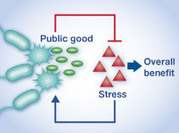
*Programming stress-induced altruistic death in engineered bacteria*
by
Yu Tanouchi, Anand Pai, Nicolas E Buchler & Lingchong You
"Altruistic death is shown to confer a population level advantage in engineered E. coli. Cost-benefit trade-offs are analyzed and altruistic death is shown to account for the 'Eagle effect', whereby bacteria appear to grow better in high antibiotics concentrations."
|
|
Scooped by
Gerd Moe-Behrens
November 21, 2012 12:54 PM
|
Scoop.it!
Computational approaches to predicting essential proteins: a survey http://1.usa.gov/Ufm9Iv
|
|
Scooped by
Gerd Moe-Behrens
November 20, 2012 10:56 AM
|
Scoop.it!

Metabolic Engineering and Synthetic Biology in Strain Development http://bit.ly/Wtuniz
|
|
Scooped by
Gerd Moe-Behrens
November 20, 2012 9:17 AM
|
Scoop.it!
by
Petkau-Milroy K, Brunsveld L.
"The regulation of recognition events in nature via dynamic and reversible self-assembly of building blocks has inspired the emergence of supramolecular architectures with similar biological activity. Synthetic molecules of diverse geometries self-assemble in water to target biological systems for applications ranging from imaging and diagnostics, through to drug delivery and tissue engineering. Many of these applications require the ability of the supramolecular system to actively recognize specific cell surface receptors. This molecular recognition is typically achieved with ligands, such as small molecules, peptides, and proteins, which are introduced either prior to or post self-assembly. Advantages of the non-covalent organization of ligands include the responsive nature of the self-assembled structures, the ease of supramolecular synthesis and the possibility to incorporate a multiple array of different ligands through pre-mixing of the building blocks. This review aims to highlight the diversity of self-assembled nanostructures constructed from mono-disperse synthetic building blocks; with a particular focus on their design, self-assembly, functionalization with bioactive ligands and effects thereof on the self-assembly, and possible applications."
|
|
Scooped by
Gerd Moe-Behrens
November 20, 2012 9:06 AM
|
Scoop.it!
by
By Alexandra Daisy Ginsberg
"Synthetic biology has the potential to transform the manufacturing sector, but it requires a new way of thinking about the relationship between design and science, between nature and industry, and even between creator and product
Design is the transmission of ideas through things. But how do we judge whether new ideas are good things if the designs become invisible? Since the industrial revolution, design has been integral to the process of making things. It translates technology into the mass of useful stuff that marks progress in our everyday lives: the internal combustion engine into the car; the spring into the adjustable lamp; the transistor into the personal computer. Design separates what we make from what already exists: the natural, living stuff we want to control. But design is a plastic term with plastic morals. While we enjoy the conviction that 'to design is to be human', design today is mostly concerned with making products for us to consume, shy of responsibility for the functions to which it gives form and those forms' existence before and beyond their functional lives.
But now the mosquito is becoming a design object. Oxitec's RIDL male mosquitoes progeny die by genetic design. Grown in a factory, sorted by sex and released by the million, they mate with wild female mosquitoes to produce faulty offspring that will never hatch. It is a polite, British design solution to the tricky business of eradicating pathogens, on a geo-engineering scale. Swiss-designed bull sperm are also being trialled, encapsulated in cellulose before being inserted into a cow's uterus, unpackaged at ovulation as her hormones trigger precision-timed conception. Fewer deaths from dengue fever and cheaper dairy products may be the consumer's only experience of these designs. This is death and life as the stuff of design. .."
|
|
Scooped by
Gerd Moe-Behrens
November 17, 2012 7:59 PM
|
Scoop.it!

Not all computers are made of silicon.By definition, a computer is anything that processes data, performs calculations, or uses so-called logic gates to...
|
|
Scooped by
Gerd Moe-Behrens
November 17, 2012 9:59 AM
|
Scoop.it!
*Nature Genetics Series: Computational Tools for complex genetic and genomic data*
"The scale and complexity of genetic and genomic data are ever-expanding, requiring biologists to apply increasingly more sophisticated computational tools in the analysis, interpretation and storage of these data. This series contains articles that focus on the application of these software tools in genetics and genomics."
|
|
Scooped by
Gerd Moe-Behrens
November 16, 2012 8:54 AM
|
Scoop.it!
by
Michael S. Strano
"DNA is central to the existence of all life on Earth and uniquely encodes the instructions for producing such life. But it has another set of remarkable properties shared by a much larger class of molecules, most of which are yet to be invented. These “chemically sequenced polymers” (CSPs) are built by adding distinct monomers one at a time and can be programmed in such a way as to assemble into arbitrarily complex and three-dimensional shapes. Nature is far ahead of us in the creation and utility of such molecules, but on page 932 of this issue, Langecker et al. (1) provide a glimpse of the structural precision and functionality they offer for programmed assembly."
http://bit.ly/RH5awu
|
|
Scooped by
Gerd Moe-Behrens
November 16, 2012 6:48 AM
|
Scoop.it!

by
Bernadett Papp and Kathrin Plath
"The orphan nuclear receptor estrogen-related receptor b (Esrrb) is a vital component of the core pluripotency network in embryonic stem cells (ESCs). However, its function is not clear and the identity of potential upstream regulators has remained elusive. Three elegant reports (Festuccia et al, 2012; Martello et al, 2012; Percharde et al, 2012) have now elucidated the role of Esrrb in ESC self-renewal and reprogramming."




