


SynBioFromLeukipposInstitute
130.0K views |
+0 today
 Your new post is loading...
 Scoop.it!
|


|
Scooped by
Gerd Moe-Behrens
December 10, 2012 11:48 AM
|
Scoop.it!

The technique combines computer-aided design software with nanoscale fabrication technology.

|
|
Scooped by
Gerd Moe-Behrens
December 10, 2012 6:31 AM
|
Scoop.it!

*I just learned about a very interesting iGEM project for 2013*!
It is a follow up of an outstanding cell paper (see below) about a computational model for a cell.. This paper applies oriented programming. I think languages like objective-c (Apple - Xcode) are very good suited to modulate biological phenomena, as they reflect the biological duality of form and function.
Ref. original paper in Cell:
*A Whole-Cell Computational Model Predicts Phenotype from Genotype*
by
Jonathan R. Karr, Jayodita C. Sanghvi, Derek N. Macklin, Miriam V. Gutschow, Jared M. Jacobs, Benjamin Bolival, Nacyra Assad-Garcia, John I. Glass, Markus W. Covert
"Understanding how complex phenotypes arise from individual molecules and their interactions is a primary challenge in biology that computational approaches are poised to tackle. We report a whole-cell computational model of the life cycle of the human pathogen Mycoplasma genitalium that includes all of its molecular components and their interactions. An integrative approach to modeling that combines diverse mathematics enabled the simultaneous inclusion of fundamentally different cellular processes and experimental measurements. Our whole-cell model accounts for all annotated gene functions and was validated against a broad range of data. The model provides insights into many previously unobserved cellular behaviors, including in vivo rates of protein-DNA association and an inverse relationship between the durations of DNA replication initiation and replication. In addition, experimental analysis directed by model predictions identified previously undetected kinetic parameters and biological functions. We conclude that comprehensive whole-cell models can be used to facilitate biological discovery."
see also this awesome hangout:
Dawn of Virtual Cell Biology: A Whole-Cell Computational Model Predicts Phenotype from Genotype
"A journal club and author interview about the recent paper "A Whole-Cell Computational Model Predicts Phenotype from Genotype", Karr et al., 2012, about a whole cell simulation. Stephen Larson presents a 45 minute overview of the paper and authors Jonathan Karr and Jayodita Sanghvi answer questions and clarify the paper. Organized by the members of OpenWorm.org"
http://bit.ly/MpWUx8
|
|
Scooped by
Gerd Moe-Behrens
December 9, 2012 3:44 PM
|
Scoop.it!

by
Carlos G. Acevedo-Rocha, Gang Fang3, Markus Schmidt, David W. Ussery, Antoine Danchin
"A central undertaking in synthetic biology (SB) is the quest for the ‘minimal genome’. However, ‘minimal sets’ of essential genes are strongly context-dependent and, in all prokaryotic genomes sequenced to date, not a single protein-coding gene is entirely conserved. Furthermore, a lack of consensus in the field as to what attributes make a gene truly essential adds another aspect of variation. Thus, a universal minimal genome remains elusive. Here, as an alternative to defining a minimal genome, we propose that the concept of gene persistence can be used to classify genes needed for robust long-term survival. Persistent genes, although not ubiquitous, are conserved in a majority of genomes, tend to be expressed at high levels, and are frequently located on the leading DNA strand. These criteria impose constraints on genome organization, and these are important considerations for engineering cells and for creating cellular life-like forms in SB."
|
|
Scooped by
Gerd Moe-Behrens
December 8, 2012 1:25 PM
|
Scoop.it!

by
Bijan Zakeri and Timothy K. Lu
"Antibiotic discovery has a storied history. From the discovery of penicillin by Sir Alexander Fleming to the relentless quest for antibiotics by Selman Waksman, the stories have become like folklore used to inspire future generations of scientists. However, recent discovery pipelines have run dry at a time when multidrug-resistant pathogens are on the rise. Nature has proven to be a valuable reservoir of antimicrobial agents, which are primarily produced by modularized biochemical pathways. Such modularization is well suited to remodeling by an interdisciplinary approach that spans science and engineering. Herein, we discuss the biological engineering of small molecules, peptides, and non-traditional antimicrobials and provide an overview of the growing applicability of synthetic biology to antimicrobials discovery."
http://bit.ly/SGvY0g
|
|
Scooped by
Gerd Moe-Behrens
December 8, 2012 1:03 PM
|
Scoop.it!
Video:
Talk by Dr Chris Barnes
"Dr Chris Barnes from UCL introduces his work as a systems biologist. Drawing an analogy from the development of steam engines, he believes the future of biology will be defined by science and engineering working in tandem, with synthetic biology taking the role of forward-engineering and systems biology taking the role of reverse engineering."
|
|
Scooped by
Gerd Moe-Behrens
December 7, 2012 11:06 AM
|
Scoop.it!

BU poised to become a synthetic biology powerhouse
By Art Jahnke
"The age of synthetic biology was turned on, literally, with a switch built by two BU researchers 13 years ago. James Collins, now a William Fairfield Warren Distinguished Professor and a College of Engineering professor of biomedical engineering, and his graduate student Timothy Gardner (ENG’00) altered the genes of E. coli bacteria so that they could be made to produce proteins or not produce proteins, essentially creating a two-gene on/off switch for a biological circuit.
The researchers described the achievement in a paper published in Nature in January 2000, an issue that also described a three-gene oscillating circuit built with the same genetic components by two Princeton physicists. Exactly 10 years later, Nature described the work done at BU and Princeton as the “defining pair of experiments” that mark the start of synthetic biology.
In those days, says Collins, who is also a Howard Hughes Medical Institute investigator, the Human Genome Project had captured the attention of cutting-edge biologists, as well as of the press. It would be years before the appellation “synthetic biology” entered the vernacular, and more important, before the science was distinguished from genetic engineering. Today, he says, the difference between the two fields is almost as clear as on and off.
“What genetic engineers were doing was cutting and pasting,” says Collins. “They were introducing genes to enable organisms to be production organisms—they were essentially swapping a red lightbulb for a green lightbulb.” By contrast, he says, synthetic biologists design and build the circuits that power the bulb. “Introducing the lightbulb is not engineering. That’s home design. Designing the circuit is engineering. Synthetic biology is genetic engineering on steroids.”
Collins’ standard definition of the field goes like this: “Synthetic engineering is a new field that is bringing together engineers and biologists who design and construct biomolecular components and synthetic gene networks to reprogram cells, endowing them with novel functions.....”
http://bit.ly/SSEqcH
|
|
Scooped by
Gerd Moe-Behrens
December 7, 2012 10:54 AM
|
Scoop.it!

Craig Venter, CEO & President, Synthetic Genomics, shares the latest advancements in synthetic genomic research and technology. According to Venter, synthetic biological organisms are not far away.
- 47min video with Craig Venter http://bit.ly/127aY6Q
|
|
Scooped by
Gerd Moe-Behrens
December 7, 2012 7:46 AM
|
Scoop.it!
Video: Three-Dimensional Structures Self-Assembled from DNA Bricks http://bit.ly/VOdwn8
see also these 2 new communities on G+
Synthetic Biology
https://plus.google.com/communities/110080235428400987829?hl=en
Biological Computing
https://plus.google.com/communities/117578997424311496437?hl=en
|
|
Scooped by
Gerd Moe-Behrens
December 6, 2012 12:51 PM
|
Scoop.it!
Press coverage of synthetic biology in the United States and Europe increased significantly between 2008 and 2011, according to a report released today by the Synthetic Biology Project.
|
|
Scooped by
Gerd Moe-Behrens
December 6, 2012 12:41 PM
|
Scoop.it!
A mechanical metamaterial made from a DNA hydrogel : Nature Nanotechnology : Nature Publishing Group

DNA Nanotechnology: A metamaterial with memory
by
Ju Li & Liyuan Bai
http://bit.ly/UgZN4U
comment to:
A mechanical metamaterial made from a DNA hydrogel
by
Jong Bum Lee, Songming Peng, Dayong Yang, Young Hoon Roh, Hisakage Funabashi, Nokyoung Park, Edward J. Rice, Liwei Chen, Rong Long, Mingming Wu & Dan Luo
"Metamaterials are artificial substances that are structurally engineered to have properties not typically found in nature. To date, almost all metamaterials have been made from inorganic materials such as silicon and copper1, 2, which have unusual electromagnetic or acoustic properties1, 2, 3, 4, 5 that allow them to be used, for example, as invisible cloaks6, 7, 8, 9, superlenses10, 11, 12 or super absorbers for sound13. Here, we show that metamaterials with unusual mechanical properties can be prepared using DNA as a building block. We used a polymerase enzyme to elongate DNA chains and weave them non-covalently into a hydrogel. The resulting material, which we term a meta-hydrogel, has liquid-like properties when taken out of water and solid-like properties when in water. Moreover, upon the addition of water, and after complete deformation, the hydrogel can be made to return to its original shape. The meta-hydrogel has a hierarchical internal structure and, as an example of its potential applications, we use it to create an electric circuit that uses water as a switch."
|
|
Scooped by
Gerd Moe-Behrens
December 11, 2012 9:04 AM
|
Scoop.it!
by
Peter Dizikes
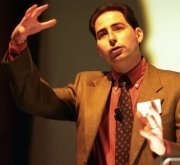
"If you’ve ever talked about a “paradigm shift,” you’ve channeled Thomas Kuhn, the historian and philosopher of science whose landmark 1962 bestseller, “The Structure of Scientific Revolutions,” changed how people discuss the scientific enterprise. Kuhn asserted that most research takes place during periods of “normal science,” which are occasionally upended when scientists find a new and more compelling framework, or paradigm, for interpreting known observations — such as Newton’s overturning of Aristotelian ideas about motion. To Kuhn, this also suggested that scientific knowledge does not consist of a straightforward accumulation of objective facts — a controversial view often seized upon by skeptics of science, to Kuhn’s chagrin.
Kuhn spent the last 17 years of his career at MIT, until his death in 1996. On Dec. 7, the Institute hosted a symposium on Kuhn’s thought and influence, on the 50th anniversary of his celebrated book. MIT News spoke with David Kaiser, the Germeshausen Professor of the History of Science, about Kuhn’s work.
Q. Over 50 years, we’ve become highly acclimated to Kuhn’s ideas. In retrospect, what was so innovative about them?
A. It’s not that every word in the book was without precedent, but it presented many ideas with a great cleverness and clarity. One of them was that science might not be progressing toward a single truth — although Kuhn was at pains the rest of his life to say that didn’t mean he thought it was all made up, either. But nonetheless, scientific knowledge could be a great deal more complicated and rich than the notion that we just get closer and closer to some sort of ultimate truth. There could be a kind of progress of knowledge that was not a linear progress, nor progress toward a particular end. ...."

David Gifford's comment,
December 12, 2012 2:37 AM
As an undergrad in History of Science I was lucky to meet Thomas Kuhn in around 1980 at a small seminar meeting at MIT STS!

Gerd Moe-Behrens's comment,
December 12, 2012 8:02 AM
As big data is a major challenge for contemporary science (see my recent Nature blog http://www.nature.com/spoton/2012/05/tool-tales-leukippos-synthetic-biology-lab-in-the-cloud/ ) we might see a paradigm shift. The hypothesis method has some flaws in this context. Systemics (see eg Systems Biology) might give a basis to deal with this new situation!
|
|
Scooped by
Gerd Moe-Behrens
December 10, 2012 6:32 PM
|
Scoop.it!
*Open access could prevent rejection of good science*
"Steve Miron, senior vice president of Wiley's Scientific, Technical, Medical and Scholarly business reveals why he is excited about the potential of open access.
What trends have you seen?
We are seeing huge growth in our author base from emerging countries, not just in quantity but also in quality. Also, as publishing becomes more global, we are able to tap into a global talent base for staff and reviewers.
There are trends for societies too. For years they have looked to journals to fund their activities but with library budgets under pressure we see lots of societies wanting to develop new services for members in, for example, education and professional development. It’s early days with this but it’s a definite trend.
This is a very exciting development for Wiley, which publishes on behalf of around 800 professional and learned societies, but also is both a major educational publisher and a publisher in the area of professional development.
How have the needs of researchers changed?
In many ways, they haven’t. The need to get funding and publish in order to build a career hasn’t changed very much. And certain aspects of the publishing landscape will probably remain, for example, the importance of quality and reputation; and the importance of topical relevance to one’s communities...."
|
|
Scooped by
Gerd Moe-Behrens
December 10, 2012 7:10 AM
|
Scoop.it!
Bio-quantum-computer

by
Paolo Manzeli
"The Bio-quantum-computer research (1),introduced here,it is considered to be a break th rough tech nology w ith h igh expectations for a new generation ofcom puter th atw ork s on a com pletely new principle, and th at h olds m any pos s ib ilitie s inconce ivab le w ith e xis ting com pute rs (2) Firs t ofalitis necessary to startw ith som e definition and general k now ledge about Quantum Com puters innovation. “ Q . b i t ”, ( 3 ) , i n d i c a t e d b y ( / 0 > a n d / 1 > ) p r o b a b i li s t i c s t a t e , defines the unit of information of quantum computers. Unlik e th e binary “bit”of current com puters h as only tw o p o s s i b le s t a t e s ( 0 ) o r ( 1 ) . T h e u n i t o f m e a s u r e m e n t o f q uantic-com puters th e “q bit”uses a m uch m ore com plex logic involving m ultiple states entanglem ent, enabling a new efficient processing of information."
http://bit.ly/TLW0xI
|
|
Scooped by
Gerd Moe-Behrens
December 9, 2012 8:08 PM
|
Scoop.it!

A young girl has been in full remission for months after scientists used a disabled form of the AIDS virus to genetically reprogram her immune system to kill cancer cells.
|
|
Scooped by
Gerd Moe-Behrens
December 9, 2012 4:00 PM
|
Scoop.it!
Interesting work by an iGEM team on biological computer

via +Carlos Toscano Ochoa 1 year old, but still interesting work by an iGEM team:
Team Sevilla
"Although our project is pretty ambitious, it is also certainly feasible. We are going to build circuits based on collections of different bacteria strains, where each strain works as a logic gate. A logic gate is the basic component of an electronic circuit, such as AND, OR or XOR, and it exchanges information with the others.Combining the correct strains and using certain chemical substances as system inputs we can manipulate a bacterial community into performing complex functions.
To achieve our goal we are going to define a standard of programming modularized biological circuits, where a community of bacteria from different but interconnected strains form a physically independent module. Combining different modules in this way makes it possible to recycle strains and substances. To implement this system, the key is to standardise the inter-modular communication substances. This is exactly what we are going to do: we are going to define a substance, which we have named the Universal BioBit (or Ubbit for short), that will be the element of communication between modules. Just like that, any research group could use the modules created by any other group and combine them with their own without the necessity of knowing how it internally works, just by using the Ubbit standard."

|
|
Scooped by
Gerd Moe-Behrens
December 8, 2012 1:17 PM
|
Scoop.it!
Talk by Thomas Folliard
"Thomas Folliard, currently studying Synthetic Biology MRes at UCL, gives a short introduction to Synthetic Biology and explains the main principles: How Synthetic Biology builds upon genetic engineering, and how principles of abstraction and standardization allow the construction of complex new genetic circuits"
|
|
Scooped by
Gerd Moe-Behrens
December 7, 2012 6:53 PM
|
Scoop.it!

From
io9
Researchers from Parabon NanoLabs have developed a new drug for combating a lethal brain cancer called glioblastoma multiforme.
|
|
Scooped by
Gerd Moe-Behrens
December 7, 2012 10:58 AM
|
Scoop.it!
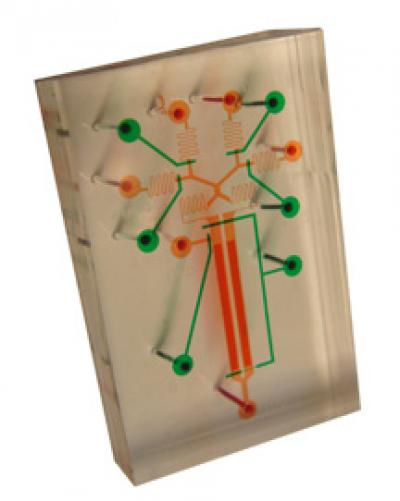
"Johns Hopkins researchers have used a small synthetic molecule to stimulate cells to move and change shape, bypassing the cells' usual way of sensing and responding to their environment.
The experiment pioneers a new tool for studying cell movement, a phenomenon involved in everything from development to immunity to the spread of cancer.
"We were able to use synthetic molecules small enough to slip inside the cell and activate a chemical reaction controlling cell movement, bypassing most of the steps that usually lead up to this reaction," says Dr. Andre Levchenko, a professor at the Johns Hopkins University School of Medicine's Institute for Cell Engineering, whose lab collaborated with that of Takanari Inoue, also from the school of medicine, on the study.
"As a result, we came up with a new model to describe one of the more fundamental and important cellular processes and a better understanding of cell movements critical for cancer progression and immune response." A report on the study was published Nov. 26 on the website of the Proceedings of the National Academy of Sciences.
.."
|
|
Scooped by
Gerd Moe-Behrens
December 7, 2012 10:13 AM
|
Scoop.it!
Looking Back at the Original Yamanaka Paper

In the first of an occasional series of Cell Annotated Classics, Konrad Hochedlinger makes notes in the margins of the original iPS paper from Nobel Prize winner Shinya Yamanaka, published in Cell in 2006. Konrad comments on his first impressions of the paper and how the field has moved on since then as a result of this groundbreaking study.
http://download.cell.com/images/edimages/Cell/annot_class_dec07.pdf
|
|
Scooped by
Gerd Moe-Behrens
December 6, 2012 1:03 PM
|
Scoop.it!
Video http://bit.ly/TMoSpR
CORNELL (US) — A new material made from synthetic DNA is so soft that it can flow like a liquid and then, strangely, return to its original shape.





by
Mark C. Politz , Matthew F. Copeland and Brian F. Pfleger
"Transcriptional repression is a common approach to control gene expression in synthetic biology applications. Here, an engineered DNA binding protein based upon a transcription activator-like effector (TALE) scaffold was shown to outperform LacI in blocking transcription from a promoter and to repress expression of a downstream gene in an operon."
http://rsc.li/TUm0uc