SynBioFromLeukipposInstitute
130.0K views | +0 today
SynBioFromLeukipposInstitute
Your new post is loading...
Scooped by Gerd Moe-Behrens
February 1, 2013 10:35 AM
Scoop.it!

Synthetic Oligonucleotide Libraries Reveal Novel Regulatory Elements in Chlamydomonas Chloroplast mRNAs

Synthetic Oligonucleotide Libraries Reveal Novel Regulatory Elements in Chlamydomonas Chloroplast mRNAs | SynBioFromLeukipposInstitute | Scoop.it
Gerd Moe-Behrens's insight:
byElizabeth A. Specht and Stephen P. Mayfield

"Gene expression in chloroplasts is highly regulated during translation by sequence and secondary-structure elements in the 5′ untranslated region (UTR) of mRNAs. These chloroplast mRNA 5′ UTRs interact with nuclear-encoded factors to regulate mRNA processing, stability, and translation initiation. Although several UTR elements in chloroplast mRNAs have been identified by site-directed mutagenesis, the complete set of elements required for expression of plastid mRNAs remains undefined. Here we present a synthetic biology approach using an arrayed oligonucleotide library to examine in vivo hundreds of designed variants of endogenous UTRs from Chlamydomonas reinhardtii and quantitatively identify essential regions through next-generation sequencing of thousands of mutants. We validate this strategy by characterizing the relatively well-studied 5′ UTR of the psbD mRNA encoding the D2 protein in photosystem II and find that our analysis generally agrees with previous work identifying regions of importance but significantly expands and clarifies the boundaries of these regulatory regions. We then use this strategy to characterize the previously unstudied psaA 5′ UTR and obtain a detailed map of regions essential for both positive and negative regulation. This analysis can be performed in a high-throughput manner relative to previous site-directed mutagenesis methods, enabling compilation of a large unbiased data set of regulatory elements of chloroplast gene expression. Finally, we create a novel synthetic UTR based on aggregate sequence analysis from the libraries and demonstrate that it significantly increases accumulation of an exogenous protein, attesting to the utility of this strategy for enhancing protein production in algal chloroplasts."


http://bit.ly/YozAGa ;
No comment yet.
Scooped by Gerd Moe-Behrens
February 1, 2013 8:57 AM
Scoop.it!

A game-of-life like simulator for design-oriented modeling of BioBricks in synthetic biology

A game-of-life like simulator for design-oriented modeling of BioBricks in synthetic biology | SynBioFromLeukipposInstitute | Scoop.it
Gerd Moe-Behrens's insight:

by

Madec M, Gendrault Y, Lallement C, Haiech J.

"This paper deals with the development of a new simulator that will be very helpful to establish new accurate and predictive design-oriented models for the BioBricks used in synthetic biology. The simulator uses the principle of the game-of-life: molecules can move on a grid and, at every iteration, binding and dissociation rules are applied when two molecules are on same node. The principle is elementary but it can highlight interesting biological phenomenon. Those can be modeled by mathematical equations to achieve design-oriented models. In this case, the simulator also helps to make to link between mathematical parameters and the microscopic parameters. A first version of the software has been implemented in MATLAB. It permits to retrieve very interesting results, such as the Hill's equation and the properties of Hill's coefficient."

Free PDF
http://bit.ly/14CX0Mj

No comment yet.
Scooped by Gerd Moe-Behrens
January 31, 2013 7:40 PM
Scoop.it!

Scaffold Diversification Enhances Effectiveness of a Superlibrary of Hyperthermophilic Proteins

Scaffold Diversification Enhances Effectiveness of a Superlibrary of Hyperthermophilic Proteins | SynBioFromLeukipposInstitute | Scoop.it
Gerd Moe-Behrens's insight:

by
Mahmud Hussain , Nimish Gera , Andrew B. Hill , and Balaji M. Rao 

"The use of binding proteins from non-immunoglobulin scaffolds has become increasingly common in biotechnology and medicine. Typically, binders are isolated from a combinatorial library generated by mutating a single scaffold protein. In contrast, here we generated a “superlibrary” or “library-of-libraries” of 4 × 10⁸ protein variants by mutagenesis of seven different hyperthermophilic proteins; six of the seven proteins have not been used as scaffolds prior to this study. Binding proteins for five different model targets were successfully isolated from this library. Binders obtained were derived from five out of the seven scaffolds. Strikingly, binders from this modestly sized superlibrary have affinities comparable or higher than those obtained from a library with 1000-fold higher sequence diversity but derived from a single stable scaffold. Thus scaffold diversification, i.e., randomization of multiple different scaffolds, is a powerful alternate strategy for combinatorial library construction."

http://bit.ly/UHtMYs

No comment yet.
Scooped by Gerd Moe-Behrens
January 31, 2013 7:14 PM
Scoop.it!

Engineering Living Cells with New Capabilities: A Science@Cal Event at Stanley Hall, Room 105, 2/16/2013

Engineering Living Cells with New Capabilities: A Science@Cal Event  at Stanley Hall, Room 105, 2/16/2013 | SynBioFromLeukipposInstitute | Scoop.it
Get details for Engineering Living Cells with New Capabilities: A Science@Cal Event, including date, start time, driving directions and more. Find other - Talks & Lectures events in Berkeley, CA.
No comment yet.
Scooped by Gerd Moe-Behrens
January 31, 2013 6:54 PM
Scoop.it!

Test-tube data

Test-tube data | SynBioFromLeukipposInstitute | Scoop.it
Gerd Moe-Behrens's insight:

Storing information in DNA

*Test-tube data:* *Archives could last for thousands of years when stored in DNA instead of magnetic tapes and hard drives*

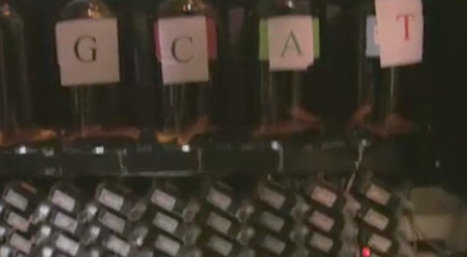
"LIKE all the best ideas, this one was born in a pub. Nick Goldman and Ewan Birney of the European Bioinformatics Institute (EBI) near Cambridge, were pondering what they could do with the torrent of genomic data their research group generates, all of which has to be archived.

 The volume of data is growing faster than the capacity of the hard drives used to hold it. “That means the cost of storage is rising, but our budgets are not,” says Dr Goldman. Over a few beers, the pair began wondering if artificially constructed DNA might be one way to store the data torrent generated by the natural stuff. After a few more drinks and much scribbling on beer mats, what started out as a bit of amusing speculation had turned into the bones of a workable scheme. After some fleshing out and a successful test run, the full details were published this week in Nature....."

http://econ.st/UHmNPe

see also this post
http://bit.ly/14u3mN7

No comment yet.
Scooped by Gerd Moe-Behrens
January 30, 2013 5:49 AM
Scoop.it!

RNA-guided editing of bacterial genomes using CRISPR-Cas systems

RNA-guided editing of bacterial genomes using CRISPR-Cas systems | SynBioFromLeukipposInstitute | Scoop.it
A CRISPR-Cas system is harnessed to introduce template-driven mutations in S. pneumoniae and E. coli at high efficiency without requiring selectable markers.
Gerd Moe-Behrens's insight:

Congratulation +David Bikard 

*RNA-guided editing of bacterial genomes using CRISPR-Cas systems*

by
Wenyan Jiang,David Bikard,David Cox,Feng Zhang& Luciano A Marraffini

"Here we use the clustered, regularly interspaced, short palindromic repeats (CRISPR)–associated Cas9 endonuclease complexed with dual-RNAs to introduce precise mutations in the genomes of Streptococcus pneumoniae and Escherichia coli. The approach relies on dual-RNA:Cas9-directed cleavage at the targeted genomic site to kill unmutated cells and circumvents the need for selectable markers or counter-selection systems. We reprogram dual-RNA:Cas9 specificity by changing the sequence of short CRISPR RNA (crRNA) to make single- and multinucleotide changes carried on editing templates. Simultaneous use of two crRNAs enables multiplex mutagenesis. In S. pneumoniae, nearly 100% of cells that were recovered using our approach contained the desired mutation, and in E. coli, 65% that were recovered contained the mutation, when the approach was used in combination with recombineering. We exhaustively analyze dual-RNA:Cas9 target requirements to define the range of targetable sequences and show strategies for editing sites that do not meet these requirements, suggesting the versatility of this technique for bacterial genome engineering."

http://bit.ly/11dWGDK

see also http://bit.ly/VvkdOY

No comment yet.
Scooped by Gerd Moe-Behrens
January 30, 2013 3:26 AM
Scoop.it!

Synthetic Biology - Inventing the Future

Gerd Moe-Behrens's insight:

via +Christopher de la Torre 

Video

Robert Terce, Andrew Hessel, William Hurlbut

"The hottest new field in biotech is synthetic biology: Scientists can now re-program life at the cellular level, just like a computer program. Syn-bio experts (also known as bio-hackers) are re-programming the DNA in viruses and creating novel life forms that can replicate and grow just like natural single cell organisms.  Joining Robert Tercek in the discussion are Andrew Hessel, Distinguished Research Scientist with the Bio/Nano Programmable Matter Group at Autodesk, and Dr. William Hurlbut, Physician and Consulting Professor at Stanford University.   Inventing the Future is a live news program featuring coming trends that will shape society. In today's world, success means knowing "What's Next After What's Next?" Lead by Robert Tercek, Inventing the Future offers insight into the future of the world after tomorrow..."


http://bit.ly/TVrk2Q

No comment yet.
Scooped by Gerd Moe-Behrens
January 29, 2013 9:08 AM
Scoop.it!

A red/far-red light-responsive bi-stable toggle switch to control gene expression in mammalian cells

A red/far-red light-responsive bi-stable toggle switch to control gene expression in mammalian cells | SynBioFromLeukipposInstitute | Scoop.it
Gerd Moe-Behrens's insight:

by

Müller K, Engesser R, Metzger S, Schulz S, Kämpf MM, Busacker M, Steinberg T, Tomakidi P, Ehrbar M, Nagy F, Timmer J, Zubriggen MD, Weber W "Growth and differentiation of multicellular systems is orchestrated by spatially restricted gene expression programs in specialized subpopulations. The targeted manipulation of such processes by synthetic tools with high-spatiotemporal resolution could, therefore, enable a deepened understanding of developmental processes and open new opportunities in tissue engineering. Here, we describe the first red/far-red light-triggered gene switch for mammalian cells for achieving gene expression control in time and space. We show that the system can reversibly be toggled between stable on- and off-states using short light pulses at 660 or 740 nm. Red light-induced gene expression was shown to correlate with the applied photon number and was compatible with different mammalian cell lines, including human primary cells. The light-induced expression kinetics were quantitatively analyzed by a mathematical model. We apply the system for the spatially controlled engineering of angiogenesis in chicken embryos. The system's performance combined with cell- and tissue-compatible regulating red light will enable unprecedented spatiotemporally controlled molecular interventions in mammalian cells, tissues and organisms."


http://bit.ly/YeQgQl

No comment yet.
Scooped by Gerd Moe-Behrens
January 29, 2013 9:00 AM
Scoop.it!

A robust and sensitive synthetic sensor to monitor the transcriptional output of the cytokinin signaling network in plants

A robust and sensitive synthetic sensor to monitor the transcriptional output of the cytokinin signaling network in plants | SynBioFromLeukipposInstitute | Scoop.it
Gerd Moe-Behrens's insight:

by

Zürcher E, Tavor-Deslex D, Lituiev D, Enkeli K, Tarr PT, Müller B  "Cytokinins are classic plant hormones that orchestrate plant growth, development, and physiology. They affect gene expression in target cells by activating a multistep phosphorelay network. Type-B response regulators, acting as transcriptional activators, mediate the final step in the signaling cascade. Previously, we have introduced a synthetic reporter, TCS (Two Component signaling Sensor)::GFP, which reflects the transcriptional activity of type-B response regulators. TCS::GFP was instrumental in uncovering novel roles of cytokinin, and deepening our undestanding of existing functions. However, TCS-mediated expression of reporters is weak in some developmental contexts, where cytokinin signaling has a documented role, such as in the shoot apical meristem, or in the vasculature of Arabidopsis thaliana. In addition, we observed that GFP expression becomes rapidly silenced in TCS::GFP transgenic plants. Here, we present an improved version of the reporter, TCS new (TCSn), which, compared to TCS, is more sensitive to phosphorelay signaling in Arabidopsis and maize cellular assays, while retaining its specificity. Transgenic Arabidopsis TCSn::GFP plants exhibit strong and dynamic GFP expression patterns consistent with known cytokinin functions. In addition, GFP expression has been stable over generations, allowing crosses with different genetic backgrounds. Thus, TCSn represents a significant improvement to report the transcriptional output profile of phosphorelay signaling networks in Arabidopsis, maize, and likely other plants that display common response regulator DNA-binding specificities."

http://bit.ly/WyTdJt
#syntheticbiology #synbio

No comment yet.
Scooped by Gerd Moe-Behrens
January 29, 2013 8:35 AM
Scoop.it!

Biosciences - Meeting on Future Perspectives in Synthetic Biology ...

Biosciences - Meeting on Future Perspectives in Synthetic Biology ... | SynBioFromLeukipposInstitute | Scoop.it
By: Caroline Channing January 23, 2013 3:37 PM. The Manchester Institute of Biotechnology is hosting a joint Academia/Industry discussion meeting on the topic of "Future Perspectives in Synthetic Biology" on Friday 8th February 2013.
No comment yet.
Scooped by Gerd Moe-Behrens
January 28, 2013 9:36 AM
Scoop.it!

DNA Hacking, Bio-punks, and the Future of Synthetic Biology

Gerd Moe-Behrens's insight:
talk by

Jameson Dungan 

Recorded at Ignite Hampton Roads #3 at Nauticus in Norfolk Virginia by Ethan O'Toole and Leroy Baynum.

(video)
http://bit.ly/Wsntsm

No comment yet.
Scooped by Gerd Moe-Behrens
January 28, 2013 9:19 AM
Scoop.it!

Systems as the Driver for Synthetic Biology

Systems as the Driver for Synthetic Biology | SynBioFromLeukipposInstitute | Scoop.it
Gerd Moe-Behrens's insight:


Synthetic Biology is a practical application of Systems Biology

*Video*: *Systems as the driver for synthetic biology*

"We now possess the ability to read and write DNA. These tools are not only revolutionizing biotechnology but also the basic life sciences as well. The challenge is that we are still learning the grammar. In other words, we often do not know which genetic perturbations to make in order to alter the behavior of an organism. As a result, synthetic biology still involves much trial and error. Moreover, we are still far from the point where we can engineer new organisms from scratch – rather, we need to alter the physiology of existing ones. Even then, we still need to understand how these organisms function in an integrated manner. In this talk, I will discuss the application systems biology to synthetic biology as a general strategy for overcoming many of these challenges. I will first review some of our previous work applying comparative genomics to inform biological design. I will then discuss our work applying systems biology approaches to improve organisms for fuel and chemical production. I will conclude by discussing our recent work developing tools for engineering non-model organisms with unique properties.

 Dr. Christopher Rao is an associate professor of chemical and biomolecular engineering at the University of Illinois, Urbana-Champaign, a Robert W. Schaefer Professional Scholar, and a member of the Energy Biosciences Institute. He received his B.S. degree in Chemical Engineering from Carnegie Mellon University in 1994 and his Ph.D. degree in Chemical Engineering from the University of Wisconsin in 2000 under the guidance of Dr. James Rawlings. Prior to joining UIUC in 2005, he was a postdoctoral fellow at the Howard Hughes Medical Institute and University of California, Berkeley working under the guidance of Dr. Adam Arkin. Dr. Rao has authored and co-authored 58 research articles. In addition, he has given invited lectures in more than 55 international meetings and institutions. Dr. Rao has received numerous research and teaching awards and honors, including American Institute of Chemical Engineers (AIChE) Computing and Systems Technology Outstanding Young Research Award (2012), Petit Scholar from UIUC College of Liberal Arts and Sciences (2011), International Federation of Automatic Control (IFAC) High Impact Paper Award (2010), UIUC School of Chemical Sciences Excellence in Teaching Award (2008), American Institute of Chemical Engineers (AIChE) Computing and Systems Technology W. David Smith Award (2007), and National Science Foundation CAREER Award (2007). Dr. Rao is an editor for PLoS Computational Biology and PLoS One. The goal of his research is to understand how cells employ feedback control in decision-making processes. In addition, he develops experimental and computational tools for synthetic biology." 


 http://bit.ly/Wslswi

No comment yet.
Scooped by Gerd Moe-Behrens
January 28, 2013 7:50 AM
Scoop.it!

Synthetic Biology is on its Way to Treating Human Disease

Synthetic Biology is on its Way to Treating Human Disease | SynBioFromLeukipposInstitute | Scoop.it
Gerd Moe-Behrens's insight:

by 
Eric Sawyer

"Synthetic biology has definitely gotten generous helpings of hype recently, so much so that it's easy to confuse speculation with data-backed results. I recently read a review of the clinical applications of synthetic biology1 and was surprised by how much progress has already been made!

Human health applications are particularly difficult because bringing new technology into the clinic lies at the end of a long, arduous journey involving clinical trials, government certification, and care provider education. Here's a "review of a review" on the most impressive steps synthetic biology has made toward improving human health.*

Bacteria and the human body are both friend and foe. Some bacteria conspire against us to cause severe illness; others live harmlessly inside us, even playing crucial roles in maintaining our health. Perhaps the most pressing challenge in our fight against pathogens is the arms race between modern medicine and antibiotic resistant bacteria. Ordinary natural selection, aided by poor healthcare management and patient noncompliance, has created a global crisis where pathogens are evolving resistance to our treatments.

Part of the problem is that invading bacteria collude to build protective biofilms that create a physical barrier to antibiotics. In a project from Collins's own lab, investigators successfully engineered the T7 phage, a virus that infects E. coli, to degrade biofilms. The viruses invade E. coli cells and hijack their protein synthesis machinery, churning out viral proteins. The engineered version of T7 also contains a gene coding for the enzyme DspB, a molecular wrecking ball that destroys biofilm. With their fortress destroyed, a whopping 99.997% of the E. coli in Collins's experiments were killed by the engineered phages...."

http://bit.ly/UwT1wJ

No comment yet.
Scooped by Gerd Moe-Behrens
February 1, 2013 10:29 AM
Scoop.it!

TREX: A Universal Tool for the Transfer and Expression of Biosynthetic Pathways in Bacteria

TREX: A Universal Tool for the Transfer and Expression of Biosynthetic Pathways in Bacteria | SynBioFromLeukipposInstitute | Scoop.it
Gerd Moe-Behrens's insight:

by
Anita Loeschcke, Annette Markert, Susanne Wilhelm, Astrid Wirtz, Frank Rosenau, Karl-Erich Jaeger, and Thomas Drepper

"Secondary metabolites represent a virtually inexhaustible source of natural molecules exhibiting a high potential as pharmaceuticals or chemical building blocks. To gain broad access to these compounds, sophisticated expression systems are needed that facilitate the transfer and expression of large chromosomal regions, whose genes encode complex metabolic pathways. Here, we report on the development of the novel system for the transfer and expression of biosynthetic pathways (TREX), which comprises all functional elements necessary for the delivery and concerted expression of clustered pathway genes in different bacteria. TREX employs (i) conjugation for DNA transfer, (ii) randomized transposition for its chromosomal insertion, and (iii) T7 RNA polymerase for unimpeded bidirectional gene expression. The applicability of the TREX system was demonstrated by establishing the biosynthetic pathways of two pigmented secondary metabolites, zeaxanthin and prodigiosin, in bacteria with different metabolic capacities. Thus, TREX represents a valuable tool for accessing natural products by allowing comparative expression studies with clustered genes."

bit.ly/W7tbP6

No comment yet.
Scooped by Gerd Moe-Behrens
January 31, 2013 7:47 PM
Scoop.it!

Functional Display of Complex Cellulosomes on the Yeast Surface via Adaptive Assembly

Functional Display of Complex Cellulosomes on the Yeast Surface via Adaptive Assembly | SynBioFromLeukipposInstitute | Scoop.it
Gerd Moe-Behrens's insight:

by
Shen-Long Tsai, Nancy A. DaSilva , and Wilfred Chen

"A new adaptive strategy was developed for the ex vivo assembly of a functional tetravalent designer cellulosome on the yeast cell surface. The design is based on the use of (1) a surface-bound anchoring scaffoldin composed of two divergent cohesin domains, (2) two dockerin-tagged adaptor scaffoldins to amplify the number of enzyme loading sites based on the specific dockerin–cohesin interaction with the anchoring scaffoldin, and (3) two dockerin-tagged enzymatic subunits (the endoglucanse Gt and the β-glucosidase Bglf) for cellulose hydrolysis. Cells displaying the tetravalent cellulosome on the surface exhibited a 4.2-fold enhancement in the hydrolysis of phosphoric acid swollen cellulose (PASC) compared with free enzymes. More importantly, cells displaying the tetravalent celluosome also exhibited an 2-fold increase in ethanol production compared with cells displaying a divalent cellulosome using a similar enzyme loading. These results clearly indicate the more crucial role of enzyme proximity than just simply increasing the enzyme loading on the overall cellulosomal synergy. To the best of our knowledge, this is the first report that exploits the natural adaptive assembly strategy in creating artificial cellulosome structures. The unique feature of the anchoring and the adaptor scaffoldin strategy to amplify the number of enzymatic subunits can be easily extended to more complex cellulosomal structures to achieve an even higher level of enzyme synergy."


http://bit.ly/XpMra2

No comment yet.
Scooped by Gerd Moe-Behrens
January 31, 2013 7:21 PM
Scoop.it!

Lightning Talks: The Emerging Field of Synthetic Biology - Kaitlin Flynn

Lightning Talks: The Emerging Field of Synthetic Biology - Kaitlin Flynn | SynBioFromLeukipposInstitute | Scoop.it
Gerd Moe-Behrens's insight:

Lightning Talks: 

*The emerging field of synthetic biology*

by
Kaitlin Flynn 

"University of Michigan Grad student Kaitlin Flynn walks us through the hacking of synthetic biology during this Lightning Talk."

http://bit.ly/XWohCR

No comment yet.
Scooped by Gerd Moe-Behrens
January 31, 2013 7:08 PM
Scoop.it!

Decoding Synthetic Biology

Decoding Synthetic Biology | SynBioFromLeukipposInstitute | Scoop.it
Gerd Moe-Behrens's insight:

A great video explaining some basics of synthetic biology

PBS learning material Grades 9-13+: 


http://bit.ly/VynzAT

No comment yet.
Scooped by Gerd Moe-Behrens
January 31, 2013 6:36 PM
Scoop.it!

Synthetic biology method dramatically cuts down “manufacturing” time

Synthetic biology method dramatically cuts down “manufacturing” time | SynBioFromLeukipposInstitute | Scoop.it
Gerd Moe-Behrens's insight:


"Scientists report that they have developed a method that cuts down the time it takes to make new ‘parts’ for microscopic biological factories from two days to only six hours.

The scientists, from Imperial College London, say their research brings them another step closer to a new kind of industrial revolution, where parts for these biological factories could be mass-produced. These factories have a wealth of applications including better drug delivery treatments for patients, enhancements in the way that minerals are mined from deep underground and advances in the production of biofuels.

Professor Paul Freemont, Co- Director of the Centre for Synthetic Biology and Innovation at Imperial College London and principle co-investigator of the study, which is published today in the journal Nucleic Acids Research, says:

“Before the industrial revolution most items were made by hand, which meant that they were slower to manufacture, more expensive to produce and limited in number. We are at a similar juncture in synthetic biology, having to test and build each part from scratch, which is a long and slow process. We demonstrate in our study a new method that could help to rapidly scale up the production and testing of biological parts.”

Parts made up of DNA are re-engineered by scientists and put into cells to make biological factories. However, a major bottleneck in synthetic biology is the lack of parts from which to build new types of factories. To build parts using the current time-consuming method, scientists have to re-engineer DNA in a cell and observe how it works. If it functions according to their specifications, then the scientists store the part specifications in a catalogue....."

bit.ly/WVPVkx

comment to: 

Validation of an entirely in vitro approach for rapid prototyping of DNA regulatory elements for synthetic biology

by
James Chappell, Kirsten Jensen and Paul S. Freemont

"A bottleneck in our capacity to rationally and predictably engineer biological systems is the limited number of well-characterized genetic elements from which to build. Current characterization methods are tied to measurements in living systems, the transformation and culturing of which are inherently time-consuming. In order to address this we have validated a completely in vitro approach for the characterization of DNA regulatory elements using E. coli extract cell-free systems. Importantly, we demonstrate that characterization in cell-free systems correlates and is reflective of performance in vivo for the most frequently used DNA regulatory elements. Moreover, we devise a rapid and completely in vitro method to generate DNA templates for cell-free systems, bypassing the need for DNA template generation and amplification from living cells. This in vitro approach is significantly quicker than current characterization methods and is amenable to high-throughput techniques, providing a valuable tool for rapidly prototyping libraries of DNA regulatory elements for synthetic biology."

PDF can be found on the bottom of 
bit.ly/WVPVkx

No comment yet.
Scooped by Gerd Moe-Behrens
January 30, 2013 3:35 AM
Scoop.it!

LIVING MACHINES | Studiolab

LIVING MACHINES | Studiolab | SynBioFromLeukipposInstitute | Scoop.it
Gerd Moe-Behrens's insight:

LIVING MACHINES - exhibition Science Gallery Dublin http://bit.ly/128JX5u

No comment yet.
Scooped by Gerd Moe-Behrens
January 29, 2013 9:19 AM
Scoop.it!

Design Principles of Regulatory Networks: Searching for the Molecular Algorithms of the Cell

Design Principles of Regulatory Networks: Searching for the Molecular Algorithms of the Cell | SynBioFromLeukipposInstitute | Scoop.it
Gerd Moe-Behrens's insight:

by
Lim WA, Lee CM, Tang C.

"A challenge in biology is to understand how complex molecular networks in the cell execute sophisticated regulatory functions. Here we explore the idea that there are common and general principles that link network structures to biological functions, principles that constrain the design solutions that evolution can converge upon for accomplishing a given cellular task. We describe approaches for classifying networks based on abstract architectures and functions, rather than on the specific molecular components of the networks. For any common regulatory task, can we define the space of all possible molecular solutions? Such inverse approaches might ultimately allow the assembly of a design table of core molecular algorithms that could serve as a guide for building synthetic networks and modulating disease networks."

 http://bit.ly/WM9c7Z

No comment yet.
Scooped by Gerd Moe-Behrens
January 29, 2013 9:01 AM
Scoop.it!

Scaffold technologies for controlling cell behavior in tissue engineering

Scaffold technologies for controlling cell behavior in tissue engineering | SynBioFromLeukipposInstitute | Scoop.it
Gerd Moe-Behrens's insight:

by
Lee SJ, Atala A.

"Scientists in the field of tissue engineering are now applying the principles of cell biology, material science and biomedical engineering to create biological substitutes that will restore and maintain normal function in diseased and injured tissues/organs [1-3]. Tissue-engineered scaffolds should (i) facilitate the localization and delivery of tissue-specific cells to precise sites in the body, (ii) maintain a three-dimensional architecture that permits the formation of new tissues, and (iii) guide the development of new tissues with appropriate function. ..."

http://1.usa.gov/Xd9ZyP

Gerd Moe-Behrens's comment, January 29, 2013 10:17 AM
(Photo source http://en.wikipedia.org/wiki/Scaffold)
Scooped by Gerd Moe-Behrens
January 29, 2013 8:38 AM
Scoop.it!

Synthetic Biology Special Interest Group - Plant Synthetic Biology Workshop, 21-22 May 2013, University of Nottingham - Articles - Open Innovation

Synthetic Biology Special Interest Group - Plant Synthetic Biology Workshop, 21-22 May 2013, University of Nottingham - Articles - Open Innovation | SynBioFromLeukipposInstitute | Scoop.it
Gerd Moe-Behrens's insight:

Plant Synthetic Biology Workshop, 21-22 May 2013, University of Nottingham http://bit.ly/WqF6bH

No comment yet.
Scooped by Gerd Moe-Behrens
January 29, 2013 8:31 AM
Scoop.it!

What Does the Future Of Innovation Look Like? Thought Leaders At 'The Intersection' Give Us a Glimpse

What Does the Future Of Innovation Look Like? Thought Leaders At 'The Intersection' Give Us a Glimpse | SynBioFromLeukipposInstitute | Scoop.it
Gerd Moe-Behrens's insight:

Steve Jurvetson, a leading Silicon Valley venture capitalists: "we’ll see remarkable progress in…synthetic biology" 

*What does the future of innovation look like*? *Thought leaders at the intersection give us a glimpse*

by

 Hamdan Azhar


"Writing and data science both involve telling stories and there are many stories to be told in Silicon Valley. In these articles, I attempt to convey a human portrait of the tech world by offering a personal account of some of the events that I attend. Recently, I went to The Intersection, a conference on innovation and social change.

 MOUNTAIN VIEW, Calif. – “I want you to go up to that lady in red and ask her if she knows what a maglev train is.” Josiah, an outgoing and precocious 18-year old, ...

Steve Jurvetson, one of Silicon Valley’s leading venture capitalists, then had a session on the science of innovation. Citing typical Kurzweilian arguments about semi-conductors, he argues that the pace of innovation was expanding exponentially. “In the coming years, we’ll see remarkable progress in artificial intelligence, synthetic biology, space exploration, and 3D-printing,” he predicts."


http://bit.ly/VtASme

No comment yet.
Scooped by Gerd Moe-Behrens
January 28, 2013 9:26 AM
Scoop.it!

We travel the road to 'mastery of our biological destiny'

We travel the road to 'mastery of our biological destiny' | SynBioFromLeukipposInstitute | Scoop.it
Gerd Moe-Behrens's insight:

by
Tom Beal 

"Genomics, the topic of this year's lecture series at the University of Arizona's College of Science, is not an inherently controversial topic.

 It is the realm of scientists who sequence and assemble the entire set of DNA contained in each cell of an organism. Genomics provides a road map for researchers in a variety of endeavors - biology, evolution, immunology, pharmacology, medicine, agriculture and more. It has the potential to unlock the mysteries of our ancestry, feed the world, improve health, cure disease and lengthen productive lives. In the public realm it also raises fears about the misuse of medical information, the danger of synthetic biology and concerns about our food supply, expressed in terms like "super weeds" and "Frankenfoods." That is partly the reason for the lecture series, said Dr. Fernando Martinez, the pediatrician and asthma researcher who heads the UA's Bio5 Research Institute and will give the initial lecture Wednesday. "The time has come for society to understand the genome," said Martinez. He predicts that within the next 10 years, a personalized genome map will be made available to the parents of each child born in the United States....."


http://bit.ly/14p025M

No comment yet.
Scooped by Gerd Moe-Behrens
January 28, 2013 8:36 AM
Scoop.it!

Italian Research: opinion from italian scientists (Teaser)

www.sciencetogrok.om
Gerd Moe-Behrens's insight:

How does science change in the digital age?
How will the publication system change?
How do we deal with the big amount of data scientist generate?

+Eugenio Battaglia has interviewed a number of italian scientist about the situation of science and what might be necessary to change. Eugenio made a great series of videos about the situation of Science. The video below is a teaser for this awesome material. It touches some local questions.

However, it is mainly about the challenges science meets in general. As we are on the dawn of the digital age, science is in the process of major changes.

The way scientist used to published their data is obvious not longer well dapped to our new digital reality. The traditional scientific journal is dying. Novel models of publishing are under discussion.

Moreover, scientist have to deal l with an enormous storage and processing capacity.  "We talk about a magnitude in the “petabyte” scale, which is equivalent to 1000 terabytes (TB) = 1 quadrillion bytes = 10E+15 bytes. Google processes about 24 petabytes per day. Within the last decade or so, scientific research (such as research in biology, bioinformatics, and medicine, to name a few) has increasingly produced vast amounts of data from high throughput experiments. We have also witnessed an exponential increase in the number and/or size of data sets, in particular in biology and bioinformatics research. For example, the 1000 Genomes Project has so far produced 200 TB publicly available data sets since its inception. Moreover, the output in scientific literature has become so vast and complex, that it has become difficult to read, assimilate and process such research production." (see http://bit.ly/TtuNOP ;)

Moreover,  many scientist participate in social networks. These platforms provide the potential option of planetary scale connectivity among researchers and the ability to organize research projects solely in the cloud.

I was so fortunate to have the opportunity to watch the whole material. I can promise you some awesome contributions to the discussion where science stands for the moment and what problems we face and need to solve.

http://bit.ly/X3yg8N

No comment yet.