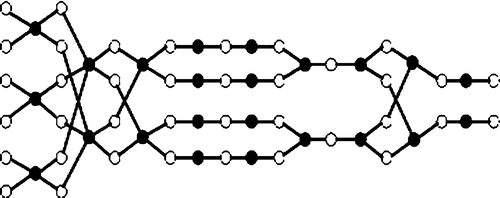
"RNA molecules are versatile biomaterials that act not only as DNA-like genetic materials but also have diverse functions in regulation of cellular biosystems. RNA is capable of regulating gene expression by sequence-specific hybridization. This feature allows the design of RNA-based artificial gene regulators (riboregulators). RNA can also build complex two-dimensional (2D) and 3D nanostructures, which afford protein-like functions and make RNA an attractive material for nanobiotechnology. RNA tectonics is a methodology in RNA nanobiotechnology for the design and construction of RNA nanostructures/nanoobjects through controlled self-assembly of modular RNA units (tectoRNAs). RNA nanostructures designed according to the concept of RNA tectonics are also attractive as tools in synthetic biology, but in vivo RNA tectonics is still in the early stages. This review presents a summary of the achievements of RNA tectonics and its related researches in vitro, and also introduces recent developments that facilitated the use of RNA nanostructures in bacterial cells."
Once all parts of the genome are complete, scientists can design new strains of the yeast Saccharomyces cerevisiae to make products including chemicals, vaccines and biofuels.
.....is a pioneering design consultancy focused on bringing living and bio-based materials to fashion, sportswear and luxury brands. We’re passionate about creating a biodesigned future where we grow materials from minimal renewable (or waste) resources.London based, we collaborate with the most innovative creatives in design and science to turn today’s science fiction into tomorrow’s reality. Founder Suzanne Lee is a fashion visionary. Her book ‘Fashioning The Future: tomorrow’s wardrobe’, (Thames & Hudson) was the first to map out the future landscape of technological innovation in fashion from spray on dresses to talking t-shirts..."
Angel Goñi-Moreno, Martyn Amos, Fernando de la Cruz
"Recent efforts in synthetic biology have focussed on the implementation of logical functions within living cells. One aim is to facilitate both internal “re-programming” and external control of cells, with potential applications in a wide range of domains. However, fundamental limitations on the degree to which single cells may be re-engineered have led to a growth of interest in multicellular systems, in which a “computation” is distributed over a number of different cell types, in a manner analogous to modern computer networks. Within this model, individual cell type perform specific sub-tasks, the results of which are then communicated to other cell types for further processing. The manner in which outputs are communicated is therefore of great significance to the overall success of such a scheme. Previous experiments in distributed cellular computation have used global communication schemes, such as quorum sensing (QS), to implement the “wiring” between cell types. While useful, this method lacks specificity, and limits the amount of information that may be transferred at any one time. We propose an alternative scheme, based on specific cell-cell conjugation. This mechanism allows for the direct transfer of genetic information between bacteria, via circular DNA strands known as plasmids. We design a multi-cellular population that is able to compute, in a distributed fashion, a Boolean XOR function. Through this, we describe a general scheme for distributed logic that works by mixing different strains in a single population; this constitutes an important advantage of our novel approach. Importantly, the amount of genetic information exchanged through conjugation is significantly higher than the amount possible through QS-based communication. We provide full computational modelling and simulation results, using deterministic, stochastic and spatially-explicit methods. These simulations explore the behaviour of one possible conjugation-wired cellular computing system under different conditions, and provide baseline information for future laboratory implementations."
"Chemists from North Carolina State University have performed a DNA-based logic-gate operation within a human cell. The research may pave the way to more complicated computations in live cells, as well as new methods of disease detection and treatment."
I am watching right now the life stream from this synthetic biology conference: SB6.0 LIVESTREAM http://bit.ly/W9Nx9i All talks are made available via life stream. You can comment on Twitter #sb6conf
This is an awesome concept and works very well. This format democratize scientific meetings. Moreover, professional scientists can participate in important meetings, if they have not the opportunity to travel.
I hope, this concept will be copied by other meeting organizer!
Gabriel C. Uguru, Madhav Mondhe, Shan Goh, Andrew Hesketh, Mervyn J. Bibb, Liam Good, James E. M. Stach
"We demonstrate the first application of synthetic RNA gene silencers in Streptomyces coelicolor A3(2). Peptide nucleic acid and expressed antisense RNA silencers successfully inhibited actinorhodin production. Synthetic RNA silencing was target-specific and is a new tool for gene regulation and metabolic engineering studies in Streptomyces."
by Taek Kang Jacob T. White, Zhen Xie , Yaakov Benenson , Eduardo Sontag, and Leonidas Bleris
"Multicomponent biological networks are often understood incompletely, in large part due to the lack of reliable and robust methodologies for network reverse engineering and characterization. As a consequence, developing automated and rigorously validated methodologies for unraveling the complexity of biomolecular networks in human cells remains a central challenge to life scientists and engineers. Today, when it comes to experimental and analytical requirements, there exists a great deal of diversity in reverse engineering methods, which renders the independent validation and comparison of their predictive capabilities difficult. In this work we introduce an experimental platform customized for the development and verification of reverse engineering and pathway characterization algorithms in mammalian cells. Specifically, we stably integrate a synthetic gene network in human kidney cells and use it as a benchmark for validating reverse engineering methodologies. The network, which is orthogonal to endogenous cellular signaling, contains a small set of regulatory interactions that can be used to quantify the reconstruction performance. By performing successive perturbations to each modular component of the network and comparing protein and RNA measurements, we study the conditions under which we can reliably reconstruct the causal relationships of the integrated synthetic network."
"Pseudomonas aeruginosa (P. aeruginosa) is a major cause of urinary tract and nosocomial infections. Here, we propose and demonstrate proof-of-principle for a potential cell therapy approach against P. aeruginosa. Using principles of synthetic biology, we genetically modified E. coli to specifically detect wild type P. aeruginosa (PAO1) via its quorum sensing (QS) molecule, 3OC12HSL. Engineered E. coli sentinels respond to the presence of 3OC12HSL by secreting CoPy, a novel pathogen-specific engineered chimeric bacteriocin, into the extracellular medium using the flagellar secretion tag FlgM. Extracellular FlgM-CoPy is designed to kill PAO1 specifically. CoPy was constructed by replacing the receptor and translocase domain of Colicin E3 with that of Pyocin S3. We show that CoPy toxicity is PAO1 specific, not affecting sentinel E. coli or the other bacterial strains tested. In order to define the system’s basic requirements and PAO1-killing capabilities, we further determined the growth rates of PAO1 under different conditions and concentrations of purified and secreted FlgM-CoPy. The integrated system was tested by co-culturing PAO1 cells, on semisolid agar plates, together with engineered sentinel E. coli, capable of secreting FlgM-CoPy when induced by 3OC12HSL. Optical microscopy results show that the engineered E. coli sentinels successfully inhibit PAO1 growth. .."
"As a reference platform for in vitro synthetic biology, we have developed a prototype flow microreactor for enzymatic biosynthesis. We report the design, implementation, and computer-aided optimisation of a three-step model pathway within a microfluidic reactor. A packed bed format was shown to be optimal for enzyme compartmentalisation after experimental evaluation of several approaches. The specific substrate conversion efficiency could significantly be improved by an optimised parameter set obtained by computational modelling. Our microreactor design provides a platform to explore new in vitro synthetic biology solutions for industrial biosynthesis.'
"The life sciences present a politically and ethically sensitive area of technology development. NBIC convergence-the convergence of nanotechnology, biotechnology, and information and cognitive technology-presents an increased interaction between the biological and physical sciences. As a result the bio-debate is no longer dominated by biotechnology, but driven by NBIC convergence. NBIC convergence enables two bioengineering megatrends: "biology becoming technology" and "technology becoming biology." The notion of living technologies captures the latter megatrend. Accordingly, living technology presents a politically and ethically sensitive area. This implies that governments sooner or later are faced with the challenge of both promoting and regulating the development of living technology. This article describes four current political models to deal with innovation promotion and risk regulation. Based on two specific developments in the field of living technologies-(psycho)physiological computing and synthetic biology-we reflect on appropriate governance strategies for living technologies. We conclude that recent pleas for anticipatory and deliberative governance tend to neglect the need for anticipatory regulation as a key factor in guiding the development of the life sciences from a societal perspective. In particular, when it is expected that a certain living technology will radically challenge current regulatory systems, one should opt for such a more active biopolitical approach."
by M. A. J. Roberts, R. M. Cranenburgh, M. P. Stevens and P. C. F. Oyston
"Synthetic biology can be defined as the design and construction of novel biologically based parts, devices and systems, as well as the redesign of existing natural biological systems, for useful purposes. It builds on genetic engineering, being design-driven genetic engineering encompassing engineering concepts of standardization and abstraction (Endy, 2005). One of the technical advances that has significantly increased the ability to undertake synthetic biology has been to artificially synthesize DNA, and thus create DNA parts. So far, the peak achievement has been the synthesis and assembly of a small bacterial genome which was transferred to a bacterial cell devoid of DNA to create a novel replicating micro-organism (Gibson et al., 2010). A great diversity of synthetic biology applications exists, many in the early research phase, which include using microbes as biofactories or as biological computers (Bonnet et al., 2012; Oldham et al., 2012). In this issue of Microbiology we have assembled a collection of papers to showcase the current state of synthetic biology research, and to convey the potential impact of synthetic biology on biological sciences."
by Jonathan Blakes, Jamie Twycross Francisco Jose Romero−Campero and Natalio Krasnogor
"The Infobiotics Workbench is an integrated software suite incorporating model specification, simulation, parameter optimization and model checking for Systems and Synthetic Biology. A modular model specification allows for straightforward creation of large-scale models containing many compartments and reactions. Models are simulated either using stochastic simulation or numerical integration, and visualized in time and space. Model parameters and structure can be optimized with evolutionary algorithms, and model properties calculated using probabilistic model checking."
"RNA molecules are versatile biomaterials that act not only as DNA-like genetic materials but also have diverse functions in regulation of cellular biosystems. RNA is capable of regulating gene expression by sequence-specific hybridization. This feature allows the design of RNA-based artificial gene regulators (riboregulators). RNA can also build complex two-dimensional (2D) and 3D nanostructures, which afford protein-like functions and make RNA an attractive material for nanobiotechnology. RNA tectonics is a methodology in RNA nanobiotechnology for the design and construction of RNA nanostructures/nanoobjects through controlled self-assembly of modular RNA units (tectoRNAs). RNA nanostructures designed according to the concept of RNA tectonics are also attractive as tools in synthetic biology, but in vivo RNA tectonics is still in the early stages. This review presents a summary of the achievements of RNA tectonics and its related researches in vitro, and also introduces recent developments that facilitated the use of RNA nanostructures in bacterial cells."
"Array-based oligonucleotide synthesis technologies provide access to thousands of custom-designed sequence variants at low cost. Large-scale synthesis and high-throughput assays have become valuable experimental tools to study in detail the interplay between sequence and function. We have developed a methodology and corresponding algorithms for the design of diverse protein coding gene libraries, to exploit the potential of multiplex synthesis and help elucidate the effects of codon utilization and other factors in gene expression. Using our algorithm, we have computationally designed gene libraries with hundreds to thousands of orthogonal codon usage variants, uniformly exploring the design space of codon utilization, while demanding only a small fraction of the synthesis cost that would be required if these variants were synthesized independently."
Too many data-management projects fail because they ignore the changing nature of life-sciences data, argues John Boyle.
"The last week of April was designated Big Data Week. But in modern biology, every week is big-data week: life-sciences research now routinely churns out more information than scientists can analyse without help. That help increasingly comes in the form of expensive data-management systems, but these are hard to design and most are even harder to use. As a result, a long line of data-management projects in the life sciences — many of which I have been involved with — have failed.
The size, complexity and heterogeneity of the data generated in labs across the world can only increase, and the introduction of cloud computing will encourage the same mistakes. Just a stone's throw from where I work, at least three computer companies are already touting cloud-based data-management systems for the life sciences. We need to find ways to manage and integrate data to make discoveries in fields such as genomics, and we need to do this quickly....
To get content containing either thought or leadership enter:
To get content containing both thought and leadership enter:
To get content containing the expression thought leadership enter:
You can enter several keywords and you can refine them whenever you want. Our suggestion engine uses more signals but entering a few keywords here will rapidly give you great content to curate.
by
Junya Ishikawa, Hiroyuki Furuta, Yoshiya Ikawa
"RNA molecules are versatile biomaterials that act not only as DNA-like genetic materials but also have diverse functions in regulation of cellular biosystems. RNA is capable of regulating gene expression by sequence-specific hybridization. This feature allows the design of RNA-based artificial gene regulators (riboregulators). RNA can also build complex two-dimensional (2D) and 3D nanostructures, which afford protein-like functions and make RNA an attractive material for nanobiotechnology. RNA tectonics is a methodology in RNA nanobiotechnology for the design and construction of RNA nanostructures/nanoobjects through controlled self-assembly of modular RNA units (tectoRNAs). RNA nanostructures designed according to the concept of RNA tectonics are also attractive as tools in synthetic biology, but in vivo RNA tectonics is still in the early stages. This review presents a summary of the achievements of RNA tectonics and its related researches in vitro, and also introduces recent developments that facilitated the use of RNA nanostructures in bacterial cells."
http://bit.ly/12w1qVA