SynBioFromLeukipposInstitute
130.0K views | +1 today
SynBioFromLeukipposInstitute
Your new post is loading...
Scooped by Gerd Moe-Behrens
August 2, 2013 6:02 PM
Scoop.it!

A robust family of Golden Gate Agrobacteirum vectors for plant synthetic biology

Tools that allow for rapid, accurate and inexpensive assembly of multi-component combinatorial libraries of DNA for transformation into plants will accelerate the progress of synthetic biology research.
Gerd Moe-Behrens's insight:

A robust family of Golden Gate Agrobacteirum vectors for plant synthetic biology http://bit.ly/17YD8nn ;

No comment yet.
Scooped by Gerd Moe-Behrens
August 2, 2013 4:36 PM
Scoop.it!

How bacteria 'invest' their meagre resources to bring about evolutionary success

How bacteria 'invest' their meagre resources to bring about evolutionary success | SynBioFromLeukipposInstitute | Scoop.it
Gerd Moe-Behrens's insight:


*How bacteria 'invest' their meagre resources to bring about evolutionary success*

"The breakthrough was in using synthetic biology to create identical bacteria but with fixed investment strategies, some investing in growth, some in stress resistance and others in both to various degrees."


http://bit.ly/15B6GqP

comment to:

*The form of a trade-off determines the response to competition*

by
Ram Maharjan Susanna Nilsson, Judy Sun, Ken Haynes, Robert E. Beardmore, Laurence D. Hurst4 Tom Ferenci, Ivana Gudelj

"Understanding how populations and communities respond to competition is a central concern of ecology. A seminal theoretical solution first formalised by Levins (and re-derived in multiple fields) showed that, in theory, the form of a trade-off should determine the outcome of competition. While this has become a central postulate in ecology it has evaded experimental verification, not least because of substantial technical obstacles. We here solve the experimental problems by employing synthetic ecology. We engineer strains of Escherichia coli with fixed resource allocations enabling accurate measurement of trade-off shapes between bacterial survival and multiplication in multiple environments. A mathematical chemostat model predicts different, and experimentally verified, trajectories of gene frequency changes as a function of condition-specific trade-offs. The results support Levins' postulate and demonstrates that otherwise paradoxical alternative outcomes witnessed in subtly different conditions are predictable."


http://bit.ly/13IwME8

Scooped by Gerd Moe-Behrens
July 31, 2013 6:28 PM
Scoop.it!

BioFNet: biological functional network database for analysis and synthesis of biological systems

Gerd Moe-Behrens's insight:

by
Kurata H, Maeda K, Onaka T, Takata T.

"In synthetic biology and systems biology, a bottom-up approach can be used to construct a complex, modular, hierarchical structure of biological networks. To analyze or design such networks, it is critical to understand the relationship between network structure and function, the mechanism through which biological parts or biomolecules are assembled into building blocks or functional networks. A functional network is defined as a subnetwork of biomolecules that performs a particular function. Understanding the mechanism of building functional networks would help develop a methodology for analyzing the structure of large-scale networks and design a robust biological circuit to perform a target function. We propose a biological functional network database, named BioFNet, which can cover the whole cell at the level of molecular interactions. The BioFNet takes an advantage in implementing the simulation program for the mathematical models of the functional networks, visualizing the simulated results. It presents a sound basis for rational design of biochemical networks and for understanding how functional networks are assembled to create complex high-level functions, which would reveal design principles underlying molecular architectures."

http://bit.ly/15cKHZr

No comment yet.
Scooped by Gerd Moe-Behrens
July 30, 2013 5:59 PM
Scoop.it!

Interactive learning and action: realizing the promise of synthetic biology for global health

No comment yet.
Scooped by Gerd Moe-Behrens
July 30, 2013 5:49 PM
Scoop.it!

Adoptive T Cell Transfer for Cancer Immunotherapy in the Era of Synthetic Biology

Adoptive T Cell Transfer for Cancer Immunotherapy in the Era of Synthetic Biology | SynBioFromLeukipposInstitute | Scoop.it
Gerd Moe-Behrens's insight:

by
Michael Kalos, Carl H. June

"Adoptive T cell transfer for cancer and chronic infection is an emerging field that shows promise in recent trials. Synthetic-biology-based engineering of T lymphocytes to express high-affinity antigen receptors can overcome immune tolerance, which has been a major limitation of immunotherapy-based strategies. Advances in cell engineering and culture approaches to enable efficient gene transfer and ex vivo cell expansion have facilitated broader evaluation of this technology, moving adoptive transfer from a “boutique” application to the cusp of a mainstream technology. The major challenge currently facing the field is to increase the specificity of engineered T cells for tumors, because targeting shared antigens has the potential to lead to on-target off-tumor toxicities, as observed in recent trials. As the field of adoptive transfer technology matures, the major engineering challenge is the development of automated cell culture systems, so that the approach can extend beyond specialized academic centers and become widely available."

 http://bit.ly/13XvnxT

No comment yet.
Scooped by Gerd Moe-Behrens
July 29, 2013 4:55 PM
Scoop.it!

BIOFACTION » SYNMOD game

BIOFACTION » SYNMOD game | SynBioFromLeukipposInstitute | Scoop.it
Gerd Moe-Behrens's insight:

 SYNMOD is based on a real scientific project that uses synthetic biology to design new antibiotics. http://bit.ly/1e6IWwm

No comment yet.
Scooped by Gerd Moe-Behrens
July 28, 2013 12:59 PM
Scoop.it!

Our genomes today: time to be clear

Gerd Moe-Behrens's insight:

by
Jeantine E Lunshof and Madeleine P Ball

"DNA is an identifier. We are not defined by our genome, but our DNA is ours and we can be identified through it. Despite the comments made at the time, it was neither wicked nor tacky when Craig Venter, shortly after the first human genome sequence was published in 2001, publicly revealed that he was one donor of the samples used in Celera's genome sequencing project [1]. Venter later explained that by identifying himself as a donor he had intended to demystify the human genome and to reduce public fears about the potential misuse of genetic information [2]...."

 http://bit.ly/13oOSeq

No comment yet.
Scooped by Gerd Moe-Behrens
July 27, 2013 5:40 PM
Scoop.it!

Mobile Real-Time DNA Analysis on Your Smartphone

Mobile Real-Time DNA Analysis on Your Smartphone | SynBioFromLeukipposInstitute | Scoop.it
Gerd Moe-Behrens's insight:

by
Anonymous

"Biomeme, a new company out of Philadelphia, PA, is planning on launching an easy to use system that can perform real-time qPCR and provide results through any smartphone without using expensive lab equipment nor requiring an experienced hand to operate. The goal is to offer medical professionals, regardless of their location, the ability to do advanced diagnostics and perform disease surveillance.

 Biomeme’s platform transforms a smartphone into a mobile lab for advanced DNA diagnostics and real-time disease surveillance. The system includes: a docking station for performing real-time quantitative polymerase chain reaction (qPCR)a mobile app to wirelessly control the system, analyze results in real-time and send them to the cloudtargeted test kits for preparing samples and identifying pathogens or diseases by their specific DNA or RNA signatures.The low-cost system requires no special laboratory equipment and could enable mobile testing at the point-of-need for health care, agriculture, vector surveillance, veterinary medicine, environmental monitoring, and even education and citizen science. We’re intrigued by the battery-powered system’s game changing potential and hope to interview the team in an upcoming article."


http://bit.ly/15Uo8Fz

No comment yet.
Scooped by Gerd Moe-Behrens
July 26, 2013 4:54 PM
Scoop.it!

Barcoding Alaska

Barcoding Alaska | SynBioFromLeukipposInstitute | Scoop.it
How do we enable citizen scientists to identify fragile Alaskan species?
Gerd Moe-Behrens's insight:

Great project. Ellen Jorgensen and Genspace are doing awesome work. Their microryza project deserve all support.

No comment yet.
Scooped by Gerd Moe-Behrens
July 25, 2013 6:10 PM
Scoop.it!

Quantification of microRNA Expression with Next-Generation Sequencing

No comment yet.
Scooped by Gerd Moe-Behrens
July 24, 2013 6:56 PM
Scoop.it!

The art of trans-boundary governance: the case of synthetic biology

No comment yet.
Scooped by Gerd Moe-Behrens
July 24, 2013 6:42 PM
Scoop.it!

Yikes! Three Skin-Crawling Dishes That Combine Fine Dining and Synthetic Biology

Yikes! Three Skin-Crawling Dishes That Combine Fine Dining and Synthetic Biology | SynBioFromLeukipposInstitute | Scoop.it
Gerd Moe-Behrens's insight:

Design concept: Living food......

*Yikes! Three Skin-Crawling Dishes That Combine Fine Dining and Synthetic Biology*

by
KYLE VANHEMERT

"Today, with fine dining, the best and the most bizarre are often one in the same. Beef Wellington might’ve been an exciting order if you were an Earl on the eve of the Boxer Rebellion, but if you want to be on the cutting edge of culinary thrills today, get ready to slurp on a flower-infused octopus lollipop. Of course, the rise of molecular gastronomy hasn’t just given us a plethora of weird new eats; it’s also about giving diners weird new eating experiences. And where do we look as we try to dream up the ever-stranger eating experiences of the near-future? For Minsu Kim, the answer is obvious: synthetic biology.

 Kim, a student at the Royal College of the Arts, explored this terrifying convergence of trends in a project called Living Food. Looking at diners’ willingness (eagerness?) to get weird in the context of our advancements in the world of man-made organisms and genetic modification, Kim dreamed up three dishes that behave like living creatures. Depending on your outlook, they’re either the stuff of avant garde foodie dreams or a perfect reason to reboot Fear Factor..."


 http://bit.ly/12Mjkjl

No comment yet.
Scooped by Gerd Moe-Behrens
July 23, 2013 4:09 PM
Scoop.it!

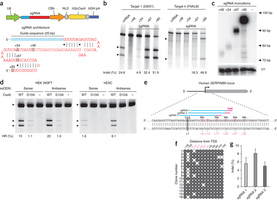
DNA targeting specificity of RNA-guided Cas9 nucleases

DNA targeting specificity of RNA-guided Cas9 nucleases | SynBioFromLeukipposInstitute | Scoop.it
Gerd Moe-Behrens's insight:


Improved technique makes it easier to add or delete genes in living cells, with less risk of off-target DNA damage. (comment see below)

*DNA targeting specificity of RNA-guided Cas9 nucleases*

by
Patrick D Hsu,David A Scott,Joshua A Weinstein,F Ann Ran,Silvana Konermann,Vineeta Agarwala,Yinqing Li,Eli J Fine,Xuebing Wu,Ophir Shalem,Thomas J Cradick,Luciano A Marraffini,Gang Bao& Feng Zhang

"The Streptococcus pyogenes Cas9 (SpCas9) nuclease can be efficiently targeted to genomic loci by means of single-guide RNAs (sgRNAs) to enable genome editing1, 2, 3, 4, 5, 6, 7, 8, 9, 10. Here, we characterize SpCas9 targeting specificity in human cells to inform the selection of target sites and avoid off-target effects. Our study evaluates >700 guide RNA variants and SpCas9-induced indel mutation levels at >100 predicted genomic off-target loci in 293T and 293FT cells. We find that SpCas9 tolerates mismatches between guide RNA and target DNA at different positions in a sequence-dependent manner, sensitive to the number, position and distribution of mismatches. We also show that SpCas9-mediated cleavage is unaffected by DNA methylation and that the dosage of SpCas9 and sgRNA can be titrated to minimize off-target modification. To facilitate mammalian genome engineering applications, we provide a web-based software tool to guide the selection and validation of target sequences as well as off-target analyses."

 http://bit.ly/15e3QI1

comment 

*Research update: Genome editing becomes more accurate*

by 
Anne Trafton

"Earlier this year, MIT researchers developed a way to easily and efficiently edit the genomes of living cells. Now, the researchers have discovered key factors that influence the accuracy of the system, an important step toward making it safer for potential use in humans, says Feng Zhang, leader of the research team. 

 With this technology, scientists can deliver or disrupt multiple genes at once, raising the possibility of treating human disease by targeting malfunctioning genes. To help with that process, Zhang’s team, led by graduate students Patrick Hsu and David Scott, has now created a computer model that can identify the best genetic sequences to target a given gene. “Using this, you will be able to identify ways to target almost every gene. Within every gene, there are hundreds of locations that can be edited, and this will help researchers narrow down which ones are better than others,” says Zhang, the W.M. Keck Assistant Professor in Biomedical Engineering at MIT and senior author of a paper describing the new model, appearing in the July 21 online edition of Nature Biotechnology. The genome-editing system, known as CRISPR, exploits a protein-RNA complex that bacteria use to defend themselves from infection. The complex includes short RNA sequences bound to an enzyme called Cas9, which slices DNA. These RNA sequences are designed to target specific locations in the genome; when they encounter a match, Cas9 cuts the DNA.  This approach can be used either to disrupt the function of a gene or to replace it with a new one. To replace the gene, the researchers must also add a DNA template for the new gene, which would be copied into the genome after the DNA is cut.  This technique offers a much faster and more efficient way to create transgenic mice, which are often used to study human disease. Current methods for creating such mice require adding small pieces of DNA to mouse embryonic cells. However, the process is inefficient and time-consuming.  With CRISPR, many genes are edited at once, and the entire process can be done in three weeks, says Zhang, who is a core member of the Broad Institute and MIT’s McGovern Institute for Brain Research. The system can also be used to create genetically modified cell lines for lab experiments much more efficiently. Fine-tuning Since Zhang and his colleagues first described the original system in January, more than 2,000 labs around the world have started using the system to generate their own genetically modified cell lines or animals. In the new paper, the researchers describe improvements in both the efficiency and accuracy of gene editing.  To modify genes using this system, an RNA “guide strand” complementary to a 20-base-pair sequence of targeted DNA is delivered to cells. After the RNA strand binds to the target DNA, it recruits the Cas9 enzyme, which snips the DNA in the correct location. The researchers discovered they could minimize the chances of the Cas9-RNA complex accidentally cleaving the wrong site by making sure the target sequence is not too similar to other sequences found in the genome. They found that if an off-target sequence differs from the target sequence by three or fewer base pairs, the editing complex will likely also cleave that sequence, which could have deleterious effects for the cell.  The team’s new computer model can search any sequence within the mouse or human genome and identify 20-base-pair sequences within that region that have the least overlap with sequences elsewhere in the genome.  Another way to improve targeting specificity is by adjusting the dosage of the guide RNA, the researchers found. In general, decreasing the amount of RNA delivered minimizes damage to off-target sites but has a much smaller effect on cleavage of the target sequence. For each sequence, the “sweet spot” with the best balance of high on-target effects and low off-target effects can be calculated, Zhang says. “The real value of this paper is that it does a very comprehensive and systematic analysis to understand the causes of off-target effects. That analysis suggests a lot of possible ways to eliminate or reduce off-target effects,” says Michael Terns, a professor of biochemistry and molecular biology at the University of Georgia who was not part of the research team. Zhang and his colleagues also optimized the structure of the RNA guide needed for efficient activation of Cas9. In the January paper describing the original system, the researchers found that two separate RNA strands working together — one that binds to the target DNA and another that recruits Cas9 — produced better results than when those two strands were fused together before delivery. However, in experiments reported in the new paper, the researchers found that they could boost the efficiency of the fused RNA strand by making the strand longer. These longer RNA guide strands include a hairpin structure that may stabilize the molecules and help them interact with Cas9, Zhang says. Zhang’s team is now working on further improving the specificity of the system, and plans to start generating cell lines and animals that could be used to study how the brain develops and builds neural circuits. By disrupting genes known to be involved in those processes, they can learn more about how they work and how they are impaired in neurological disease. "


http://bit.ly/162Jvqi

No comment yet.
Scooped by Gerd Moe-Behrens
August 2, 2013 5:38 PM
Scoop.it!

Nanothermometer takes the temperature of living cells

Nanothermometer takes the temperature of living cells | SynBioFromLeukipposInstitute | Scoop.it
Gerd Moe-Behrens's insight:


*Nanothermometer takes the temperature of living cells*

by
Davide Castelvecchi

"A tool originally developed for quantum computers can now map temperature changes within a living cell.

 The technique exploits quantum effects in tiny diamond crystals, or 'nanodiamonds', to detect changes down to a few thousandths of a degree. The researchers were also able to heat selected parts of the cell using a laser. “We now have a tool to control temperature on a cellular level, and we can study how biological systems react to temperature change,”


http://bit.ly/18ShG4q

No comment yet.
Scooped by Gerd Moe-Behrens
August 1, 2013 6:50 PM
Scoop.it!

Engineering Life

Engineering Life | SynBioFromLeukipposInstitute | Scoop.it
Gerd Moe-Behrens's insight:

by
Ahmad S. Khalil, Caleb J. Bashor, and Timothy K. Lu

"Engineering began as an outgrowth of the craftwork of metallurgical artisans. In a constant quest to improve their handiwork, those craftsmen exhaustively and empirically explored the properties—alone and in combination—of natural materials. The knowledge accumulated from this exploration and experimentation with natural building blocks eventually led to today’s modern technologies. We can now readily build things like super-lightweight cars and electrical circuits containing billions of transistors that encode highly sophisticated functions, using reliable design and manufacturing frameworks—a vast leap from artisanal craft.

 Today, there is a parallel progression unfolding in the field of synthetic biology, which encompasses the engineering of biological systems from genetically encoded molecular components.1-7 The first decade or so of synthetic biology can be viewed as an artisanal exploration of subcellular material. Much as in the early days of other engineering disciplines, the field’s focus has been on identifying the building blocks that may be useful for constructing synthetic biological circuits—and determining the practical rules for connecting them into functional systems. This artisanal tinkering with cells is necessary for arriving at a rigorous understanding of subcellular construction material and for determining the extent to which it can be manipulated....."


http://bit.ly/14JjffQ

No comment yet.
Scooped by Gerd Moe-Behrens
July 31, 2013 6:19 PM
Scoop.it!

Metabolic analyses elucidate non-trivial gene targets for amplifying dihydroartemisinic acid production in yeast

Metabolic analyses elucidate non-trivial gene targets for amplifying dihydroartemisinic acid production in yeast | SynBioFromLeukipposInstitute | Scoop.it
Gerd Moe-Behrens's insight:

by
Ashish Misra1, Matthew F. Conway1, Joseph Johnnie, Tabish M. Qureshi, Bao Lige, Anne M. Derrick, Eddy C. Agbo and Ganesh Sriram

"Synthetic biology enables metabolic engineering of industrial microbes to synthesize value-added molecules. In this, a major challenge is the efficient redirection of carbon to the desired metabolic pathways. Pinpointing strategies toward this goal requires an in-depth investigation of the metabolic landscape of the organism, particularly primary metabolism, to identify precursor and cofactor availability for the target compound. The potent antimalarial therapeutic artemisinin and its precursors are promising candidate molecules for production in microbial hosts. Recent advances have demonstrated the production of artemisinin precursors in engineered yeast strains as an alternative to extraction from plants. We report the application of in silico and in vivo metabolic pathway analyses to identify metabolic engineering targets to improve the yield of the direct artemisinin precursor dihydroartemisinic acid (DHA) in yeast. First, in silico extreme pathway (ExPa) analysis identified NADPH-malic enzyme and the oxidative pentose phosphate pathway (PPP) as mechanisms to meet NADPH demand for DHA synthesis. Next, we compared key DHA-synthesizing ExPas to the metabolic flux distributions obtained from in vivo (13)C metabolic flux analysis of a DHA-synthesizing strain. This comparison revealed that knocking out ethanol synthesis and overexpressing glucose-6-phosphate dehydrogenase in the oxidative PPP (gene YNL241C) or the NADPH-malic enzyme ME2 (YKL029C) are vital steps toward overproducing DHA. Finally, we employed in silico flux balance analysis and minimization of metabolic adjustment on a yeast genome-scale model to identify gene knockouts for improving DHA yields. The best strategy involved knockout of an oxaloacetate transporter (YKL120W) and an aspartate aminotransferase (YKL106W), and was predicted to improve DHA yields by 70-fold. Collectively, our work elucidates multiple non-trivial metabolic engineering strategies for improving DHA yield in yeast."

http://bit.ly/13wp9BJ

No comment yet.
Scooped by Gerd Moe-Behrens
July 30, 2013 5:57 PM
Scoop.it!

Using Synthetic Biology to Distinguish and Overcome Regulatory and Functional Barriers Related to Nitrogen Fixation

Using Synthetic Biology to Distinguish and Overcome Regulatory and Functional Barriers Related to Nitrogen Fixation | SynBioFromLeukipposInstitute | Scoop.it
Gerd Moe-Behrens's insight:

by

Xia Wang, Jian-Guo Yang, Li Chen, Ji-Long Wang, Qi Cheng, Ray Dixon Yi-Ping Wang 

"Biological nitrogen fixation is a complex process requiring multiple genes working in concert. To date, the Klebsiella pneumoniae nif gene cluster, divided into seven operons, is one of the most studied systems. Its nitrogen fixation capacity is subject to complex cascade regulation and physiological limitations. In this report, the entire K. pneumoniae nif gene cluster was reassembled as operon-based BioBrick parts in Escherichia coli. It provided ~100% activity of native K. pneumoniae system. Based on the expression levels of these BioBrick parts, a T7 RNA polymerase–LacI expression system was used to replace the σ54-dependent promoters located upstream of nif operons. Expression patterns of nif operons were critical for the maximum activity of the recombinant system. By mimicking these expression levels with variable-strength T7-dependent promoters, ~42% of the nitrogenase activity of the σ54-dependent nif system was achieved in E. coli. When the newly constructed T7-dependent nif system was challenged with different genetic and physiological conditions, it bypassed the original complex regulatory circuits, with minor physiological limitations. Therefore, we have successfully replaced the nif regulatory elements with a simple expression system that may provide the first step for further research of introducing nif genes into eukaryotic organelles, which has considerable potentials in agro-biotechnology."


http://bit.ly/18Q2IiX

No comment yet.
Scooped by Gerd Moe-Behrens
July 29, 2013 5:01 PM
Scoop.it!

DNA Consumer Products: Not as Far Out as You Think

June 5 (Bloomberg) -- Bloomberg's Rachel Crane visits Singularity University, on the brink of accelerating human progress. "Bloomberg Brink" can be seen ever...
No comment yet.
Scooped by Gerd Moe-Behrens
July 29, 2013 4:52 PM
Scoop.it!

Free eBook: How synthetic biology will change your industry

Free eBook: How synthetic biology will change your industry | SynBioFromLeukipposInstitute | Scoop.it
Download the free eBook here to find out more about how synthetic biology will change your industry >What is Synthetic Biology?Synthetic biology is a rapidly
Gerd Moe-Behrens's insight:

http://bit.ly/18Jw5Ql

No comment yet.
Scooped by Gerd Moe-Behrens
July 28, 2013 12:52 PM
Scoop.it!

Feynman on Biology

Feynman on Biology | SynBioFromLeukipposInstitute | Scoop.it
Gerd Moe-Behrens's insight:

By Christina Agapakis


"Richard Feynman was a brilliant, bongo-playing, lock-picking, eminently quotable physicist. His quips, on anything from the pleasure of findings things out to the key to science to how fire works are standard fare for science fans. For synthetic biologists, it’s a quotation he left on his last blackboard at Caltech before his death in 1988 that is most frequently quoted: “What I cannot create, I do not understand.” This statement gives quotable form to the “drive to make” that happens when engineers start doing biology. Feynman of course wasn’t an engineer, he was a theoretical physicist–a field less often associated with creating stuff than with creating equations. But Feynman also liked to dabble in other fields, including a sabbatical year in Max Delbrück’s biology lab at Caltech studying genetic mutations in viruses that infect bacteria. The chapter on this disciplinary dabbling in Feynman’s autobiography, Surely You’re Joking Mr. Feynman, is a fascinating look at what happens when a physicist starts doing biology. I read Surely You’re Joking during college, just as I was starting to work in a biology lab. I still vividly remember one tiny anecdote about the general applicability of a certain lab technique in everyday life, a technique I was just starting to get the hang of while I was reading the book: There was one useful lab technique I learned in that course which I still use today. They taught us how to hold a test tube and take its cap off with one hand (you use your middle and index fingers), while leaving the other hand free to do something else (like hold a pipette that you’re sucking cyanide up into). Now I can hold my toothbrush in one hand, and with the other hand, hold the tube of toothpaste, twist the cap off, and put it back on. For Feynman, these little tricks of the trade–the tacit knowledge that biologists gain through experience–end up being the focus of his biological excursion more than any facts about bacteria, phage, and DNA. He concludes that: I learned a lot of things in biology, and I gained a lot of experience. I got better at pronouncing the words, knowing what not to include in a paper or a seminar, and detecting a weak technique in an experiment. These stories of these lessons are told with Feynman’s quirky mix of charming arrogance and humility, the strange combination of traits that gave him the confidence and the curiosity to jump into a new field. Feynman discusses giving a presentation to fellow students in a biology class at Princeton, the other students “laughing hysterically” at his mispronunciation of common biology terms. Later, the class urges him to move on after an especially long introduction of background facts saying, “We know all that!” He replied: “Oh” I say, “you do? Then no wonder I can catch up with you so fast after you’ve had four years of biology.” They had wasted all their time memorizing stuff like that, when it could be looked up in fifteen minutes. The chapter’s title, “A Map of the Cat?”, comes from a short anecdote that captures Feynman’s humility and humor when confronted with too many new facts: I began to read the paper. It kept talking about extensors and flexors, the gastrocnemius muscle, and so on. This and that muscle were named, but I had not the foggiest idea of where they were located in relation to the nerves or to the cat. So I went to the librarian in the biology section and asked her if she could find me a map of the cat. “A map of the cat, sir?” she asked horrified. “You mean a zoological chart!” From then on there were rumors about a dumb biology student who was looking for “a map of the cat.” Rereading the chapter now after many years in biology labs, I’m particularly struck by they way Feynman describes experimental work, the early molecular biology tools and techniques that require “great care and a lot of tedious work.” More than the facts or the jargon or the disciplinary conventions for writing papers, this is where the biggest differences appear between the practice of biology and the practice of theoretical physics. Feynman’s legendary ability to think through problems in physics–his “problem-solving algorithm”–didn’t help as much in the lab, leading him at one point to say, “It would have been a fantastic and vital discovery if I had been a good biologist. But I wasn’t a good biologist.”..."


http://bit.ly/1e4ftU0

No comment yet.
Scooped by Gerd Moe-Behrens
July 27, 2013 9:47 AM
Scoop.it!

Optical control of mammalian endogenous transcription and epigenetic states

Optical control of mammalian endogenous transcription and epigenetic states | SynBioFromLeukipposInstitute | Scoop.it
Gerd Moe-Behrens's insight:

by
Silvana Konermann,Mark D. Brigham,Alexandro Trevino,Patrick D. Hsu,Matthias Heidenreich,Le Cong,Randall J. Platt,David A. Scott,George M. Church& Feng Zhang

"The dynamic nature of gene expression enables cellular programming, homeostasis and environmental adaptation in living systems. Dissection of causal gene functions in cellular and organismal processes therefore necessitates approaches that enable spatially and temporally precise modulation of gene expression. Recently, a variety of microbial and plant-derived light-sensitive proteins have been engineered as optogenetic actuators, enabling high-precision spatiotemporal control of many cellular functions1, 2, 3, 4, 5, 6, 7, 8, 9, 10, 11. However, versatile and robust technologies that enable optical modulation of transcription in the mammalian endogenous genome remain elusive. Here we describe the development of light-inducible transcriptional effectors (LITEs), an optogenetic two-hybrid system integrating the customizable TALE DNA-binding domain12, 13, 14 with the light-sensitive cryptochrome 2 protein and its interacting partner CIB1 from Arabidopsis thaliana. LITEs do not require additional exogenous chemical cofactors, are easily customized to target many endogenous genomic loci, and can be activated within minutes with reversibility6, 15. LITEs can be packaged into viral vectors and genetically targeted to probe specific cell populations. We have applied this system in primary mouse neurons, as well as in the brain of freely behaving mice in vivo to mediate reversible modulation of mammalian endogenous gene expression as well as targeted epigenetic chromatin modifications. The LITE system establishes a novel mode of optogenetic control of endogenous cellular processes and enables direct testing of the causal roles of genetic and epigenetic regulation in normal biological processes and disease states."

http://bit.ly/16b9Oum


Comment: 
*Controlling genes with light* 

by
Anne Trafton

"Although human cells have an estimated 20,000 genes, only a fraction of those are turned on at any given time, depending on the cell’s needs — which can change by the minute or hour. To find out what those genes are doing, researchers need tools that can manipulate their status on similarly short timescales.

 That is now possible, thanks to a new technology developed at MIT and the Broad Institute that can rapidly start or halt the expression of any gene of interest simply by shining light on the cells.  The work is based on a technique known as optogenetics, which uses proteins that change their function in response to light. In this case, the researchers adapted the light-sensitive proteins to either stimulate or suppress the expression of a specific target gene almost immediately after the light comes on. “Cells have very dynamic gene expression happening on a fairly short timescale, but so far the methods that are used to perturb gene expression don’t even get close to those dynamics. To understand the functional impact of those gene-expression changes better, we have to be able to match the naturally occurring dynamics as closely as possible,” says Silvana Konermann, an MIT graduate student in brain and cognitive sciences. The ability to precisely control the timing and duration of gene expression should make it much easier to figure out the roles of particular genes, especially those involved in learning and memory. The new system can also be used to study epigenetic modifications — chemical alterations of the proteins that surround DNA — which are also believed to play an important role in learning and memory. Konermann and Mark Brigham, a graduate student at Harvard University, are the lead authors of a paper describing the technique in the July 22 online edition of Nature. The paper’s senior author is Feng Zhang, the W.M. Keck Assistant Professor in Biomedical Engineering at MIT and a core member of the Broad Institute and MIT’s McGovern Institute for Brain Research. Shining light on genes The new system consists of several components that interact with each other to control the copying of DNA into messenger RNA (mRNA), which carries genetic instructions to the rest of the cell. The first is a DNA-binding protein known as a transcription activator-like effector (TALE). TALEs are modular proteins that can be strung together in a customized way to bind any DNA sequence. Fused to the TALE protein is a light-sensitive protein called CRY2 that is naturally found in Arabidopsis thaliana, a small flowering plant. When light hits CRY2, it changes shape and binds to its natural partner protein, known as CIB1. To take advantage of this, the researchers engineered a form of CIB1 that is fused to another protein that can either activate or suppress gene copying. After the genes for these components are delivered to a cell, the TALE protein finds its target DNA and wraps around it. When light shines on the cells, the CRY2 protein binds to CIB1, which is floating in the cell. CIB1 brings along a gene activator, which initiates transcription, or the copying of DNA into mRNA. Alternatively, CIB1 could carry a repressor, which shuts off the process. A single pulse of light is enough to stimulate the protein binding and initiate DNA copying. The researchers found that pulses of light delivered every minute or so are the most effective way to achieve continuous transcription for the desired period of time. Within 30 minutes of light delivery, the researchers detected an uptick in the amount of mRNA being produced from the target gene. Once the pulses stop, the mRNA starts to degrade within about 30 minutes.  In this study, the researchers tried targeting nearly 30 different genes, both in neurons grown in the lab and in living animals. Depending on the gene targeted and how much it is normally expressed, the researchers were able to boost transcription by a factor of two to 200.  Karl Deisseroth, a professor of bioengineering at Stanford University and one of the inventors of optogenetics, says the most important innovation of the technique is that it allows control of genes that naturally occur in the cell, as opposed to engineered genes delivered by scientists. “You could control, at precise times, a particular genetic locus and see how everything responds to that, with high temporal precision,” says Deisseroth, who was not part of the research team. Epigenetic modifications Another important element of gene-expression control is epigenetic modification. One major class of epigenetic effectors is chemical modification of the proteins, known as histones, that anchor chromosomal DNA and control access to the underlying genes. The researchers showed that they can also alter these epigenetic modifications by fusing TALE proteins with histone modifiers. Epigenetic modifications are thought to play a key role in learning and forming memories, but this has not been very well explored because there are no good ways to disrupt the modifications, short of blocking histone modification of the entire genome. The new technique offers a much more precise way to interfere with modifications of individual genes. “We want to allow people to prove the causal role of specific epigenetic modifications in the genome,” Zhang says.  So far, the researchers have demonstrated that some of the histone effector domains can be tethered to light-sensitive proteins; they are now trying to expand the types of histone modifiers they can incorporate into the system. “It would be really useful to expand the number of epigenetic marks that we can control. At the moment we have a successful set of histone modifications, but there are a good deal more of them that we and others are going to want to be able to use this technology for,” Brigham says." 


http://bit.ly/13kEtkD

No comment yet.
Scooped by Gerd Moe-Behrens
July 26, 2013 4:44 PM
Scoop.it!

Biomedical synthetic biology: an overview for physicians

Gerd Moe-Behrens's insight:

by
O. Keret

"Synthetic biology is a relatively new field of biological research and development that focuses on the engineering of genetic molecular machines with a specific predefined function. Plainly put, the newly engineered organism functions as a machine. It can process information, manufacture, heal and even diagnose. We just have to engineer it to do so. The famous quote "Biology is the nanotechnology that works" is currently being put to the test on a worldwide scale. The application of these machines is theoretically boundless. In laboratories worldwide synthetic biology technologies are being rationally designed to assist in diagnosis or disrupt disease mechanisms. In the not too distant future they are expected to reach the clinical setting. This new field should be distinguished from classic genetic engineering. The latter researches naturally found DNA segments via cloning. It is weakly associated with engineering. Synthetic biology focuses on the engineering of molecular biological machines for the benefit of mankind. This is done via synthetic (computer printed) DNA sequences, man-designed or altered in silico. In this article I will briefly introduce synthetic biology, elaborate on the Biobrick Foundation as an independent fast-growing synthetic biology-sharing movement, and report on selected developing applications for medicine."

http://bit.ly/12R8HMa

No comment yet.
Scooped by Gerd Moe-Behrens
July 25, 2013 5:49 PM
Scoop.it!

10 videos that offer a glimpse at 10 emerging sectors

10 videos that offer a glimpse at 10 emerging sectors | SynBioFromLeukipposInstitute | Scoop.it
I was asked to give a talk to a group of science and technology educators from two-year colleges around the country this week.
Gerd Moe-Behrens's insight:


*#SynBio Video: Joule Plant Overview*

by
Scott Kirsner

"Boston-area companies like Sample6 and Joule are designing bespoke bacteria to do difficult jobs like detecting pathogens in food processing plants, or cranking out ethanol for cars. (This is a field I've been following since 2005, when I wrote about the collegiate Synthetic Biology Competition.) Here's a video about Joule's fuel production facility in New Mexico."

from: 
*10 videos that offer a glimpse at 10 emerging sectors* http://bo.st/146nx81

http://bit.ly/12nlFXf

No comment yet.
Scooped by Gerd Moe-Behrens
July 24, 2013 6:54 PM
Scoop.it!

Synthetic biology, patenting, health and global justice

No comment yet.
Scooped by Gerd Moe-Behrens
July 23, 2013 5:05 PM
Scoop.it!

Biological Signal Processing with a Genetic Toggle Switch

Biological Signal Processing with a Genetic Toggle Switch | SynBioFromLeukipposInstitute | Scoop.it
Gerd Moe-Behrens's insight:

*Biological Signal Processing with a Genetic Toggle Switch *

by

Patrick Hillenbrand, Georg Fritz, Ulrich Gerland
"Complex gene regulation requires responses that depend not only on the current levels of input signals but also on signals received in the past. In digital electronics, logic circuits with this property are referred to as sequential logic, in contrast to the simpler combinatorial logic without such internal memory. In molecular biology, memory is implemented in various forms such as biochemical modification of proteins or multistable gene circuits, but the design of the regulatory interface, which processes the input signals and the memory content, is often not well understood. Here, we explore design constraints for such regulatory interfaces using coarse-grained nonlinear models and stochastic simulations of detailed biochemical reaction networks. We test different designs for biological analogs of the most versatile memory element in digital electronics, the JK-latch. Our analysis shows that simple protein-protein interactions and protein-DNA binding are sufficient, in principle, to implement genetic circuits with the capabilities of a JK-latch. However, it also exposes fundamental limitations to its reliability, due to the fact that biological signal processing is asynchronous, in contrast to most digital electronics systems that feature a central clock to orchestrate the timing of all operations. We describe a seemingly natural way to improve the reliability by invoking the master-slave concept from digital electronics design. This concept could be useful to interpret the design of natural regulatory circuits, and for the design of synthetic biological systems."


http://bit.ly/16XEOLt

No comment yet.