SynBioFromLeukipposInstitute
130.0K views | +2 today
SynBioFromLeukipposInstitute
Your new post is loading...
Scooped by Gerd Moe-Behrens
November 6, 2013 4:26 PM
Scoop.it!

MicroRNAs as novel regulators of stem cell fate

No comment yet.
Scooped by Gerd Moe-Behrens
November 6, 2013 4:17 PM
Scoop.it!

Designer piercings: New membrane pores with DNA nanotechnology

A new way to build membrane-crossing pores, using Lego-like DNA building blocks, has been developed by scientists at UCL, in collaboration with colleagues at the University of Cambridge and the University of Southampton.
No comment yet.
Scooped by Gerd Moe-Behrens
November 1, 2013 5:44 PM
Scoop.it!

J Craig Venter sequenced the human genome. Now he wants to covert DNA into a digital signal

J Craig Venter sequenced the human genome. Now he wants to covert DNA into a digital signal | SynBioFromLeukipposInstitute | Scoop.it
Gerd Moe-Behrens's insight:

by ROGER HIGHFIELD

"J Craig Venter has been a molecular-biology pioneer for two decades. After developing expressed sequence tags in the 90s, he led the private effort to map the human genome, publishing the results in 2001. In 2010 the J Craig Venter Institute manufactured the entire genome of a bacterium, creating the first synthetic organism.

 Now Venter, author of Life at the Speed of Light: From the Double Helix to the Dawn of Digital Life, explains the coming era of discovery. Wired: In Life at the Speed of Light, you argue that humankind is entering a new phase of evolution. How so? J Craig Venter: As the industrial age is drawing to a close, I think that we're witnessing the dawn of the era of biological design. DNA, as digitised information, is accumulating in computer databases. Thanks to genetic engineering, and now the field of synthetic biology, we can manipulate DNA to an unprecedented extent, just as we can edit software in a computer. We can also transmit it as an electromagnetic wave at or near the speed of light and, via a "biological teleporter", use it to recreate proteins, viruses and living cells at another location, changing forever how we view life. So you view DNA as the software of life? All the information needed to make a living, self-replicating cell is locked up within the spirals of DNA's double helix. As we read and interpret that software of life, we should be able to completely understand how cells work, then change and improve them by writing new cellular software. The software defines the manufacture of proteins that can be viewed as its hardware, the robots and chemical machines that run a cell. The software is vital because the cell's hardware wears out. Cells will die in minutes to days if they lack their genetic-information system. They will not evolve, they will not replicate, and they will not live. Of all the experiments you have done over the past two decades involving the reading and manipulation of the software of life, which are the most important? I do think the synthetic cell is my most important contribution. But if I were to select a single study, paper or experimental result that has really influenced my understanding of life more than any other, I would choose one that my team published in 2007, in a paper with the title Genome Transplantation in Bacteria: Changing One Species to Another. The research that led to this paper in the journal Science not only shaped my view of the fundamentals of life but also laid the groundwork to create the first synthetic cell. Genome transplantation not only provided a way to carry out a striking transformation, converting one species into another, but would also help prove that DNA is the software of life. What has happened since your announcement in 2010 that you created a synthetic cell, JCVI-syn1.0? At the time, I said that the synthetic cell would give us a better understanding of the fundamentals of biology and how life works, help develop techniques and tools for vaccine and pharmaceutical development, enable development of biofuels and biochemicals, and help to create clean water, sources of food, textiles, bioremediation. Three years on that vision is being borne out.…"


 http://bit.ly/1atf4gT

No comment yet.
Scooped by Gerd Moe-Behrens
October 30, 2013 5:16 PM
Scoop.it!

Georgia Tech's Massive Online Master's Degree Draws Wave of Applicants

Gerd Moe-Behrens's insight:

Awesome and congratulations to +Udacity 

*Udacity offers master degree in Computer Science with Georgia Tech and AT&T.*

http://on.wsj.com/1cmJTBF

No comment yet.
Scooped by Gerd Moe-Behrens
October 30, 2013 3:51 PM
Scoop.it!

The Bio:Fiction film festival: Sensing how a debate about synthetic biology might evolve

Gerd Moe-Behrens's insight:

by
Schmidt M, Meyer A, Cserer A.

"Synthetic biology (SB) is a new techno-scientific field surrounded by an aura of hope, hype and fear. Currently it is difficult to predict which way the public debate - and thus the social shaping of technology - is heading. With limited hard evidence at hand, we resort to a strategy that takes into account speculative design and diegetic prototyping, accessing the Bio:Fiction science film festival, and its 52 short films from international independent filmmakers. Our first hypothesis was that these films could be used as an indicator of a public debate to come. The second hypothesis was that SB would most likely not follow the debate around genetic engineering (framing technology as conflict) as assumed by many observers. Instead, we found good evidence for two alternative comparators, namely nanotechnology (technology as progress) and information technology (technology as gadget) as stronger attractors for an upcoming public debate on SB."

 http://bit.ly/1cr7e9b

No comment yet.
Scooped by Gerd Moe-Behrens
October 29, 2013 5:45 PM
Scoop.it!

G Protein—Coupled Receptors Revisited: Therapeutic Applications Inspired by Synthetic Biology

No comment yet.
Scooped by Gerd Moe-Behrens
October 29, 2013 5:34 PM
Scoop.it!

Escherichia coli with two linear chromosomes

Escherichia coli with two linear chromosomes | SynBioFromLeukipposInstitute | Scoop.it
No comment yet.
Scooped by Gerd Moe-Behrens
October 28, 2013 5:19 PM
Scoop.it!

Designing Synthetic Biology

Designing Synthetic Biology | SynBioFromLeukipposInstitute | Scoop.it
Gerd Moe-Behrens's insight:

by
Christina M Agapakis

"Synthetic biology is frequently defined as the application of engineering design principles to biology. Such principles are intended to streamline the practice of biological engineering, to shorten the time required to design, build, and test synthetic gene networks. This streamlining of iterative design cycles can facilitate the future construction of biological systems for a range of applications in the production of fuels, foods, materials, and medicines. The promise of these potential applications as well as the emphasis on design has prompted critical reflection on synthetic biology from design theorists and practicing designers from many fields, who can bring valuable perspectives to the discipline. While interdisciplinary connections between biologists and engineers have built synthetic biology via the science and the technology of biology, interdisciplinary collaboration with artists, designers, and social theorists can provide insight on the connections between technology and society. Such collaborations can open up new avenues and new principles for research and design, as well as shed new light on the challenging context-dependence--both biological and social--that face living technologies at many scales. This review is inspired by the session titled “Design and Synthetic Biology: Connecting People and Technology” at Synthetic Biology 6.0 and covers a range of literature on design practice in synthetic biology and beyond. Critical engagement with how design is used to shape the discipline opens up new possibilities for how we might design the future of synthetic biology."


 http://bit.ly/HpfoBq

No comment yet.
Scooped by Gerd Moe-Behrens
October 28, 2013 5:01 PM
Scoop.it!

Making big promises come true? Articulating and realizing value in synthetic biology

Gerd Moe-Behrens's insight:

by

Emma K Frow


"Synthetic biology is an emerging approach to biotechnology that strives to use engineering principles and practices to design and make new organisms. Proponents of synthetic biology have big aspirations for this field, citing potential for an industrial revolution in biotechnology. This article is concerned with how value is being negotiated and constituted through practice in synthetic biology – through the promises being made, through the objects and products being produced, through the initiatives and institutions being established, and through the work practices and justificatory strategies of synthetic biologists. In particular, I focus on negotiations surrounding the making, use and circulation of BioBrick™ standard biological parts. BioBricks are presented as tools that will make genetic engineering more efficient and reliable, and are accompanied by a particular imagination of innovation and value creation in synthetic biology. But exploring valuation practices in action reveals a number of sites of ambivalence and contestation over the BioBrick approach to synthetic biology. Through a series of vignettes, I show how these negotiations over the promises and practices surrounding BioBricks are configuring the epistemic foundations and design space of the field, and are helping to define what value means in synthetic biology."


http://bit.ly/Hpe0if

No comment yet.
Scooped by Gerd Moe-Behrens
October 25, 2013 3:25 PM
Scoop.it!

GenoCAD: CAD Software for Synthetic Biology

GenoCAD: CAD Software for Synthetic Biology | SynBioFromLeukipposInstitute | Scoop.it
GenoCAD: CAD Software for Synthetic Biology: http://t.co/nMZ5KBWXy9

あとで見る
No comment yet.
Scooped by Gerd Moe-Behrens
October 25, 2013 3:14 PM
Scoop.it!

Synthetic Biology Ramps Semiconductors

Synthetic Biology Ramps Semiconductors | SynBioFromLeukipposInstitute | Scoop.it
Gerd Moe-Behrens's insight:

by
R. Colin Johnson

"With the aim of creating hybrid bio-semiconductor systems that advance the frontiers of information and communications technologies, the Semiconductor Synthetic Biology (SemiSynBio, SSB) program was launched today by Semiconductor Research Corp. (SRC) in Research Triangle Park, N.C. Funded by SRC’s Global Research Collaboration (GRC), the initial phase of the project will distribute $2.25 million in funding over three years to researchers at the Massachusetts Institute of Technology, Yale University, Georgia Institute of Technology, Brigham Young University, the University of Massachusetts, and the University of Washington.

 "The SemiSynBio program is about bringing electronics and biochemistry together," said MIT professor Rahul Sarpeshkar in an interview with EE Times. "Semiconductors are about the long-range motion of electrons in wires, and bio-chemistry is about the short-range motion of electrons between molecules in chemical reactions. So when semiconductors get all the way to the bottom of the size scale, they have to deal with chemistry, and that's what living cells do best." Synthetic biology will be used to re-engineer biological materials for useful purposes in the fabrication of advanced semiconductors -- in the short-term, engineering special DNA strands that aid in the self-assembly of chip features that are beyond the reach of traditional lithography. However, the long-term goal of the multidisciplinary effort is nothing less than inventing new types of living cells that can be integrated into hybrid biological semiconductors. Along the way the SSB program aspires to discover new properties, methodologies, and applications for hybrid bio-semiconductors. "Cells compute with chemistry and semiconductors compute with transistors -- but both are about the controlled flow of electrons," says Sarpeshkar. "That insight leads from being an semiconductor designer to being a DNA circuit designer." Low-hanging fruitThe low-hanging fruit in the program will explore molecular-scale additive-chip fabrication processes that achieve sub-five nanometer design features using techniques derived from biology. For instance, DNA will be explored as a template material for guiding the self-assembly of nanometer-scale chip features -- an alternative to the subtractive lithographic methods used today. By encoding nanoscale materials with DNA, so that they automatically migrate to regions with matching codes, the program hopes to improve chip yields and significantly reduce defects for integrated circuits near the end of the International Technology Roadmap for Semiconductors, circa 2024.
"There are already efforts in directed self-assembly where you use large molecules to create patterns, and using DNA is a more sophisticated way of doing that," says Steve Hillenius, executive vice president at SRC."


 http://bit.ly/1c4Dmvf

No comment yet.
Scooped by Gerd Moe-Behrens
October 24, 2013 5:19 PM
Scoop.it!

Synthetic biology in plastids.

Gerd Moe-Behrens's insight:

 http://1.usa.gov/1igOdDV

No comment yet.
Scooped by Gerd Moe-Behrens
October 24, 2013 5:09 PM
Scoop.it!

Genetics: The genetic watchmaker : Nature : Nature Publishing Group

Genetics: The genetic watchmaker : Nature : Nature Publishing Group | SynBioFromLeukipposInstitute | Scoop.it
Nathaniel Comfort assesses Craig Venter's vision of nature-as-machine.
No comment yet.
Scooped by Gerd Moe-Behrens
November 6, 2013 4:21 PM
Scoop.it!

The 9 Coolest Student Biology Projects At The 2013 iGEM Competition

The 9 Coolest Student Biology Projects At The 2013 iGEM Competition | SynBioFromLeukipposInstitute | Scoop.it
No comment yet.
Scooped by Gerd Moe-Behrens
November 6, 2013 4:06 PM
Scoop.it!

Microbe computers - Built from the stuff of life

Microbe computers - Built from the stuff of life | SynBioFromLeukipposInstitute | Scoop.it
Gerd Moe-Behrens's insight:

by
ANDREW MYERS

"Bacteroides thetaiotaomicron is one of the good guys. Known simply as Bt, it is an abundant member of the estimated 500 to 1,000 species of bacteria that live in the human intestine and one of the lead players in a remarkable symbiosis between man and microbe. Bt does what our bodies can’t. It ingests complex sugars and breaks them down into usable nutrients that can then be absorbed by our digestive system. We may be stardust, but we are also microbe excrement.

Inflammatory bowel disease, in contrast, is about as unpleasant as the name implies. The complex condition has baffled science for decades. Among its peculiarities is the fact that the bacteria in the guts of sufferers vary significantly in type and number from those of healthy humans, Bt chief among them.“Unfortunately, we don’t know whether these variations in the bacterial populations are a root cause or a resulting symptom of inflammatory bowel disease, and, until recently, we were very limited in the tools available to answer that question,” says Justin Sonnenburg, PhD, a Stanford assistant professor of microbiology and immunology who studies relationships between gut microbes and health. He’s in the vanguard of scientists applying a new research tool that provides unprecedented control of microbes.That tool is a computer, but not a computer made of silicon, metal and plastic. It’s a computer made of DNA, RNA and enzymes, residing within the confines of a single cell.THE BUILDThis biological microcomputer sprang from the mind of Drew Endy, PhD, an assistant professor of bioengineering at Stanford. In three scientific papers released over a 13-month span in 2012 and 2013, Endy and a team of researchers from his lab showed how they used ordinary genetic engineering techniques to turn the bacterium E. coli — that stalwart of the Petri dish — into a machine capable of the basic functions of a computer: logic, data storage and data transmission. They also showed that their techniques will work in any type of living cell, not just bacteria.And while others have accomplished similar feats, Endy’s system has the singular advantage of being able to amplify the information flow.“Amplification is what makes this system the best,” says Endy. “It’s the equivalent of the transistor in an electronic device. It’s what makes our computer really useful.”So it’s a cool bit of engineering, but it’s more than that.The work “… clearly demonstrates the power of synthetic biology and could revolutionize how we compute in the future,” said fellow biological engineer Jay Keasling, PhD, at the University of California-Berkeley, quoted in the San Jose Mercury News.Other researchers echoed this opinion, as did the Journal of Biological Engineering, which recognized one of the three articles — “Engineered cell-cell communication via DNA messaging” — as its Publication of the Year.Speed-wise at least, IBM won’t feel threatened by the biocomputer. “The microbial processor operates in the millihertz time frame — about one cycle every 1,000 seconds, or about four times per hour,” Endy says, “But in biology it doesn’t always matter; slow can be beautiful.”The biological computer opens up a host of research avenues never before imagined, much less pursued. Microbes could be engineered to detect cancer, for instance, and then tag malignant cells with fluorescent markers for easy identification. Other cells might be programmed to detect those markers and deliver with pinpoint accuracy pharmaceuticals they themselves manufacture on the spot, much as Bt produces and excretes nutrients. Biological computers might even someday be able to reprogram cancer cells to shut off their own growth.Unfortunately, at first biologists often have a hard time understanding his work, Endy says. “When I talk about this to groups of biologists, the initial response is usually, ‘Harrumph. That’s not how biology does it,’” he says. “They’re not used to thinking like engineers.” Once he explains that he’s using biology to build something simpler and easy to control, something useful, they begin to warm up to the idea.Endy knows of several scientists starting projects using his system and he hopes many more will take it up. An advocate of open-source technology (which, as with open-source software, makes its discoveries and technologies free to the public), he has made the instructions available free online. A video primer is also on YouTube (http://stan.md/15u6OtC); it’s been viewed nearly 30,000 times......"


http://stanford.io/1dOh6Ht

No comment yet.
Scooped by Gerd Moe-Behrens
November 1, 2013 5:21 PM
Scoop.it!

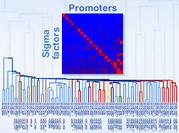
Design of orthogonal genetic switches based on a crosstalk map of σs, anti-σs, and promoters

Design of orthogonal genetic switches based on a crosstalk map of σs, anti-σs, and promoters | SynBioFromLeukipposInstitute | Scoop.it
Gerd Moe-Behrens's insight:

by 
Virgil A Rhodius, Thomas H Segall-Shapiro, Brian D Sharon, Amar Ghodasara, Ekaterina Orlova, Hannah Tabakh, David H Burkhardt, Kevin Clancy, Todd C Peterson4 Carol A Gross & Christopher A Voigt 

"Cells react to their environment through gene regulatory networks. Network integrity requires minimization of undesired crosstalk between their biomolecules. Similar constraints also limit the use of regulators when building synthetic circuits for engineering applications. Here, we mapped the promoter specificities of extracytoplasmic function (ECF) σs as well as the specificity of their interaction with anti-σs. DNA synthesis was used to build 86 ECF σs (two from every subgroup), their promoters, and 62 anti-σs identified from the genomes of diverse bacteria. A subset of 20 σs and promoters were found to be highly orthogonal to each other. This set can be increased by combining the −35 and −10 binding domains from different subgroups to build chimeras that target sequences unrepresented in any subgroup. The orthogonal σs, anti-σs, and promoters were used to build synthetic genetic switches in Escherichia coli. This represents a genome-scale resource of the properties of ECF σs and a resource for synthetic biology, where this set of well-characterized regulatory parts will enable the construction of sophisticated gene expression programs." 


  http://bit.ly/1hAmdxm

No comment yet.
Scooped by Gerd Moe-Behrens
October 30, 2013 4:48 PM
Scoop.it!

Engineering dynamic pathway regulation using stress-response promoters

Engineering dynamic pathway regulation using stress-response promoters | SynBioFromLeukipposInstitute | Scoop.it
Gerd Moe-Behrens's insight:
byRobert H Dahl, Fuzhong Zhang, Jorge Alonso-Gutierrez, Edward Baidoo, Tanveer S Batth, Alyssa M Redding-Johanson, Christopher J Petzold, Aindrila Mukhopadhyay, Taek Soon Lee, Paul D Adams & Jay D Keasling "Heterologous pathways used in metabolic engineering may produce intermediates toxic to the cell. Dynamic control of pathway enzymes could prevent the accumulation of these metabolites, but such a strategy requires sensors, which are largely unknown, that can detect and respond to the metabolite. Here we applied whole-genome transcript arrays to identify promoters that respond to the accumulation of toxic intermediates, and then used these promoters to control accumulation of the intermediate and improve the final titers of a desired product. We apply this approach to regulate farnesyl pyrophosphate (FPP) production in the isoprenoid biosynthetic pathway in Escherichia coli. This strategy improved production of amorphadiene, the final product, by twofold over that from inducible or constitutive promoters, eliminated the need for expensive inducers, reduced acetate accumulation and improved growth. We extended this approach to another toxic intermediate to demonstrate the broad utility of identifying novel sensor-regulator systems for dynamic regulation."  http://bit.ly/HqA5wr ;

comment:

*Researchers Develop Dynamic System for Controlling Toxic Metabolites in Engineered Microbes* "The first dynamic regulatory system that prevents the build-up of toxic metabolites in engineered microbes has been reported by a team of researchers with the U.S. Department of Energy (DOE)'s Joint BioEnergy Institute (JBEI). he JBEI researchers used their system to double the production in Escherichia coli (E. coli) of amorphadiene, a precursor to the premier antimalarial drug artemisinin. Using genome-wide transcriptional analysis, the JBEI researchers identified native regions of DNA – called "promoters" – in E. coli that respond to toxic metabolites by promoting the expression of protective genes. They then developed a system based on these promoters for regulating artificial metabolic pathways engineered into the E. coli to enable the bacterium to produce amorphadiene. "Static regulators of toxic metabolite levels have been developed but this is the first metabolite regulator that responds to changes in microbial growth and environmental conditions," says Jay Keasling, CEO of JBEI and ranking authority on synthetic biology, who led this research. "Control systems that can sense and respond to environmental or growth changes are needed for the optimal production of a desired chemical." Keasling, who also serves as Associate Laboratory Director of Biosciences at Lawrence Berkeley National Laboratory (Berkeley Lab), the lead institute in the JBEI partnership, is the corresponding author of a paper describing this research in the journal Nature Biotechnology. The paper is titled "Engineering dynamic pathway regulation using stress-response promoters." Co-authors are Robert Dahl, Fuzhong Zhang, Jorge Alonso-Gutierrez, Edward Baidoo, Tanveer Batth, Alyssa Redding-Johanson, Christopher Petzold, Aindrila Mukhopadhyay, Taek Soon Lee and Paul Adams. From life-saving drugs, such as artemisinin, to sustainable, green biofuels, the metabolic engineering of microbes for the production of valuable chemicals continues to grow in importance. To date, the most productive microbial hosts have been those engineered with heterologous pathways for which they have little or no native regula¬tion of the metabolites being expressed. However, such unregulated expression of heterologous enzymes can be toxic to the host, which can limit the production of the target chemical to well below levels that could be obtained. "Although synthetic biology has made great strides in creating novel, dynamic genetic circuits, most control systems for heterologous metabolic pathways still rely on inducible or constitutive pro¬moters," Keasling says. "Approaches developed to tailor expression strength by means of promoter libraries, mRNA stability or ribosome-binding are optimized for a particular growth phase or condition in the bioreactor, however, growth and environmental conditions change during the fermentation process." Since the accumulation of intermediate metabolites to toxic levels in a microbe during a fermentation process can lead to a stress response, Keasling and his JBEI colleagues reasoned that it should be possible to tap a host microbe's native stress response system when metabolites accumulate. Transcript profiling of the E. coli genome allowed them to evaluate transcrip¬tional response to a heterologous pathway and create a list of promoters that could be used to respond to intermediate toxicity. "Using such promoters to regulate pathway expression in response to the toxic intermediate metabolites creates a link between the cell's metabolic state and the expression of the metabolic pathway," Keasling says. "This enables us to create biosensors that respond to and regulate pathway intermediates. In silico models have indicated, and we've demonstrated in this study that our approach can be used to improve production of a desired chemical over common inducible promoters and constitutive promoters of various strengths." Keasling and his colleagues believe their dynamic approach to metabolite regulation could be extended to higher organisms as well, where constitutive promot¬ers are still commonly used. This holds potential for – among other things - improving the accumulation of nutrients in food crops, or decreasing the lignin in energy crops that makes extraction of fuel sugars difficult and expensive. "What we're looking at are strategies that could help reduce the problems associated with feeding a larger global population or efficiently converting biomass into renewable fuels," Keasling says." http://bit.ly/Hv6MbE ;
No comment yet.
Scooped by Gerd Moe-Behrens
October 30, 2013 3:46 PM
Scoop.it!

Patch cloning method for multiple site-directed and saturation mutagenesis

Gerd Moe-Behrens's insight:

by
Taniguchi N, Nakayama S, Kawakami T, Murakami H.

"BACKGROUND:

Various DNA manipulation methods have been developed to prepare mutant genes for protein engineering. However, development of more efficient and convenient method is still demanded. Homologous DNA assembly methods, which do not depend on restriction enzymes, have been used as convenient tools for cloning and have been applied to site-directed mutagenesis recently. This study describes an optimized homologous DNA assembly method, termed as multiple patch cloning (MUPAC), for multiple site-directed and saturation mutagenesis.RESULTS:To demonstrate MUPAC, we introduced five back mutations to a mutant green fluorescent protein (GFPuv) with five deleterious mutations at specific sites and transformed Escherichia coli (E. coli) with the plasmids obtained. We observed that the over 90% of resulting colonies possessed the plasmids containing the reverted GFPuv gene and exhibited fluorescence. We extended the test to introduce up to nine mutations in Moloney Murine Leukemia Virus reverse transcriptase (M-MLV RT) by assembling 11 DNA fragments using MUPAC. Analysis of the cloned plasmid by electrophoresis and DNA sequencing revealed that approximately 30% of colonies had the objective mutant M-MLV RT gene. Furthermore, we also utilized this method to prepare a library of mutant GFPuv genes containing saturation mutations at five specific sites, and we found that MUPAC successfully introduced NNK codons at all five sites, whereas other site remained intact.CONCLUSIONS:MUPAC could efficiently introduce various mutations at multiple specific sites within a gene. Furthermore, it could facilitate the preparation of experimental gene materials important to molecular and synthetic biology research…"


 http://bit.ly/16LrCPK

No comment yet.
Scooped by Gerd Moe-Behrens
October 29, 2013 5:41 PM
Scoop.it!

Synthetic biology: Engineering off the beaten pathway

Interfacing synthetic diverters with a native yeast signaling pathway adds a robust layer of cell fate control.
No comment yet.
Scooped by Gerd Moe-Behrens
October 28, 2013 5:27 PM
Scoop.it!

Grow Your Own: where scientists and artists are shaking up creation

Grow Your Own: where scientists and artists are shaking up creation | SynBioFromLeukipposInstitute | Scoop.it
From armpit brie to banana flavoured E.coli, artists and bio-hackers have teamed up to push the frontiers of 'synthetic biology' in a new exhibition. By Oliver Wainwright
No comment yet.
Scooped by Gerd Moe-Behrens
October 28, 2013 5:13 PM
Scoop.it!

Left to their own devices: Post-ELSI, ethical equipment and the International Genetically Engineered Machine (iGEM) Competition

Left to their own devices: Post-ELSI, ethical equipment and the International Genetically Engineered Machine (iGEM) Competition | SynBioFromLeukipposInstitute | Scoop.it
Gerd Moe-Behrens's insight:

by
Andrew S Balmer, and Kate J Bulpin

"In this article, we evaluate a novel method for post-ELSI (ethical, legal and social implications) collaboration, drawing on ‘human practices' (HP) to develop a form of reflexive ethical equipment that we termed ‘sociotechnical circuits'. We draw on a case study of working collaboratively in the International Genetically Engineered Machine Competition (iGEM) and relate this to the parts-based agenda of synthetic biology. We use qualitative methods to explore the experience of undergraduate students in the Competition, focussing on the 2010 University of Sheffield team. We examine how teams work collaboratively across disciplines to produce novel microorganisms. The Competition involves a HP component and we examine the way in which this has been narrowly defined within the ELSI framework. We argue that this is a much impoverished style of HP when compared with its original articulation as the development of ‘ethical equipment'. Inspired by this more theoretically rich HP framework, we explore the relations established between team members and how these were shaped by the norms, materials and practices of the Competition. We highlight the importance of care in the context of post-ELSI collaborations and report on the implications of our case study for such efforts and for the relation of the social sciences to the life sciences more generally."


http://1.usa.gov/19NKGLp

No comment yet.
Scooped by Gerd Moe-Behrens
October 25, 2013 3:26 PM
Scoop.it!

Andrew Hessel’s Definitive Guide to SynBio

Andrew Hessel’s Definitive Guide to SynBio | SynBioFromLeukipposInstitute | Scoop.it
Andrew Hessel has released a 1 hour video presentation explaining everything about synthetic biology, assuming no prior knowledge. Must see!
No comment yet.
Scooped by Gerd Moe-Behrens
October 25, 2013 3:22 PM
Scoop.it!

One-pot DNA construction for synthetic biology: the Modular Overlap-Directed Assembly with Linkers (MODAL) strategy

One-pot DNA construction for synthetic biology: the Modular Overlap-Directed Assembly with Linkers (MODAL) strategy | SynBioFromLeukipposInstitute | Scoop.it
Gerd Moe-Behrens's insight:

by
Arturo Casini, James T. MacDonald, Joachim De Jonghe, Georgia Christodoulou, Paul S. Freemont, Geoff S. Baldwin and Tom Ellis

"Overlap-directed DNA assembly methods allow multiple DNA parts to be assembled together in one reaction. These methods, which rely on sequence homology between the ends of DNA parts, have become widely adopted in synthetic biology, despite being incompatible with a key principle of engineering: modularity. To answer this, we present MODAL: a Modular Overlap-Directed Assembly with Linkers strategy that brings modularity to overlap-directed methods, allowing assembly of an initial set of DNA parts into a variety of arrangements in one-pot reactions. MODAL is accompanied by a custom software tool that designs overlap linkers to guide assembly, allowing parts to be assembled in any specified order and orientation. The in silico design of synthetic orthogonal overlapping junctions allows for much greater efficiency in DNA assembly for a variety of different methods compared with using non-designed sequence. In tests with three different assembly technologies, the MODAL strategy gives assembly of both yeast and bacterial plasmids, composed of up to five DNA parts in the kilobase range with efficiencies of between 75 and 100%. It also seamlessly allows mutagenesis to be performed on any specified DNA parts during the process, allowing the one-step creation of construct libraries valuable for synthetic biology applications."


 http://bit.ly/1ajuUXy

No comment yet.
Scooped by Gerd Moe-Behrens
October 25, 2013 2:58 PM
Scoop.it!

Need different types of tissue? Just print them

Need different types of tissue? Just print them | SynBioFromLeukipposInstitute | Scoop.it
What sounds like a dream of the future has already been the subject of research for a few years: simply printing out tissue and organs. Now scientists have further refined the technology and are able to produce various tissue types.
No comment yet.
Scooped by Gerd Moe-Behrens
October 24, 2013 5:16 PM
Scoop.it!

TEDx Bermuda NATALIE KULDELL Synthesizing Change

Gerd Moe-Behrens's insight:

by
Amanda Dale

"How can a relatively new scientific field be translated into something that high school students understand, and go on to inspire a love of learning?

 Dr Natalie Kuldell is a biological engineer, a lecturer and a mother. She teaches in the Department of Biological Engineering at Massachusetts Institute of Technology (MIT). However, she can never successfully grow a house plant in her home. If she was looking for a solution to this problem she “might look around the natural world and find an organism that doesn’t need much water”. She said she would take the genes from a camel and a firefly and add them to her plant to create  “a glowing, never thirsty plant”. “Synthetic biology is drawing lessons from more mature and robust engineering disciplines and putting those into biology”. Examples of these were standardization of design and fabrication tools. Just as computers started out as simple design processes in the 1980’s and evolved into the technology of today, so “synthetic biologists are trying to take a page from the same book”. She summed up the science as “trying to standardize biological parts so they can reliably programme living cells”. In formulating simple design processes, solutions could then be applied to some of the world’s most pressing problems, such as hunger (agriculture), medicines, biofuels and environmental issues. Dr Kuldell said: “Synthetic biologists want to make the world better, but early on the greatest success came in an unexpected place — in the classroom. “I’ve seen the power this approach has in exciting students about learning”. Synthetic biology can inspire young people “to explore the world the way scientists do”, through physical experimentation. “The formal education system can really dampen how students explore,” said Dr Kuldell. “I have seen that with synthetic biology there is a re-excitement about exploration in my students.” In creating BioBuilder, she works with teachers across the country, creating teaching modules in synthetic biology “that everyone can try”. This encourages individual students to come up with ideas and answers to questions that exist in this field of science, and which they then share with others in their class. “They carry out authentic investigations where they try to build things from biology,” she said. “They have ownership of the data and talk about it with other students and classes.” BioBuilder also “reawakens the teachers to their love of learning and love of teaching”. “Because synthetic biology is a new field, where we don’t have all the answers, and we are building things from biology, I think BioBuilder has great potential and promise,” she said. “Not only in building things from biology but to really progress the kind of education we would all like to see.” See www.biobuilder.org"


http://bit.ly/1gJZbGw

No comment yet.