SynBioFromLeukipposInstitute
130.0K views | +2 today
SynBioFromLeukipposInstitute
Your new post is loading...
Scooped by Gerd Moe-Behrens
February 25, 2014 1:39 PM
Scoop.it!

Don't Get Hung Up On Gene Synthesis

Don't Get Hung Up On Gene Synthesis | SynBioFromLeukipposInstitute | Scoop.it
Gerd Moe-Behrens's insight:

by
Markus Gershater

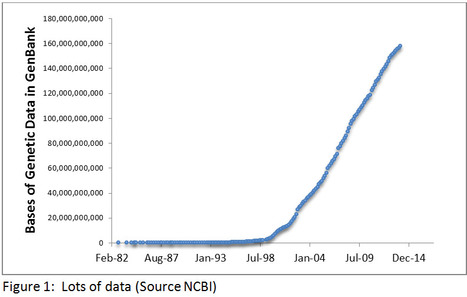
"Synthetic biology is a new field, but it sometimes feels like we already have dogma.  The idea that de novo DNA synthesis costs are limiting seems so ingrained: many of the major news stories we hear in synthetic biology are the latest milestones of ever larger chunks of DNA being stitched together, ever increasing numbers of strains being created, and the cost of DNA synthesis falling exponentially. There’s no doubt that the advances to date have been phenomenal, and I certainly tell anyone who gives me half a chance about how processes that took months when I was a PhD student can now be solved in minutes (and it really wasn’t that long ago).  The problem is, I’m not sure our attitudes have kept up with this pace of change: it’s the thesis of this post that due to these immensely rapid advances, DNA synthesis is no longer such an issue and we should now focus as a community on the bigger problem of effectively addressing biological complexity.

There are two reasons why we might need to make more DNA than is economic at the moment: either to make more constructs, or larger ones. 
Larger constructs
The fundamental issue with building larger constructs (e.g. >50 kilobases, or kb) is that you need the knowledge to be able to make such larger and more complex constructs work.  So either you need full knowledge of how dozens of biological parts will work together (or not) or you resort to copying large chunks from what you know works in nature (or all of it).  Therefore, the main limitation on making larger and more complex synthetic biology constructs is not the DNA synthesis, but our knowledge of what to do with that DNA synthesis.  Fundamentally, life is too complex and unpredictable for us to productively utilize large, engineered constructs at this point in our knowledge of biology.  We can make great advances with DNA that can directly and easily be assembled from small building blocks, and along the way develop the tools that will allow us to truly engineer the more ambitious systems that will need larger constructs....."


 http://bit.ly/MZ7lhd

No comment yet.
Scooped by Gerd Moe-Behrens
February 24, 2014 1:51 PM
Scoop.it!

Open questions in origin of life: experimental studies on the origin of nucleic acids and proteins with specific and functional sequences by a chemical synthetic biology approach

Open questions in origin of life: experimental studies on the origin of nucleic acids and proteins with specific and functional sequences by a chemical synthetic biology approach | SynBioFromLeukipposInstitute | Scoop.it
Open questions in origin of life: experimental studies on the origin of nucleic acids and proteins with specific and functional sequences by a chemical synthetic biology approach
No comment yet.
Scooped by Gerd Moe-Behrens
February 24, 2014 1:33 PM
Scoop.it!

What is synthetic biology and why does it matter? - CISAC

What is synthetic biology and why does it matter? - CISAC | SynBioFromLeukipposInstitute | Scoop.it
Gerd Moe-Behrens's insight:

Drew Endy today at Stanford 11.30 am: What is synthetic biology and why does it matter? http://stanford.io/1fNZnyl

No comment yet.
Scooped by Gerd Moe-Behrens
February 22, 2014 8:23 AM
Scoop.it!

TEDxVilnius - TEDxVilnius 2014 Simulcast

TEDxVilnius 2014: THE FUTURE IS OURS - Feb 22nd, Saturday, Theatre Arena, Olimpieciu str. 3
Gerd Moe-Behrens's insight:

Human Biology Hacker Sean Ward on stage "How Synthetic Biology Is Exploring Biological Complexity http://bit.ly/1egbTFH

No comment yet.
Scooped by Gerd Moe-Behrens
February 21, 2014 3:08 PM
Scoop.it!

MIT’s Synthetic Biology Center collaborates with Pfizer to advance synthetic biology research in drug discovery and development - MIT News Office

MIT’s Synthetic Biology Center collaborates with Pfizer to advance synthetic biology research in drug discovery and development - MIT News Office | SynBioFromLeukipposInstitute | Scoop.it
No comment yet.
Scooped by Gerd Moe-Behrens
February 20, 2014 4:23 PM
Scoop.it!

Generation of Orthogonally Selective Bacterial Riboswitches by Targeted Mutagenesis and In Vivo Screening

Generation of Orthogonally Selective Bacterial Riboswitches by Targeted Mutagenesis and In Vivo Screening | SynBioFromLeukipposInstitute | Scoop.it
Gerd Moe-Behrens's insight:

by
Vincent HA, Robinson CJ, Wu MC, Dixon N, Micklefield J.

"Riboswitches are naturally occurring RNA-based genetic switches that control gene expression in response to the binding of small-molecule ligands, typically through modulation of transcription or translation. Their simple mechanism of action and the expanding diversity of riboswitch classes make them attractive targets for the development of novel gene expression tools. The essential first step in realizing this potential is to generate artificial riboswitches that respond to nonnatural, synthetic ligands, thereby avoiding disruption of normal cellular function. Here we describe a strategy for engineering orthogonally selective riboswitches based on natural switches. The approach begins with saturation mutagenesis of the ligand-binding pocket of a naturally occurring riboswitch to generate a library of riboswitch mutants. These mutants are then screened in vivo against a synthetic compound library to identify functional riboswitch-ligand combinations. Promising riboswitch-ligand pairs are then further characterized both in vivo and in vitro. Using this method, a series of artificial riboswitches can be generated that are versatile synthetic biology tools for use in protein production, gene functional analysis, metabolic engineering, and other biotechnological applications."

 http://bit.ly/1jTc8P0

No comment yet.
Scooped by Gerd Moe-Behrens
February 20, 2014 4:16 PM
Scoop.it!

Dual-Selection for Evolution of In Vivo Functional Aptazymes as Riboswitch Parts

Dual-Selection for Evolution of In Vivo Functional Aptazymes as Riboswitch Parts | SynBioFromLeukipposInstitute | Scoop.it
Gerd Moe-Behrens's insight:

by
Goler JA, Carothers JM, Keasling JD.

"Both synthetic biology and metabolic engineering are aided by the development of genetic control parts. One class of riboswitch parts that has great potential for sensing and regulation of protein levels is aptamer-coupled ribozymes (aptazymes). These devices are comprised of an aptamer domain selected to bind a particular ligand, a ribozyme domain, and a communication module that regulates the ribozyme activity based on the state of the aptamer. We describe a broadly applicable method for coupling a novel, newly selected aptamer to a ribozyme to generate functional aptazymes via in vitro and in vivo selection. To illustrate this approach, we describe experimental procedures for selecting aptazymes assembled from aptamers that bind p-amino-phenylalanine and a hammerhead ribozyme. Because this method uses selection, it does not rely on sequence-specific design and thus should be generalizable for the generation of in vivo operational aptazymes that respond to any targeted molecules."

 http://bit.ly/1bPBaMA

No comment yet.
Scooped by Gerd Moe-Behrens
February 19, 2014 2:53 PM
Scoop.it!

The World's Top 10 Most Innovative Companies in Education

The World's Top 10 Most Innovative Companies in Education | SynBioFromLeukipposInstitute | Scoop.it
1. DonorsChoose.orgFor teaching government a thing or two about education reform. Most of us can agree that the U.S. school system is a mess: State...
Gerd Moe-Behrens's insight:

Genspace is ranked #4 in world's most innovative education companies!
http://bit.ly/1c364LT

malek's comment, February 19, 2014 6:03 PM
Kaplan is always the one you hate to love. Very interesting post.
Gerd Moe-Behrens's comment, February 21, 2014 3:10 PM
you are welcome
Scooped by Gerd Moe-Behrens
February 18, 2014 2:21 PM
Scoop.it!

Synthetic Biology Future

Synthetic Biology Future | SynBioFromLeukipposInstitute | Scoop.it
Gerd Moe-Behrens's insight:

March 13 | Cork, Ireland http://bit.ly/1biIxvs

No comment yet.
Scooped by Gerd Moe-Behrens
February 17, 2014 1:33 PM
Scoop.it!

This Pen 3-D Prints Live Cells On A Damaged Bone

This Pen 3-D Prints Live Cells On A Damaged Bone | SynBioFromLeukipposInstitute | Scoop.it
Surgeons can precisely position cells on the site of injury and speed up recovery.
Debrada Burns's comment, February 17, 2014 8:15 PM
I really didn't expect anything like this
Scooped by Gerd Moe-Behrens
February 17, 2014 1:17 PM
Scoop.it!

Small RNA regulators in bacteria: powerful tools for metabolic engineering and synthetic biology

Gerd Moe-Behrens's insight:

by
Zhen Kang, Chuanzhi Zhang, Junli Zhang, Peng Jin, Juan Zhang, Guocheng Du, Jian Chen

"Small RNAs, a large class of ancient posttranscriptional regulators, have recently attracted considerable attention. A plethora of small RNAs has been identified and characterized, many of which belong to the major small noncoding RNA (sRNA) or riboswitch families. It has become increasingly clear that most small RNAs play critical regulatory roles in many processes and are, therefore, considered to be powerful tools for metabolic engineering and synthetic biology. In this review, we describe recent achievements in the identification, characterization, and application of small RNAs. We give particular attention to advances in the design and synthesis of novel sRNAs and riboswitches for metabolic engineering. In addition, a novel strategy for hierarchical control of global metabolic pathways is proposed."

 http://bit.ly/1eIX3Yi

No comment yet.
Scooped by Gerd Moe-Behrens
February 17, 2014 1:08 PM
Scoop.it!

Graphene for multi-functional synthetic biology: the last ‘zeitgeist’ in nanomedicine

Graphene for multi-functional synthetic biology: the last ‘zeitgeist’ in nanomedicine | SynBioFromLeukipposInstitute | Scoop.it
Gerd Moe-Behrens's insight:

by
A. Servanta, A. Biancob, M. Pratoc,  K. Kostarelos

"The high versatility of graphene has attracted significant attention in many areas of scientific research from electronics to physics and mechanics. One of the most intriguing utilisation of graphene remains however in nanomedicine and synthetic biology. In particular, the last decade has witnessed an exponential growth in the generation of novel candidate therapeutics of multiple biological activities based on graphene constructs with small molecules, such as anti-cancer drugs. In this Digest, we summarise the different synthetic strategies and routes available to fabricate these promising graphene conjugates and the opportunities for the design of multi-functional tools for synthetic biology that they offer."

 http://bit.ly/N3fFMC

No comment yet.
Scooped by Gerd Moe-Behrens
February 14, 2014 1:47 PM
Scoop.it!

Speeding to Pluripotency

Gerd Moe-Behrens's insight:

by
Josh G. Chenoweth, Ronald D. McKay

"Finding a cell that reprograms in a nonstochastic manner without genetic manipulation has proven elusive. In this issue, Guo et al. report the identification of a cell defined by an ultrafast cycle whose progeny reprogram in a synchronous and rapid manner."


 http://bit.ly/1dPOIlq

No comment yet.
Scooped by Gerd Moe-Behrens
February 25, 2014 1:18 PM
Scoop.it!

The synthetic biology future.

Gerd Moe-Behrens's insight:

by
Sleator RD.

"Herein, I track the evolution of synthetic biology from its earliest incarnations more than 50 years ago, through the DIYbio revolution, to the next 50 years."


 http://1.usa.gov/1o3EcwH

Bob's curator insight, April 15, 2014 12:50 PM

About synthetic biology

Scooped by Gerd Moe-Behrens
February 24, 2014 1:39 PM
Scoop.it!

CSHAsia 2014 Conference on Synthetic Biology

CSHAsia 2014 Conference on Synthetic Biology | SynBioFromLeukipposInstitute | Scoop.it
Gerd Moe-Behrens's insight:

COLD SPRING HARBOR ASIA CONFERENCES: Synthetic Biology - Suzhou, China

December 1-5, 2014 http://bit.ly/MUVtN4

No comment yet.
Scooped by Gerd Moe-Behrens
February 22, 2014 8:53 AM
Scoop.it!

Engineering reduced evolutionary potential for synthetic biology

Engineering reduced evolutionary potential for synthetic biology | SynBioFromLeukipposInstitute | Scoop.it
Gerd Moe-Behrens's insight:

by
Renda BA, Hammerling MJ, Barrick JE.

"The field of synthetic biology seeks to engineer reliable and predictable behaviors in organisms from collections of standardized genetic parts. However, unlike other types of machines, genetically encoded biological systems are prone to changes in their designed sequences due to mutations in their DNA sequences after these devices are constructed and deployed. Thus, biological engineering efforts can be confounded by undesired evolution that rapidly breaks the functions of parts and systems, particularly when they are costly to the host cell to maintain. Here, we explain the fundamental properties that determine the evolvability of biological systems. Then, we use this framework to review current efforts to engineer the DNA sequences that encode synthetic biology devices and the genomes of their microbial hosts to reduce their ability to evolve and therefore increase their genetic reliability so that they maintain their intended functions over longer timescales."

http://rsc.li/1f6qTMi

No comment yet.
Scooped by Gerd Moe-Behrens
February 22, 2014 8:12 AM
Scoop.it!

Synthetic Biology Market is Expected to Reach USD 16.7 Billion Globally in 2018

Synthetic Biology Market is Expected to Reach USD 16.7 Billion Globally in 2018 | SynBioFromLeukipposInstitute | Scoop.it
No comment yet.
Scooped by Gerd Moe-Behrens
February 20, 2014 4:28 PM
Scoop.it!

Artificial Riboswitch Selection: A FACS-Based Approach

Artificial Riboswitch Selection: A FACS-Based Approach | SynBioFromLeukipposInstitute | Scoop.it
Gerd Moe-Behrens's insight:

by
Zohaib Ghazi, Casey C. Fowler, Yingfu Li

"Riboswitches have a number of characteristics that make them ideal regulatory elements for a wide range of synthetic biology applications. To maximize their utility, methods are required to create custom riboswitches de novo or to modify existing riboswitches to suit specific experimental needs. This chapter describes such a method, which exploits fluorescence-activated cell sorting (FACS) to quickly and efficiently sort through large libraries of riboswitch-like sequences to identify those with the desired activity. Suggestions for the experimental setup are provided, along with detailed protocols for testing and optimizing FACS conditions FACS selection steps, and follow-up assays to identify and characterize individual riboswitches."

http://bit.ly/1bqtoZa

No comment yet.
Scooped by Gerd Moe-Behrens
February 20, 2014 4:17 PM
Scoop.it!

In Vivo Screening for Aptazyme-Based Bacterial Riboswitches

In Vivo Screening for Aptazyme-Based Bacterial Riboswitches | SynBioFromLeukipposInstitute | Scoop.it
Gerd Moe-Behrens's insight:

by
Rehm C, Hartig JS.

"In many synthetic biology applications, modular and easily accessible tools for controlling gene expression are required. In addition, in vivo biosensors and diagnostic devices will become more important in the future to allow for noninvasive determination of protein, ion, or small molecule metabolite levels. In recent years synthetic RNA-based switches have been developed to act as signal transducers to convert a binding event of a small molecule (input) into a detectable output. Their modular design allows the development of a variety of molecular switches to be used in biochemical assays or inside living cells. RNA switches developed by our group are based on the Schistosoma mansoni hammerhead ribozyme, a self-cleaving RNA sequence that can be inserted into any RNA of interest. Connection to an aptamer sensing a small molecule renders the cleavage reaction ligand-dependent. In the past we have successfully designed and applied such hammerhead aptazymes for the allosteric control of both bacterial and eukaryotic gene expression by affecting transcription elongation, translation initiation, or mRNA stability. In order to yield functional switches optimization of the connecting sequence between the aptamer and the HHR needs to be carried out. We have therefore developed an in vivo screening protocol detailed in this chapter that allows the identification of functional aptazymes in bacteria."

http://bit.ly/1jTaL2Q

No comment yet.
Scooped by Gerd Moe-Behrens
February 20, 2014 3:11 PM
Scoop.it!

The Synthetic Biology Investor's Lament

The Synthetic Biology Investor's Lament | SynBioFromLeukipposInstitute | Scoop.it
Gerd Moe-Behrens's insight:

By Jenny Rooke

"Jenny Rooke drives innovation in the life sciences field through investing and business building around brilliant scientists and engineers with novel technologies. Prior, Jenny held multiple executive roles at U.S. Genomics. 

As a zealous believer in the potential of synthetic biology, I’ve been looking to invest in synthetic biology tools and applications for years (not as long as some, longer than many). I’ve even put serious thought into raising a venture fund with a focus on synthetic biology investments, but, for now, conclude that there simply aren’t enough investment-grade opportunities to justify a dedicated fund (yet!). Why is it challenging to invest in synthetic biology companies? What is the disconnect between that sense of enormous potential and actually betting on companies to achieve it (besides investors’ reputations for being more risk averse than we’d like to admit)? Here are several barriers to investing in synthetic biology that I’ve observed, drawing on comparisons to biotech investing more generally.
Transition from labs to enterprise
We’re still early in the process of transitioning synthetic biology technologies out of research labs and into applied, for-profit settings (i.e., companies). In the last decade, the field has seen a profusion of novel pathway design tools, gene editing techniques, DNA synthesis and sequencing technologies, and analytical tools — all of which fuel that sense of synthetic biology’s potential.  We are closer than ever to being able to go from an idea for a novel genetic pathway to proof of concept, rapidly and inexpensively. But we’re not yet at the point where the cost, performance, and scalability of the tools are suitable to broad commercial application. As an example, I see a number of startups whose business plan hinges on engineering a proprietary genetic pathway in a microbial host for production of a particular high value chemical. The tools are there to test their hypothesis — which in itself is a remarkable advance over even five years ago. But it’s still so expensive, slow, and unpredictable that they’ll get only one or two shots at making it work on early-stage capital. That’s a fairly high degree of technical risk for an investor to embrace...."


 http://bit.ly/1l2CfmY

No comment yet.
Scooped by Gerd Moe-Behrens
February 19, 2014 2:26 PM
Scoop.it!

Stem cells programmed to grow cartilage inside body

Stem cells programmed to grow cartilage inside body | SynBioFromLeukipposInstitute | Scoop.it
Scientists have used gene therapy to direct stem cells to grow new cartilage inside a living body.
No comment yet.
Scooped by Gerd Moe-Behrens
February 18, 2014 2:12 PM
Scoop.it!

Spatiotemporal control of gene expression using microfluidics

Spatiotemporal control of gene expression using microfluidics | SynBioFromLeukipposInstitute | Scoop.it
Accurate spatiotemporal regulation of genetic expression and cell microenvironment are both essential to epithelial morphogenesis during development, wound healing and cancer. In vivo, this is achieved through the interplay between intrinsic cellular properties and extrinsic signals. Amongst these, morphogen gradie
Scooped by Gerd Moe-Behrens
February 17, 2014 1:31 PM
Scoop.it!

Research reveals structure of key CRISPR complex

Research reveals structure of key CRISPR complex | SynBioFromLeukipposInstitute | Scoop.it
Gerd Moe-Behrens's insight:

by
Veronica Meade-Kelly

"Researchers from MIT and the Broad Institute have teamed up with colleagues from the University of Tokyo to form the first high-definition picture of the Cas9 complex — a key part of the CRISPR-Cas system used by scientists as a genome-editing tool to silence genes and probe the biology of cells. Their findings, which are reported this week in Cell, are expected to help researchers refine and further engineer the tool to accelerate genomic research and bring the technology closer to use in the treatment of human genetic disease.

First discovered in bacteria in 1987, CRISPRs (Clustered Regularly Interspaced Short Palindromic Repeats) have recently been harnessed as so-called genome-editing tools. These tools allow researchers to home in on “typos” within the three-billion-letter sequence of the human genome, and cut out or alter problematic sequences. The Cas9 complex, which includes the CRISPR “cleaving” enzyme Cas9 and an RNA “guide” that leads the enzyme to its DNA target, is key to this process. 
“We’ve come to view the Cas9 complex as the ultimate ‘guided missile’ that we can use to target precise sites in the genome,” says co-senior author Feng Zhang, the W.M. Keck Assistant Professor of Medical Engineering in MIT’s departments of Brain and Cognitive Sciences and Biological Engineering, and a member of the Broad Institute and MIT’s McGovern Institute for Brain Research. “This study provides a schematic of the entire system — it shows the missile (the Cas9 protein), the programming instructions (the guide RNA) that send it to the right location, and the target DNA. It also reveals the secret of how these pieces function together to make the whole system work.”
To deconstruct this system, Zhang approached the paper’s co-senior author, Osamu Nureki of the University of Tokyo. Together, they assembled a team to work out the complicated structure. 
“Cas9-based genome-editing technologies are proving to be revolutionary in a wide range of life sciences, enabling many new experimental techniques, so my colleagues and I were excited to work with Feng’s lab on this important research,” says first author Hiroshi Nishimasu, an assistant professor of biophysics and biochemistry who works in Nureki’s lab at the University of Tokyo. 
The two teams worked closely to reveal the structural details of the Cas9 complex and to test their functional significance. Their efforts revealed a division of labor within the Cas9 complex. The researchers determined that the Cas9 protein consists of two lobes: One lobe is involved in the recognition of the RNA and DNA elements, while the other lobe is responsible for cleaving the target DNA, causing what is known as a “double strand break” that disables the targeted gene. The team also found that key structures on Cas9 interface with the guide RNA, allowing Cas9 to organize itself around the RNA and the target DNA as it prepares to cut the strands.
Identifying the key features of the Cas9 complex should enable researchers to improve the genome-editing tool to better suit their needs. 
“Up until now, it has been very difficult to rationally engineer Cas9. Now that we have this structural information, we can take a principled approach to engineering the protein to make it more effective,” says Zhang, who is also a co-founder of Editas Medicine, a company that was started last year to develop Cas9 and other genome-editing technologies into a novel class of human therapeutics.
Currently, Cas9 is used in experiments to silence genes in mammalian cells — sometimes at multiple sites across the genome — and large libraries of RNA sequences have been created to guide Cas9 to genes of interest. However, the system can only target specific types of sites. Some studies have also shown that the RNA could lead Cas9 “off target,” potentially causing unexpected problems within the cellular machinery. 
The researchers plan to use this new, detailed picture of the Cas9 complex to address these concerns.
“Understanding this structure may help us engineer around the current limitations of the Cas9 complex,” says co-author F. Ann Ran, a graduate student in Zhang’s lab. “In the future, it could allow us to design versions of these editing tools that are more specific to our research needs. We may even be able to alter the type of nucleic acid sequences that Cas9 can target.”  
Such technological improvements will be needed if the CRISPR-Cas system is to evolve into a therapeutic tool for the treatment of genetic disease.
Dana Carroll, a professor of biochemistry at the University of Utah, says the new structural findings provide a basis for both understanding and modifying the CRISPR-Cas system. 
“Like many crystal structures, this one of the Cas9-sgRNA-DNA complex confirms and rationalizes many inferences from biological and biochemical studies, and it provides further insight into the functions of the complex. By doing so it suggests approaches to enhancing or modulating the activity of the Cas9 protein, some of which the authors have tested in a preliminary fashion,” says Carroll, who was not part of the research team.
The study was supported by the National Institute of Mental Health; an NIH Director’s Pioneer Award; the Japan Science and Technology Agency; the Japan Society for the Promotion of Science; the Keck, McKnight, Poitras, Merkin, Vallee, Damon Runyon, Searle Scholars, Klingenstein, and Simons foundations; as well as Bob Metcalfe and Jane Pauley.
Other researchers who worked on the study include Patrick D. Hsu, Silvana Konermann, Soraya Shehata, Naoshi Dohmae, and Ryuichiro Ishitani."


 http://bit.ly/1f6sMsw

No comment yet.
Scooped by Gerd Moe-Behrens
February 17, 2014 1:13 PM
Scoop.it!

Engineering reduced evolutionary potential for synthetic biology

Gerd Moe-Behrens's insight:

by
Brian A. Renda,   Michael J. Hammerling and    Jeffrey Barrick  

"The field of synthetic biology seeks to engineer reliable and predictable behaviors in organisms from collections of standardized genetic parts. However, unlike other types of machines, genetically encoded biological systems are prone to changes in their designed sequences due to mutations in their DNA sequences after these devices are constructed and deployed. Thus, biological engineering efforts can be confounded by undesired evolution that rapidly breaks the functions of parts and systems, particularly when they are costly to the host cell to maintain. Here, we explain the fundamental properties that determine the evolvability of biological systems. Then, we use this framework to review current efforts to engineer the DNA sequences that encode synthetic biology devices and the genomes of their microbial hosts to reduce their ability to evolve and therefore increase their genetic reliability so that they maintain their intended functions over longer timescales."

http://rsc.li/1f6qTMi

No comment yet.
Scooped by Gerd Moe-Behrens
February 14, 2014 2:28 PM
Scoop.it!

Up Close

Up Close | SynBioFromLeukipposInstitute | Scoop.it
Gerd Moe-Behrens's insight:

by
Thomas K. Grose

"In 1987, Ronald Reagan was president, the Soviet Union still existed, and few people outside Seattle had heard of Starbucks. It was also the last year that any pharmaceutical company released a major new antibiotic. That’s because antibiotics cost billions to develop from scratch and are money-losers for Big Pharma. Meanwhile, because of overuse and misuse of the drugs, disease-causing bacteria are becoming resistant to common antibiotics. Health experts are warning that a looming post-antibiotics era could make even routine operations life-threatening, triggering a health crisis of epidemic proportions.

On the front lines of the battle against the bugs is James J. Collins, a professor of biomedical engineering at Boston University and a pioneering researcher in the burgeoning area of synthetic biology. This new field involves designing biological parts and systems, or redesigning existing biological systems, mainly for healthcare therapies or renewable-energy production. Collins calls it “an evolution of genetic engineering that really does bring engineering into bioengineering.” By that he means it involves the creation of synthetic controls and logic-based systems within genomes. It’s difficult, complicated work that requires “a lot of trial and error.” That’s where systems biology comes in: a top-down approach to figure out how organisms function and how molecular components fit together.

Collins believes his research in synthetic biology and systems biology will lead to ways to reinvigorate existing antibiotics. “Can we make what we have better? That’s really our sweet spot,” he says. It’s also a way to replenish the antibiotic armory that’s cheaper and faster than developing new drugs. In 2012, Collins cofounded EnBiotix, a Boston start-up, which already has a potential winning formula for boosting some antibiotics with the addition of trace amounts of silver. Early tests show that silver “significantly improves their [antibiotics] killing efficiency by 10 to 1,000 fold,” he calculates....."

http://bit.ly/1jhZwOb

No comment yet.