


SynBioFromLeukipposInstitute
130.0K views |
+2 today
 Your new post is loading...
 Scoop.it! 
From
phys

Plants have many valuable functions: They provide food and fuel, release the oxygen that we breathe, and add beauty to our surroundings. 
Scoop.it!

PLOS Computational Biology is an open-access
Scoop.it!

New 'GenoCAD' modelling helping design synthetic biological systems NDTV Known as 'GenoCAD', the open-source software would help synthetic biologists capture biological rules to engineer organisms that produce useful products or health-care...
Scoop.it!
Gerd Moe-Behrens's insight:
by
Scoop.it!
Gerd Moe-Behrens's insight:
by
Scoop.it!
Compute Midwest 2013: Andrew Hessel, Genomic Futurist @ Autodesk , Speaks About The Next Generation Of Computing: Programming Living Things. About Compute Mi...
Scoop.it!

“DIYbio” is the name given to the growing movement of people who are interested in performing science outside of traditional academic and corporate pharma.
Gerd Moe-Behrens's insight:
by Normative recently hosted Pantea Razzaghi, co-founder of Synbiota in our studio to talk to our team about synthetic biology and the role Synbiota is playing in the DIYbio movement. Synbiota is a platform that enables DIYbio makers to create virtual research institutes and radically reduce the barrier-to-entry for creating blockbuster life science products. Based in Montreal and Toronto with users on all 7 continents, Synbiota recently won the Accelerator Innovative World Technology award at SXSW. At SxSW they also launched #ScienceHack, a research event in collaboration with Alberta-based Genomikon taking place March 28-30 in Haliburton, Ontario.
I spoke with Pantea while she was en route to Austin: [KVW]: With this new context where science is being done how do you think it’s going to change the scientific process and the way we produce scientific knowledge? [PR]: Mostly I think it’s going to have a big impact on making science accessible. I feel like people have very much had an impression of science that it’s extremely difficult to get involved. You’ll often hear a lot of people say I’m really interested in this but I didn’t do well in high school science and so it feels like it’s hard to access it, it’s hard to find a place where you can go to get started. So I think having these DIY movement and having specific public labs or citizen labs allow people physical spaces to get started. Y One of the other things about bio: unlike getting involved in coding or other technical movements, it’s very much not only digital but also physical. You want to have your hands in a wet lab, and that’s quite intimidating and a little bit hard to get started. So having these DIYbio spaces in physical places actually gives people an opportunity to get their hands literally wet and reduce that level of intimidation and offer them more of an opportunity to hop in and start getting involved. [KWV]: One of the things we think a lot about at Normative is the future of our creations once they leave our hands and go out and live in the world and evolve. We think it’s important to think about the consequences of the things that we are creating – positive or negative, intended or unintended. I’m wondering if you can speak to what you think the potential outcomes of DIY are in the next 5 years, both positively and negatively. [PR]: The great thing about the DIYbio movement at least in the States and Europe is that it is happening in visible places. One of the issues people have had with hacker movements that started in virtual spaces is that they could really keep incognito and remain more invisible. With the DIYbio movement – public labs like La Paillasse, BioCurious, GenSpace – these spaces are physical spaces; they are registered, they have addresses and entities so it makes it easier and more accessible for governments and society to stay informed of activity. Their involvement is less about monitoring and more about participation and collaboration. So this again helps reduce the possibility of things skewing to a potentially more negative side. I think as with all technology there’s potential for any different applications to be made. For this reason I think it’s important to focus on conversation, people talking about things, people sharing content, people having a place to go where they can speak about what they’re working on and therefore have visibility of their projects. [KWV]: Can you share your thoughts on what you think the role is for designers in the world of DIYbio? [PR] Sure! For designers I think it’s a great opportunity for them to add a new kind of paint to their palette. This is another extension to our toolkit of materials and methods that we can use to produce useful applications when solving complex problems. [KWV]: Are there specific challenges in communicating between designers and scientists that are trends or things that come up often? [PR]: If you think of experiments as recipes, I think scientists are very concerned about how you put the ingredients together, what the ingredients are, the measurements that go into that recipe – did it produce the outcome first hypothesized? While designers are more interested in explaining the historical context of the recipe, to talk about how it tastes, its textures, if they were lucky enough to have unexpected results. So these are some of the variances I’ve noticed, and why there’s such great potential in bringing designers and scientists together to help each other out. Each has a different approach, and together they are more whole and able to inspire one another...."
Scoop.it!

A quantum computer is a serious piece of hardware. My colleagues and I build quantum computers from superconducting systems, quantum dots, lasers operating on nonlinear crystals,... Read Full Postelse
Scoop.it!
Gerd Moe-Behrens's insight:
by
Scoop.it!
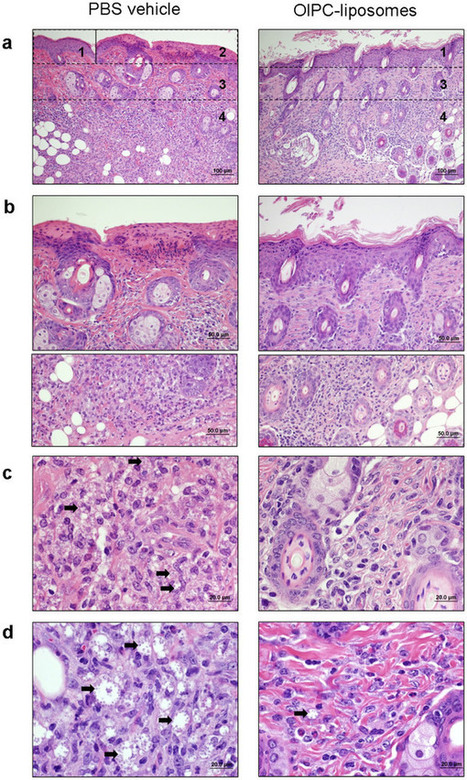
This study establishes a proof-of-concept that a tattoo device can target intra-dermal drug delivery against cutaneous leishmaniasis (CL). The selected drug is oleylphosphocholine (OlPC) formulated as liposomes, particles known to be prone to macrophage ingestion. We first show that treatment of cultured Leishmania-infected macrophages with OlPC-liposomes results in a direct dose-dependent killing of intracellular parasites. Based on this, in vivo efficacy is demonstrated using a 10 day tattooing-mediated treatment in mice infected with L. major and L. mexicana. In both models this regimen results in rapid clinical recovery with complete regression of skin lesions by Day 28. Parasite counts and histopathology examination confirm high treatment efficacy at the parasitic level. Low amount of drug required for tattooing combined with fast clinical recovery may have a positive impact on CL patient management. This first example of tattoo-mediated drug delivery could open to new therapeutic interventions in the treatment of skin diseases.
Scoop.it!

*This forthcoming tome looks like it oughta be pretty happening. *It's a press release. *******************************************************************
Gerd Moe-Behrens's insight:
by Investigating Synthetic Biology’s Designs on Nature By Alexandra Daisy Ginsberg, Jane Calvert, Pablo Schyfter, Alistair Elfick, and Drew Endy Publication date: March 31, 2014 Synthetic biology manipulates the stuff of life. For synthetic biologists, living matter is programmable material. In search of carbon-neutral fuels, sustainable manufacturing techniques, and innovative drugs, these researchers aim to redesign existing organisms and even construct completely novel biological entities. Some synthetic biologists see themselves as designers, inventing new products and applications. But if biology is viewed as a malleable, engineerable, designable medium, what is the role of design and how will its values apply? In this book, synthetic biologists, artists, designers, and social scientists investigate synthetic biology and design. After chapters that introduce the science and set the terms of the discussion, the book follows six boundary-crossing collaborations between artists and designers and synthetic biologists from around the world, helping us understand what it might mean to ‘design nature.’ These collaborations have resulted in biological computers that calculate form; speculative packaging that builds its own contents; algae that feeds on circuit boards; and a sampling of human cheeses. They raise intriguing questions about the scientific process, the delegation of creativity, our relationship to designed matter, and, the importance of critical engagement. Should these projects be considered art, design, synthetic biology, or something else altogether? Synthetic biology is driven by its potential; some of these projects are fictions, beyond the current capabilities of the technology. Yet even as fictions, they help illuminate, question, and even shape the future of the field."
|
Scoop.it!
Gerd Moe-Behrens's insight:
by • Transient expression is an effective method for the co-expression of proteins. • A number of vectors are available to facilitate this use. • They can be used to produce complex macromolecules and analyse metabolic pathways. • Transient expression is likely to become a method of choice for plant synthetic biology.
Recent developments in transient expression methods have enabled the efficient delivery and expression of multiple genes within the same plant cell over a timescale of days. In some cases, the vectors deployed can be fine-tuned to allow differential expression of the various genes. This has opened the way to the deployment of transient expression for such applications as the production of macromolecular complexes and the analysis and manipulation of metabolic pathways. The ability to observe the effect of gene expression in a matter of days means that transient expression is becoming the method of choice for many plant-based synthetic biology applications...."
Scoop.it!
The creators of FOX's new science-fiction buddy-cop show, Almost Human focuses the uncontrollable evolution of emerging tech. The solution is real cops need robot cop partners to help control crime. Bio-3D printers, DNA swipes, machines that prick your finger and dispense a pill with the nutrients your body needs, robotic policemen [...]
Scoop.it!
Gerd Moe-Behrens's insight:
by
Scoop.it!

From
phys
Move over, nanotechnologists, and make room for the biggest of the small. Scientists at the Harvard's Wyss Institute have built a set of self-assembling DNA cages one-tenth as wide as a bacterium. The structures are some of the largest and most complex structures ever constructed solely from DNA, they ...
Scoop.it!

From
phys
(Phys.org) —Researchers at Virginia Tech and the Massachusetts Institute of Technology have used a computer-aided design tool to create genetic languages to guide the design of biological systems.
Scoop.it!
Gerd Moe-Behrens's insight:
by function(doc) { var tile_size = 256; var pixels = 4; if (doc.lat && doc.lon) { for (var zoom = 0; zoom < 7; zoom++) { var x_pos = (parseFloat(doc.lon) + 180)/360 * Math.pow(2, zoom); var x = Math.floor(x_pos); var relative_x = Math.round(tile_size * (x_pos - x)); var y_pos = (1-Math.log(Math.tan(parseFloat (doc.lat) * Math.PI/180) + 1/Math.cos(parseFloat(doc.lat) * Math.PI/180))/Math.PI)/2 * Math.pow(2,zoom); var y = Math.floor(y_pos); var relative_y = Math.round(tile_size * (y_pos - y)); relative_x = Math.floor(relative_x / pixels) * pixels; relative_y = Math.floor(relative_y / pixels) * pixels; var tile = []; tile.push(zoom); tile.push(x); tile.push(y); tile.push(relative_x); tile.push(relative_y); emit(tile, 1); } } } ..... "
Scoop.it!
Gerd Moe-Behrens's insight:
by While there haven’t been any major new breakthrough chemical or biological transformations reported in recent years, there continue to be incremental improvements in existing technologies. For the pharmaceutical industry, these advancements include improvements in processing capabilities, such as flow chemistry, that make large-scale implementation of these technologies possible, according to John Caldwell, editor-in-chief of Chirality and professor emeritus at the University of Liverpool. He also notes that the development of effective chiral transformations that are “greener” and proceed at large scale in water, use low levels of catalysts that can be recycled, require lower temperatures and pressures, reduce the number of steps through carefully designed cascade sequences, are more atom economical, and use less hazardous materials has become important in the pharmaceutical industry. “We now have a lot of choices of methods for obtaining pharmaceutical intermediates with extremely high enantioselectivities in the range of 99.9%, and part of the challenge now is choosing the best method for a given API,” he notes. Route development based on good process chemistry is in fact crucial and should be addressed prior to choosing a chiral technology, according to Garrett Hoge, chiral technology manager at the ChiroTech Technology Center, part of Dr. Reddy’s Custom Pharmaceutical Services business. “It is important not to use chiral technology just for the sake of it. Chiral chemistry must be implemented in an effective manner. It is as important to have an efficient route to the prochiral substrate as it is to have a highly effective chiral catalyst,” Hoge says. “Greening” of chiral chemistry The “greening” of chemical manufacturing is one trend that has led to the growing use of biocatalysts for asymmetric synthesis, because these reactions often proceed in water under mild conditions, produce less waste, and are highly selective. Biocatalysis has also passed the proof-of-concept stage, according to Hoge. In addition, Tom Moody, head of biocatalysis and isotope chemistry with Almac and a professor of chemistry at the University of Belfast, notes that a diverse array of enzymes are now commercially available in quantities suitable for pharmaceutical manufacturing. There are a large number of transaminases and dehydrogenases, for example, available for commercial-scale use that enable the enantioselective production of key building blocks and intermediates needed for API synthesis, according to Stefan Mix, Almac’s biocatalysis team leader. Advances in molecular engineering The increased availability of enzymes can be traced back to significant advances that have been achieved in molecular biology, metabolic engineering, and bioinformatics, according to Moody. “The design and engineering of enzymes for highly selective chiral transformations is now possible under tight timelines,” Mix notes. “In fact, a customized enzyme for a specific application can be developed in a few months rather than with extended periods of time and cost,” Mix explains. In many cases today, the cost of chiral ligands is greater than the cost of the enzyme that can provide the same product,” he adds. Hoge also points out that the identification of the gene of interest within a specific organism is also much easier today, and genes can be synthesized for just s few $100. Access to enzymes The availability of large quantities of enzymes at reasonable cost, combined with the greater sustainability of processes based on biocatalysts, has led to their use at earlier stages of the drug development process. “There is definitely a growing acceptance of the use of enzymes for the synthesis of APIs according to GMP,” Moody says. However, unlike for chemocatalysis, for which there are established procedures and guidelines for GMP manufacturing, a scientific approach has been undertaken for biocatalysis. Selected industrial specialists are now getting together to prepare a detailed document for the application of enzymes under GMP that will be published in 2014, he notes. Mix adds that, even though medicinal chemists are slow to adopt novel technologies, where once it was common to use enzyme catalysis only in second-generation synthetic routes, today biocatalysts are being considered from the earliest phases of new product development because of the benefits they provide in terms of cost, productivity, and efficiency. One leading example of the implementation of a second-generation biocatalytic route was achieved by Merck & Co. A highly active and stable immobilized transaminase catalyst for the reduction of ketones to chiral amines created using directed evolution techniques served as a replacement for a rhodium-catalyst used for asymmetric enamine hydrogenation in the production of the antidiabetic drug Januvia (sitagliptin) (1). Development of the enzyme was accomplished in 10 months through cooperation with Codexis. The process demonstrated the potential to improve productivity by 56%, increase yield by 10-13%, and reduce overall waste generation by 19%, according to Merck. A pilot plant process was completed in 2009, and FDA granted approval for the new route in April 2012 (2). The work that Frances Arnold, the Dick and Barbara Dickinson professor of chemical engineering, bioengineering, and biochemistry at the California Institute of Technology, demonstrates the versatility and potential of enzyme catalysis. Arnold has engineered a bacterial cytochrome P450 enzyme to catalyze highly diastereo and enantioselective carbene transfers from diazoester reagents to aryl-substituted olefins, enabling cyclopropanation through a route not observed in nature (3). Gaining acceptability More recently, the idea of synthetic biology has taken hold, according to all three scientists. “Pharmaceutical companies, contract manufacturers, and academic researchers are all investigating the possibility of engineering systems that consist of multiple enzymes that work in tandem and/or in sequence to generate complex chiral molecules with high selectivity,” Hoge explains. Further down the road, Moody says the ultimate goal is to engineer whole cells that switch on and off genes for different enzymes and can take basic raw materials and convert them into isomerically pure, complex, highly value added pharmaceutical intermediates, and ideally APIs themselves. “Investigations are still at the very early stages, but the interest in biomimetic synthesis is very high, and there is a wealth of transformations possible given the biological complexity of nature,” Mix observes. ChiroTech, for example, has developed a two-enzyme system for the dynamic kinetic resolution of nonnatural α-amino acids. The company engineered N-acetyl amino acid racemase (NAAAR) to catalyze the racemization of many N-Acetyl amino acids, which when used in combination with an L- or D- acylase enzyme, enables their dynamic kinetic resolution. “Because the NAAAR enzyme is general in its ability to racemize many N-Acyl amino acids, we have found many applications for this system and typically achieve an enantiomeric purity of 99%,” Hoge comments. Don’t count out chemocatalysis Chemocatalysts will always have a place in API manufacturing, even though much of the excitement today is centered around biocatalysis. “Asymmetric hydrogenation in particular is a very important reaction in the pharmaceutical industry and will continue to be so,” Hoge asserts. He adds that there are still many new applications yet to be discovered. The fact that many chiral ligands are coming off patent will also promote the use of chemocatalysis because the cost of catalyst systems will decline significantly. In addition, chemocatalysts are very attractive for generics manufacturers, who can capitalize on asymmetric hydrogenation technology by improving on innovator routes that might not access a chiral technology. “These new and improved routes are enabled with technology allowing for more efficient implementation and a lower cost of goods than the originals,” Hoge notes. Cascade organocatalysis Organocatalysts also show potential for use in chiral transformations, particularly when used in cascade reactions, such as those being developed by David MacMillan, the James S. McDonnell distinguished university professor of chemistry at Princeton University. “We have a much greater understanding of the molecular environment required for catalysts, and therefore there is greater potential to design effective organocatalysts,” Caldwell says. In fact, ChiroTech has found that industrial application of this technology is possible and plans to bring an organocatalytic route to the plant within the next several months, according to Hoge. Fitting the theme of synthetic biology, MacMillan’s approach to organocascade catalysis is based on the biochemical blueprints of biosynthesis. According to MacMillan, it includes the successful merger of different reactivity platforms, allowing access to intricate structural motifs directly applicable to natural product synthesis and enabling the straightforward generation of multiple stereocenters in a single operation. His group is using this strategy to construct the chiral frameworks of several complex natural products. Most recently, they achieved the enantioselective total synthesis of (−)-minovincine in nine chemical steps (4). Caldwell believes that the design of cascade reactions through the assembly of known chemistry--whether involving organo-, chemo-, or biocatalysis--in unique sequences that leverage the best properties of each provides tremendous opportunities for advancing asymmetric synthesis in general and developing practical, efficient, and more sustainable commercial-scale routes to enantiomerically pure pharmaceutical intermediates and APIs."
Scoop.it!

As the costs of DNA sequencing and synthesis drop precipitously, a host of computer science-meets-biotech startups are cropping up in Silicon Valley...
Scoop.it!

A tattoo may make a statement, but can it also help fight disease? Find out...
Scoop.it!
Gerd Moe-Behrens's insight:
by Evan J Olson, Lucas A Hartsough, Brian P Landry, Raghav Shroff & Jeffrey J Tabor "Gene circuits are dynamical systems that regulate cellular behaviors, often using protein signals as inputs and outputs. Here we have developed an optogenetic 'function generator' method for programming tailor-made gene expression signals in live bacterial cells. We designed precomputed light sequences based on experimentally calibrated mathematical models of light-switchable two-component systems and used them to drive intracellular protein levels to match user-defined reference time courses. We used this approach to generate accelerated and linearized dynamics, sinusoidal oscillations with desired amplitudes and periods, and a complex waveform, all with unprecedented accuracy and precision. We also combined the function generator with a dual fluorescent protein reporter system, analogous to a dual-channel oscilloscope, to reveal that a synthetic repressible promoter linearly transforms repressor signals with an approximate 7-min delay. Our approach will enable a new generation of dynamical analyses of synthetic and natural gene circuits, providing an essential step toward the predictive design and rigorous understanding of biological systems." comment: *Rice synthetic biologists shine light on genetic circuit analysis* by Jade Boyd "Bioengineers invent ‘light tube array,’ ‘bioscilloscope’ to test, debug genetic circuits In a significant advance for the growing field of synthetic biology, Rice University bioengineers have created a toolkit of genes and hardware that uses colored lights and engineered bacteria to bring both mathematical predictability and cut-and-paste simplicity to the world of genetic circuit design. “Life is controlled by DNA-based circuits, and these are similar to the circuits found in electronic devices like smartphones and computers,” said Rice bioengineer Jeffrey Tabor, the lead researcher on the project. “A major difference is that electrical engineers measure the signals flowing into and out of electronic circuits as voltage, whereas bioengineers measure genetic circuit signals as genes turning on and off.” In a new paper appearing online today in the journal Nature Methods, Tabor and colleagues, including graduate student and lead author Evan Olson, describe a new, ultra high-precision method for creating and measuring gene expression signals in bacteria by combining light-sensing proteins from photosynthetic algae with a simple array of red and green LED lights and standard fluorescent reporter genes. By varying the timing and intensity of the lights, the researchers were able to control exactly when and how much different genes were expressed. “Light provides us a powerful new method for reliably measuring genetic circuit activity,” said Tabor, an assistant professor of bioengineering who also teaches in Rice’s Ph.D. program in systems, synthetic and physical biology. “Our work was inspired by the methods that are used to study electronic circuits. Electrical engineers have tools like oscilloscopes and function generators that allow them to measure how voltage signals flow through electrical circuits. Those measurements are essential for making multiple circuits work together properly, so that more complex devices can be built. We have used our light-based tools as a biological function generator and oscilloscope in order to similarly analyze genetic circuits.” ...." Video:
|






