SynBioFromLeukipposInstitute
130.0K views | +0 today
 
Scooped by Gerd Moe-Behrens
onto SynBioFromLeukipposInstitute
October 19, 2016 8:57 AM
Scoop.it!

Replicating Life in Code

Replicating Life in Code | SynBioFromLeukipposInstitute | Scoop.it
A few years ago, Michael Levin faced a conundrum. He and his colleagues at the Tufts Center for Regenerative and Developmental Biology just outside Boston wanted to find a model that would explain why the flatworm—a model organism used throughout biology—looks the way it does. At a fundamental level, they wanted to be able to describe the cascade of events that leads to the growth of a head in one place and a tail in the other.
In fact, it was almost the same problem that Thomas Hunt Morgan, a Nobel Prize-winning evolutionary biologist and one of the founders of the modern study of genetics, faced more than a century ago. Back then, he was busying himself making careful cuts into flatworms.
$$!ad_code_content_spilt_video_ad!$$
He sliced them lengthwise. He dissected them in half. From each segment, the worm grew a complete body. Eventually, Morgan carved off 1/279th of the worm, a bit selected from its mid-section, and demonstrated that it could regenerate an entirely new animal. He was trying, unsuccessfully, to understand why and how certain body parts developed where they did: Why did a head appear at one end of the worm after a cut?
Over the next 100 years, using new tools and insights, researchers replicated Morgan’s efforts in increasing detail: Make a cut here, a fully formed trunk and head will reappear. Tinker with this particular chemical or knock down this gene, and create a worm with a tail at either end. There are more than a thousand such papers. Yet, still, nobody has been able to fully explain why a head forms where it does.
Levin and his colleagues at the center, where he’s the director, have been tackling this problem for years. In that time, they have helped explain some basic questions about development and regeneration. By tweaking certain signals within flatworms, for example, he has been able to grow a worm with four heads or one with no head but a tail on either end. He and his team have even grown an eye on a tadpole’s belly. But those experiments didn’t help them understand how it all fit together.
“We have a massive literature of results saying ‘I did this to the worm and this happened,’ ” Levin says. “And we’re increasingly drowning in ever higher resolution genetic data sets. And yet, since Morgan cut his first worm, we still don’t have any model that explains more than a couple of different cuts.” And so, “after 120 years of really smart people going at it, I started to wonder, maybe this is beyond the ability of us to come up with off the top of our heads, to create a model that fits all the data.”
->Developmental biologists use the flatworm Schmidtea mediterranea to study regeneration.<-
Computers, however, now offer enough power that Levin thought it might be possible to create such a model for a flatworm, one that would detail, in silico, the cascade of events that lead to the growth of a head at one end and a tail in the other. Still, even with a supercomputer’s worth of computational power, it wouldn’t be easy.
Yet Levin’s ambitions didn’t stop there. Full, in-depth models beguile nearly every aspect of biology, and Levin hoped to create a tool that could be employed beyond flatworm development, one that could eventually model the vastly more complex world of human diseases. If he did it right, it might even help develop cures for those diseases. All he needed first was the right computer program.
:break:
Enter Evolution
It’s fitting that Levin’s computer models of biology are inspired by one of the fundamental tenets of biology itself, evolution. He builds his models around the idea that computer algorithms can meet, mate, and select the most fit version to then mate with other fit algorithms. These so-called genetic algorithms were first proposed by computer scientist John Holland in the 1960s. But even earlier, in the 1940s and ’50s, “people were already thinking about using inspiration from biology to build life-like computer programs,” says Melanie Mitchell, a professor of computer science at Portland State University and author of the book An Introduction to Genetic Algorithms. For instance, John Von Neumann, one of the earliest computer scientists in the 1940s, envisioned computers that could replicate themselves, with code serving as what we now call DNA. Mitchell says that Holland saw the field of genetic algorithms as a mathematical tool that could help explain how adaptation occurs in evolution.
What Holland saw as theory, others took as a practical tool. For instance, one of his students, David Goldberg, used these new genetic algorithms to optimize plans for gas pipelines by mating different models until the algorithm came up with the best design. But while early computer scientists were limited by memory and speed, today’s more powerful computers can run increasingly complex models to process millions of possible combinations and save the best chunks of code before passing them on to the next model, just as in natural evolution. Mitchell says these models have applications in engineering, big data, drug design, banking, and ever more realistic computer graphics and animations.
Unlike biological evolution, where individuals meet, mate, and pass on useful traits that best fit the environment, computer-based evolution starts with a goal or a set of rules. Then the computer generates millions, even billions, of models to try to meet those goals. The ones that solve part of the problem or meet some aspect of the goal have a higher likelihood of passing on that relevant code to the next generation.
Robotics researchers have employed this approach as well. Josh Bonguard at the University of Vermont modeled robots that learned to evolve walking. Columbia University’s Hod Lipson used this approach to simulate machines that learned how to crawl on a table. He spun off a company called Nutonian that allows scientists to input their data, and then the program evolves equations until one explains the data. That equation could allow researchers to optimize designs, model what might happen in the future, or show how changes in one part of a system might affect the final result. “It can be used anywhere,” Lipson says, “from finance to rainfall in the Amazon.”
“This approach—reverse engineering—it’s like a Russian spy movie,” says Johannes Jaeger, a developmental geneticist and scientific director of the Konrad Lorenz Institute for Evolution and Cognition Research in Austria. “You have some kind of gadget, like in the Cold War, some kind of Russian technology. You don’t know what it does. Here, you have an organism, you don’t know how it works, and you’re trying to infer the networks that make the pattern that you see in animals.” Jaeger began working in this field more than a decade ago and has used such algorithms to model the genetic network that created a segmented body pattern in fruit flies.
But none of the models are as complex as the development of an entire creature’s shape.
:break:
Billions of Experiments
When Levin first proposed his modeling project a few years ago, his colleagues in biology found the proposal absurd. “Pretty much nobody I talked to thought it was going to work,” Levin says. His critics had two overarching reactions. Some thought it would be impossible to find any model that worked; biologists would say, he said: “ ‘You’re telling me this program is going to take random models and by recombining random changes to random models you’re going to find the right model? That’s ridiculously impossible.’ ” Levin disregarded that criticism. That was how evolution had worked, he thought, and computers finally seemed powerful enough to try.
The second criticism he heard was that they’d find many models that explained the data, maybe 10, maybe 1,000. How would they know which one was the correct one? “In theory,” Levin says, “that was a possible outcome. But we didn’t have any. It’s actually very difficult to find a model that does what it needs to. I wasn’t worried. If we found more than one—fabulous.”
Levin hired post-doc Daniel Lobo to lead the flatworm modeling project, a computer science PhD who had worked with Hod Lipson, and whose research was also inspired by Johannes Jaeger. (Lobo now heads his own lab at the University of Maryland, Baltimore County.) Lobo had the right combination of computer expertise and interest in biology, and he’d written a paper about applying genetic algorithms to the evolution of shape that caught Levin’s attention. He’d used such algorithms to automatically design structures optimized for unmanned landings, such as those of the rovers sent to Mars, and Levin was impressed with the way Lobo combined a deep knowledge of the field with an interest in making it practical.
The first challenge was to take the more than 1,000 experiments that had been done on flatworm shape and create one language to describe those results. It’s a not insignificant challenge. Natural language, as opposed to computer code, is ambiguous, even in scientific papers. At the same time, the team had to decide what to encode. They didn’t need exact dimensions of a flatworm head, but they did need to include relative scale, for instance. Eventually, Lobo created a standardized language and a standardized mathematical approach that represents the shapes of the worm’s regions, its organs, and how they’re interconnected. The end result was a searchable database of results, which is now available to all flatworm biologists.
Next, Lobo designed the simulation itself, a virtual worm on which candidate models would test their results. The computer compares the results of the simulated experiments to the real-world results expected from the database. The models receive scores based on how well they predict the outcomes seen in flesh-and-blood flatworms. Those with high scores reproduce; those with bad scores are discarded.
After four years of work, they’d come up with a common language for scientific papers, distilled the most crucial aspects of the worm to put in a model, developed a simulator, and created the algorithm to find the shape model. Levin felt fairly sure that the project would work—but they needed one more piece of equipment. Common lab computers, no matter how powerful, can’t yet quickly process the massive computations needed to evolve an entire biological model, in effect replicating millions of years of evolution. They needed a supercomputer. So the team rented time on Stampede, the University of Texas supercomputer that can perform up to 10 quadrillion mathematical operations per second.
Levin says the first models performed terribly; they didn’t get anything right. But by the 100th generation, some of the models started to predict some of the correct results. By the 1,000th, the models were increasingly matching the real-world experimental results.
In the end, it took 6 billion simulated experiments, 26,727 generations of models, and about 42 hours of processing by the Stampede computer before the computer came up with one result. This was what they’d been waiting for: one model that could explain the 1,000 existing experiments that generate the head-trunk-tail pattern in a flatworm.
To test the model, the team introduced data from two papers on shape formation that had purposefully not been included in the dataset when developing the models. The model accurately explained the results of both papers.
So Levin and Lobo took it one step further. The model predicted experiments that had never been done before. The team tested those experiments in the real world, and they worked. The new results were published in May, 2016, describing the activity of a previously unknown gene that played a role in shape formation.
Intriguingly, the model suggests the existence of a second node that hasn’t yet been explained by current scientific knowledge; it could be a protein, it could be a particular chemical. “The computer knows there’s a product that should be there, that seems to be important. In a way, it’s predicting a product that we don’t yet know,” Lobo says.
:break:
From Silicon Models to Hard Data
The shape investigation a success, Levin and Lobo turned their attention to modeling disease. They started with melanoma—skin cancer—and did so by focusing on pigmentation cells in tadpoles.
They conducted experiments in which tadpoles were exposed to particular chemicals during their development. The tadpoles had no obvious chromosomal damage or genetic trigger, but for some of them, the chemicals would spark a change in all of their pigmentation cells. Those cells then turned metastatic and invaded tissues throughout their bodies. But for other tadpoles under exactly the same conditions, nothing changed. Could the algorithm determine why?
Graduate student Maria Lobikin conducted dozens of experiments, knocking out genes or applying drugs and determining what percentage of the tadpoles became hyper-pigmented. Then she combined those results with other research published in the last decade. The team followed the same approach, creating a standardized language to describe the experiments and using a supercomputer to evolve a model to understand how, in some tadpoles, under certain biological circumstances, the cells flipped to a hyper-pigmented, cancerous state.
The computer-generated model came quite close to the results of the existing experiments. The model predicted the results of all papers but one; perhaps the algorithm had even caught inaccurate data, a finding that was published in the journal Science Signaling in October 2015. “I said, you know what, go back and redo this experiment just to make sure, and sure enough, the data were slightly off,” Levin says. “It’s almost like a verification step. If it’s having trouble matching the results of one experiment, maybe the problem’s not the model, maybe the problem’s your data.”
More recently, they asked the model a question. Is there any way to create a scenario where only some of the pigment cells become cancerous, where it’s not an all-or-none response? The computer generated an unusual three-step combination of drugs. When the team tried the experiment suggested by the computer model, they were able to create the first partially-pigmented animals.
While the tadpole model is far from an ideal surrogate for human disease, Levin points out that this research supports what other scientists have claimed, that cancer is not always a result of specific DNA damage. Rather it may also be a systems disorder, where the exact right set of circumstances in the system generate conditions for cancer to grow.
The simulated experiments demonstrate how artificial intelligence can augment human abilities, both Lobo and Levin say. “I see it definitely not as a way to replace biologists,” Jaeger says with a laugh. He says it’s nearly impossible for humans to process all the relevant parameters to generate a model, but computer power can do what our brains simply can’t.
$$!ad_code_content_spilt_video_ad2!$$
The duo see many more such experiments in the future. At his Baltimore lab, Lobo is now focusing on bacteria, as modeling the ways in which the microbes create different compounds could be useful for the field of synthetic biology. He’s also trying to reverse-engineer cancer tumors to attempt to discover the best possible treatments to cause them to collapse. Levin sees applications in many fields: drug development, regenerative medicine, and understanding metabolism and disease. (Levin recently was awarded one of the first two Paul Allen Frontiers Group grants, a $30 million grant over eight years, to support risky, unconventional research; these computer-generated models are only a portion of his lab’s research.)
In any case, employing computer algorithms to wrestle with yet unanswered questions in biology will, researchers say, only become more mainstream. Lipson says this approach is crucial: “We’re in a stage where biology is producing lots and lots of data,” he says. “But magically it’s not going to make sense out of nowhere. You need these types of systems to make sense of the data we have.” In other words, systems that mimic evolution—and might help us evolve solutions as well.
No comment yet.
SynBioFromLeukipposInstitute
Your new post is loading...
Scooped by Gerd Moe-Behrens
October 23, 7:17 AM
Scoop.it!

Programmable design of functional proteins from natural language

Programmable design of functional proteins from natural language | SynBioFromLeukipposInstitute | Scoop.it
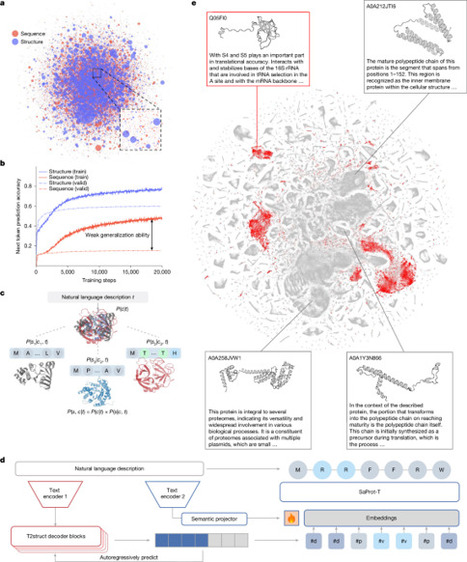
Programming biological function—designing bespoke proteins to perform specified molecular tasks—is a foundational goal of molecular engineering. However, current design models remain fundamentally limited1–3: they typically require either natural proteins as starting points for optimization or manual reformulation of functional goals as geometric and sequence-level constraints to guide candidate generation. Here we introduce Pinal, a 16-billion-parameter foundation model that designs candidate proteins from natural-language descriptions of desired function. Trained on 1.7 billion synthetically annotated protein–text pairs, Pinal links functional intent to protein sequence and structure. In computational evaluations, generated candidates combined high predicted foldability with functional-description alignment and sequence diversity, providing a basis for prioritizing experimentally testable designs. We applied Pinal to four distinct design tasks—a fluorescent protein, a polyethylene terephthalate hydrolase, an alcohol dehydrogenase and a metabolic H-protein—and experimentally observed the intended function in each case, including catalytic activity for both designed enzymes. Without iterative experimental optimization, a Pinal-designed H-protein increased product titre by 1.7-fold relative to the corresponding native Escherichia coli H-protein in a multi-enzyme CO2 fixation pathway. These findings support natural language as a high-level interface for candidate generation in protein design, enabling programmable exploration with reduced reliance on manually specified structural or sequence constraints. Pinal, a 16-billion-parameter artificial intelligence model, designs functional proteins from natural-language descriptions, demonstrating experimentally validated activities and improved CO2-fixation product yields without iterative optimization.
No comment yet.
Scooped by Gerd Moe-Behrens
August 12, 8:07 AM
Scoop.it!

SynComs should be rigorously defined, not renamed | Nature Communications

SynComs should be rigorously defined, not renamed | Nature Communications | SynBioFromLeukipposInstitute | Scoop.it
Koch et al. propose replacing “synthetic microbial communities (SynComs)” with “defined microbial communities”. We argue that this substitution obscures the design-driven logic of SynCom research, and that the field needs clearer conceptual classification rather than a broader renaming of SynComs.
No comment yet.
Scooped by Gerd Moe-Behrens
April 16, 5:25 PM
Scoop.it!

B lymphocyte protein factories produced by hematopoietic stem cell gene editing

Gerd Moe-Behrens's insight:

Engineered B cells have the potential to deliver therapeutic antibodies or other proteins within the body. Hartweger et al. modified hematopoietic stem and progenitor cells (HSPCs) with genes encoding specific antibodies (see the Perspective by James and Zhang). When transferred into mice, the HSPCs developed into B cells that responded to vaccination and produced therapeutic quantities of antibodies. The B cells underwent some somatic hypermutation, a process that diversifies the antibodies that they produce. However, transferring two populations of HSPCs, each modified to make a different antibody, provided an alternative solution for delivery of broadly neutralizing antibodies. HSPCs could be modified so that they differentiated into B cells that produced a fluorescent protein alongside an antibody, suggesting that this approach may also be leveraged to deliver other types of protein therapeutics. https://www.science.org/doi/10.1126/science.adz8994

No comment yet.
Scooped by Gerd Moe-Behrens
October 3, 2025 7:12 PM
Scoop.it!

A biological 0-day? Threat-screening tools may miss AI-designed proteins.

A biological 0-day? Threat-screening tools may miss AI-designed proteins. | SynBioFromLeukipposInstitute | Scoop.it
Ordering DNA for AI-designed toxins doesn’t always raise red flags.
No comment yet.
Scooped by Gerd Moe-Behrens
September 16, 2025 8:14 AM
Scoop.it!

Mirror of the unknown: should research on mirror-image molecular biology be stopped?

Mirror of the unknown: should research on mirror-image molecular biology be stopped? | SynBioFromLeukipposInstitute | Scoop.it
Amid growing debates about the benefits and risks of studying looking-glass versions of life’s building blocks, there is an urgent need to bridge divergent views.
No comment yet.
Scooped by Gerd Moe-Behrens
July 13, 2025 10:39 AM
Scoop.it!

Optogenetics-enabled discovery of integrated stress response modulators

Optogenetics-enabled discovery of integrated stress response modulators | SynBioFromLeukipposInstitute | Scoop.it
Gerd Moe-Behrens's insight:

The integrated stress response (ISR) is a conserved stress response that maintains homeostasis in eukaryotic cells. Modulating the ISR holds therapeutic potential for diseases including viral infection, cancer, and neurodegeneration, but few known compounds can do so without toxicity. Here, we present an optogenetic platform for the discovery of compounds that selectively modulate the ISR. Optogenetic clustering of PKR induces ISR-mediated cell death, enabling the high-throughput screening of 370,830 compounds. We identify compounds that potentiate cell death without cytotoxicity across diverse cell types and stressors. Mechanistic studies reveal that these compounds upregulate activating transcription factor 4 (ATF4), sensitizing cells to stress and apoptosis, and identify GCN2 as a molecular target. Additionally, these compounds exhibit antiviral activity, and one compound reduced viral titers in a mouse model of herpesvirus infection. Structure-activity and toxicology studies highlight opportunities to optimize therapeutic efficacy. This work demonstrates an optogenetic approach to drug discovery and introduces ISR potentiators with therapeutic potential.


https://www.cell.com/cell/abstract/S0092-8674(25)00690-7

No comment yet.
Scooped by Gerd Moe-Behrens
May 23, 2025 7:06 AM
Scoop.it!

Silencing mitochondrial gene expression in living cells

Silencing mitochondrial gene expression in living cells | SynBioFromLeukipposInstitute | Scoop.it

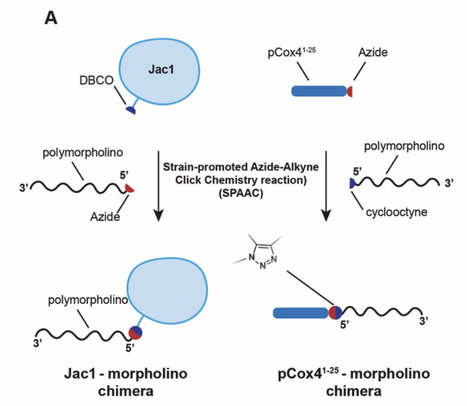
Mitochondria fulfill central functions in metabolism and energy supply. They express their own genome, which encodes key subunits of the oxidative phosphorylation system. However, central mechanisms underlying mitochondrial gene expression remain enigmatic. A lack of suitable technologies to target mitochondrial protein synthesis in cells has limited experimental access. Here, we silenced the translation of specific mitochondrial mRNAs in living human cells by delivering synthetic peptide-morpholino chimeras. This approach allowed us to perform a comprehensive temporal monitoring of cellular responses. Our study provides insights into mitochondrial translation, its integration into cellular physiology, and provides a strategy to address mitochondrial gene expression in living cells. The approach can potentially be used to analyze mechanisms and pathophysiology of mitochondrial gene expression in a range of cellular model systems.

Gerd Moe-Behrens's insight:

https://www.science.org/doi/10.1126/science.adr3498

No comment yet.
Scooped by Gerd Moe-Behrens
January 21, 2025 4:27 PM
Scoop.it!

Simulating 500 million years of evolution with a language model

Gerd Moe-Behrens's insight:

More than three billion years of evolution have produced an image of biology encoded into the space of natural proteins. Here we show that language models trained at scale on evolutionary data can generate functional proteins that are far away from known proteins. We present ESM3, a frontier multimodal generative language model that reasons over the sequence, structure, and function of proteins. ESM3 can follow complex prompts combining its modalities and is highly responsive to alignment to improve its fidelity. We have prompted ESM3 to generate fluorescent proteins. Among the generations that we synthesized, we found a bright fluorescent protein at a far distance (58% sequence identity) from known fluorescent proteins, which we estimate is equivalent to simulating five hundred million years of evolution.

https://www.science.org/doi/10.1126/science.ads0018

No comment yet.
Scooped by Gerd Moe-Behrens
January 16, 2025 8:07 AM
Scoop.it!

AI-designed proteins tackle century-old problem — making snake antivenoms

AI-designed proteins tackle century-old problem — making snake antivenoms | SynBioFromLeukipposInstitute | Scoop.it
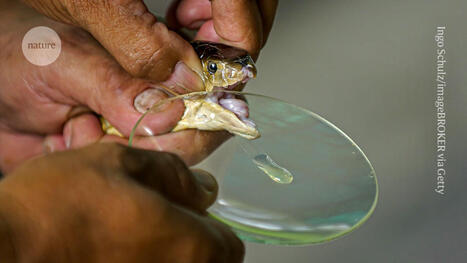
Machine learning has supercharged the field of computational protein design.
No comment yet.
Scooped by Gerd Moe-Behrens
January 16, 2025 8:06 AM
Scoop.it!

AI tools are designing entirely new proteins that could transform medicine

AI tools are designing entirely new proteins that could transform medicine | SynBioFromLeukipposInstitute | Scoop.it
Digital art techniques can now devise custom, working biomolecules on demand.
No comment yet.
Scooped by Gerd Moe-Behrens
November 1, 2024 8:50 PM
Scoop.it!

Engineered receptors show how humans tell countless odour molecules apart

Engineered receptors show how humans tell countless odour molecules apart | SynBioFromLeukipposInstitute | Scoop.it
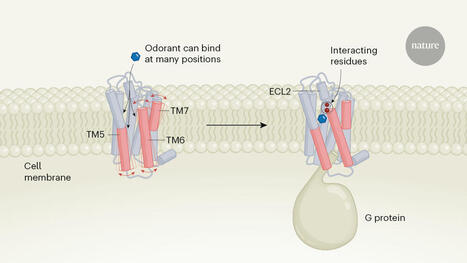
The structures of engineered odorant receptors.
No comment yet.
Scooped by Gerd Moe-Behrens
September 8, 2024 2:15 PM
Scoop.it!

https://www.sciencedirect.com/science/article/pii/S0092867424007165

Multi-layered computational gene networks by engineered tristate logics

Gerd Moe-Behrens's insight:

So far, biocomputation strictly follows traditional design principles of digital electronics, which could reach their limits when assembling gene circuits of higher complexity. Here, by creating genetic variants of tristate buffers instead of using conventional logic gates as basic signal processing units, we introduce a tristate-based logic synthesis (TriLoS) framework for resource-efficient design of multi-layered gene networks capable of performing complex Boolean calculus within single-cell populations. This sets the stage for simple, modular, and low-interference mapping of various arithmetic logics of interest and an effectively enlarged engineering space within single cells. We not only construct computational gene networks running full adder and full subtractor operations at a cellular level but also describe a treatment paradigm building on programmable cell-based therapeutics, allowing for adjustable and disease-specific drug secretion logics in vivo. This work could foster the evolution of modern biocomputers to progress toward unexplored applications in precision medicine. https://www.sciencedirect.com/science/article/pii/S0092867424007165

No comment yet.
Scooped by Gerd Moe-Behrens
July 12, 2024 7:52 AM
Scoop.it!

In situ targeted base editing of bacteria in the mouse gut

In situ targeted base editing of bacteria in the mouse gut | SynBioFromLeukipposInstitute | Scoop.it
Microbiome research is now demonstrating a growing number of bacterial strains and genes that affect our health1. Although CRISPR-derived tools have shown great success in editing disease-driving genes in human cells2, we currently lack the tools to achieve comparable success for bacterial targets in situ. Here we engineer a phage-derived particle to deliver a base editor and modify Escherichia coli colonizing the mouse gut. Editing of a β-lactamase gene in a model E. coli strain resulted in a median editing efficiency of 93% of the target bacterial population with a single dose. Edited bacteria were stably maintained in the mouse gut for at least 42 days following treatment. This was achieved using a non-replicative DNA vector, preventing maintenance and dissemination of the payload. We then leveraged this approach to edit several genes of therapeutic relevance in E. coli and Klebsiella pneumoniae strains in vitro and demonstrate in situ editing of a gene involved in the production of curli in a pathogenic E. coli strain. Our work demonstrates the feasibility of modifying bacteria directly in the gut, offering a new avenue to investigate the function of bacterial genes and opening the door to the design of new microbiome-targeted therapies. Edited bacteria were stably maintained in mouse gut for at least 42 days following the delivery of a base editor using an engineered phage-derived particle to modify Escherichia coli colonizing the gut.
No comment yet.
Scooped by Gerd Moe-Behrens
September 3, 8:27 AM
Scoop.it!

Creating bottom-up RNA transfer vehicles from synthetic protein assemblies

Creating bottom-up RNA transfer vehicles from synthetic protein assemblies | SynBioFromLeukipposInstitute | Scoop.it
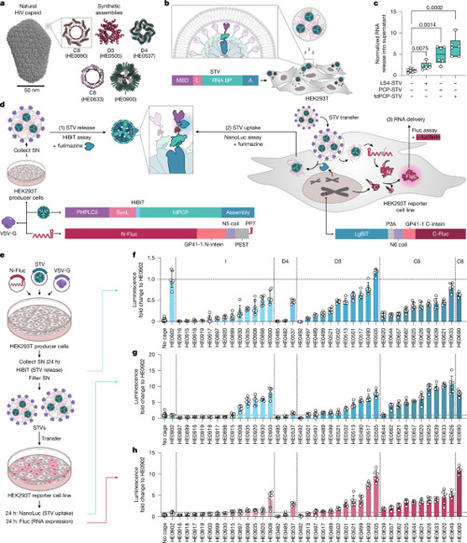
Evolution guides biological systems to populate ecological niches, with viruses among the most successful examples of this principle. Viruses evolved over billions of years to efficiently transfer genetic information. Although viruses are highly diverse, most have converged towards remarkable similarity in the size and shape of their capsids1,2. By contrast, generative models for protein design enable the creation of protein architectures that are absent from nature3–5. Here we investigate whether protein assemblies designed by artificial intelligence can be functionalized to construct nucleic acid transport vehicles that are independent of evolutionary trajectories. By combining natural protein domains with synthetic protein assemblies, we create more than 100 bottom-up RNA transfer vehicles with unique sizes and shapes. These vehicles surpass the RNA transfer efficiency of widely used delivery vehicles by several orders of magnitude. In addition, we demonstrate that their tropism can be programmed by incorporation of computationally designed peptide binders and use them to deliver therapeutically relevant cargo RNAs into a wide range of cellular models. We show the in vivo biodistribution of one of these vehicles in a mouse at near-single-cell resolution, confirm its safety, and use it to perform a gene-editing treatment strategy for Duchenne muscular dystrophy in patient-derived cells and a pig. Our work demonstrates how proteins created by generative artificial intelligence can be harnessed for the rational engineering of RNA transport systems with the desired properties by overcoming the limitations of natural protein diversity. Synthetic virus-like protein architectures designed by artificial intelligence show superior ability to deliver RNA into cells, compared with their naturally occurring counterparts, by overcoming the evolutionary constraints limiting viral evolution.
No comment yet.
Scooped by Gerd Moe-Behrens
August 12, 8:07 AM
Scoop.it!

Programmed membrane breaching with nanosyringes unlocks control over biochemical responses in synthetic cells | Nature Nanotechnology

Programmed membrane breaching with nanosyringes unlocks control over biochemical responses in synthetic cells | Nature Nanotechnology | SynBioFromLeukipposInstitute | Scoop.it
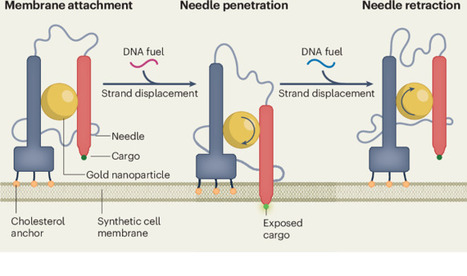
A nanodevice inspired by bacterial contractile injection systems enables reversible, fuel-actuated membrane penetration and spatio-temporally controlled cargo delivery for programmable biochemical regulation in synthetic cells.
No comment yet.
Scooped by Gerd Moe-Behrens
November 4, 2025 8:25 AM
Scoop.it!

Accelerating the discovery of multicatalytic cooperativity

Accelerating the discovery of multicatalytic cooperativity | SynBioFromLeukipposInstitute | Scoop.it
Cooperative catalysis, in which multiple catalytic units operate synergistically, underpins a variety of synthetically and mechanistically important organic reactions1–4. Despite its potential utility in new reactivity contexts, approaches to the discovery of cooperative catalysts have been limited, typically relying on serendipity or on prior knowledge of single-catalyst reactivity1,5. Systematic searches for unanticipated types of catalyst cooperativity must contend with vast combinatorial complexity and are therefore not undertaken6–10. Here, we describe a pooling–deconvolution algorithm, inspired by group testing11, that identifies cooperative catalyst behaviors with low experimental cost while accommodating potential inhibitory effects between catalyst candidates. The workflow was validated first on simulated cooperativity data, and then by experimentally identifying previously documented cooperativity between organocatalysts in an enantioselective oxetane-opening reaction. The workflow was then applied in a discovery context to a Pd-catalyzed decarbonylative cross-coupling reaction, enabling the identification of several ligand pairs that promote the target transformation at substantially lower catalyst loading and temperature than previously reported with single ligand systems.
No comment yet.
Scooped by Gerd Moe-Behrens
September 19, 2025 10:21 AM
Scoop.it!

World's first AI-designed viruses a step towards AI-generated life

World's first AI-designed viruses a step towards AI-generated life | SynBioFromLeukipposInstitute | Scoop.it
Scientists used AI to write coherent viral genomes, using them to synthesize bacteriophages capable of killing resistant strains of bacteria.
No comment yet.
Scooped by Gerd Moe-Behrens
July 13, 2025 10:41 AM
Scoop.it!

Engineering yeast multicellular behaviors via synthetic adhesion and contact signaling

Engineering yeast multicellular behaviors via synthetic adhesion and contact signaling | SynBioFromLeukipposInstitute | Scoop.it

Multicellular coordination enhances biological complexity, yet the widely used yeast Saccharomyces cerevisiae possesses limited multicellular capabilities. Here, we expand the possibilities for engineering multicellular behaviors in yeast by developing modular toolkits for two key mechanisms in multicellularity, contact-dependent signaling and specific cell-cell adhesion. MARS (mating-peptide anchored response system) enables contact-dependent signaling via surface-displayed peptides and G protein-coupled receptors, mimicking juxtacrine communication, while Saccharomyces SATURN (adhesion toolkit for multicellular patterning) uses adhesion-protein pairs for the creation of programmable cell aggregation patterns. Combining these allows the construction of multicellular logic circuits, equivalent to developmental programs that lead to cell differentiation based on local population. We further created JUPITER (juxtacrine sensor for protein-protein interaction), a genetic sensor based on MARS and SATURN, for assaying protein-protein interactions and selecting high-affinity nanobody binders. Collectively, these toolkits present versatile building blocks for constructing complex, user-defined multicellular yeast systems and expand the scope of its biotechnological applications.

No comment yet.
Scooped by Gerd Moe-Behrens
June 2, 2025 7:59 AM
Scoop.it!

DNA computing could solve AI's single biggest systemic problem

DNA computing could solve AI's single biggest systemic problem | SynBioFromLeukipposInstitute | Scoop.it
Global energy production can't keep pace with AI's demands
No comment yet.
Scooped by Gerd Moe-Behrens
May 19, 2025 10:00 AM
Scoop.it!

Engineered nucleocytosolic vehicles for loading of programmable editors

Engineered nucleocytosolic vehicles for loading of programmable editors | SynBioFromLeukipposInstitute | Scoop.it

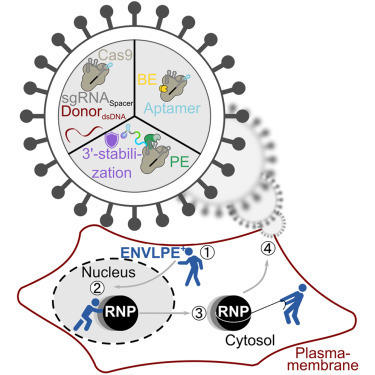
Advanced gene editing methods have accelerated biomedical discovery and hold great therapeutic promise, but safe and efficient delivery of gene editors remains challenging. In this study, we present a virus-like particle (VLP) system featuring nucleocytosolic shuttling vehicles that retrieve pre-assembled Cas-effectors via aptamer-tagged guide RNAs. This approach ensures preferential loading of fully assembled editor ribonucleoproteins (RNPs) and enhances the efficacy of prime editing, base editing, trans-activators, and nuclease activity coupled to homology-directed repair in multiple immortalized, primary, stem cell, and stem-cell-derived cell types. We also achieve additional protection of inherently unstable prime editing guide RNAs (pegRNAs) by shielding the 3′-exposed end with Csy4/Cas6f, further enhancing editing performance. Furthermore, we identify a minimal set of packaging and budding modules that can serve as a platform for bottom-up engineering of enveloped delivery vehicles. Notably, our system demonstrates superior per-VLP editing efficiency in primary T lymphocytes and two mouse models of inherited retinal disease, highlighting its therapeutic potential.

Gerd Moe-Behrens's insight:

Highlights

• Nucleocytosolic shuttling allows modular loading of gene editors into VLPs via aptamers
• ENVLPE+ VLPs achieve superior per-particle editing efficiency compared with previous VLPs
• 3′-pegRNA protection with Csy4 improves prime editing efficiency in VLP-based delivery
No comment yet.
Scooped by Gerd Moe-Behrens
January 16, 2025 8:07 AM
Scoop.it!

Massively parallel characterization of transcriptional regulatory elements

Massively parallel characterization of transcriptional regulatory elements | SynBioFromLeukipposInstitute | Scoop.it
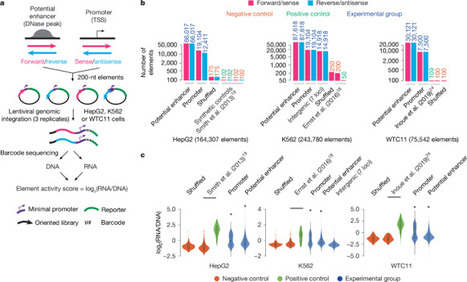
The human genome contains millions of candidate cis-regulatory elements (cCREs) with cell-type-specific activities that shape both health and many disease states1. However, we lack a functional understanding of the sequence features that control the activity and cell-type-specific features of these cCREs. Here we used lentivirus-based massively parallel reporter assays (lentiMPRAs) to test the regulatory activity of more than 680,000 sequences, representing an extensive set of annotated cCREs among three cell types (HepG2, K562 and WTC11), and found that 41.7% of these sequences were active. By testing sequences in both orientations, we find promoters to have strand-orientation biases and their 200-nucleotide cores to function as non-cell-type-specific ‘on switches’ that provide similar expression levels to their associated gene. By contrast, enhancers have weaker orientation biases, but increased tissue-specific characteristics. Utilizing our lentiMPRA data, we develop sequence-based models to predict cCRE function and variant effects with high accuracy, delineate regulatory motifs and model their combinatorial effects. Testing a lentiMPRA library encompassing 60,000 cCREs in all three cell types further identified factors that determine cell-type specificity. Collectively, our work provides an extensive catalogue of functional CREs in three widely used cell lines and showcases how large-scale functional measurements can be used to dissect regulatory grammar. Lentivirus-based reporter assays for 680,000 regulatory sequences from three cell lines coupled to machine-learning models lead to insights into the grammar of cis-regulatory elements.
No comment yet.
Scooped by Gerd Moe-Behrens
January 16, 2025 8:06 AM
Scoop.it!

AI has dreamt up a blizzard of new proteins. Do any of them actually work?

AI has dreamt up a blizzard of new proteins. Do any of them actually work? | SynBioFromLeukipposInstitute | Scoop.it
Emerging protein-design competitions aim to sift out the functional from the fantastical. But researchers hope that the real prize will be a revolution for the field.
No comment yet.
Scooped by Gerd Moe-Behrens
December 12, 2024 12:01 PM
Scoop.it!

Crosslinking intermodular condensation in non-ribosomal peptide biosynthesis

Crosslinking intermodular condensation in non-ribosomal peptide biosynthesis | SynBioFromLeukipposInstitute | Scoop.it
Non-ribosomal peptide synthetases are assembly line biosynthetic pathways that are used to produce critical therapeutic drugs and are typically arranged as large multi-domain proteins called megasynthetases1. They synthesize polypeptides using peptidyl carrier proteins that shuttle each amino acid through modular loading, modification and elongation2 steps, and remain challenging to structurally characterize, owing in part to the inherent dynamics of their multi-domain and multi-modular architectures3. Here we have developed site-selective crosslinking probes to conformationally constrain and resolve the interactions between carrier proteins and their partner enzymatic domains4,5. We apply tetrazine click chemistry to trap the condensation of two carrier protein substrates within the active site of the condensation domain that unites the first two modules of tyrocidine biosynthesis and report the high-resolution cryo-EM structure of this complex. Together with the X-ray crystal structure of the first carrier protein crosslinked to its epimerization domain, these structures highlight captured intermodular recognition events and define the processive movement of a carrier protein from one catalytic step to the next. Characterization of these structural relationships remains central to understanding the molecular details of these unique synthetases and critically informs future synthetic biology design of these pathways. Structural studies of tyrocidine synthetase using site-selective crosslinking probes to link condensation domains with carrier protein substrates define key interactions and molecular mechanisms of non-ribosomal protein synthesis.
Marcus Jorelle's curator insight, December 13, 2024 6:08 AM
Sierra MatchKing Bullets 22 Caliber (224 Diameter) 69 Grain Hollow Point Boat Tail: The Ultimate Choice for Precision Shooting ▎Introduction When it comes to precision shooting, every detail matters—from the rifle to the ammunition. Among the top choices for competitive shooters and enthusiasts alike are the Sierra MatchKing Bullets 22 Caliber (224 Diameter) 69 Grain Hollow Point Boat Tail. Renowned for their exceptional accuracy and performance, these bullets are designed to meet the rigorous demands of long-range shooting. In this article, we will explore the features, benefits, and applications of these premium bullets while incorporating essential SEO keywords to enhance your searchability. ▎What Are Sierra MatchKing Bullets? Sierra MatchKing bullets are specifically engineered for competitive shooting and precision applications. With a focus on accuracy, these bullets are crafted with meticulous attention to detail, ensuring they perform consistently in various conditions. The 22 caliber (224 diameter) designation makes them suitable for a range of rifles, while the 69 grain weight strikes a balance between velocity and stability. ▎Key Features of Sierra MatchKing Bullets 1. Hollow Point Design: The hollow point design enhances ballistic performance by promoting controlled expansion upon impact. This feature is particularly beneficial for target shooting, as it helps maintain accuracy at longer distances. 2. Boat Tail Configuration: The boat tail design reduces drag and improves aerodynamics, allowing for flatter trajectories and better stability in flight. This results in enhanced accuracy and reduced wind drift—critical factors for long-range shooters. 3. High-Quality Manufacturing: Sierra is known for its commitment to quality, and the MatchKing bullets are no exception. Each bullet undergoes rigorous testing to ensure consistency in weight, shape, and performance. ▎Benefits of Using Sierra MatchKing Bullets ▎1. Exceptional Accuracy The primary advantage of using Sierra MatchKing bullets is their unmatched accuracy. Whether you are participating in a competition or honing your skills at the range, these bullets are designed to deliver tight groupings, giving you confidence in your shots. ▎2. Versatility While primarily designed for match shooting, the 22 caliber 69 grain hollow point boat tail bullets can also be utilized for varmint hunting and other applications where precision is paramount. Their versatility makes them a valuable addition to any shooter’s arsenal. ▎3. Consistent Performance Thanks to their high-quality construction, MatchKing bullets provide consistent performance across various shooting conditions. This reliability ensures that you can trust your ammunition when it matters most. ▎Applications of Sierra MatchKing Bullets Sierra MatchKing bullets are ideal for: • Competitive Shooting: Perfect for benchrest competitions, high-power matches, and other precision shooting events. • Target Practice: Excellent choice for those looking to improve their marksmanship skills. • Varmint Hunting: Effective for taking down small game due to their accurate and controlled expansion. ▎How to Load Sierra MatchKing Bullets Loading Sierra MatchKing bullets requires careful attention to detail to maximize their potential. Here are some tips: 1. Choose the Right Powder: Select a powder that complements the bullet weight and your specific rifle. Refer to reloading manuals for recommended powder types and charges. 2. Set Proper OAL (Overall Length): Adjust the seating depth to achieve the optimal overall length for your specific firearm. This can significantly affect accuracy. 3. Test Different Loads: Experiment with various loads to find the combination that delivers the best performance in your rifle.https://canada-reloading.shop/product/federal-firestic…-powder-10-count/ ‎ https://canada-reloading.shop/product/fiocchi-primers-…09-w-type-1000ct/ https://canada-reloading.shop/product/fiocchi-small-pi…l-magnum-primers/ https://canada-reloading.shop/product/large-rifle-magn…formance-primers/ https://canada-reloading.shop/product/pmc-small-pistol…rimers-two-trays/ ‎ https://canada-reloading.shop/product/remington-10-percussion-caps-100/ ‎ https://canada-reloading.shop/product/remington-11-percussion-caps/ ‎ https://canada-reloading.shop/product/remington-209ml-…ader-primers-100/ https://canada-reloading.shop/product/remington-22617-…-caps-100-ct-tin/ https://canada-reloading.shop/product/rws-1075-plus-percussion-caps-11/ ‎ https://canada-reloading.shop/product/rws-4-flange-200-ct-musket-caps/ ‎ https://canada-reloading.shop/product/rws-11-percussio…250-to-1000-pack/ ‎ https://canada-reloading.shop/product/rws-musket-caps-…200-to-5000-pack/ ‎ https://canada-reloading.shop/product/schuetzen-musket…00-to-5000-count/ ‎ https://canada-reloading.shop/product/small-rifle-magn…formance-primers/ ‎ https://canada-reloading.shop/product/tulammo-large-ri…imers-1000-count/ ‎ https://canada-reloading.shop/product/tulammo-small-ri…imers-1000-count/ https://canada-reloading.shop/product/winchester-percussion-caps-11-100/ ‎ https://canada-reloading.shop/product/209-shotshell-wo…formance-primers/ ‎ https://canada-reloading.shop/product/cci-percussion-c…0-10-cans-of-100/ https://canada-reloading.shop/product/cci-primers-209-…-10-trays-of-100/ https://canada-reloading.shop/product/cci-primers-209m…-10-trays-of-100/ ‎ https://canada-reloading.shop/product/cheddite-shotshell-primer-209/ https://canada-reloading.shop/product/federal-209a-shotshell-primers/ ‎ https://canada-reloading.shop/product/federal-primers-…-10-trays-of-100/ https://canada-reloading.shop/product/fiocchi-primers-…-10-trays-of-100/ ‎ https://canada-reloading.shop/product/nobel-sport-shot…-10000-pack-case/ ‎ https://canada-reloading.shop/product/nobelsport-prime…-50-trays-of-100/ https://canada-reloading.shop/product/remington-premie…rs-209-shotshell/ https://canada-reloading.shop/product/rio-209-g-1000-shotshell-primers/ ‎ https://canada-reloading.shop/product/winchester-prime…-10-trays-of-100/ https://canada-reloading.shop/product/fort-smith-fsaap…ol-boxer-primers/ https://canada-reloading.shop/product/cci-small-pistol…-10-trays-of-100/ ‎ https://canada-reloading.shop/product/cci-small-pistol…-10-trays-of-100/ ‎ https://canada-reloading.shop/product/federal-premium-…-10-trays-of-100/ ‎ https://canada-reloading.shop/product/federal-premium-…-10-trays-of-100/ ‎ https://canada-reloading.shop/product/federal-small-pi…-10-trays-of-100/ https://canada-reloading.shop/product/federal-small-pi…-10-trays-of-100/ ‎ https://canada-reloading.shop/product/remington-small-…-10-trays-of-100/ https://canada-reloading.shop/product/remington-small-…-10-trays-of-100/ https://canada-reloading.shop/product/small-pistol-wol…formance-primers/ ‎ https://canada-reloading.shop/product/small-pistol-mag…formance-primers/ ‎ https://canada-reloading.shop/product/winchester-small…-10-trays-of-100/ ‎ https://canada-reloading.shop/product/winchester-small…-10-trays-of-100/ ‎ https://canada-reloading.shop/product/winchester-small…-10-trays-of-100/ https://canada-reloading.shop/product/winchester-usa-r…-10-trays-of-100/ https://canada-reloading.shop/product/fort-smith-fsaap…le-boxer-primers/ ‎ https://canada-reloading.shop/product/cci-small-rifle-…-10-trays-of-100/ ‎ https://canada-reloading.shop/product/cci-small-rifle-…-10-trays-of-100/ https://canada-reloading.shop/product/cci-small-rifle-…-10-trays-of-100/ ‎ https://canada-reloading.shop/product/cci-small-rifle-…-10-trays-of-100/ ‎ https://canada-reloading.shop/product/federal-premium-…-10-trays-of-100/ ‎ https://canada-reloading.shop/product/federal-small-ri…-10-trays-of-100/ https://canada-reloading.shop/product/magtech-small-ri…imers-1000-count/ ‎ https://canada-reloading.shop/product/pmc-small-rifle-magnum-primers/ ‎ https://canada-reloading.shop/product/remington-small-…-10-trays-of-100/ ‎ https://canada-reloading.shop/product/remington-small-…-10-trays-of-100/ ‎ https://canada-reloading.shop/product/hornady-brass-45…ess-3″-box-of-20/ https://canada-reloading.shop/product/hornady-brass-6-5-prc-box-of-50/ https://canada-reloading.shop/product/lapua-brass-30-0…field-box-of-100/ https://canada-reloading.shop/product/lapua-brass-338-…agnum-box-of-100/ https://canada-reloading.shop/product/lapua-brass-6-5-creedmoor/ ‎ https://canada-reloading.shop/product/norma-brass-shoo…magnum-box-of-50/ https://canada-reloading.shop/product/nosler-brass-6-5…dmoor-bag-of-100/ https://canada-reloading.shop/product/nosler-custom-br…osler-box-of-100/ https://canada-reloading.shop/product/nosler-custom-br…hester-box-of-50/ https://canada-reloading.shop/product/nosler-custom-br…oulder-box-of-50/ https://canada-reloading.shop/product/nosler-custom-br…magnum-box-of-25/ ‎ https://canada-reloading.shop/product/nosler-custom-co…-point-boat-tail/ ‎ https://canada-reloading.shop/product/once-fired-brass…00-bulk-packaged/ https://canada-reloading.shop/product/sierra-matchking…-point-boat-tail/ https://canada-reloading.shop/product/sig-sauer-brass-…ington-bag-of-50/ https://canada-reloading.shop/product/starline-brass-223-remington/ https://canada-reloading.shop/product/starline-brass-357-sig/ ‎ https://canada-reloading.shop/product/starline-brass-38-55-wcf-2-082″/ ‎ https://canada-reloading.shop/product/starline-brass-45-acp/ https://canada-reloading.shop/product/starline-brass-45-auto-rim-not-acp/ ‎ https://canada-reloading.shop/product/starline-brass-458-socom/ ‎ https://canada-reloading.shop/product/starline-brass-5-56x45mm-nato/ https://canada-reloading.shop/product/top-brass-premiu…300-aac-blackout/ ‎ https://canada-reloading.shop/product/top-brass-premiu…ired-brass-40-sw/ https://canada-reloading.shop/product/hodgdon-2024-ann…reloading-manual/ https://canada-reloading.shop/product/hornady-11th-edi…reloading-manual/ ‎ https://canada-reloading.shop/product/loadbooks-usa-12…reloading-manual/ https://canada-reloading.shop/product/lyman-pistol-rev…book-3rd-edition/ https://canada-reloading.shop/product/norma-reloading-manual-2nd-edition/ ‎ https://canada-reloading.shop/product/nosler-reloading-manual-9/ https://canada-reloading.shop/product/sierra-6th-editi…reloading-manual/ https://canada-reloading.shop/product/speer-reloading-manual-15/ https://canada-reloading.shop/product/swift-reloading-manual-2/ ‎ https://canada-reloading.shop/product/tom-rosters-hevi…nual-2nd-edition/ https://canada-reloading.shop/product/top-brass-premiu…ired-brass-40-sw/ ‎‎ https://canada-reloading.shop/product/federal-premium-…-point-boat-tail/ ‎ https://canada-reloading.shop/product/hornady-superfor…-v-max-box-of-20/ ‎"Referring page title" "Referring page URL" "Language" "Platform" "Referring page HTTP code" "Domain rating" "UR" "Domain traffic" "Referring domains" "Linked domains" "External links" "Page traffic" "Keywords" "Target URL" "Left context" "Anchor" "Right context" "Redirect Chain URLs" "Redirect Chain status codes" "Type" "Content" "Nofollow" "UGC" "Sponsored" "Rendered" "Raw" "Lost status" "Drop reason" "Discovered status" "First seen" "Last seen" "Lost" "Author" "Links in group" "YouTube Creator Blog [UK]: Ride to Success with 63fixedtv, September’s Rising Partner" "https://youtubecreator-uk.googleblog.com/2012/09/ride-to-success-with-63fixedtv.html" "en" "" "200" "94" "5" "210429" "29" "180" "542" "0" "0" "http://ssgunstore.com/" "" "Buy sig sauer online" "" "" "" "text" "false" "true" "false" "false" "true" "true" "" "" "pagefound" "2022-07-11 14:53:04" "2024-05-29 07:01:22" "" "" "2" "沖縄対策本部■沖縄に現れた若き愛国ヒロインのスッキリする名スピーチ - 沖縄対策本部" "https://blog.goo.ne.jp/jiritsukokka/e/55ac732a803559c65c0865560848bb22" "" "" "200" "90" "6" "24746634" "22" "711" "1879" "0" "0" "https://ssgunstore.com/" "(" "Sig Sauer" ")" "" "" "text" "false" "true" "false" "false" "false" "true" "" "" "linkfound" "2021-07-09 02:55:40" "2024-05-29 17:13:03" "" "" "1" "Immagine Immagina | Germaine Muller" "http://www.germainemuller.altervista.org/?page_id=172" "it" "wordpress" "200" "90" "0.6" "2411712" "93" "5554" "13863" "0" "0" "https://ssgunstore.com/" "" "sig sauer sp2022" "" "" "" "text" "false" "true" "false" "false" "true" "true" "" "" "linkrestored" "2022-07-04 22:49:07" "2024-05-27 21:28:57" "" "" "1" "Up Against the Wall: How to Break Up Your Day so You Feel Great – Magellan Chiropractic" "http://jonesborochiropractor.flywheelsites.com/up-against-the-wall-how-to-break-up-your-day-so-you-feel-great/" "" "wordpress" "200" "88" "1.1" "15265" "2" "3840" "8378" "0" "0" "https://ssgunstore.com/" "" "sig sauer ar 15" "" "" "" "text" "false" "true" "true" "false" "true" "true" "" "" "pagefound" "2023-05-27 08:35:04" "2024-05-27 18:49:19" "" "" "2" "The Moo's News » Blog Archive » Click To Tweet" "http://fatcow.com/blog/?p=1137" "en" "ecommerce, wordpress" "200" "86" "19" "16248" "1158" "13023" "30474" "0" "6" "https://ssgunstore.com/" "" "sig sauer p226" "Says:" "" "" "text" "false" "true" "false" "false" "false" "true" "" "" "linkrestored" "2021-03-31 08:20:02" "2024-05-29 20:22:08" "" "" "2" "EINMANNDING – Kommentare zu Heute , Morgentext vom 28.06. 2017" "http://wordpress.p255834.webspaceconfig.de/?comments_popup=5817" "de" "" "200" "85" "9" "5551" "290" "12307" "21416" "0" "0" "https://ssgunstore.com/" "Kommentar von" "Trevor Mackey" "— 5. April 2021 zu 1:33" "" "" "text" "false" "true" "false" "false" "false" "true" "" "" "pagefound" "2024-01-05 06:21:59" "2024-04-30 15:24:48" "" "" "3" "maquete_2 – Adaptpolis" "http://adaptpolis.fa.ulisboa.pt/?attachment_id=334" "" "wordpress" "200" "82" "0.1" "273078" "111" "7539" "11901" "0" "0" "https://ssgunstore.com/" "" "sig sauer rattler" "" "" "" "text" "false" "true" "true" "false" "false" "true" "" "" "pagefound" "2023-01-06 19:43:36" "2024-05-29 15:48:06" "" "" "1" "What might a post-Wonga world look like? - University of Birmingham" "https://www.birminghamdev.bham.ac.uk/research/perspective/what-might-a-post-wonga-world-look-like" "en" "" "200" "80" "0" "29063" "0" "3994" "13855" "0" "0" "https://ssgunstore.com/" "At 5:25AM on 21 July 2021," "sig sauer guns shop" "wrote" "" "" "text" "false" "true" "false" "false" "false" "true" "" "" "pagefound" "2024-03-27 10:10:12" "2024-04-29 05:20:04" "" "" "1" "Baseball Talk » Blog Archive » Hamilton and Rangers agree to deal" "https://blogs.bgsu.edu/mlblog/2011/02/10/hamilton-and-rangers-agree-to-deal/" "en" "wordpress" "200" "80" "4.3" "234573" "141" "6158" "12700" "0" "4" "https://ssgunstore.com/" "to create this actual post amazing. Excellent process!My page ::" "sig sauer p228" "" "" "" "text" "false" "true" "true" "false" "false" "true" "" "" "linkfound" "2022-06-29 18:25:00" "2024-05-30 01:38:43" "" "" "1" "How Is A Man Freed After 23 Years? – Juris Magazine" "https://sites.law.duq.edu/juris/2013/03/27/how-is-a-man-freed-after-23-years/" "" "wordpress" "200" "78" "3.1" "110203" "47" "7446" "13671" "0" "3" "https://ssgunstore.com/" "" "Mammie Maguire" "" "" "" "text" "false" "true" "true" "false" "false" "true" "" "" "linkfound" "2023-11-04 16:44:53" "2024-05-29 08:38:20" "" "" "1" "buy ayahuasca - On Feet Nation" "https://www.onfeetnation.com/profiles/blogs/buy-ayahuasca-1?xg_source=activity" "en" "" "200" "77" "3.8" "8" "0" "23" "34" "0" "0" "https://ssgunstore.com/" "" "sig sauer, sig sauer p320, sig sauer p365, sig sauer p226, sig saue..." "" "http://ssgunstore.com/" "301" "text" "false" "true" "false" "false" "false" "true" "" "" "linkrestored" "2021-10-12 17:19:30" "2024-05-15 03:29:06" "" "" "8" "For the Love of Food: Get Me to the Greek" "http://healthyeating.sunnybrook.ca/2013/02/get-me-to-greek.html" "en" "" "200" "75" "4.6" "68539" "24" "217" "528" "0" "0" "https://ssgunstore.com/" "" "Firearms For sale, sig sauer p320 compact, sig sauer sp2022, sig sauer p320 for sale, sig sauer p365 for sale, sig sauer p250, sig sauer 365, sig sauer tread, sig sauer p226 legion, sig sauer mcx virtus, sig sauer p320 x5, sig sauer 380, sig sauer p210, sig sauer legion, sig sauer p320 m17, sig sauer pistols, sig sauer p320 x5 legion, sig sauer p228, sig sauer p226 price, sig sauer p365 price, sig ..." "" "" "" "text" "false" "true" "false" "false" "true" "true" "" "" "linkfound" "2023-07-06 15:43:32" "2024-05-28 15:57:43" "" "" "1" "EDDL 5141 – Benefits and Challenges Activity – sdeighton's Portfolio" "https://sdeighton-portfolio.eddl.tru.ca/2019/01/22/eddl-5141-benefits-and-challenges-activity/" "en" "wordpress" "200" "74" "4.4" "108624" "47" "4166" "7570" "0" "0" "https://ssgunstore.com/" "" "sig sauer m18" "" "" "" "text" "false" "true" "true" "false" "false" "true" "" "" "linkfound" "2022-06-30 18:15:14" "2024-05-28 23:46:27" "" "" "2" "31 companies participate in AIT Career Fair – AIT Research Portal" "https://research.ait.ac.th/2018/03/14/31-companies-participate-in-ait-career-fair/" "en" "wordpress" "200" "73" "4.2" "49074" "51" "7473" "12596" "0" "0" "https://ssgunstore.com/" "" "sig sauer tread" "" "" "" "text" "false" "true" "true" "false" "false" "true" "" "" "linkrestored" "2023-10-31 15:56:15" "2024-05-29 09:57:32" "" "" "2" "Majelis Ta’lim Uswatun Nisa Peringati Maulid - BIRO ADMINISTRASI PIMPINAN SETDA ACEH" "https://humas.acehprov.go.id/majelis-talim-uswatun-nisa-peringati-maulid/" "id, en" "ecommerce, wordpress" "200" "71" "1.8" "629960" "35" "2169" "3365" "0" "2" "https://ssgunstore.com/" "" "sig sauer p229" "" "" "" "text" "false" "true" "true" "false" "true" "true" "" "" "linkrestored" "2022-12-22 11:51:32" "2024-05-13 05:12:57" "" "" "1" "Rio Anhanduí pede socorro - Hidrologia, Erosão e Sedimentos - HEroS" "https://heros.ufms.br/rio-anhandui-pede-socorro/" "pt" "wordpress" "200" "70" "4.5" "123300" "79" "8555" "14327" "0" "1" "https://ssgunstore.com/" "" "sig sauer p365" "" "" "" "text" "false" "true" "true" "false" "true" "true" "" "" "linkrestored" "2021-04-07 22:14:28" "2024-05-28 21:29:27" "" "Pedro Zamboni" "2" "Olá, mundo! | IFA"
Scooped by Gerd Moe-Behrens
October 25, 2024 7:31 PM
Scoop.it!

Machine-guided design of cell-type-targeting cis-regulatory elements

Machine-guided design of cell-type-targeting cis-regulatory elements | SynBioFromLeukipposInstitute | Scoop.it
Cis-regulatory elements (CREs) control gene expression, orchestrating tissue identity, developmental timing and stimulus responses, which collectively define the thousands of unique cell types in the body1–3. While there is great potential for strategically incorporating CREs in therapeutic or biotechnology applications that require tissue specificity, there is no guarantee that an optimal CRE for these intended purposes has arisen naturally. Here we present a platform to engineer and validate synthetic CREs capable of driving gene expression with programmed cell-type specificity. We take advantage of innovations in deep neural network modelling of CRE activity across three cell types, efficient in silico optimization and massively parallel reporter assays to design and empirically test thousands of CREs4–8. Through large-scale in vitro validation, we show that synthetic sequences are more effective at driving cell-type-specific expression in three cell lines compared with natural sequences from the human genome and achieve specificity in analogous tissues when tested in vivo. Synthetic sequences exhibit distinct motif vocabulary associated with activity in the on-target cell type and a simultaneous reduction in the activity of off-target cells. Together, we provide a generalizable framework to prospectively engineer CREs from massively parallel reporter assay models and demonstrate the required literacy to write fit-for-purpose regulatory code. A generalizable framework to prospectively engineer cis-regulatory elements from massively parallel reporter assay models can be used to write fit-for-purpose regulatory code.
No comment yet.
Scooped by Gerd Moe-Behrens
July 22, 2024 6:10 PM
Scoop.it!

Q&A: How machine learning is propelling structural biology

Q&A: How machine learning is propelling structural biology | SynBioFromLeukipposInstitute | Scoop.it
For Lucas Farnung, there is no question more fascinating than how a single fertilized egg develops into a fully-functioning human. As a structural biologist, he is studying this process on the smallest scale: the trillions of atoms that must synchronize their work to make it happen.
No comment yet.