Your new post is loading...

|
Scooped by
EcoVadis
October 15, 2022 3:14 AM
|
German wholesale giant Metro aims to reduce water consumption across its operations by 10% per square metre of net operating space by 2030 compared to the base year 2021.
The move will contribute to the global community's Sustainable Development Goal (SDG) 12, which seeks to produce and consume sustainably and reduce the company's operating costs.
The new target replaces the previous goal of a 5% reduction in water consumption by 2025 compared to fiscal year 2016/17, the wholesaler noted.
The company exceeded this target by cutting water consumption by 19% in the current fiscal year.
Ivonne Bollow, SVP of public policy and corporate responsibility at Metro AG, said, "Water scarcity is one of the biggest global challenges today. Global water demand is continuously increasing, while available water resources are steadily declining due to climate change – with drastic consequences for the world's food supply and nutrition. [...]
"As a globally active food wholesaler, water and climate protection are therefore a high priority for Metro and we have set ourselves ambitious goals that we will consistently pursue and, if necessary, formulate even more ambitiously."
|
|
Scooped by
EcoVadis
October 4, 2022 4:41 AM
|
The voluntary guidelines, published by the BRC, outline the steps retailers can take to adhere to circular economy principles. By following this circular model, the BRC says retailers will further the progress they have already made to lengthen the lifecycle of the products they buy.
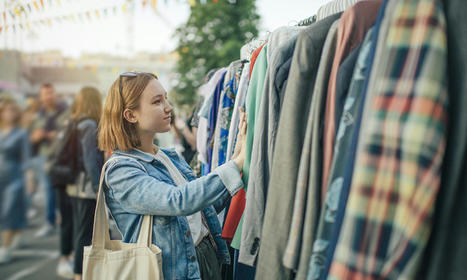
As part of the guidelines, it explains clothing, footwear, homeware textiles, and other items, retailers can promote resale markets and platforms; use hire and rental subscription services; and offer product swaps, upcycling and repair schemes, instead of throwing away items.
The guidelines also emphasise the importance of quality checks, which “clearly informs” the customer of the item’s condition. They also clarify that its aim is not to promote the circulation of perfect items, but rather to circulate all items, “safe in the knowledge” that both buyer and seller have the same level of information and expectation of their condition.
Retailers recognise the role they can play in helping their customers shop in more environmentally friendly ways.
The UK trade association explains that its long-term goal is to limit, and ultimately end, the sending of items to landfill unnecessarily and to keep them in circulation for longer so that they can be used and loved by more people.
The BRC says it is already working with retailers on their journey to Net Zero through their Climate Action Roadmap. Supported by over 80 major retailers, it is the Retail Industry’s commitment to reduce industry and supply chain carbon emissions to zero by 2040.
Chief Executive of the BRC, Helen Dickinson OBE, said: “We are delighted to launch our first voluntary Guideline on second-hand and preloved items. With more people looking for ways to shop sustainably, particularly as the cost of living rises, the sale of second-hand items in-store and online can encourage sustainable behaviours at affordable prices and take us one step further towards a circular economy.
“Retailers recognise the role they can play in helping their customers shop in more environmentally friendly ways, and we hope that this Guideline will help many on their sustainability journey.”
|
|
Scooped by
EcoVadis
October 2, 2022 4:37 AM
|
Final negotiations have begun between the European Council, Parliament and Commission on a regulation that will ban products from the EU market that result from deforestation.
It will impact what is placed on supermarket shelves, and, importantly, retailers might be held accountable.
The proposal focuses on coffee, cacao, cattle, palm oil, soy and wood products. Among these commodities, the palm oil sector is at the forefront of sustainability, reaching 93% uptake of certified sustainable palm oil in Europe, even before legislation.
The core of the proposal requires that only products that are both legally produced and demonstrably free from deforestation should be allowed on the EU market.
To guarantee this, companies must submit a due diligence statement which states that the product is not only deforestation-free but also shows the exact plot of land where it originated.
This can be achieved by making the first importer (operator) responsible for this due diligence statement.
All subsequent actors who handle the product commercially (traders), such as retailers, would then ensure that the information they receive from the operator is correct.
|
|
Scooped by
EcoVadis
September 23, 2022 7:48 AM
|
The country’s most sustainably minded retailers are placing more of an emphasis on sourcing — by both boosting locally and sustainably produced food and by requiring stricter environmental standards from their suppliers. This ranges from sourcing more sustainable seafood, including canned tuna, to ensuring that beef is being produced with no deforestation. Palm oil, coffee, eggs, soy and pulp are other commodities that are being more closely watched by grocers to ensure sustainable production.
In fact, the 2022 Sustainability Barometer released by London-based Mintel finds that from a global consumer perspective, concerns about water and food shortages are now being prioritized ahead of previous preoccupations with waste and plastic. Therefore, it makes sense for grocers to include messaging about their efforts in more sustainable sourcing and in combating climate change.
Several retailers, including Batavia, Ill.-based Aldi US, are committing that all of the fresh, frozen and farmed seafood they purchase will be third-party certified as sustainable or from fishery improvement projects by the end of 2025. Meanwhile, expect to see more of these grocers ramp up tracing efforts so that customers will also recognize their efforts in sustainability.
|
|
Scooped by
EcoVadis
September 13, 2022 7:16 AM
|
Sustainability often comes at a price, but despite inflation and other global disruptions, many Americans are open to shopping sustainability. Among those surveyed, 68% indicated they would pay more for sustainable products. This increased from 56% in 2020 to 47% in 2019. Gen Z stood out again when it came to spending and reported that they were the most likely to pay up to 100% more for a sustainable product.
Related to cost is also where consumers are shopping. Sustainability is driving consumers to change the brands they shop from based on whether they make sustainable offerings. 50% of U.S. consumers have changed where they purchased goods in the past year, and 14% are purchasing from businesses with sustainable practices.
|
|
Scooped by
EcoVadis
September 5, 2022 2:33 AM
|
Much has been written about Walmart’s main sustainability program, Project Gigaton — the ambition to reduce or avoid 1 billion metric tons (a gigaton) of greenhouse gases from its supply chain by 2030. Now, five years in, the retail giant is claiming in its recent fiscal year 2022 ESG report to be halfway to its goal, having avoided 574 million metric tons by engaging with over 4,500 suppliers.
In 2020 and 2021, Walmart avoided or reduced 230 million metric tons and 416 metric tons of carbon emissions since 2017 before reaching the 574 million cumulative this year. And the 4,500 suppliers represent 70 percent of Walmart’s U.S. product sales.
"It's a big number, and we know we need to do more," said Jane Ewing, senior vice president of sustainability at Walmart. "But it gives us confidence that we’re on track to delivering on that commitment."
A gigaton of greenhouse gases accounts for about 30 percent of Walmart’s Scope 3 footprint, in line with the Paris agreement's plans for 1.5 degrees Celsius of warming.
|
|
Scooped by
EcoVadis
May 23, 2022 2:15 AM
|
Tesco and WWF have launched a new accelerator programme pairing pioneering start-ups with Tesco suppliers to fast-track sustainability innovation in the supply chain. The aim is to cut the environmental impact of food and support UK food security. FoodNavigator speaks to Giles Bolton, Responsible Sourcing Director for Tesco, to learn more about the retailer’s approach.
|
|
Scooped by
EcoVadis
April 8, 2022 8:36 AM
|
Starbucks has made a commitment to eliminate toxic PFAS (per-and polyfluoroalkyl substances) in its food packaging materials. As part of the company’s new sustainable packaging policy, the transition away from these dangerous chemicals in its food packaging materials will be complete in the US by the end of 2022. Starbucks previously received a letter grade of F in 2018, 2019, and 2021 in the Retailer Report Card, which benchmarks retailers on their safer chemicals policies and implementation programs.
|
|
Scooped by
EcoVadis
March 22, 2022 3:09 AM
|
Brands have realized that focusing on sustainability is a critical part of the modern supply chain by locating and arranging warehouses and fulfillment centers at the nearest location to optimize travel time and resources. There is a huge shift that has been observed in the brand's world as the industry is switching to a non-retailer-based model and incorporating D2C models in their businesses. And the same trend is forecast to grow over 15 times, almost threefold from the current size by reaching $100 billion, as per the recent report by Statista. D2C is becoming a pivotal factor and disrupting the retail industry post-pandemic. The innovative approach, quality product, unbelievable level of customization is catching the attention of especially young customers towards D2C brands.
|
|
Scooped by
EcoVadis
February 23, 2022 2:36 AM
|
Russian retailer Fix Price has announced the rollout of eco-friendly branded bags across its estate, which are made form 40% recycled polyethylene.
Over the coming months, all large shopping bags, of which between four million and eight million are sold per month, will be replaced with new eco-friendlier alternatives.
The bags contain no bio-additives or PVC and can be recycled.
|
|
Scooped by
EcoVadis
February 22, 2022 2:35 AM
|
UK retailer Morrisons has launched paper packaging for its own-brand toilet and kitchen rolls in its effort to cut plastic use and increase the use of recyclable packaging.
The paper packaging used in the products is responsibly sourced, FSC certified and 100% recyclable to allow customers to put it into their kerbside collections.
The toilet paper and kitchen sheets are also made with 100% recycled paper, the retailer noted.
Leanne Jarrett, household buyer at Morrisons, said, “Millions of toilet paper and kitchen rolls are bought every day in the UK. So if we can remove plastic entirely from these products - and if all customers bought these alternatives - we could save nine tonnes of plastic from being used a year.
|
|
Scooped by
EcoVadis
January 22, 2022 3:11 AM
|
Consumers are willing to spend more for sustainable brands, but that a significant gap exists between retailers and customers as to what consumers want and what’s actually being delivered, according to new data released by First Insight and the Baker Retailing Center at the Wharton School of the University of Pennsylvania.
“This report clearly demonstrates that retailers are leaving money on the table. Brands and retailers must listen to the voice of the customer on issues as critical as sustainability. Consumers want more than performative measures from retailers and brands when it comes to ESG priorities, which will only become more important as Gen Z grows in influence,” says Greg Petro, CEO of First Insight.
|
|
Scooped by
EcoVadis
September 27, 2021 7:25 AM
|
New climate goal will require retailer to slash emissions generated in the production and end use of its products, from agriculture to food waste
The UK's largest supermarket chain has committed to delivering net zero emissions across its entire value chain by 2050, vowing to target the emissions generated from the sourcing of raw materials, agriculture,...
|
|
|
Scooped by
EcoVadis
October 5, 2022 4:44 AM
|
The H&M Group is a multinational clothing company. The Swedish retailer is known for “fast fashion,” which is clothing that is made and sold cheaply. The company has shops in 75 locations worldwide with 4,702 stores, although they are marketed under different brands. The company positions itself as a leader in the area of sustainability. Its goal is to be carbon positive by 2040. In the nearer term, it wants to reduce its emissions by 56% by 2030, using 2019 as a baseline, and to make its clothing using sustainable components.
Furthermore, H&M established an internal price on carbon in 2021. It aims to reduce its Scope 1 and 2 greenhouse gas emissions by 20% by 2025. Those emissions fell by 22% between 2019 and 2021. Scope 1 comes from owned and controlled sources, while Scope 2 comes from those sources of energy it purchases from others.
Also, by 2025, it wants to cut its Scope 3 emissions or those that emanate from its suppliers. Those emissions dropped by 9% between 2019 and 2021.
Meanwhile, it produces its clothing with sustainable components such as organic cotton and recycled polyester. It aims to make all of its clothing using recycled components by 2030. It says it is 65% of the way there now.
|
|
Scooped by
EcoVadis
October 3, 2022 4:38 AM
|
We are in the midst of a real-time, seismic shift as consumers transform expectations of global supply and demand models. The pandemic exposed the fragility of many supply chain networks. An inability to sense and dynamically adjust to shifting demand signals, consumer preferences, labour requirements, transportation, storage, inventory and trade policy changes caused havoc to economies and brands around the world.
According to McKinsey, “Investments in technology and automation in distribution centres are now at the forefront of most Chief Supply Chain Officers’ agendas.” Gartner recently upped its supply chain management technology forecast from 8% to 14% in compounded annual growth rate – forecasting a $28 billion investment by 2025.
Retailers are racing to transform store, digital, fulfilment and service experiences in an effort to win over omnichannel consumers, boost employee productivity and increase profitability, all the while trying to balance increasing environmental requirements.
Digital transformation initiatives have kicked into high gear across supply chains, too, allowing brands to reap the benefits of cloud, composable IT architecture, microservices and AI in efforts to better match supply with demand.
|
|
Scooped by
EcoVadis
October 2, 2022 4:35 AM
|
There are signs of a disconnect between consumers and retailers when it comes to sustainability.
A recent report has found that two-thirds of consumers are willing to pay more for sustainable products than retailers expect — and reveals that consumer preference for recommerce models is also being underserved.
Further reinforcing this misalignment is the finding that only half of the senior retailer executives surveyed believe sustainability to be an important purchase consideration for consumers — a stark contrast to the three-quarters of consumers saying it is “somewhat” or “very important” to them.
Where the two sides do meet is with nearly all the senior retail executives agreeing that today’s consumer expects retailers to operate in a more sustainable way.
|
|
Scooped by
EcoVadis
September 16, 2022 8:42 AM
|
The Kroger Co. ( NYSE: KR), America's largest grocery retailer, today outlined an updated Environmental, Social and Governance (ESG) action plan to support the company's comprehensive ESG strategy and published its annual ESG report.
"We live our purpose – to feed the human spirit – through Kroger's commitments to advance positive impacts for people and our planet and create more resilient global systems," said Rodney McMullen, Kroger's chairman and CEO. "We are proud to report that Kroger continues to make progress toward key ESG goals. I am especially proud of the Kroger team's collective effort to create communities free from hunger and food waste. Through Zero Hunger | Zero Waste, Kroger has donated billions of meals to help end hunger and millions of pounds of surplus fresh food to avoid waste. We are committed to expanding food access, affordability, and choice for all our customers."
|
|
Scooped by
EcoVadis
September 5, 2022 2:43 AM
|
Pollution, high carbon footprints and overproduction in the apparel and retail industry are going out of fashion for allocators scrutinising companies’ environmental and social impact.
Data from the World Bank shows that the fashion industry is responsible for about 10% of annual global carbon emissions - more than international flights and maritime shipping combined. Beyond CO2, consumers and investors are also dissecting the sector's fast pace of production, labour practices, pollution and biodiversity impact. To achieve a more sustainable world, the industry must become more sustainable. However, it is imperative that the industry examines what it means to be ‘sustainable'. Sustainable fashion definition To define sustainable fashion, investors must look at eve...
|
|
Scooped by
EcoVadis
August 26, 2022 5:47 AM
|
Lowe’s Companies is a home-improvement retailer with nearly 2,200 stores in the United States and Canada. The Mooresville, NC company employs 300,000 people and had sales in 2021 of $96 billion.
In 2021, it cut its scope 1 and 2 greenhouse gases by 42% over the last five years. It, therefore, beat its goal of cutting those emissions by 40% by 2025. Its new objective is to cut emissions by 60% by 2030 from 2022 levels.
“As one of the world’s largest retailers, we feel a deep sense of responsibility to protect the planet we all share. Across our operations, we reduced absolute Scope 1 and 2 greenhouse gas emissions by 42% over the past five years and achieved an 11% reduction in total energy consumption from 2020 to 2021,” says Marvin Ellison, chief executive of Lowe’s, in the company’s annual report.
|
|
Scooped by
EcoVadis
May 23, 2022 2:10 AM
|
"We don't have time to waste." With this imperative tagline, American retail giant Walmart launched its Circular Connector this spring.
The goal: to accelerate innovation in the field of sustainable and circular packaging, creating a bridge between companies looking for packaging that has less impact on the environment and those with new solutions to offer.
|
|
Scooped by
EcoVadis
March 27, 2022 3:32 AM
|
- With consumers prioritizing environmental sustainability, Amazon and Target unveiled stores that aim to use less energy than they produce, the retailers announced last week. Target's first net-zero energy store is located in Vista, California, and the new Amazon Fresh store, which is pursuing net-zero carbon certification, is located in Seattle.
- The new Amazon Fresh Seattle location features a CO2-based refrigeration system, has steel byproducts to reduce embodied carbon and fully sources its electricity from the company's renewable energy projects. Target's store has solar carports, CO2 refrigeration and LED lighting.
- Drawing from its experience, Target said it plans to add CO2 refrigeration to all of its stores by 2040. Amazon said that some of the upgrades will be used at all of its Amazon Fresh grocery stores going forward, such as the lower-carbon concrete flooring.
|
|
Scooped by
EcoVadis
February 25, 2022 2:49 AM
|
- Grocers face a gap between consumers’ desire for sustainable food products and packaging and their perceptions of how food retailers are measuring up, according to a recent survey from data and software firm Retail Insight.
- Seventy-seven percent of the 1,000 U.S. consumers surveyed by the firm said they have tried to be more sustainable in their consumption habits in the last 12 months. Nearly half (49%) said they would pay more for green goods, which bumped up to 64% among millennials.
- But what shoppers want isn't matching up with what they are finding in grocery stores, with 67% saying retailers have more work to do to boost their sustainability credentials, Retail Insight found.
|
|
Scooped by
EcoVadis
February 22, 2022 2:37 AM
|
Beyond Bamboo is today ‘opening its doors’ to consumers.
Beyond Bamboo is an online marketplace and community that allows consumers to shop for planet-friendly items without having to do lots of time-consuming research and without the risk of being bamboozled by greenwashing. It also offers sellers of ethical, sustainable, upcycled and refurbished products a platform to connect with conscious consumers.
Every business selling via the Beyond Bamboo Marketplace has gone through a strict Ethical and Sustainable Assessment System, developed in collaboration with Ethical Consumer Magazine.
|
|
Scooped by
EcoVadis
January 26, 2022 2:16 AM
|
Luxury fashion brand Burberry has agreed a £300m (US$410m) loan linked to its performance against its sustainability targets, including the company's headline goal of being climate positive by 2040.
Burberry refinanced its revolving credit facility (RCF), coordinated by Lloyds Bank, for the sustainable finance package which is linked to the achievement of key environmental, social and governance (ESG) targets.
These include accelerating emissions reductions across its extended supply chain (Scope 3) by 46 per cent by 2030 and becoming net zero by 2040, 10 years ahead of the 1.5°C pathway set out in the Paris Agreement.
|
|
Scooped by
EcoVadis
November 19, 2021 1:44 AM
|
“Rolling out just in time for Thanksgiving, Amazon’s new packaging is made from recycled paper and is curbside recyclable,” Landry wrote. “Whether customers are ordering turkey, green beans, or frosty pints of ice cream, chilled and frozen foods from Amazon Fresh and Whole Foods Market will arrive insulated in packaging that is easy and convenient for customers to recycle at home.”
|