Your new post is loading...

|
Scooped by
EcoVadis
April 25, 1:52 AM
|
FOOD and beverage (F&B) companies can now refer to a new sustainability playbook that provides tools and solutions for them to reduce food and packaging waste, as well as optimise resource use.
The playbook was developed by Enterprise Singapore (EnterpriseSG) in consultation with the F&B industry and solution providers. It was launched by Minister for Sustainability and the Environment Grace Fu on Friday (Nov 8) at the Unilever Campus at One-North.
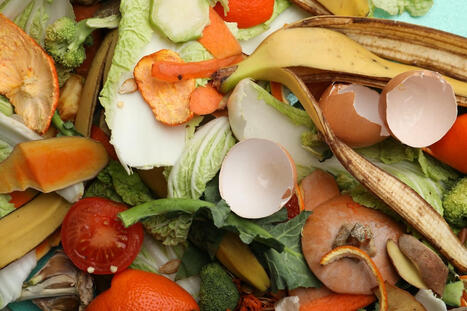
The step-by-step guide teaches companies to be more sustainable in three key areas: food waste, packaging waste and greenhouse gas emissions. These areas were identified for their significant environmental and commercial impact, with food waste being the industry’s most pressing issue today, said EnterpriseSG.
|
|
Scooped by
EcoVadis
April 25, 1:50 AM
|
Resorts World Genting (RWG) executive vice-president of sales, marketing, and public relations Spencer Lee said businesses have had to embrace and make sustainability a critical focus and integral part of their operations.
“In line with world sustainability trends, corporations are increasingly focusing on waste reduction, sustainable packaging, minimising carbon footprint through local food sourcing, and food customisation with healthier options for consumers, all while utilising technology and digital advancements to boost operational efficiency.
“RWG is very much vested in and geared towards sustainable futures and green economy development,” he said at the opening of the Genting Sustainbiz F&B Expo today.
To note, the domestic F&B industry recorded revenue of RM228.66 billion in 2023 and the amount is expected to grow at a compound rate of 7.95% from 2023 to 2027.
|
|
Scooped by
EcoVadis
April 25, 1:49 AM
|
Ireland’s food industry could be part of the solution to the health and sustainability crisis in our food system, but are trailing international counterparts, according to a report published today by researchers at University College Cork’s (UCC) School of Public Health.
UCC researchers examined statements 35 companies make publicly, for example on their websites or in their annual reports, relating to product formulation, nutrition labelling, and marketing for the nutrition assessment. In the sustainability assessment, the focus is on statements relating to factors such as emissions, packaging, food waste, water use, and product portfolio. The results are contained in Ireland’s first ever report on Business Impact Assessment (BIA) on Obesity and Population-level Nutrition and Business Impact Assessment on Sustainability.
|
|
Scooped by
EcoVadis
April 25, 1:47 AM
|
The Food and Beverage Carton Alliance (FBCA), an association formed from the merger of two established organizations, announces a unified platform dedicated to advancing beverage cartons as essential, renewable, and circular packaging solutions.
The organization, from the merger of ACE (The Alliance for Beverage Cartons and the Environment) and EXTR:ACT, two European associations that have promoted beverage cartons as a sustainable packaging solution and the industry’s work in ensuring they are collected and recycled.
|
|
Scooped by
EcoVadis
April 25, 1:45 AM
|
At the 36th Banksia Foundation National Sustainability Awards, the Australian Food Pact (AFP) won the Business Services and Solutions Award, recognising efforts and changes across Australia’s food system.
This milestone in the journey to combat food waste reflects the AFP’s collaborative approach to creating measurable change. Some of the outcomes from this approach include:
13 per cent reduction in food waste since 2022.
982,000 tonnes of food repurposed through redistribution to food rescue charities and innovative upcycling into
products like vegetable powders.
$57 million saved by Signatories in 2024 by reducing food waste.
254 million meals donated to food rescue organisations since 2022.
505,000 tonnes of CO₂-equivalent emissions avoided.
|
|
Scooped by
EcoVadis
April 25, 1:42 AM
|
Agriculture a major driver of deforestation, linked to 70-80% of forest loss
New EU deforestation regulations affect imports of coffee, soy, and palm oil
Technology such as AI and satellite data can trace commodity origins and assess deforestation risks
Platforms like TRACT and Forest IQ offering data solutions to help companies and investors
But experts warn real progress requires actionable measures beyond data collection
|
|
Scooped by
EcoVadis
April 25, 1:42 AM
|
Ten multinational beverage companies have teamed up to form the REfresh Alliance, a new industry-wide consortium aimed at accelerating the supply chain’s adoption of renewable energy.
The new initiative invites additional companies from across the beverage industry to pool and scale their resources to remove barriers to renewable energy adoption in the supply chain, provide education on best market practices and support the industry’s transition to net zero.
The companies part of the partnership include Bacardi, Carlsberg Group, Constellation Brands, Diageo, Heineken, Molson Coors Beverage Company, Pernod Ricard, The Coca-Cola Company and Whyte & Mackay.
|
|
Scooped by
EcoVadis
April 25, 1:40 AM
|
The food and beverage industry faces significant policy changes around energy and deregulation, with potential benefits from domestic energy production and reduced regulations, though the future of clean energy credits remains uncertain.
Labor challenges loom large for the industry, particularly regarding potential immigration policy changes that could affect the workforce, leading many companies to turn to AI and automation as a solution.
Tax and tariff policies pose complex implications — while increased tariffs aim to protect domestic industry, they may raise costs for manufacturers, and the expiration of Tax Cuts and Jobs Act provisions in 2025 could particularly impact pass-through entities in the sector.
|
|
Scooped by
EcoVadis
April 25, 1:38 AM
|
Manufacturers must also consider how the environmental impact of their food production is shaping consumer behaviour. Now more than ever, consumers are prioritising sustainability when purchasing: 85% of consumers globally say they are experiencing the disruptive impacts of climate change, and 46% say they buy more sustainable products to reduce environmental impact.⁵
One way that consumers are prioritising sustainability is by incorporating plant-based products into their diets. Research shows that a vegan diet can produce a carbon footprint that is up to 60% smaller than a meat-based diet.⁶
“One of the biggest misconceptions is that taste, health and sustainability are in conflict with each other. This is likely due to formulation challenges where one ingredient may offer a high source of protein, but could also produce undesirable off-flavours, compromising taste as a result.
|
|
Scooped by
EcoVadis
September 5, 2024 3:26 AM
|
Natural ingredients supplier Symrise is taking its secure sourcing approach to the next level amid climatic and geopolitical factors that increasingly affect the production of agricultural raw materials and impact the availability and quality of food.
The company anticipates and addresses these challenges to ensure a secure supply of natural ingredients for its customers, leveraging expertise in agronomy and sustainability.
Symrise has designed its comprehensive program of sustainable sourcing strategies, in face of global climate changes and the related availability of food crops, to ensure business continuity for its customers.
|
|
Scooped by
EcoVadis
June 20, 2024 2:53 AM
|
Entitled “Driving the fairness agenda,” the Annual Report highlights the achievements of the Fairtrade system and its partners in the past year, such as its programs and initiatives that deepen benefits for more than two million farmers and workers from 68 countries around the globe.
Fairtrade reported on its first strategic priority of shifting the balance of power to farmers and workers, including developing pathways to decent and sustainable livelihoods, building resilience to climate change, reinforcing human and environmental rights, and supporting women and young people as leaders.
|
|
Scooped by
EcoVadis
April 18, 2024 3:33 AM
|
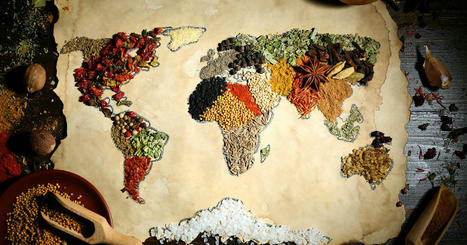
In the wide-ranging Food and Beverage industry, global trends are increasingly important. As cultures intertwine and borders blur, the industry must cater to a palate that is constantly evolving and universally connected.
|
|
Scooped by
EcoVadis
April 18, 2024 2:41 AM
|
Mars Inc., is looking to tap into a network of startup companies that are poised to transform the food system, helping to progress sustainability within the company's snacking division.
The ultimate goal of the three-year partnership with Unreasonable Group — a Colorado-based, international fellowship provider for growth-stage entrepreneurs — is to bring forward companies that can fast-track regenerative, inclusive, equitable, and sustainable food processes at Mars.
|
|
|
Scooped by
EcoVadis
April 25, 1:51 AM
|
90% of consumers prioritise sustainability when making purchasing decision.
Thailand’s food and beverage (F&B) industry is rapidly moving towards sustainable packaging, driven by tighter regulations and rising consumer demand for eco-friendly solutions, GlobalData reported.
A survey by GlobalData showed that 90% of consumers prioritise sustainability when making purchasing decisions, prompting companies to adapt.
|
|
Scooped by
EcoVadis
April 25, 1:49 AM
|
Quantis, a BCG company and leading global sustainability consultancy driving sustainable transformation to align businesses with planetary boundaries, has released its global food and beverage report, Recipe for Transformation. The report surveyed more than 600 professionals and C-level executives across multiple business functions in the food and beverage industry. Respondents work in large companies within retail, wholesale, consumer packaged goods, commodities and agriculture subsectors of the food and beverage industry.
|
|
Scooped by
EcoVadis
April 25, 1:48 AM
|
The food, beverage, and agriculture sectors are increasingly vulnerable to climate-related risks, including rising temperatures, erratic weather patterns, and resource scarcity. As businesses navigate these challenges, adopting comprehensive environmental, social, and governance (ESG) strategies becomes paramount. The key is not just managing the physical risks but also addressing broader social and governance concerns.
For businesses navigating these issues, the relevance of adopting comprehensive environmental, social and governance (ESG) strategies has become paramount. Many in the food and beverage industry believe having an ESG tool that serves their niche would be key to addressing broader social and governance concerns, not only physical risks.
|
|
Scooped by
EcoVadis
April 25, 1:46 AM
|
The Australian Southern Bluefin Tuna Industry Association (ASBTIA) has reached a new milestone, with its purse seine fishery now certified as sustainable under the Marine Stewardship Council (MSC) standard.
Southern bluefin tuna was once listed under Australia’s Environment Protection and Biodiversity Conservation (EPBC) Act as a threatened species. With its recent recovery, this certification marks ASBTIA’s long-term success in:
“Environmental conservation and sustainable industry go hand in hand – and Aussie industry is world beating,” said minister for Environment and Water Tanya Plibersek.
“The Australian tuna fishing industry has done such terrific work that the Southern bluefin tuna population is now healthy.”
|
|
Scooped by
EcoVadis
April 25, 1:44 AM
|
The vanillin market focuses on the production and distribution of vanillin, a key flavoring agent widely used in the food, beverage, and fragrance industries. Derived from natural sources like vanilla beans or synthesized chemically, vanillin is in high demand due to its versatile applications. The market is driven by rising consumer preference for natural flavorings and growth in the food and beverage sector. Key trends include sustainable sourcing and innovations in bio-based vanillin production.
|
|
Scooped by
EcoVadis
April 25, 1:42 AM
|
This year’s ten top trends for 2025 have a particular focus on sustainability, health and nutrition, according to Whole Foods Market annual survey.
The forecasted trends for next year include a surge in hydrating ready-to-drink beverages, new aquatic ingredients within the plant-based category, crunchy textures and fusion snack foods with international flavors.
This is Whole Foods’ tenth year releasing its trends report, which not only reflects “growing consumer preferences but also pushes the boundaries of what’s possible for the world of food
|
|
Scooped by
EcoVadis
April 25, 1:41 AM
|
The food and beverages (F&B) market around the world has witnessed exponential growth, especially during the last two decades. This growth has been substantiated by sustained innovation in processes, products, and services to satisfy changing consumer preferences that evolve at an increasingly faster rate. With increasing demands for diversity and healthy options, producers in the F&B industry are being forced to change even more rapidly. According to the International Food Information Council, which polled for the 2024 survey, the most important factor for American consumers remains healthfulness at 62%, followed closely by convenience at 57% and environmental sustainability at 31%.
|
|
Scooped by
EcoVadis
April 25, 1:39 AM
|
DNV, an assurance and risk management specialist, published a new report highlighting the urgent need for the food and beverage sector to transform its supply chains to meet sustainability demands amid global challenges like climate change, regulatory shifts and evolving consumer expectations.
The report ‘The Future of Sustainable Food Supply Chains: Spotlight on Europe’s Food and Beverage Industry’ reveals that sustainability has become the number one supply chain priority for food and beverage companies, with 75% ranking it among their top three goals, ahead of cost efficiency (63%) and regulatory compliance (49%).
To succeed, companies must adopt a holistic approach that integrates visibility, digital transformation, and compliance with emerging regulations.
|
|
Scooped by
EcoVadis
December 12, 2024 3:21 AM
|
ECOM Agroindustrial Corp Ltd., one of the world's leading traders of agricultural commodities, is partnering with supply chain mapping leader Sourcemap for compliance with the EU Deforestation Regulation (EUDR). The EUDR requires an increase in data collection and management throughout commodity supply chains. This includes digital maps of all farms used to supply coffee and cocoa with proof the products were produced without deforestation.
|
|
Scooped by
EcoVadis
September 5, 2024 3:22 AM
|
Fornio is an ancient grain that's been cultivated in West Africa for over 5,000 years. It is prized for its resilience and minimal water requirements, and has emerged as an important food source in discussions about regenerative and sustainable agriculture, particularly in regions facing water scarcity.
Brewgooder, the UK-based ethical brewer known for its support of clean water projects across Africa, recently created the world’s first Fairtrade-certified supply chain for the grain, linking Guinea and the UK. The project was set up in just six months thanks to close working between the B-Corp certified brewer and fonio farming cooperatives in Guinea.
Along this with work, Brewgooder has also launched the first beer made with Fairtrade-certified fonio grain, its Fonio Session IPA.
|
|
Scooped by
EcoVadis
April 18, 2024 3:34 AM
|
Recent research found that Gen Z shoppers prioritise taste, value and affordability, as well as social justice-driven causes like sustainability and animal welfare. This means brands have the opportunity to strike a balance between creating the climate-conscious products Gen Z consumers crave at prices they can afford. Barak Bar-Cohen, founder and CEO of Sojo Industries, discusses how F&B companies can start adding climate-responsible practices into every part of the product life cycle, from manufacturing to packaging.`
|
|
Scooped by
EcoVadis
April 18, 2024 3:33 AM
|
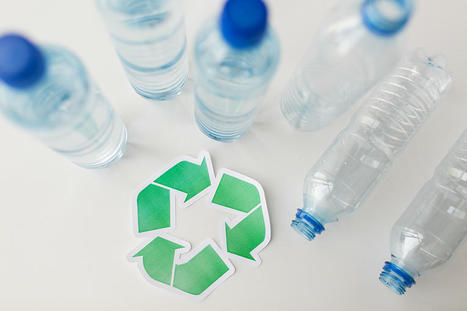
Plastic packaging has played a crucial role in ensuring consumers have affordable access to food and drinks. It’s a durable material that protects food from perishing and allows for mass production and distribution. Petroleum-based plastic has proven a boon to the food and beverage industry and to consumers everywhere, but it is also environmentally unsustainable in the long term. Globally, governments and companies are seeking new ways to reduce the accumulation of single-use plastics and other packaging, which so often ends up in landfills and the ocean. Consumers also support the drive to reduce plastic waste; a 2023 McKinsey study showed they are willing to pay more for sustainably packaged products.
|