Your new post is loading...
Investment boom in AI is a financial bubble "primed to pop," warns report. Lawmakers urged to protect working-class Americans from potential harm.
Earlier this week, a New Mexico judge ordered Meta to pay a $25 billion fine for violating consumer protection laws dating back to the Cambridge Analytica scandal. $25 billion is a massive fine, the largest Meta has ever faced, but it still had us folks at WIRED wondering: Would Meta even feel the pain? A quick recap of the case: Filed in 2021, the suit alleged that the company violated the state’s Unfair Practices Act by lying to Meta users about the way it handled their data. (Later, New Mexico’s attorney general also made claims against Meta’s content moderation policies.) In September, a jury ruled in favor of the state. Then came the multibillion-dollar penalty.
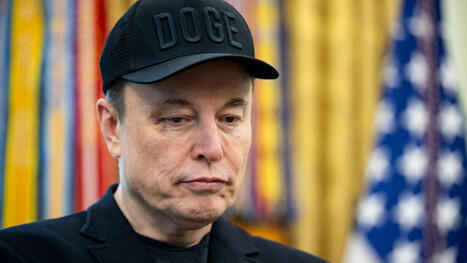
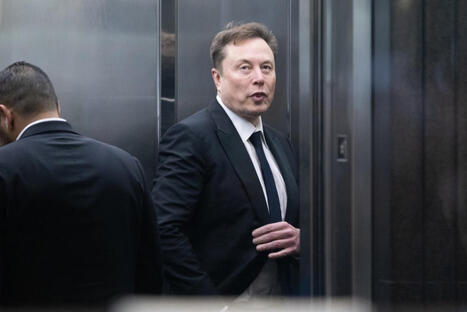
Elon Musk spoke to podcast "The Builders" about his time leading DOGE, stating that his proximity to Trump's power was seductive. The billionaire agreed that he was basically drunk on the Trump administration's power and now thinks he shouldn't have continued running the Department of Government Efficiency (DOGE) for so long. Trump and Musk had been fairly aligned prior to this point. Musk told The Builders that he had supported President Donald Trump's run for office out of a desire for a free market economy and "less bureaucracy," as well as interests such as "aspirationally sensible spending."
Portal Space Systems has reached Earth orbit for the second time this year, successfully launching the startup’s first free-flying spacecraft, Starburst-1, aboard a SpaceX Falcon 9 rocket. Portal’s Starburst-1 lifted off Tuesday at 7:04 a.m. EDT from Space Launch Complex 40 at Cape Canaveral Space Force Station. The spacecraft separated from SpaceX’s Falcon 9 on the Bandwagon-5 rideshare mission about 57 minutes later. Within hours of deployment, the Bothell, Wash.-based company reported that the desk-sized craft had established ground communications, stabilized itself, and successfully deployed its solar array to become power positive.
If nearly three-quarters of the world streamed music all at once, it would produce an overwhelming flood of data. Now, Meta’s new project aims to carry that vast amount of digital traffic through “glass strands” laid across 4,300 miles of deep ocean floor. The tech giant is planning to achieve this ambitious task with Petal, its newly unveiled transatlantic subsea cable set to go live in 2029.
Oct 22 (Reuters) - SpaceX is in talks with cellular infrastructure companies to secure access to at least 80,000 sites across the United States, Bloomberg News reported on Thursday, citing people familiar with the matter. The agreements would potentially solidify the company's path toward building a fourth nationwide wireless carrier.
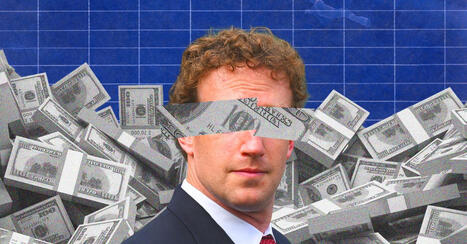
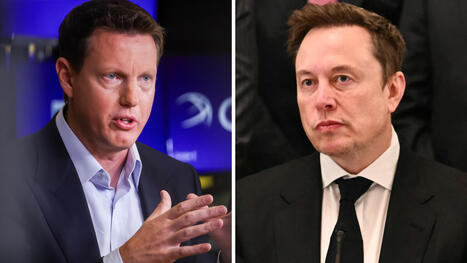
Elon Musk has made an investment in Skydance of roughly $1 billion, according to a person familiar with the matter who asked not to be named because they were not authorized to speak publicly. David Ellison's father, billionaire and Oracle co-founder Larry Ellison, has a history with Musk. The financial injection comes as the company looks to cut costs. Paramount closed its acquisition of Warner Bros. Discovery on Oct. 6, naming the combined entity Skydance. Co-CEOs David Ellison and Ynon Kreiz are tasked with merging two major film studios in Paramount and Warner Bros., two popular streaming platforms — Paramount+ and HBO Max — and a host of corporate functions to support a portfolio of TV networks and two news divisions. Skydance has said it expects to see $6 billion in cost savings over three years, though it faces a debt burden of nearly $80 billion.
Today’s blog looks at some technology breakthroughs that may have long-term impact on the broadband industry. First Sub-1 Nanometer Chip. IBM announced a new chip in June that packs almost 100 billion transistors in a chip the size of a fingernail. IBM’s new chip is a landmark moment in computing and pushes transistor technology beyond the nanometer era to the scale of atoms. The new chip features a transistor architecture of 0.7 nanometers (or 7 angstroms). The company says the new chip, with dimensions of 10 millimeters by 15 millimeters is 70% more energy efficient, and has a 50% improvement in performance over the industry’s best current chips. The company predicts the new chip technology will become standard in commercial devices within a decade.
Most smartphone traffic already runs over WiFi, and Musk is planning a terrestrial network. Telcos may keep carrying the traffic while losing the customer. During SpaceX’s Q3 2026 earnings call, Elon Musk made a comment that should concern mobile operators. “We will also have direct-to-cell, high-bandwidth direct-to-cell capability, and we will be building out our terrestrial network.” He was not describing Starlink as a satellite-only mobile service. He was describing a future network that combines space and ground infrastructure, with broad connectivity anywhere SpaceX is allowed to operate.
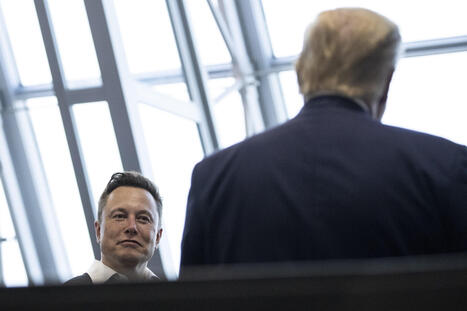
The root cause of Elon Musk’s ascent to de facto defense secretary is the federal government’s practice of contracting out the work it had formerly done itself. This week, The Wall Street Journal reported that the decision to block Ukraine from the high-speed Starlink satellite alerts that enabled it to intercept Russian missiles and drones was made by SpaceX owner Elon Musk, either in conjunction with President Trump or in advance of Trump’s support for the action. Whichever version is more correct, Musk is either making or carrying out a fundamental shift in U.S. foreign and military policy—something that no private citizen has ever done in our 250-year history. Winchester made rifles, but it didn’t order the army to use them against native tribes. Boeing made the B-29s, but it didn’t order them to destroy Hiroshima and Nagasaki. Once the army purchased the Winchesters, and the Air Force, the B-29s, their manufacturers weren’t at the table or in the room where government leaders decided where, when, how—and in the case of Ukraine and Russia, why—they would or wouldn’t be deployed. They weren’t part of the kind of fundamental reorientation of foreign policy that Trump has wrought, in which his narcissistic and thuggish impulses have eclipsed the democratic affinities by which the U.S., at its all too intermittent best, has dealt with other nations. This month, that has meant Musk has played a key role in attempting to turn the tide in Russia’s favor in its war on Ukraine. This reductio ad absurdum of contracting out is also the result, of course, of the mind-meld between Trump and Musk, who, as New York Times columnist Jamelle Bouie pointed out last week, is every bit as racist, xenophobic, and self-interested as our president.
Meta must pay $25 billion to New Mexico after a jury found the tech giant guilty of nearly 44 million violations of state consumer protection laws. The largest fine to ever hit Meta came after New Mexico Attorney General Raúl Torrez declined to join an $18 billion settlement Meta reached earlier this year with attorneys general in nearly all states. In his opinion Wednesday, US district court judge Francis J. Mathew said there was no “bright line rule” for determining the appropriate penalty for Meta’s repeated and willful deception of users since 2010 about their “control of data, third-party data misuse, misinformation, hate speech, and equal enforcement.” New Mexico had asked the court to impose even higher fines, up to $40 billion. The entire state of 2 million people were harmed by Meta’s conduct, Torrez argued, and it seemed dubious that Meta would make meaningful changes unless the penalty impacted Meta’s stock price.
Tesla published its third-quarter 2026 financial results this afternoon. Earlier in October, it reported its sales and deliveries for the three-month period, selling fewer cars than in the same quarter in 2025, yet it still beat analyst projections. Now we can see how those sales translate to the bottom line. Tesla brought in $28 billion in revenue in Q3, almost the same as in 2025. Automotive revenues were $20.6 billion, a 3 percent decrease year over year. Perhaps more troubling is the decline in revenue from solar panels and storage batteries—this line of business had been growing, but for Q3 revenue fell 16 percent year over year to $2.9 billion. Services and other revenues, though, which include parts and Supercharger use, grew by a third to $4.6 billion. But the company—like the rest of us—has seen its expenses go up.
New research from Broadband Genie has revealed that unreliable broadband is hampering productivity among remote workers in the UK, with many facing patchy internet connections, particularly in major cities. The study highlights significant connectivity issues in cities such as London, Belfast, and Manchester, where over a third of remote workers frequently encounter outages. This is despite a high adoption rate of working from home, indicating a pressing need for improved broadband infrastructure to support the modern workforce. Data from the research indicates that while cities like Gloucester (92%), Wolverhampton (86%), and Oxford (84%) experience generally reliable broadband, other urban centres are not as fortunate. In London, only 55% of remote workers report having a stable internet connection, even as 68% of workers in the city work from home at least part-time. Belfast fares worse, with just 49% enjoying uninterrupted service.
|
My Google Home Speaker had been burning through more data than all the rest of my devices combined. As I looked into it further, I found other smart home devices that had the same problem.
Key questions about social media harms remain unsettled due to lack of research data — a problem that is repeating for AI risks, writes Jen Rosiere Reynolds. In September, AI executives voiced fears of human extinction. President Trump moved quickly to sign a “morally binding” framework for AI companies to self-police. The gap in urgency between these two events, just days apart, leaves the public largely in the dark about AI risks. Researchers, for their part, are limited in their work by industry opacity. The situation is reminiscent of research on social media, which has long struggled with access to platform data. Today, we are at risk of forgetting lessons from that work in the face of a technology that is much more powerful, even putting aside speculation of so-called superintelligence. AI companies’ restrictions on data and models give them significant power while limiting the ability of independent researchers or the public to assess the technology’s impact. Self-policing can work if corporate and public incentives are aligned or there is external pressure shaping behavior. External pressure can only happen if outside researchers or the public have enough visibility to evaluate impact. When companies restrict transparency, how can the public or government know if any slow-down or oversight is appropriate?
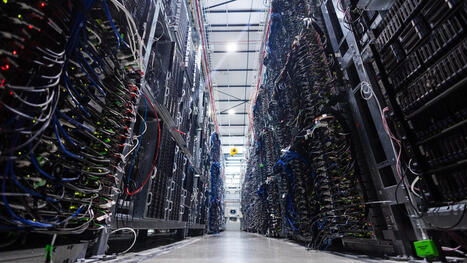
MN Star Tribune reports.. Graco has signed a licensing deal with a Swiss company to use its special motors to help cool data centers. The Minneapolis-based manufacturer announced Wednesday that it signed a deal with ABB, an international electrification and automation company, to supply devices called transverse flux motors (TFM) from a company Graco acquired in 2018. Graco and Zurich-based ABB have partnered on other industrial applications. This deal will give Graco additional exposure into one of the fastest-growing industrial applications in the rapid build out of datacenters.
Americans don’t seem like they’d be particularly broken up if the data center craze gripping corporate America were stopped dead in its tracks. According to recent polling, data center hate is one of the few things capable of uniting people across the political spectrum. At this point, the only people who’d genuinely miss them—besides the tech CEOs insisting we need them for reasons they can’t explain—might be the thieves making a fortune stealing the mountains of copper and equipment headed to their construction sites. According to Business Insider, investigators recently recovered two stolen trailers near Chicago containing roughly $1.3 million worth of data center supplies, including $300,000 in copper wire stolen in Alabama, and another trailer carrying $1 million in infrastructure equipment taken from Florida. It’s a booming industry, with the US Department of Homeland Security estimating that cargo theft costs businesses about $35 billion a year, and the AI boom is now fueling a whole new niche within that black market.
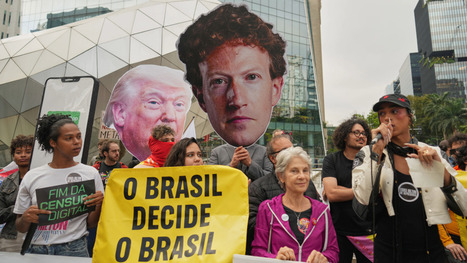
The Prosecution Office gave Meta 48 hours to respond as to whether it will comply with the recommendations, reports Laís Martins. With days left before the second and decisive round of Brazil’s presidential election, the country’s Federal Prosecution Office on Wednesday issued urgent recommendations and demanded answers from Meta regarding content moderation actions by the platform, alleging that previous answers sent by the company were generic and insufficient. The Prosecution Office gave Meta 48 hours to respond as to whether it will comply with the recommendations. The decision comes after a series of content moderation failures by the company over the past few weeks, amid Brazil’s most tightest electoral race in recent years, which pits incumbent President Luiz Inácio Lula da Silva against Senator Flávio Bolsonaro, the son of former president Jair Bolsonaro. In this period, Meta took down a page of a media entity that produced a viral video on scandals surrounding Flávio, temporarily disabled Lula’s campaign page from running political ads, and disabled its Muse AI agent from generating images in support of Lula, while authorizing images related to Flávio.
In 1996, Grateful Dead lyricist John Perry Barlow wrote ‘A Declaration of the Independence of Cyberspace.’ The age of AI demands we reimagine it, writes Amelia Rose Barlow. When I was a little girl, my father took me with him to watch the future arrive. I was eight, sitting in a vast Silicon Valley conference hall filled with rows of gray monitors glowing with a fluorescent premonition. It was the 1994 off-the-record unveiling of Netscape for about 150 select advisers and early adopters. Most of the world did not yet know the web existed. That day, I spent my first time online researching white rabbits and fell down a hole of hyperlinks. Forty minutes later, I surfaced, frozen and frightened, not of the technology, but of how untethered I felt from my own body and the wilds of Wyoming that had forged me and four generations of my family before. Could anyone have imagined where we would be three decades later, in the age of artificial intelligence? My father, John Perry Barlow, was as astonished as I was, and he ran with it. He had grown up on the two “frontiers” of wilderness and culture as a Wyoming cattleman and a Grateful Dead lyricist, and could recognize a third emerging. In February 1996, after the passage of the Communications Decency Act, a landmark law that brought federal censorship to the internet for the first time, he wrote “A Declaration of the Independence of Cyberspace”: “We are creating a world that all may enter without privilege or prejudice accorded by race, economic power, military force, or station of birth.” This year marks the 30th anniversary of his declaration and the 250th anniversary of the one that inspired it. Both my dad and the Founding Fathers understood something crucial: declarations are powerful social technologies. They are called for at thresholds: when things begin falling apart and what comes next has not yet arrived and the future remains radically unknown.
Earlier in October, Finnish authorities ordered Google’s affiliate data center developer Tuike Finland Oy to immediately suspend the illegal cutting of some 1,300 acres of forest. The tech giant was given a week to draft a report explaining its actions, which soon became a flashpoint for Europe’s growing outrage over the data center boom. As the anger grew, reporters descended on the scene — and what they found is a clear-cut example of the AI revolution’s impact on the environment. Google's cut-first pay-later approach to Finland's boreal forests is leaving wild fauna without a place to call home. “We had wolves coming into the village because all the wild animals moved out of the forest,” 53-year-old Otanmäki resident Anni Ranta told the Guardian. “They fled.” “I don’t want them here,” she continued, speaking of Google’s data centers. “I don’t want them in Finland at all. I don’t like the whole idea of AI and the world changing and the way it’s changing. It’s going too fast, too soon.”
Reading between the lines of SpaceX’s earnings call One of the things I particularly like about SpaceX, especially now that it is a public company, is that its executives sometimes move beyond carefully crafted corporate statements and provide surprisingly candid answers that offer genuine insight into where the company may be heading next. In this case, the earnings call was broadcast live on X, allowing viewers to assess not only what was said but also the body language of its leaders, particularly President Gwynne Shotwell and Elon Musk. I found their responses to an excellent question from Kutgun Maral, CFA of Evercore particularly interesting (minute 56:45 in the X webcast linked below). Maral asked how SpaceX’s spectrum portfolio could compete with incumbent US mobile operators and what the traffic mix between satellite and terrestrial networks might look like.
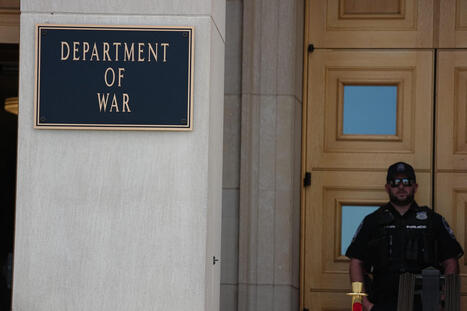
The Trump administration’s campaign to compel hundreds of billions of dollars of new military appropriations out of Congress has been stalled in the Senate for months. The Trump administration’s campaign to compel hundreds of billions of dollars of new military appropriations out of Congress, citing new materiel needs downstream of its unsanctioned Iran War, has been stalled in the Senate for months. But one unexpected winner has emerged from the congressional stalemate over defense spending: an obscure investment office in the Pentagon known as the Economic Defense Unit (EDU). Earlier this year, Deputy Secretary of Defense Stephen Feinberg stood up the EDU and appointed George Kollitides, a one-time executive at Feinberg’s former private equity firm, Cerberus Capital Management, who recently was the subject of a ProPublica investigation for his role in steering a $350 million Department of Defense contract to a consulting firm where he was a partner until just weeks ago. The office was created by way of a memo from the deputy secretary, and has been operating without congressional authorization for months, taking center stage in the administration’s multi-billion-dollar effort to prop up domestic military and energy supply chains. Those deals have been heavily scrutinized for the ways they’ve favored well-connected Wall Street firms and have been set up to benefit the president and his inner circle.
Elon Musk has invested approximately $1 billion in the newly formed media company Skydance, according to a new report from Semafor. News of the investment comes a few weeks after Paramount completed its $110 billion acquisition of Warner Bros. Discovery to create the combined company. Co-CEOs David Ellison and Ynon Kreiz are tasked with bringing together two major streaming platforms, Paramount+ and HBO Max, along with a portfolio of networks, including CBS, CNN, MTV, TBS, Comedy Central, and Food Network, under a single corporate umbrella. Semafor reports that Musk’s investment was made around the same time as equity contributions from other Skydance investors, including board member Laurene Powell Jobs. The investment will provide a much needed financial boost as the company seeks to cut costs and lift its stock price, the report notes. Skydance has already committed to reducing costs by $6 billion over the next three years.
AT&T recently announced a joint venture with Global Infrastructure Partners (“GIP”), a part of BlackRock, and the Canada Pension Plan Investment Board to build new fiber passings. AT&T will own 50% of the joint venture, with the equity investors owning the other 50%. It gets a little convoluted, but one of the assets that AT&T is bringing to the table is the fiber assets it recently purchased from Lumen. Those assets were placed into a new company, Forged Fiber 37, which will be rolled into the new joint venture with GIP. AT&T also currently operates the Gigapower joint venture with GIP. The new joint venture brings big advantages to AT&T.
A decision by Elon Musk led to restrictions on Ukraine's use of SpaceX's satellite communications network, people familiar with the matter told CBS News. The satellite service, which is used for drone operations, hitting certain targets and protecting sites in Ukraine, was slowed significantly last week. Musk held multiple conversations with administration officials leading up to the order, the sources said. He wanted clarity on the president's thinking on the matter. Musk has expressed distaste with his company being seen as profiting from the continued war between Russia and Ukraine.
|



 Scoop.it!