Your new post is loading...
There is currently a lot of news circulating about the financial troubles of two of the largest cable companies. Both Optimum (formerly Altice USA) and Cable One are in distress. Optimum is in financial distress because of its $26 billion in total debt, which includes payments coming due in 2027 of $6 billion. While the company is profitable , it’s not nearly profitable enough to meet the debt payments. Altice’s debt comes from the money the company spent to buy two other cable companies; Altice bought Cablevision in 2016 for $17.7 billion. The company bought Suddenlink in 2022 for $9.1 billion. These transactions were highly leveraged with debt. The company has been hemorrhaging broadband customers and has lost over 580,000 customers since the end of 2022. The company’s stock has plummeted over time. Five years ago, the stock traded at more than $28 per share. As I’m writing this blog, the share price was $0.65.
The Guy With the Dish on the Roof: Starlink in Rural America The camp’s founder is a former Nashville touring musician who started a website and YouTube channel years ago to teach banjo, guitar, mandolin, and just about everything you can think of (sadly, the jaw harp lessons aren’t yet available). He has built an impressive business with a full brand and following, a retail store, and an event business. One afternoon, he walked us through his production workflow. He records in his studio, creates separate audio and video files, and shuttles everything back and forth with his editing team, who are located in different parts of the country. Being the telecom geek in the room, I asked the obvious question: Who’s your provider? Starlink. There’s no fiber to his place. Given the volume of files he moves, his monthly bill runs to an amount that would make most of us check the invoice twice. I frankly had never heard of a residential bill at that level. Even most business locations don’t pay that much.
Every ten years, the telecommunications equipment lobby invents a new miracle to convince mobile operators to spend hundreds of billions of dollars on radio hardware they cannot afford. For 5G, the miracle was remote robotic surgery and self-driving cars—applications that either stayed in conference demos or bypassed the public cellular billing system entirely. As the 6G standardization machine rolls through 3GPP Release 20 and toward Release 21, the industry has settled on its new salvation story: Integrated Sensing and Communication (ISAC). The pitch from vendor keynotes is sexy. Mobile operators already own millions of cellular towers covering the planet. By upgrading those towers to 6G, every base station will supposedly double as a high-resolution radar. Operators will stop just selling cheap data plans; they will sell a live “digital twin” of the physical world, charging cities to monitor street intersections, aviation authorities to track low-altitude drones, and defense ministries to guard the skies. Let’s call this narrative what it is: commercial bullcrap.
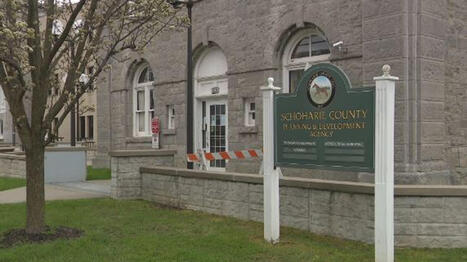
Schoharie County is one step closer to having 100% broadband coverage. The county has applied for the ConnectALL state grant to help bridge the gap and bring digital equity to rural communities. The county could receive up to $30 million for infrastructure upgrades. Currently 92% of the county has access to high-speed internet.
NTIA on Track to Complete 1675–1695 MHz Band Study in Early 2027 WASHINGTON—Today, Arielle Roth, Assistant Secretary of Commerce for Communications and Information and Administrator of the National Telecommunications and Information Administration (NTIA), released the following statement on the FCC’s vote to begin a rulemaking for an auction of the 1675-1695 MHz band:
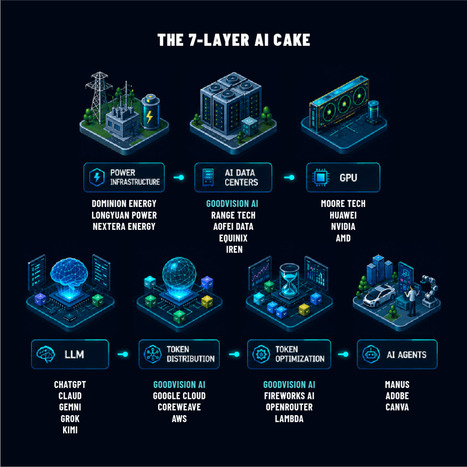
The choice of model is only the beginning of an AI request. Take an insurance claim moving through an AI agent. It reads a photo of a damaged bumper, pulls up the policy, checks a repair estimate against regional pricing, drafts a summary and hands the file to a human adjuster. What this business countsas one task is actually 40 or more calls to a model. Each of those calls carries its own requirements. Reading a scanned form is simple work that a small model handles for a fraction of a cent. Judging whether the claim looks fraudulent needs a larger and slower model, and if the file contains medical records, those may not be allowed to leave the country. For most of the past three years, enterprises have focused on which AI model to use. Now, the focus is turning to a broad question of placement: which model handles each call, where it runs, and whether there is capacity to take it.
Sources tell WIRED that an Accenture employee’s personal Claude agent ran on a DOD network for two months before it was identified and the vulnerability could be patched.
The Senate permitting plan would cut emissions from power plants in the near term and help keep electricity prices down, a new analysis finds. Why it matters: The study from scholars at Resources for the Future, a nonpartisan think tank, offers some of the most detailed independent modeling yet of the bill's effects. - It will help inform lobbying and advocacy around the bill ahead of a test vote looming on Nov. 9.
Driving the news: The analysis models how the bill would affect the power sector compared with current law and policies. Among the findings from its central scenario:
The other day, I spoke with Melissa Bettis, Guam’s broadband director, who was already living in my tomorrow. Naturally, I asked whether the future was looking any better. She explained, that is not how time zones work.
Bettis and her team are working on connecting Guam through BEAD. She defines this as ‘a better future—one with reliable internet connections, stronger infrastructure, and fewer people left offline when the weather turns.’ Guam is home to the Indigenous CHamoru people and a diverse community of ~155K that includes residents of Filipino and other Asian backgrounds, fellow Pacific Islanders, and military families. For this American island in the western Pacific, staying connected means bridging both service gaps and considerable distance.
How can digital equity programs escape the boom-and-bust funding cycle? Chris and Samantha Schartman of Connect Humanity explore co-investment through the Alt Funding Field Guide. In this episode of Unbuffered, Chris is joined by Samantha Schartman, Director of Philanthropic Programs at Connect Humanity, to discuss the Alt Funding Field Guide: Building Sustainable Funding for Digital Adoption. The guide is a new resource that maps how digital skills and connectivity programs create value across six sectors: education, healthcare, telecom, workforce development, housing, and local government.
Tribal Broadband Bootcamp has released a new video on YouTube looking back on what the immersive learning experience has built. The timing is fitting, as more Tribes celebrate the building of their own networks in parts of the U.S. that have historically been left behind by the nation’s major telecom companies.
Internet speeds of up to 5 Gbps, upgradeable to 10 Gbps, will be available for residents of the first signature multifamily community at the Wyld Oaks development in NW Orlando. The new project, being developed by the Atlanta-based Hathaway Development affiliate Dewfall Hathaway, will be known as Exchange at Wyld Oaks. When it’s finished, the project will result in a 325-resident multifamily community and serve as Wyld Oaks’ first signature multifamily community, Wyld Oaks said.
Colorado Springs City Council has approved a lease agreement with gFiber, allowing the company to use a fiber optic network in the community to sell connectivity. An approved lease agreement struck between gFiber and Colorado Springs Utilities further accelerates gFiber’s growth in Colorado and the Denver area, gFiber announced last week. The agreement will allow gFiber sell to customers within the footprint of the new Colorado Springs Utilities fiber network, gFiber announced October 21. “As a tenant on Colorado Springs Utilities’s network, we’ll be able to connect local homes and businesses even more quickly and with less neighborhood disruption,” gFiber’s announcement stated.
|
AT&T claims only 1% of Copper lines left; 70–90% of Lines are Missing. Why is FCC Brendan Carr supporting this obfuscation? We will focus on the manipulation of the counting of these lines and how the media and the public have been snookered. Light Reading’s headline quotes AT&T’s recent announcement that it has only 1% of legacy customers remaining. “AT&T copper network retirement set to accelerate as legacy base shrinks to 1% Then we have The Street, also quoting AT&T: AT&T accelerates the end of a network that’s losing customers “The carrier has decommissioned copper-based services in over 500 communities covering 1.3 million locations across 18 states. Broadband Breakfast reports: AT&T Says Just 1% of Eligible Customers Still Use Copper Voice Lines AT&T cites rising copper theft and longer repair times for moving customers to newer technologies. AT&T even published their update to previous stats. But please notice the words “eligible customers”, “copper” and “voice technology”. “Today, only 1% of our eligible customers are still using legacy copper voice technology, and we’ve discontinued copper services in more than 500 communities, making up more than 1.3 million locations across 18 states.” We know this is all pure manipulation of the number of copper access lines as we’ve been documenting that AT&T and Verizon have failed the lie-detector test. Here’s 2 recent stories we created to discuss the accounting of access lines, and the massive shell game that has been underway.
Danny heads to Nashville to emcee a panel hosted by Stand Up Nashville, which has assembled “The Avengers” of the data center fight in the American South. But Nashville has meaningful data center regulations already in place — why is this activist group convening such a powerful panel in a city that appears to have it figured out? First, the Nashville community is demanding more, and who is Stand Up Nashville to rest on its laurels? And second, for the data center fight to succeed, it must grow from a local fight to a statewide, and even a regional one. In talking with these Tennessee changemakers, including a charismatic young legislator making good trouble in the Tennessee House, Danny finds once again that Big Tech’s efforts to divide and isolate us are actually building bridges to bring us together.
A company like Microsoft, one of America’s great technological innovators, is unaccustomed to harsh public reprimands from the White House. So it reacted with indignation when Vice President JD Vance took to a Washington stage to announce a crackdown on H-1B visa abuse, saying of Microsoft that there had been “no company in the United States, unfortunately, that has abused this system more” and warning it could no longer “lay off American workers and then replace them with foreign indentured servants.” Microsoft pushed back hard, with company president Brad Smith calling Mr. Vance’s remarks “completely off base.” Someone “had failed to inform the vice president accurately about our numbers,” he said. Most of Microsoft’s applications were for workers already employed, he said, not for new hires.
After decades of deregulation, governments are back in control of their energy sectors. Energy is no longer just a commodity. It's become an instrument of economic power and geopolitical influence. This 47-page perspectives report from Shift Lab gives you a data-rich view of how the US, China and Europe are reshaping global energy. Get the report and access to the webinar recording
Oregon Gov. Tina Kotek’s recent executive order barring data centers on state lands is creating roadblocks for telecommunications companies building out fiber-optic cable networks that transmit internet data and that are typically buried along state highways. Kotek’s September order directed state agencies to pause approving new or pending leases, easements and right-of-way permits for data centers sited on state properties and lands. In response, the Oregon Department of Transportation placed on hold at least 20 state right-of-way permit applications from fiber-optic companies, according to records the transportation agency released to the Capital Chronicle.
General Motors will pay $220 million to 36 states to settle allegations that it illegally sold private driving behavior and location information to data brokers. As part of the settlement, GM must get drivers’ express consent before it collects or shares their driving and location data — terms that are in line with separate agreements it previously reached with California and the Federal Trade Commission (FTC). This settlement does contain a new requirement that GM must have a third party assess the automaker’s compliance with the privacy program it has put in place. The agreement announced Thursday settles a lawsuit brought by a coalition of attorneys general from 36 states that alleged GM had sold the information to data brokers, which in turn then sold it to insurance providers.
On October 11, a confidential memo went out to military officers across Ukraine, urging them to brace for a catastrophe. Donald Trump had decided earlier that week to ease U.S. sanctions on Russia and to begin buying its diesel fuel. Based on that shift in White House policy, the memo foresaw another act of American betrayal: the loss of access to the Starlink satellite network, which Ukraine uses to operate its drone fleet. The document warned that Elon Musk, the creator of Starlink, might soon restrict service in Ukraine, and it urged users of the technology to “keep all communication alternatives to Starlink on standby—ready for immediate use—and develop contingency plans.” Two days later, the warnings began to come true. Starlink faltered across the war zone, grounding drones and halting military operations. In one case, it led to the loss of Ukrainian naval drones in the Black Sea, according to two people familiar with that mission. The memo predicted worse to come. It came from a nongovernmental organization called Narodnyi Starlink, or “People’s Starlink,” which helps the armed forces of Ukraine acquire and operate this technology. In the memo, the group’s founder, Volodymyr Stepanets, envisioned several ways Musk could restrict service. The worst-case scenario—a total shutoff—would result in a cascade of disasters, potentially leading to Russia’s victory in the war. One senior U.S. military officer told us that “without Starlink, the war would grind to a halt.” Musk himself has suggested that might be his goal.
I’ve recently been talking to several first responders about communications needs. One of the issues that keeps being raised is that first responders are dismayed that ISPs don’t recognize that public safety sites are mission-critical. This blog will talk about what that means for providing voice and data service. A critical mission location is one that can not be allowed to lose communications service. The public is instantly at peril if 911 centers, firehouses, police stations, and other similar mission-critical sites lose the ability to communicate with the public. Where this gets complicated is that mission-critical sites should not only survive during routine network outages from problems like fiber cuts, but should also be able to survive big events like hurricanes, fires, and other catastrophes.
Tower companies now own Dish's deserted 5G gear, says American Tower CEO Steven Vondran. This could feed into SpaceX's mobile ambitions, analysts say.
‘If your work does not benefit from current AI tooling, that is a finding, not a failing,’ Amazon tells engineers in a memo on tokenmaxxing. Amazon says token usage, AI tool adoption and counts of code changes are “deeply flawed” ways to measure its engineers’ work with AI. The company published the warning on Tuesday in a memo against tokenmaxxing. It came with an updated role guideline for its software development engineers. Terk Terkowitz, vice president and distinguished engineer for Worldwide Amazon Stores, signed the memo. Amazon first shared it with staff in September, CNBC reported.
Fifteen years ago, Western Massachusetts residents in the small hill towns were stuck on aging broadband infrastructure. While their neighbors in the eastern part of the state were seeing new investment and expanding coverage, they were not. But instead of giving a handout to the regional monopoly, they rolled up their sleeves and got to work. The result? Between 2018 and 2022, 19 very small towns in Western Massachusetts built fiber-to-the-home (ftth) networks and transformed their telecommunications future forever. Seeking the Commonwealth of Connection: How Small-Town Volunteers and Public Partnerships Transformed Internet Access in Western Massachusetts [pdf] tells the story of how this came to be, and the impact it is had for residents, businesses, and community anchor institutions in the region.
Wecom Fiber was joined by the Arizona Commerce Authority, officials from Town of Parker, and the Parker Regional Chamber of Commerce & Tourism this month to mark what the ISP calls “a new milestone in connecting residents” of Arizona. A multi-year fiber build spanning Mohave and La Paz counties, with the Town of Parker as its final segment, has been completed in Arizona. According to Wecom Fiber, the completed network now serves 124 community anchor institutions and connects 15,000 homes and businesses.
|