The debates around STEM v STEAM are plentiful - many STEM advocates disconnect STEM content from meaningful and engaging contexts; seemingly forgetting about active and inquiry focussed pedagogies that can only operate well in a rich integrated ecosystem. We advocate for STEM+ and the "+" is essential.
NIMBioS and NISER are co-hosting an NSF INCLUDES Conference on Multi-Scale Evaluation in STEM Education. Effective program evaluation is an essential component of STEM education and workforce development. The conference and associated events will enhance participants' abilities to develop an evaluation plan that meets the needs of an INCLUDES Alliance Project. Participants will include individuals involved in current INCLUDES projects, those considering collaborating in such projects and STEM educators considering inclusion of formal evaluation in their projects. Examples of program evaluation developed by the program organizers are available at http://www.nimbios.org/NISER. The program consists of a conference, an online webinar, and a tutorial. Full details about the program components will be available at a later date.
Policy makers are placing great emphasis on STEM-related education to equip students with the skills to succeed in a digital and disrupted future world. STEM is the collective reference to the fields of science, technology, engineering, and mathematics. Within Australia, and especially Western Australia, STEM competencies are particularly important in our resource-sector led economy. However, I would argue (and yes, I’m an Arts graduate) that humanities and the arts play an equally important role in driving innovation and growth in the future. If the first industrial revolution was steam powered, I contend that Industry 4.0 and this next wave of industrial evolution can be “STEAM” powered.
Where for "teach programming languages" I mean C++, Python, Java, etc, not the act of creating a new programming language
Quincy Larson, teacher at FreeCodeCamp.com Written 1h ago There are excellent YouTube channels focused on programming languages and other development tools. Here are 12 of the most popular ones:
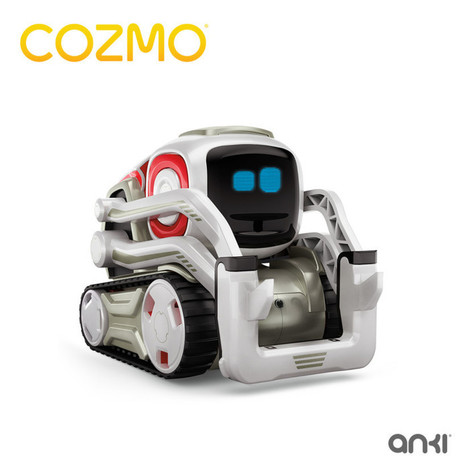
I’ve reviewed a robot or two in my time. I’ve played with many more that I didn’t deem worthy of writing about. Cozmo is, as consumer robots go, easily the best I’ve seen. In fact, even before Anki released its new robot toy, we were smitten.
When unpacking Cozmo, it’s easy to be underwhelmed. The packaging is terrific, but inside lies a plastic figure with a short stature that’d seemingly be just as at home as a kid’s meal freebie. But then you turn it on. After pairing the robot with your phone, it springs to life. It’s cute, mischievous, and it quickly makes you forget about any of its shortcomings.
Ideate Share your ideas! Use insights from Discover. Try a brainstorm at your school. And read our insights from the Discover phase here. Still have questions? No worries. Check out our Medium post or connect with Coach Moss.
Whether it's robots that dance, robot coworkers, sociable trash cans, or therapeutic devices, Dr. Selma Sabanovic from Indiana University has seen it all.
Dr. Sabanovic, an associate professor at the university's School of Informatics and Computing, has been examining international robot development for many years. However, as her research has proved, most robots reflect their country of origin, and people's responses to robots can be influenced by their cultural background. This could be a problem for the emerging global industry as, in purely economic terms, it's hard to make serious cash as a manufacturer through exports if your robot gets lost in translation.
Constance Carroll, chancellor of the San Diego Community College District, said the grant is expected to reverse a trend that emphasized STEM over humanities, which had some unintended consequences.
“Community college enrollments have remained steady, but people have become too workforce-oriented at the exclusion of everything else,” she said.
Carroll noted that China is re-thinking its past emphasis on STEM courses after finding that students who didn’t study the humanities were less imaginative and had poor communication and critical thinking skills. Those skills are needed in many different fields and can be developed through the humanities, she said.
Schools are not preparing children to succeed in a world where intelligent robots have transformed the workforce, MPs have warned.
A report by the cross-party Science and Technology Committee suggests that the education system should be adapted to “focus on things that machines will be less good at for longer,” rather than skills that are rapidly becoming obsolete.
The committee also warned that while “robots as portrayed in films like Star Wars” remain some way off, the government’s role in preparing for major social change is lacking.
Dr Tania Mathias, acting chairwoman of the committee and Conservative MP for Twickenham, said: “Science fiction is slowly becoming science fact, and robotics and AI look destined to play an increasing role in our lives over the coming decades.”
“The past is a foreign country: they do things differently there” L. P. Hartley
While the past may seem like a foreign country, the future is a more mysterious land. Full of potential and promise, tragedy and heartache, people have always sought glimpses of a map of the future. Visions of Christmases-Yet-to-Come terrified Scrooge in Dickens’s A Christmas Carol, while less fictional, and more powerful, characters have sought future insight from the dances of the planets and stars.
But while science is about astronomy, not astrology, and the entrails of animals are about biology, not fortune-telling, gazing into the future is central to science.
We are proud to announce the launch of Science Friday’s newest education initiative, the Educator Collaborative. Of the many incredibly qualified and innovative science teachers in this country, our Educator Collaborative includes some of the very best.
Science Friday started the Educator Collaborative as a way to share novel approaches to STEM (science, technology, engineering, and math) education with a broad educator audience. In this inaugural season, we selected six experienced educators based on their exceptional approaches to STEM teaching and enthusiasm for incorporating current scientific research into their curricula.
Often, scientists use DNA to highlight what sets individuals apart. In an ongoing exhibit at the Esther Klein Gallery at the University City Science Center in Philadelphia, Pennsylvania, artist Paul Vanouse is using DNA to illustrate exhibition visitors’ oneness.
For “The America Project,” Vanouse isolated DNA from the combined spit of visitors to the exhibit’s opening. He is now using this DNA as the raw material to create images with gel electrophoresis, a process by which an electric current pulls DNA fragments across a porous gel at differing rates depending on each fragment’s size.
Vanouse, who is director of the Coalesce Center for Biological Art and a professor at the University of Buffalo in New York, told The Scientist he is playing off of the idea of DNA fingerprinting, a method used by forensic scientists to identify individual people. Because DNA is mostly uniform among humans, it is also possible to use the mixed-up DNA of many individuals to create standard images.
Monday, October 31, 2016 - 1:00pm to 3:00pm Monday, October 31 | 1 PM to 3 PM EDT | bit.ly/fight4edu-live | #fight4edu | RSVP
Description
Join the Futures Initiative on October 31st from 1-3pm for Enacting a Different STEM: Creating Equitable Futures Beyond "Diversity." The discussion will include multiple perspectives on working against structural barriers to support equity and social justice in STEM, both in the academy and in industry. Expert panelists Jill Bargonetti (Hunter College), Gillian Bayne (GC and Lehman College), Andrew Rosenberg (Queens College and IBM) and Sara Vogel (GC PhD student, Urban Education) are joined by moderator Michelle Morales, Futures Initiative Fellow and GC PhD student in Computational Linguistics. Join us to learn about the kinds of inspiring, creative research that can be fostered by dismantling racial and gender-based bias.
For those joining us in person, a reception will follow.
This panel is the second in the second year of The University Worth Fighting For, a series of events that tie student-centered, engaged pedagogical practices to institutional change, race, equality, gender, and social justice.
To help build momentum and to provide a place to discuss related topics outside of the event itself, we also invite you to join a Twitter chat on October 31 at 12 to 1 p.m. at the hashtag #fight4edu.
Some have suggested that deracialising the academy requires all researchers, teachers and students to link knowledge and identity. What might this mean for mathematics?
Based at UC Berkeley, Greater Good reports on groundbreaking research into the roots of compassion, happiness, and altruism.
Our Mission
The Greater Good Science Center studies the psychology, sociology, and neuroscience of well-being, and teaches skills that foster a thriving, resilient, and compassionate society. image Illustration by Leigh Wells Based at the University of California, Berkeley, the GGSC is unique in its commitment to both science and practice: Not only do we sponsor groundbreaking scientific research into social and emotional well-being, we help people apply this research to their personal and professional lives.
Since 2001, we have been at the fore of a new scientific movement to explore the roots of happy and compassionate individuals, strong social bonds, and altruistic behavior—the science of a meaningful life. And we have been without peer in our award-winning efforts to translate and disseminate this science to the public.
Many scientists wear white lab coats, yes. But this narrow view of what it is to be a scientist is pervasive in our society going back to the gothic rantings of Dr Frankenstein in the Mary Shelley classic. Naturally, science teachers are above such rantings.
But this stereotypical view of scientist and the other professionals in the STEM arena is not only wrong, but disastrous to recruiting the next generation of STEM professionals. However, with high profile science and STEM communicators, as well as excellent teachers, this is changing.
In this issue of UKEd Magazine we are looking at science, technology, engineering and mathematics and explore how they are found throughout the curriculum.So it is time to explore the limit of human knowledge and understanding once more.
Phenomenon-Based Learning tackles real-world scenarios holistically from different subject areas’ perspectives. This method will entail a rich learning experience, which is relevant to learners’ lives. The interdisciplinary learning could be conducted in a simple way, by linking similar knowledge areas between different subjects and introducing them at the same slot of the academic year. This develops awareness of how curricula intersect to form the broader frame of knowledge. A more sophisticated interdisciplinary approach, such as Phenomenon-Based Learning occurs when we go beyond simply linking different subjects to applying, organising centers and essential questions to plan topic teaching. One example could be the questions students have about a topic such as the importance of the European Union. To answer these questions knowledge and skills from economics, history, geography and languages are to be integrated.
This is the first of four student-produced science music videos from the 2014-2015 "Science Rap Academy". The second premieres on April 21st. The song is a science-ified version of "B****, Don't Kill My Vibe" by Kendrick Lamar.
The English Design and technology (D&T) curriculum places a greater emphasis on the teaching of electronic systems within a fashion context. E-textiles, are fabrics with embedded electronic circuits that create Smart Fashion products, which interact with the body and environment. Previous research by Davies and Rutland (2014) identified that teachers perceived this kind of curriculum as difficult to design and resource, within the classroom. In this paper we report on some of the initial results from the evaluation of a set of teaching resources, that have been created and tested with teachers, as part of a larger study into how Smart Fashion curriculum can be supported in the classroom. Data collected from the teaching resources and teacher interviews was analysed against current theories of ‘best practice’. The findings describe the potential of the resources to support learners in developing an understanding of what e-textiles are and how they can be made. This understanding can then be applied to the designing and making of Smart Fashion products.
26th International World Wide Web Conference, 2017 3-7 April, 2017 The 2017 World Wide Web conference will be held on the sunny shores of Perth, Western Australia.
When Vivian Chan was studying for her PhD in Biochemistry, she encountered a problem that most scientists have confronted: how can you keep yourself updated with the enormous amount of new research that is being published every day? In fact, for scientists, it is getting increasingly difficult to remain updated with the latest developments in their own field of expertise. Generally, nowadays it has become the norm to read journal articles, RSS feeds, and email updates every morning, thus missing updates on a single day can make it very overwhelming for an individual researcher.
To overcome this issue, Chan built her own unique solution, Sparrho, which is a science recommendation engine that looks like a familiar social networking or news aggregation site. Sparrho combines the power of machine and human intelligence to find recommendations and aims to make the process of finding new, relevant research within your field of interest easy as possible. Sparrho’s database includes updates on journal articles, grant announcements, patents, to conference proceedings and so on, which helps researchers see everything they require in one place.
Ready to learn something new? Expand your digital toolkit and explore new ideas for learning and teaching by joining us for the ISTE Professional Learning Series. Presented by members for members, these free 30-minute webinars deliver new ideas and strategies. Watch them live or view the archive.
Not an ISTE member? Join us today to get hours of free professional learning right at your fingertips!
Using scissors, tape, and reams of creativity, Matthew Reinhart engineers paper to bend, fold, and transform into fantastic creatures, structures and locales. By adjusting the angles of folds and the depth of layers, Reinhart animates his subjects to tell dramatic stories that literally pop off the page.
Another useful art and engineering crossover... this one can combine literature, or any narrative really, with visual design and engineering.... check out the rest of the SciFri channel on YouTube..
To get content containing either thought or leadership enter:
To get content containing both thought and leadership enter:
To get content containing the expression thought leadership enter:
You can enter several keywords and you can refine them whenever you want. Our suggestion engine uses more signals but entering a few keywords here will rapidly give you great content to curate.


 Your new post is loading...
 Scoop.it!