SoRo class
5.2K views | +0 today
SoRo class
A collection of readings
Curated by Clairelouise
Your new post is loading...
Scooped by Clairelouise
April 14, 2017 8:41 PM
Scoop.it!

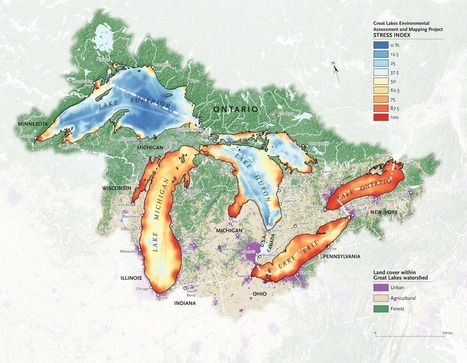
Mapping the human impact on the Great Lakes

Mapping the human impact on the Great Lakes | SoRo class | Scoop.it

"It’s no secret that the Great Lakes are suffering tremendous ecological strain — Lake Erie was even pronounced “dead” for a time during the 1960s because of an overload of phosphorus from municipal waste. Back in 1615, though, when the entire region was pristine and explorers Samuel de Champlain and Étienne Brûlé gazed out together from Lake Huron’s shores, they dubbed it la mer douce, 'the sweet sea.' Today roughly one-quarter of Canada’s population and a 10th of America’s population drink from the Great Lakes basin; the beleaguered lakes alone hold more than a fifth of Earth’s freshwater."

Lou Salza's curator insight, April 15, 2017 11:52 AM
These lakes are a tremendous resource, not only for the region but the nation as well. They need our attention and protection.-Lou 
 
Nicole Canova's curator insight, February 8, 2018 9:58 PM
It is amazing, in a sad way, to see how in just four centuries these lakes have gone from "la mer douce" to "dead." This map is a reminder of the damage humans do to the environment on a daily basis, and of the importance of protecting our natural resources.  Considering the fact that these lakes hold roughly one fifth of all of the fresh water on the planet and provide drinking water for millions of people in both the U.S. and Canada, we need to think about the impact we have on the world around us and how that impact can come back to bite us on the rear end.
Scooped by Clairelouise
April 10, 2017 9:31 AM
Scoop.it!

Stewart Brand: Why squatter cities are a good thing

http://www.ted.com Rural villages worldwide are being deserted, as billions of people flock to cities, to live in teeming squatter camps and slums. An
No comment yet.
Scooped by Clairelouise
April 2, 2017 9:36 AM
Scoop.it!

How Nazi propaganda managed to fool so many

How Nazi propaganda managed to fool so many | SoRo class | Scoop.it
Was cultural life in Nazi Germany as unidimensional and controlled as we have been led to believe? A new survey suggests that the situation was far more complex.
Clairelouise's insight:
Share your insight
No comment yet.
Scooped by Clairelouise
March 30, 2017 9:35 AM
Scoop.it!

Russia In The 20th Century timeline.

Russia In The 20th Century timeline. | SoRo class | Scoop.it
Russia In The 20th Century, a timeline made with Timetoast's free interactive timeline making software.
No comment yet.
Scooped by Clairelouise
March 23, 2017 9:17 AM
Scoop.it!

Printing the Ancient Way Keeps Buddhist Texts Alive in Tibet

Printing the Ancient Way Keeps Buddhist Texts Alive in Tibet | SoRo class | Scoop.it
A press that uses wooden blocks and dates to 1729 is the embodiment of a hallowed tradition and is one site where the Tibetan language is being preserved.
No comment yet.
Scooped by Clairelouise
March 21, 2017 9:21 AM
Scoop.it!

In Berlin, a Grass-Roots Fight Against Gentrification as Rents Soar

In Berlin, a Grass-Roots Fight Against Gentrification as Rents Soar | SoRo class | Scoop.it
Tenants and activists are banding together to protest rising rents, forced evictions and rampant real estate speculation.
No comment yet.
Scooped by Clairelouise
March 16, 2017 9:28 AM
Scoop.it!

How America's Idea Of Illegal Immigration Doesn't Always Match Reality

How America's Idea Of Illegal Immigration Doesn't Always Match Reality | SoRo class | Scoop.it
Border crossers, farm laborers, new arrivals from Mexico: There's no shortage of stereotypes about people living in the U.S. illegally. But the statistics tell a different story.
No comment yet.
Scooped by Clairelouise
March 15, 2017 10:31 AM
Scoop.it!

Turning Cemeteries Into Wine at a California Diocese

Turning Cemeteries Into Wine at a California Diocese | SoRo class | Scoop.it
The Catholic Church had a problem: meeting graveyard expenses as more and more people chose cremation over burial. The answer: Bishop’s Vineyard.
No comment yet.
Scooped by Clairelouise
March 13, 2017 12:18 PM
Scoop.it!

How Do They Do It__ Coal Mining Video.flv

No comment yet.
Scooped by Clairelouise
March 13, 2017 12:13 PM
Scoop.it!

How Shipping Containers Changed the World

Steel shipping containers are a crucial component of globalization and the worldwide market place. Learn about their massive impact on our everyday lives
No comment yet.
Scooped by Clairelouise
March 8, 2017 2:39 PM
Scoop.it!

Von Thunen quick review

This video screencast was created with Doceri on an iPad. Doceri is free in the iTunes app store. Learn more at http://www.doceri.com
No comment yet.
Rescooped by Clairelouise from World History - SHS
February 25, 2017 11:21 AM
Scoop.it!

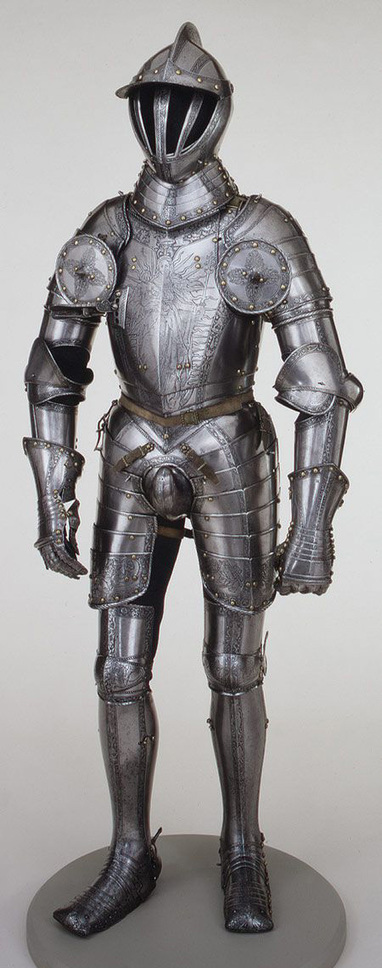
Medieval Armour

Medieval Armour | SoRo class | Scoop.it
Medieval Armour and Shields

Via Joy Kinley
Joy Kinley's curator insight, February 24, 2017 1:13 PM
Great description of different parts of armor from the Middle Ages, also plenty of pictures.
Scooped by Clairelouise
February 23, 2017 9:02 AM
Scoop.it!

Portrait of Mathilde Kschessinska

No comment yet.
Scooped by Clairelouise
April 12, 2017 9:11 AM
Scoop.it!

The Fallen of World War II

For the interactive version, ticket payments, and more: http://fallen.io An animated data-driven documentary about war and peace, The Fallen of World War II looks…
No comment yet.
Scooped by Clairelouise
April 10, 2017 9:26 AM
Scoop.it!

8 TED Talks on how to revive a city

8 TED Talks on how to revive a city | SoRo class | Scoop.it
Energetic and thriving, cities are the heartbeat of society. These talks offer viable ways to reinvigorate and strengthen the metropolises we love.
No comment yet.
Scooped by Clairelouise
March 31, 2017 9:09 AM
Scoop.it!

Good Schools, Affordable Homes: Finding Suburban Sweet Spots

Good Schools, Affordable Homes: Finding Suburban Sweet Spots | SoRo class | Scoop.it
We created a set of charts for several metropolitan areas that look at school quality, home price and commute. There are deals to be had.
No comment yet.
Scooped by Clairelouise
March 29, 2017 2:36 PM
Scoop.it!

A dying breed: The American shopping mall

A dying breed: The American shopping mall | SoRo class | Scoop.it
With the explosion of the Internet and changing shopping habits, hundreds of U.S. malls are expected to close their doors, but some entrepreneurs see ways to buck that trend
No comment yet.
Scooped by Clairelouise
March 23, 2017 7:28 AM
Scoop.it!

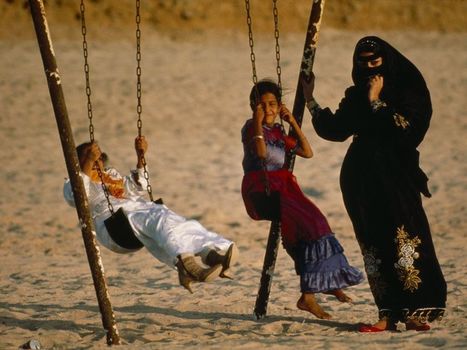
Hijab: Veiled in Controversy

Hijab: Veiled in Controversy | SoRo class | Scoop.it
Hijab is an Islamic concept of modesty and privacy, most notably expressed in women’s clothing that covers most of the body.
Taylor Doonan's curator insight, March 23, 2018 12:42 PM
This article is about Hijabs and it talks about the religious aspect of Hijabs versus the cultural aspect. It states that the hijab is a sign of modesty, which is not a strictly Muslim ideology, but is addressed in many religions. It also talks about how the hijab is not directly mentioned in the Quran. It states that the hijab is almost as much a cultural symbol instead of a religious one and talks about countries with laws about hijabs and how women should dress. 
Nicole Canova's curator insight, March 24, 2018 9:19 PM
Hijab is the expression of a concept of modesty.  It is not specific to one religion, nor is it specific to one region.  This expression of modesty is encouraged, but not clearly defined, in Islam's holy texts; rather, it is informed by personal or cultural notions of what it means to be modest.  Hijab's association with extreme or radical Islam has led to heated debates in Western nations about whether or not it is acceptable for people to express hijab, with many people citing "national/public security" as a reason to ban certain coverings.
David Stiger's curator insight, October 31, 2018 11:29 AM
The geography of the hijab is important for Westerners to understand. Only two countries, Iran and Saudi Arabia, require women to dress by the strict standards of hijab. The vast majority of Middle Eastern, North African, and Muslim countries around the world do not have a legal dress code for women. Some laws and cultural traditions encourage women to dress modestly. Other countries like Tunisia, Turkey, and Syria (all predominantly Muslim) had laws to restrict women from wearing the hijab in order to be more secular and modern. Many other countries, like Pakistan and Jordan, do not have any laws on the book concerning if women should or should not wear a hijab. These countries understand that it is a personal choice regarding privacy, reputation, and personal faith. Like many religious precepts, the concept of hijab is open to interpretation. As a result, a Westerner can safely assume that having a large Muslim population, or a significant number of Muslims operating in a government, will not lead to a takeover of Sharia law or oppressive fundamentalist codes of behavior. Instead of being afraid of the unknown and making assumptions about entire societies, Westerners should find out more and be exposed to how diverse and broad differing cultures and societies can be. 
Rescooped by Clairelouise from World History - SHS
March 18, 2017 9:27 AM
Scoop.it!

Back to the Dark Ages | History Today

Back to the Dark Ages | History Today | SoRo class | Scoop.it
“ Monogram at the start of the Gospel of Matthew, from the Lindisfarne Gospels (c. 700 AD) To academic historians the Dark Ages are a thing of the past. And yet English Heritage, in their timeline of the Story of England from the prehistoric to the modern period, shows that, after the Romans left Britain, the nation fell into the ‘Dark Ages’ before resurfacing for two distinct Middle Ages, neatly chopping medieval England into pieces. The term ‘Dark Ages’ found a foothold in the 17th and 18th centuries, with historians like Edward Gibbon writing about the ‘darkness’ of the period, and reached its peak in the mid-19th century as, with a fervent belief in the dawn of a modern age, a growing Empire needed to build a dark past from which to emerge. The Dark Ages cling to Victorian ideals. ”
Via Joy Kinley
Joy Kinley's curator insight, March 1, 2017 1:28 PM
The Dark Ages refer to the fact people thought that no learning happened during this time, however this is not true.
Scooped by Clairelouise
March 15, 2017 10:36 AM
Scoop.it!

‘Sea Slaves’: The Human Misery That Feeds Pets and Livestock

‘Sea Slaves’: The Human Misery That Feeds Pets and Livestock | SoRo class | Scoop.it
Men who have fled servitude on fishing boats recount beatings and worse as nets are cast for the catch that will become pet food and livestock feed.
No comment yet.
Scooped by Clairelouise
March 15, 2017 10:30 AM
Scoop.it!

How New York City Gets Its Electricity

How New York City Gets Its Electricity | SoRo class | Scoop.it
The power grid was established in the country nearly 135 years ago in Lower Manhattan. Now the state is preparing for a major overhaul of the system.
No comment yet.
Scooped by Clairelouise
March 13, 2017 12:14 PM
Scoop.it!

A Brief History of Shipping Containers w/ Johnny I

East Regional Sales Director John Ingrassia explains a quick history of the trucking industry. PolarTVLive: Employee Network of Preferred Freezer Service
No comment yet.
Scooped by Clairelouise
March 11, 2017 10:14 AM
Scoop.it!

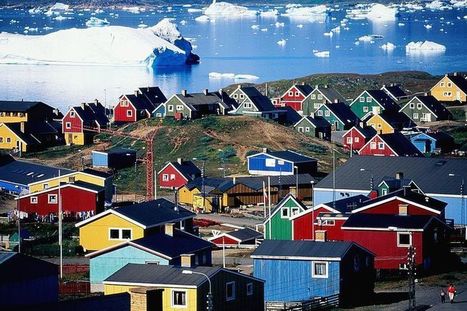
Why Is Greenland an Island but Australia a Continent?

Why Is Greenland an Island but Australia a Continent? | SoRo class | Scoop.it

"Why is Australia a continent and Greenland is not? Even though Australia is the smallest of the accepted continents, Australia is still more than 3.5 times larger than Greenland. There has to be a line in the sand between small continent and the world's largest island and traditionally that line exists between Australia and Greenland. Geologically, Australia lies on its own major tectonic plate while Greenland is part of the North American plate."

Courtney Barrowman's curator insight, March 9, 2017 11:58 AM
unit 1
Anne Tumak's curator insight, March 10, 2017 4:28 AM

I'm sharing this link for two reasons. 

  1. To help resolve the confusion as to why Greenland the world's largest island but Australia gets to be the smallest continent. The main reason is all about the continental shelf and not the coastline--Greenland is connected to North America to the continental shelf while Australia has its own shelf. 
  2. I know many of you have been fans of Matt Rosenberg's online resources over the years.  If you have lost track of him, he is continuing to share geographic information on ThoughtCo. 


Tags: Greenland, Australia, geology.

Taylor Doonan's curator insight, May 3, 2018 1:01 PM
Australia is 3.5 times larger than Greenland and this article talks about how there is no internationally recognized definition of a continent. Though there is no internationally recognized definition the line between island and continent lies somewhere between Greenland and Australia. It is also worth noting that Australia sits on its own tectonic plate where Greenland is part of the North American plate. 
Rescooped by Clairelouise from World History - SHS
February 25, 2017 11:25 AM
Scoop.it!

Sunken cities

Sunken cities | SoRo class | Scoop.it
London’s must-see summer exhibition - Submerged under the sea for over a thousand years, two lost cities of ancient Egypt were recently rediscovered. Their story is told for the first time at the British Museum.
Via Joy Kinley
Joy Kinley's curator insight, August 24, 2016 8:24 AM
Rivers and landforms change over time.  We have the ability to study and remove artifacts that have been submerged.  But should we remove them so that we can see what ancient life was like or leave them where they were?
Scooped by Clairelouise
February 23, 2017 9:10 AM
Scoop.it!

moving in a crinoline 1

Crinoline cages are often viewed as clunky, unwieldy contraptions that considerably hindered the movement of the wearer. I have been wearing these for wor
No comment yet.