


Data mining Wikipedia people reveals some surprising differences in the way eastern and western cultures identify important figures in history, say computational anthropologists.
Via Charles Tiayon


 Your new post is loading...
 Scoop.it! Data mining Wikipedia people reveals some surprising differences in the way eastern and western cultures identify important figures in history, say computational anthropologists. Via Charles Tiayon 
No comment yet.
Sign up to comment
Scoop.it!

Is the sky really blue? Or do you just think it is because you know it is?
Scoop.it!
As part of the Yiddish Book Center Wexler Oral History Project, Leonard Nimoy explains the origin of the Vulcan hand signal used by Spock, his character in the “Star Trek” series. Via Seth Dixon

Seth Dixon's curator insight,
March 2, 2015 11:27 AM
Leonard Nimoy was born to Yiddish-speaking Orthodox Jewish immigrants from Iziaslav, Soviet Union in 1931. His connection to the Jewish people was always very important to him and this is a great example of how folk/religious cultural traits can become part of popular culture. LLAP. 
Tori Denney's curator insight,
March 23, 2015 10:35 PM
folk culture vs. popular culture - Often, practices of folk culture can turn into popular culture and lose it's meaning. The example here begins with Nimoy's Star Trek character, Spock's, hand signal for waving hello. When Nimoy was younger he had seen the Vulcan culture do this hand signal for blessing others in a ceremony of something he wasn't sure of, but knew was very powerful and important. So, this is where Spock's hand signal idea originated. Because of this popular movie, over media, this spread worldwide, turning into everyone practicing this alien greeting. But, no one knew where it came from or even cared to find out that the hand gesture had very sentimental meaning to this folk culture.
Scoop.it!
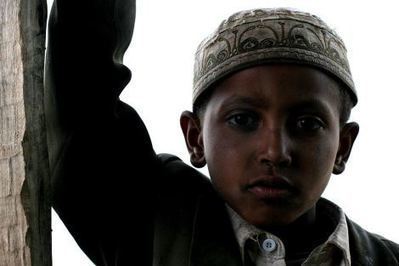
"I am torn about how to teach these two ideas about cultures and societies all around the world: People and cultures are different all over the world.People and cultures are the same all over the world. These points may seem like a contradiction, but when put into proper context they teach important truths about culture."

Avery Liardon's curator insight,
March 23, 2015 9:48 PM
Unit 3: Shines insight on stereotypes that are commonly used throughout the world. Reading this article really made me think about stereotypes that are so commonly used they are considered acceptable. It's a ridiculous idea to think that all people under a culture act and behave the same way. 
Emily Coats's curator insight,
March 24, 2015 12:06 PM
UNIT 3 CULTURE This article is written to compare and contrast various ways to teach young school children about global cultures. On one hand, we can relate all cultures to each other, due to their common goals and views. For example, all families around the world aim to do what's best for each other, love and cherish one another, and try their hardest to succeed economically. On the other hand, cultures are extremely different around the world, with different music, clothing, and underlying views on life. We can continue to say that popular culture has diffused so greatly, with advanced technologies and means of transportation, so it has influenced and homogenized our landscape quite a bit. Folk culture is obviously still a powerful force, but popular culture does have some effects around the world. I believe that children need to understand the importance of maintaining diversity thy preserving folk culture but they also need to acknowledge the pros and cons of the global diffusion of popular culture and how it connects us at a global scale. 
Danielle Smith's curator insight,
April 12, 2015 12:21 AM
I think Teaching Cultural Empathy: Stereotypes, World Views and Cultural Difference is a helpful article for teachers to read. This article considers ideas I constantly come back to, whilst collecting resources and ideas for teaching students about cultural diversity and identity. How do I teach students, that ‘people and cultures are different all over the world’ (Dixon, 2015, April 2), but also the same? Dixon suggests that we need to teach that people and cultures worldwide are the SAME and DIFFERENT simultaneously. In this way, students can appreciate the rich diversity of cultures and societies, whilst at the same time learning values of humanity and empathy, which unite us all.
I believe by recognising and appreciating the rich cultures of students in the classroom, we can explore and learn about cultural diversity in an honest, rich and non-stereotypical way and allow students to feel valued at the same time. In addition, as students know each other, this helps them relate to ‘people from other places, who speak other languages’ and follow different religions to their own (Dixon, 2015, April 2). Furthermore, this should help increase intercultural understanding in the classroom by developing a ‘socially cohesive’ environment that ‘respects, and appreciates cultural, social and religious diversity’ (MYCEETA, p. 7).
References Dixon, S. (2015, April 2). Teaching cultural empathy: Stereotypes, world views and cultural difference. National Geographic. Retrieved April 7, 2015, http: http://blog.education.nationalgeographic.com/2015/02/04/teaching-cultural-empathy-stereotypes-world-views-and-cultural-difference/
Ministerial Council on Education, Employment, Training, and Youth Affairs. (2008, December). Melbourne declaration on educational goals for young Australians. Melbourne: Author.
Scoop.it!

What if, this holiday season, instead of saying "thank you" to your aunt for her gift of a knitted sweater, the polite response expected from you was to show up at her house in a week with a better gift? Or to vote for her in the town election? Or let her adopt your firstborn child? Alex Gendler explains how all of these things might not sound so strange if you were involved in a gift economy.
Scoop.it!
View full lesson: http://ed.ted.com/lessons/how-languages-evolve-alex-gendler Over the course of human history, thousands of languages have developed from wh...
Scoop.it!
In this talk, Dr. Peter Gray compellingly brings attention to the reality that over the past 60 years in the United States there has been a gradual but, over...
Scoop.it!

Human culture is about survival of the friendliest, says John Edward Terrell, the curator of oceanic archaeology and ethnology at the Field Museum of Natural History in Chicago, and an expert on the biological, cultural, and linguistic diversity of...
Scoop.it!

Images of the equinox at Loughcrew... - Cultural Heritage Ireland - http://t.co/DEzaHLktty http://t.co/XgF6Xt9NKP
Scoop.it!

Stanford anthropologist Tanya Luhrmann compared the religious experiences of Buddhists in Thailand and evangelical Christians in the United States.

Catherine Buckman's curator insight,
December 16, 2014 2:22 PM
Interesting short video explaining Hadley Cells and why the earth rain forests on Equator and deserts above and below. 
Jason Schneider's curator insight,
January 28, 2015 10:27 PM
Deserts are pretty much important for bringing warm air towards the equator which cools and causes rain to form rain forests. As the cool air hits the stratosphere, it warms up again because of it's hot temperature and it spreads throughout the stratosphere 30 degrees north and 30 degrees south in latitude from the equator. When it dries, it lowers back to earth forming a dry desert. I now notice that there are no deserts along the equator and there are rain forests pretty much along the equator. The Hadley Cells are pretty much like cycles allowing rain forests and deserts to occur. |
Scoop.it!

From
ed

Some people question whether Shakespeare really wrote the works that bear his name – or whether he even existed at all. Could it be true that the greatest writer in the English language was as fictional as his plays? Natalya St. Clair and Aaron Williams show how a linguistic tool called stylometry might shed light on the answer.
Scoop.it!

The fingers are positioned in a manner which leaves five “windows” through which G‑d’s blessings flow to the congregation . . .
Scoop.it!
A project I picked up this past spring semester for independent study credit for my undergrad at the University of North Carolina at Chapel Hill. It tells th...
Scoop.it!

Today, about one-tenth of the world’s population are southpaws. Why are such a small proportion of people left-handed
Scoop.it!
Steven Pinker - Psychologist, Cognitive Scientist, and Linguist at Harvard University How did humans acquire language? In this lecture, best-selling author S...
Scoop.it!
This video will teach you how to wear a sari in just a few easy steps. It's very easy to follow and enjoyable to watch. For more videos, please visit www.goo...
Scoop.it!
In his humorous and uplifting style, Gever Tulley debunks classic myths of childhood safety. With rampant fear mongering, is it any wonder that children are ...
Scoop.it!

When I began living in the plains of Nepal in 1987, villagers visited almost daily to ask for advice on health problems. I was studying to be a doctor but not in medicine.
Scoop.it!

Our obsession with celebrity culture is a result of our maladapted brains, argues social anthropologist Jamie Tehrani.
Scoop.it!

Popular fairy tales and folk stories are more ancient than was previously thought, according research by biologists.
Scoop.it!

Huli in Indonesia and Papua New Guinea
Scoop.it!
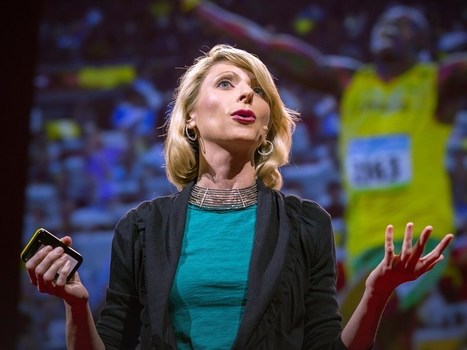
Body language affects how others see us, but it may also change how we see ourselves. Social psychologist Amy Cuddy shows how “power posing” -- standing in a posture of confidence, even when we don’t feel confident -- can affect testosterone and cortisol levels in the brain, and might even have an impact on our chances for success.
|






