



Via Robin Good

 Your new post is loading...
 Scoop.it! 

Alessandro Mazzoli's curator insight,
October 9, 2013 5:30 PM
Risorsa utile ( e gratuita) per il Fact-Checking 
Ruveanna Hambrick's curator insight,
October 2, 2014 2:53 PM
This has great resources and has different multi-media links that are great for crap-detecting.
Scoop.it!

The launch of eBook subscription service Oyster has set the proverbial cat among the pigeons in the publishing world. Publishers and authors are frantically trying to work out just what on-demand ... Via Robin Good

Robin Good's comment,
September 22, 2013 3:39 AM
Rodrick: print books are here to stay for quite some time still, as there will be, like in your case, always some demand for this unique medium. Print publishers will have to reorganize and rethink their business strategy to remain profitable.

Ghouti Kerzabi's curator insight,
September 24, 2013 6:19 PM
Le lancement du Livre abonnement Oyster de service a mis le chat proverbial parmi les pigeons dans le monde de l'édition. Editeurs et auteurs sont frénétiquement essayer de travailler sur tout ce que la demande ... 
chen kc's curator insight,
October 10, 2013 12:40 AM
http://www.staged.com/video?v=WQce like this video content...i like this....great visualise...subscription...?
Scoop.it!

Sydney's new 1888 Hotel is an Instagram junkie's paradise.
Scoop.it!
From Robin Good's insight: "Federico Guerrini, an Italian freelance journalist is the author of a new research study done for the University of Oxford and sponsored by Thomson Reuters which analyzes the emergent use of content curation practices for journalistic use.
The research provides a good introduction to content curation, and a few excellent examples of how it has been used effectively for journalistic purposes..."
Read full Robin Good's insight below.
PDF study:
review by Reuters Institute:
Via Robin Good, Giuseppe Mauriello

Federico Guerrini's comment,
October 2, 2013 5:06 AM
Actually, I believe it will become more and more important, as an issue, as newsrooms cut staff, especially foreign correspondents

socialNONmente's curator insight,
October 2, 2013 6:54 AM
La "Content Curation" è una nuova forma di giornalismo? Se lo è chiesto un giornalista freelance italiano specializzato in tecnologia, Federico Guerrini, in una ricerca commissionata dal Reuters Institute for the Study of Journalism 
David Sallinen (WAN-IFRA)'s curator insight,
October 3, 2013 4:48 PM
newsroom curators to engage readers !
Scoop.it!

One in three Brits visit the doctor less often than normal thanks to health and fitness gadgets, a survey has found. Via Alex Butler
Scoop.it!

Here are five key points to increasing your influence in support of your strategies. 1. Produce quality content If you want to make your mark on social media, you should provide quality content. Generate your own, become a thought leader, and share other people’s content that you believe is interesting. 2. Be open and engaging On social media, it’s important to be available to your audience, and few people exemplify that principle better than US entrepreneur Gary Vaynerchuk. For example, on Twitter he does a lot of responding to followers. He treats everybody as an equal, and responds at an amazing velocity. On social media, you can either be a generalist – producing and curating a hodge-podge of content across many different disciplines – or you can choose to specialise in one or a few areas. Specialists tend to bend more ears than generalists. Social media is extremely noisy. You’ve got to be able to stand out, and the best way to do this is to own a particular subject. For an entrepreneur, time spent on social media might seem like a distraction from the more important tasks central to running a business. Because it’s so time-intensive, back up your thought leadership on social media with a profit-making enterprise. Each social network has a unique culture, and the best users embrace it rather than sharing identical content across platforms. Take Cory Booker, the mayor of Newark, New Jersey. He relies mainly on Twitter, where he has more than 1,2 million followers – and Facebook, and uses each platform in a way that takes advantage of its native capabilities. Via nrip

jmwakasege's curator insight,
September 24, 2013 11:39 AM
A vey engagig views, here for a lot has become to much for people streaming and reading inforamtion online so if you want to stand out, be yourself too. Actual you where created to stand ou, Embrace the self you and become the best out there. 
George Fritz's curator insight,
September 29, 2013 9:49 PM
Focus on these in order. Quality content is The most important quality!
Scoop.it!
jmwakasege's comment,
October 1, 2013 1:20 AM
how come you always get good stuff, I real appreciate the value you bring. And for this one, it's a life saver.

Dan Aldridge's curator insight,
October 1, 2013 9:58 AM
Excellent tips for journalists and writers of all stripes on how to use Pinterest.
Scoop.it!

According to a 2013 study by the Pew Research Center, almost 40% of adults in the U.S. are currently caring for an adult or child with significant health issues. These unpaid “caregivers” may come from a wide range of cultural and socio-economic backgrounds, but they face similar challenges when it comes to making decisions that can significantly affect the health and wellbeing of their patients as well as their own lives. While traditional healthcare marketing efforts have been focused primarily on educating and influencing patients, new research shows that family caregivers are often just as influential (if not more so) than patients when it comes to making choices about health providers, products and services. With a rapidly aging population contributing to an increase in caregivers, it’s vitally important for healthcare marketers to understand the behaviors, needs and interests of this audience. Understanding how caregivers research, evaluate and make decisions for both their patients and themselves can lead to more effective ways of getting our messages out and improving brand recognition within this influential but underserved audience. Caregivers Search for Health Information Online One of the most interesting findings of the Pew study is that caregivers are more likely than the general population to search for health information online. Eighty-four percent of caregivers with internet access say they went online within the past year to research health topics such as medical procedures, health insurance and drug safety. And of those caregivers, 80% used a search engine. Although the importance of maintaining a robust web presence is not new for marketers, regardless of industry, the Pew data underscores the importance of search engine optimization (SEO) when it comes to increasing exposure and driving qualified traffic. Organizations that rank highly in organic search have a greater chance of attracting information seeking users and then converting them into prospects, leads and then customers. Juggernauts like WebMD and Wikipedia may get the lion’s share of these health-related queries, but there are many opportunities for smart organizations to improve their visibility in search engine results pages (SERPs) that relate directly to the products and services they offer. Through proper keyword research, active link-building, and the creation of useful, useable, authoritative content using their subject matter expertise, healthcare organizations can improve brand exposure and increase qualified upper-funnel traffic to their websites. Caregivers Use Social Media Caregivers often look to search engines to help them find medical information, but they’re also relying on social media, online groups and discussion forums to connect with other caregivers, get and give support, and exchange recommendations and tips on common challenges. In fact, social media use among adults ages 50-64 (the prime caregiving years) increased more than 400% from 2008 to 2012 (source). And while Twitter and Facebook may be appropriate for sharing and getting support and recommendations from friends and family, caregivers may not always feel comfortable sharing personal health information on these semi-public platforms. A number of sites such as CareZone have recently launched that merge the community aspects of social media with tools for helping caregivers communicate in private groups and manage the care of a loved one. Healthcare organizations have multiple opportunities to connect with caregivers through these social channels. Whether it’s advertising on social media or communities geared towards caregivers, creating and distributing relevant, engaging content through these same channels, or even building their own in-house tools and support networks for caregivers, the power of social sharing and engagement to build trust and generate interest can’t be ignored. Caregivers Perform Complicated Medical/Nursing Tasks In addition to normal day-to-day care, a 2012 study by the AARP Public Policy Institute found that almost half of all caregivers are also in charge of performing complex medical or nursing tasks, such as managing multiple medications, providing wound care, dealing with special diets, and even operating specialized medical equipment. Unfortunately, those caregivers also reported that they’ve received little support or training from health professionals on how to perform these tasks, causing them added stress and worry about making a mistake. Because of this unmet need, healthcare organizations have a great opportunity to target caregivers with additional training resources and content to help them learn how to manage these tasks effectively and reduce their stress. Whether it’s an application to help caregivers manage multiple medications, a detailed how-to guide for operating a complex piece of medical equipment, or sponsored real-world training classes aimed specifically at in-home caregivers, any way that you as an organization can make life easier for them and help them provide better care is an opportunity to create a positive association with your brand and products. Caregivers Need Help Caring for Themselves One of the biggest challenges facing caregivers is that they often spend so much time taking care of their patients that they have little time to take care of themselves. In addition to the stress associated with caring for (and worrying about) a loved one, they also often end up neglecting their own health and wellbeing due to the demands of caregiving. Things like getting enough exercise and sleep, maintaining a healthy diet, and giving themselves time to re-charge end up taking a back seat to the day-to-day care of their patient. Add onto that the financial worries and time constraints of caregivers who also need to work full- or-part time jobs and you have a recipe for severe stress and burnout. While caregivers may be reluctant to actively seek out personal help and respite, that doesn’t mean that health organizations can’t offer these types of services and information in order to address their needs. This might take the form of counseling programs aimed at helping caregivers navigate their own care, respite services that run in parallel with patient care or even pamphlets and online resources that show caregivers how to provide better care for their patients by proactively taking care of their own health and wellbeing. The idea that a healthcare organization cares about their health as well as their patient’s health is a powerful message and one that can help build trust and credibility. Conclusion When it comes to marketing to the growing caregiver population, the most important thing is to have empathy for their situation and to understand the significant role they play in their patient’s ongoing care and success. By understanding the daily challenges and decisions that affect the lives of caregivers (and their patients), you’ll start to identify how your organization can address those needs in ways that strengthen your brand and increase your exposure among this influential audience. And since there’s a good chance that you might be called on to provide caregiving services to a friend or loved one at some point in your life, keep in mind how you would want to be treated and marketed to if you were in a similar situation. Ditch the pushy sales pitches. Forget the self-promotional marketing fluff. Be authentic. Be helpful. Because making life easier for caregivers is just good business. Via Plus91
Scoop.it!

Many physicians not only understand but use social media to improve relationships with patients and find new ones. Social media marketing for your medical practice is an efficient way to enhance marketing and bring in new patients. It can be a little challenging to connect with patients outside your clinic or hospital. Many doctors use Medical blogs, Facebook and Twitter accounts to make this connection. Below are a few tips on using social media marketing for doctors offices. 1. Build Relationships You can develop loyalty and trust with both your prospective and current patients through social media. Add patient staff interviews and patient testimonials on YouTube and upload these to social media sites for more coverage. Creating a professional profile for networking on LinkedIn can better your practice as well and help you to network and build relationships with potential patients. 2. Read & Respond to Reviews People tend to leave reviews on social media sites about other businesses and practitioners. Make sure you are not just reading reviews of your practice but also leaving feedback and making positive responses to them. You can really influence your reputation by staying active on these sites and interacting rather than having reactions or doing nothing at all. 3. Test the waters You will want to dive into many different social media sites, however, be careful not to spread yourself out too thin. Facebook is a popular place to be, and so is Tumblr and Twitter. To effectively develop an online reputation, you will need to embrace diversity and get involved in a few social sites, just start off slowly. This will enable you to test out your audience. Other things you can do include:
By staying active on social media sites and offering things like healthcare tips, products and more, you can stay active and avoid conduct that is unprofessional. You can stay social by making new product recommendations to help your social following stay healthy. Community interaction will encourage more people to participate and keep them around. If you receive feedback from a patient, make sure you go back and respond or share feedback as well. Being active online through social media will really benefit your medical practice and let people know you are available more than just in the office. Via Plus91
Scoop.it!

One of the most compelling reasons for hospitals to use social media is because it allows organizations—of all sizes—to establish a personal relationship with patients. One of the best ways to do this is by telling meaningful, powerful patient stories. And hospitals don't have to look too far when seeking patients to celebrate. Social media and marketing experts tell the Daily Briefing that at the average organization, there's no shortage of inspiring stories to draw from. Case study: Mount Sinai Hospital For example, Mount Sinai Hospital in New York City recently highlighted the story of patient Ron Gardner on Facebook as Gardner underwent Deep Brain Simulation surgery for Parkinson's disease. The hospital shared pictures from BattlingParkinsons.com of Gardner before, during, and after his surgery. The photos evoked a huge outpouring of support. Gardner continued to interact with the site throughout his treatment, posting updates on his surgery and thanking all those involved in his care—surgeons, nurses, anesthesiologists, radiologists, and even the receptionist—for their "compassion and professionalism. During the campaign, Mt. Sinai also continued to interact with Gardner, "liking" and responding to his posts—an engagement strategy that the hospital emulates across each of its media channels, according to social media director John Ambrose. "Using patient stories, we try and connect with as many people as we can," Ambrose says, adding, "We put a human face on health care in this way." Case study: MD Anderson Similarly, one of MD Anderson Cancer Center's most successful media campaigns was a music video called "Hold On," a song written by Greg Lizee, an associate professor of oncology. The video received "hundreds of comments, shares, likes, views—you name it," says MD Anderson's Laura Nathan-Garner, adding that the video was "unlike anything we've done before." "What we often hear is that when patients receive a diagnosis, they go online to find people with stories similar to theirs," Nathan-Garner says, adding that "a lot of times if they see that person has received treatment at MD Anderson, then, they will want to follow through and do the same thing." Via Plus91

Dr Martin Wale's curator insight,
September 27, 2013 6:37 AM
If anyone is interested in doing this on Vancouver Island, please get in touch.
Scoop.it!

Grapeseed extract (GSE) has recently been proven to prohibit cancerous cell growth and to instigate cancer cell death - outperforming chemotherapy.
Scoop.it!

Social media networks such as Facebook, Twitter, Google Plus, and LinkedIn can provide cosmetic surgery practices with an extraordinary opportunity to reach out to a greater number of potential patients. As the social media revolution sweeps across all demographics, age has ceased to be a criterion, and cosmetic surgeons are uniquely placed to leverage the robust marketing options that social media platforms offer. Forward-thinking cosmetic surgeons need to keep abreast of ongoing changes if they are to stay on top of things. The Numbers Say It All According to A.C. Nielsen, more than 80 percent of all American adults use an online social network. In fact, a large majority of potential patients are active on social media sites. Given the fluid exchange of information over these sites, cosmetic surgery practices simply cannot afford to ignore their growing importance. According to the latest statistics in social media trends:
One look at these numbers is more than enough to establish the extensive reach and the immense power that social media commands when it comes to reaching out to potential patients. Advantage for Cosmetic surgeons Independent cosmetic practitioners stand to gain distinctive marketing advantages if they include social media within marketing strategies. In a study of 1,180 small and medium businesses (SMBs) and 500 customers conducted by Zoomerang, a leading online survey firm, key reasons were identified as the main drivers behind the increasing adoption of social media among SMBs and independently practicing professionals.1 These include:
Building Relationships with Potential Patients and Fans Cosmetic practitioners need to understand that social media, in addition to being a powerful marketing tool for expanding the scope of operations for their practice, is also a great and cost-effective way of building relationships with potential patients. Because it offers easy and instant interactions, social media is an active medium for building trust with new patients. Based on survey results of a recent study published in the May 2013 issue of Plastic and Reconstructive Surgery, the following trends were observed:2
Social media marketing is a veritable goldmine and is quickly becoming the most effective way to build relationships with potential patients. The changing marketing landscape is bound to affect cosmetic surgery practices as much as it affects other businesses and professional establishments. By investing requisite time and resources in creating a top-notch social presence, cosmetic surgery practices can reach out to a greater number of potential patients and establish their credibility within their area of expertise. Via Plus91

malek's comment,
October 22, 2013 11:59 AM
Eye opening: plastic surgeons must jump the wagon of social media
|
Scoop.it!

kitty de bruin's curator insight,
October 25, 2013 4:15 AM
co creating, such a nice way to work together 
irene's curator insight,
January 10, 2014 9:16 AM
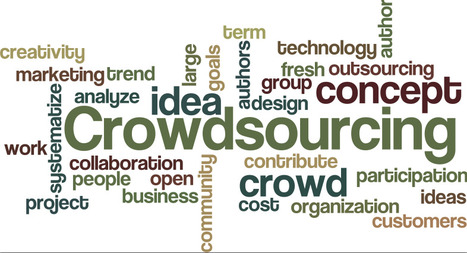
Perché il futuro del Crowdsourcing va in direzione della cura, sintesi e cose varie.
Scoop.it!
Robin Good's curator insight,
August 31, 2013 5:02 AM
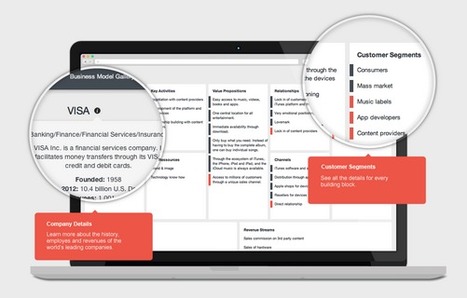
The Business Model Gallery is a growing database of curated business models canvases gathered from a diverse set of companies operating in different sectors. For each company you can analyze its updated "business canvas" in which you can see at a glance the key value propositions, its partners, revenue streams and all of the other key business building blocks. Business models can be easily searched, filtered and compared across specific building blocks you are interested in. Coming up are also a PDF and PowerPoint export option as well as a dedicated iPad app. A free trial is available and pro plans start at $9/month and go up all the way to $29/mo according to the number of features you want to use. My comment: The Business Model Gallery offers a truly excellent gallery of valuable business models which can be extremely useful for anyone studying, researching or working on creating a successful new company. Furthermore this is a great living example of how, curated collections of best of breed examples, are going to have a go as very useful business services in the coming months and years. Free for the first three months: http://businessmodelgallery.com/ Features: http://businessmodelgallery.com/features/ Pricing: http://businessmodelgallery.com/packages/ To learn more about the canvas and its 9 building blocks, visit www.businessmodelgeneration.com
Scoop.it!
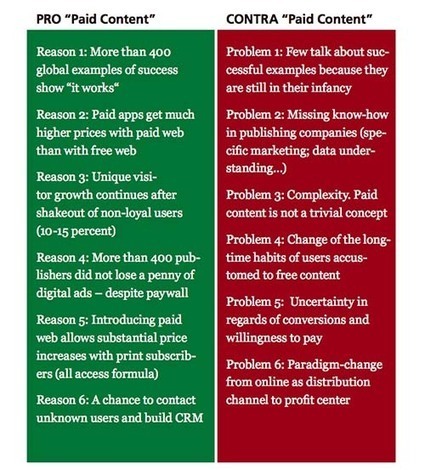
Do Paywalls Change the Engagement Equation? - The Huffington Post
Jake Batsell seems to think so, saying that while advertising-driven models of digital journalism aim to maximize page views, when news organizations introduce online subscriptions "it reconfigures the benchmarks for success." Which leads to the question: What are online readers willing to pay for digital content? It's one of those complex issues troubling publishers, editors and reporters who have to worry about producing enticing content to compete with the plethora of digital fare, and, ensure the success of their revenue streams. Via Lelio Simi, Robin Good
Robin Good's curator insight,
October 4, 2013 12:42 PM
Paid Digital Content: The Journey Begins, a report by the World Association of Newspapers and News Publishers (WAN-IFRA), uses case studies to explain successes, failures and transitions news organizations are experiencing in attempts to get readers to pay for what they consume.
chen kc's curator insight,
October 10, 2013 12:20 AM
http://www.staged.com/video?v=WQce like this video content... 
doddy frnces's curator insight,
March 22, 2024 4:35 AM
Aeropuerto Adolfo Suárez Madrid-Barajas @gmail.com koop ozempic Nederland koop ozempic voor gewichtsverlies Koop pillen om af te vallen koop ozempic 0.25 mg acquista saxenda acquista subutex online acquista ozempic acquista qsymia acquista methadone acquista actiskenan acquista morphine acquista oxicodona koop ozempic Amsterdam koop ozempic Rotterdam koop ozempic Eindhoven mounjaro koop zepbound koop rybelsus koop saxenda koop wegovy koop acquisto ozempic ozempic prezzo acquistare ozempic 0.5mg acquistare ozempic senza ricetta acquistare ozempic 1mg ozempic comprar 1mg comprar ozempic 1mg ozempic comprar sin receta ozempic comprar online ozempic comprar comprar ozempic 2mg comprar mounjaro comprar wegovy comprar saxenda comprar actiskenan kaufen ozempic Deutschland kaufen ozempic kaufen ozempic 0.25 mg kaufen ozempic 0.5 mg kaufen ozempic 1 mg kaufen ozempic 2 mg kaufen actiskenan online acheter ozempic Acheter Ozempic 0.25 mg Acheter Ozempic 0.25 mg Acheter Ozempic 0.5 mg Acheter ozempic perte de poid Acheter ozempic saxenda Acheter ozempic wegovy en ligne ozempic perte de poid Acheter oxycodone en ligne Acheter percocet en ligne Acheter morphine en ligne Acheter vyvanse en ligne Acheter adipex en ligne Acheter mounjaro en ligne Acheter zepbound en ligne ozempic comprar 1mg comprar ozempic 1mg ozempic comprar sin receta ozempic comprar online ozempic comprar comprar ozempic 2mg comprar mounjaro comprar wegovy comprar saxenda comprar actiskenan acquista subutex online acquista saxenda acquista subutex acquista victoza acquista qsymia acquista duromine acquista methadone acquista actiskenan acquista morphine acquista oxicodona acquista sevredol acquista dexedrine online acquista pillole acquista ritalin acquista vyvanse efedrina acquisto acquista adipex acquista belviq acquista duromine acquista ozempic acquista qsymia https://acheterozempic5mg.com/ https://acheterozempic5mg.com/shop/ https://acheterozempic5mg.com/product/acheter-ozempic-0-25/ https://acheterozempic5mg.com/product/acheter-ozempic-1mg/ https://acheterozempic5mg.com/product/acheter-ozempic-0-5-mg/ https://acheterozempic5mg.com/product/acheter-ozempic-2mg/ https://acheterozempic5mg.com/product/acheter-saxenda-en-ligne/ https://acheterozempic5mg.com/product/acheter-wegovy-en-ligne/ https://acheterozempic5mg.com/product-category/medicaments-contre-la-douleur-opioides/ https://acheterozempic5mg.com/product/acheter-de-loxycodone/ https://acheterozempic5mg.com/product/acheter-percocet-en-ligne/ https://acheterozempic5mg.com/product/acheter-morphine-en-ligne/ https://acheterozempic5mg.com/product/acheter-vyvanse-en-ligne/ https://acheterozempic5mg.com/product/acheter-adipex-37-5-mg/ https://acheterozempic5mg.com/product/acheter-mounjaro-en-ligne/ https://acheterozempic5mg.com/product/acheter-zepbound-en-ligne/ https://ozempickopen.com/ https://ozempickopen.com/shop/ https://ozempickopen.com/product-categorie/weight-loss-medications/ https://ozempickopen.com/product/koop-ozempic-0-25mg/ https://ozempickopen.com/product/koop-ozempic-0-5mg/ https://ozempickopen.com/product/koop-ozempic-1mg-online/ https://ozempickopen.com/product/koop-ozempic-2mg-online/ https://ozempickopen.com/product/koop-adipex-online/ https://ozempickopen.com/product/mounjaro-kopen/ https://ozempickopen.com/product/saxenda-kopen/ https://ozempickopen.com/product/koop-wegovy-online/ https://ozempickopen.com/product/koop-zepbound-online/ https://ozempickopen.com/product/koop-rybelsus-online/ https://kaufenozemp25mg.com/ https://kaufenozemp25mg.com/geschaft/ https://kaufenozemp25mg.com/product/ozempic-kaufen-0-25mg/ https://kaufenozemp25mg.com/product/ozempic-kaufen-ohne-rezept-0-5-mg/ https://kaufenozemp25mg.com/product/ozempic-kaufen-schweiz-1mg/ https://kaufenozemp25mg.com/product/ozempic-kaufen-2mg-online/ https://kaufenozemp25mg.com/product/kaufen-sie-actiskenan-online/ https://ozempiccomprar1mg.com/ https://ozempiccomprar1mg.com/compra-ahora/ https://ozempiccomprar1mg.com/product/ozempic-comprar-sin-receta/ https://ozempiccomprar1mg.com/product/comprar-ozempic-online/ https://ozempiccomprar1mg.com/product/comprar-ozempic/ https://ozempiccomprar1mg.com/product/comprar-ozempic-2mg/ https://ozempiccomprar1mg.com/product/comprar-mounjaro-sin-receta/ https://ozempiccomprar1mg.com/product/comprar-saxenda-espana/ https://ozempiccomprar1mg.com/product/comprar-wegovy-en-linea/ https://ozempiccomprar1mg.com/product/comprar-metadona-en-linea/ https://ozempiccomprar1mg.com/product/comprar-actiskenan/ https://acquistoozempic.com/ https://acquistoozempic.com/acquista-il-tuo-iniettabile-ozempic/ https://acquistoozempic.com/Prodotto/acquista-ozempic-0-25-mg/ https://acquistoozempic.com/Prodotto/acquisto-ozempic-senza-ricetta/ https://acquistoozempic.com/Prodotto/acquista-ozempic-1mg/ https://acquistoozempic.com/Prodotto/acquisto-ephedrine/ https://acquistoozempic.com/Prodotto/acquista-phentermine-online/ https://acquistoozempic.com/Prodotto/acquista-saxenda-online/ https://acquistoozempic.com/Prodotto/acquisto-wegovy-online/ https://acquistasubutexonline.com/ https://acquistasubutexonline.com/prodotto/ https://acquistasubutexonline.com/prodotto/acquista-ozempic-senza-prescrizione-medica/ https://acquistasubutexonline.com/prodotto/acquista-saxenda-online/ https://acquistasubutexonline.com/prodotto/acquista-wegovy-in-italia/ https://acquistasubutexonline.com/prodotto/acquista-zepbound/ https://acquistasubutexonline.com/prodotto/acquista-subutex-online/ https://acquistasubutexonline.com/prodotto/acquista-methadone-in-italia/ https://acquistasubutexonline.com/prodotto/acquista-actiskenan-online/ https://acquistasubutexonline.com/prodotto/acquista-morphine-online/ https://acquistasubutexonline.com/prodotto/acquista-ossicodone-online/ https://acquistasubutexonline.com/prodotto/efedrina-acquisto-online/ https://acquistasubutexonline.com/prodotto/acquista-vyvanse-online/ https://acquistasubutexonline.com/prodotto/acquista-methadone-in-italia/ https://acquistasubutexonline.com/prodotto/acquista-adipex-online/ https://acquistasubutexonline.com/prodotto/acquista-victoza-online/ https://acquistasubutexonline.com/prodotto/acquista-qsymia-online/
Scoop.it!

"...I consume a lot of information across an incredibly wide spectrum of disciplines and sources, always aiming to synthesize the meaningful and connect it with something else for a larger portrait of what matters in the world." Via Robin Good

Randy Bauer's comment,
October 5, 2013 1:43 PM
Thanks Robin, I am a fan of Brain Pickings. and of your curation as well.

Brian Kirby's curator insight,
October 11, 2013 4:41 PM
How to sift through large amounts of information...
Scoop.it!

The Latin root of the noun curator means "to care." We know the word primarily in connection with museum collections, which may make some folks think of dusty old boring things, or preserving histo... Via Robin Good
Robin Good's curator insight,
October 2, 2013 8:13 AM
If you are into understanding the real value of content curation and what are the characterizing traist that make it so valuable and unique for the future of journalism and of our collective ability to stay informed, here is an evergreen "classic" on what curation specifically entails, synthesized and outlined by the Mindy McAdams. When it comes to content curation, her list includes seven specific characterizing traits:
Her content curation identikit is as useful, truthful and relevant today as it was was 5 years ago when it was first published. Content curation reference. Must-read. 9/10 Full post: http://mindymcadams.com/tojou/2008/curation-and-journalists-as-curators/ Question to you: Five years on, today, what would you add to these traits, that in your view, fully characterizes content curation? (Image credit: Fingerprint by Shutterstock) 
Nancy White's curator insight,
October 2, 2013 10:38 AM
I love the way examining curating from the perspective of other disciplines adds such richness to our definition and understanding of what it is, and what we are trying to accomplish with the act of curating.
Scoop.it!

It seems that the average consumer uses social media for everything today. One can track an entire family history through online records, speak to clients all over the world through video conferencing services, and even access one’s bank account and bills with the click of a button. Given that people are turning to the Internet and social media sites more than ever, it only makes sense that health care companies have a presence on these services so that they, too, can better connect with their clients. Before crafting your digital marketing plans for your health care site, it is first important to examine who exactly is using them to search for health care information. An in-depth survey by Kantar Media did just that.1 This survey, including data on over 165 million adults, looked at the reasons why people might search for health-related information on the Internet. Here are some of the more interesting findings:
As for who the people using social media sites to research medical and health information are, Kantar’s Media study found the following:
Knowing these important social demographics when creating the digital marketing plan for your health care business can greatly improve the success of your overall social media strategy as well as ensure that you are targeting the right audience in your posts. The sites where users sought health care information were spread pretty evenly across the board, so it is important not to focus all of your content on just one social media channel. Were you surprised by any of these numbers or statistics? Be sure to let us know your thoughts about the survey and social media for health care! Via Plus91
Scoop.it!

Healthcare by its very nature is social in many aspects. One of the recent developments of medical professionals is to enter the social media platform. We are all aware of the shift from volume based models to a more socially acceptable value based system in healthcare. The relationship between doctors and patients is getting more similar to other industries, i.e. the relation between a service provider and a consumer. The medical industry is seeking out new ways to implicate customer satisfaction and playing with the tools that proved to increase engagement and reach. To reach out to customers, one of the savviest ways in this modern market is the use of social media. In fact, according to the Journal of Internet Medical Research, more than 60% of adults use the internet to come across health related information and treatment procedures. This isn’t surprising as the culture of this world is seeking more of an instant solution. When an individual is sick, he wants to know what has really happened and wants it at that very instance. There is really no waiting. Social media in this case is perfectly positioned for healthcare professionals to reach out to patients and provide solutions in an effective and valuable way. An example for the extensive use of social media in healthcare practiced could be well understood by the stand of the Mayo Clinic Center for Social Media. It is one of the most popular healthcare channels on YouTube with more than 450,000 followers on Facebook and 600,000 on Twitter. Further, they have come up with different Facebook pages especially concerning different departments including gynecology, breast cancer, cochlear implants and many more. Also the Mayo Clinic has three different blogs targeting different audiences. The main idea is to share expertise with the masses that would very well be your main customer base. Services provided in social media networks for medical professionals would also include webinars, training programs and access to resources. It is quite relevant to assume here that social media plays an increasingly important part in the healthcare industry as more and more professionals and institutions seek the path taken by the Mayo Clinic. Digital communications and especially social media are laying deep roots in day-to-day healthcare operations. This network includes doctors, patients, nurses, therapists, clinics, hospitals and other professionals who use social platform as a tool for a more effective and far reaching means of communications. YouTube, Twitter, Facebook, Google, etc are used to share symptoms, research medical information, offering opinions, seeking similar communities, and provide health plans and even prescribe drugs. People use the social medium to keep in touch with other in similar communities having the same symptoms and seeking out references for a proper treatment. If something has worked out for one, it surely will work out for others. Another report by the Pew Internet Research titled “State of Social Media in 2013” suggests that 60% of U.S. patients use social tools like Titter, Facebook, Instagram, Pinterest to stay connected and interact with others having the same interests. 35 % of American adults have tried to figure out medical conditions from others who might have gone through a similar condition. The e-patient idea is a powerful growing force challenging to break the traditional barrier that had existed between healthcare providers and patients. The new system is more enables, empowered, equipped and engaged and could be further used to educate and enhance health by offering DIY techniques in some instances. Drawing inspiration from their social habits, the majority of internet users today are demanding access to online information and seeking out alternative ways of treatment that improve care and contain costs. Social media is acting as a catalyst to drastically impact patient motivation and the interaction with service provider. The collaborative technologies of today and the resulting innovations also allows for quicker dispersal of information and help patients who seek out immediate and cost effective medical services. Since now, the traditional methods of interaction between patients and healthcare professionals allowed little opportunity for the patients to have a say on the logistics, alternative and the methods of care delivery. Now, with the connected setup, the idea has thoroughly changed and patients are empowered to have a greater say and play a role in their wellness and treatment. The medical service provider is nothing less than any other consumer market. There is competition between service providers (both institutions and individuals) and patients have a wide opportunity to choose someone they would be comfortable with. This could be intimidating for physicians who still want to stick to old school methods, but it certainly benefits everyone. Via Plus91
Scoop.it!

Here are some rules I think communicators should follow to create a good infographic:
More: http://www.healthcarecommunication.com/Main/Articles/11574.aspx Via nrip
Scoop.it!

Known by many other names including the Nintendo Generation, Generation Next, Echo Boomers and most notably Generation Y, the newest group to the healthcare consumer market includes over 75 million adults born since 1982. These millennial members constitute one of the most challenging groups to market to. Why? In a nutshell, these younger patients grew up with computers, smart phones, Wii's and Playstations. These “digital natives,” are multi-taskers who skim and scan so much information on a daily basis making it challenging for healthcare marketers to attract and engage this elusive group. They are much less accepting of traditional marketing methods, proving more skeptical and difficult to reach than their predecessors. On the bright side, these members show similar characteristics to their Generation X predecessors when they begin to shop for healthcare services leaving marketers not completely in the dark. For example, we know that they use several sources of information including online search, reviews and ratings sites and social sites for initial research. Unique to this generation is their independence from physician referrals and reliance on self-directed care decisions when ultimately choosing a service or provider, which makes it tricky for marketers to target and track. In response to this, healthcare marketers need to find creative ways to communicate and connect with constant personalized content, most notably through social and online platforms, to effectively reach this digital generation. Additionally, physicians need to provide a total care experience to keep this group from switching doctors or hospitals if they have a negative experience, which is a common trait of this generation. According to The Advisory Board Company “Millennials show a greater interest in wellness and preventative treatment, but prefer to access health information through the Internet or a fitness center rather than through hospital services.” They still believe Doctor’s are the most reliable source of information; however, this generation will consult everyone from their friends, family, to the networks they have built around social media. So what works with healthcare marketing to Generation Y?
Thus, even though these millennials at first appearance can be a tough sell, there’s a huge opportunity to connect with these consumers more deeply and help win their trust. For they value patient-centered relationships and quality connections through various channels making them a loyal bunch of healthcare consumers for years to come. Via Plus91
Scoop.it!
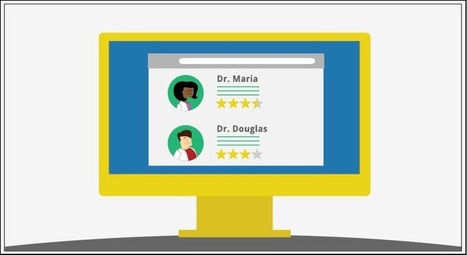
With the expansion of rich information found on social media and review websites, the modern patient is empowered like never before. Researching physicians is as simple as browsing for a car or laptop: search engines and rating websites provide current or former patients a platform for sharing their experiences. Reputation management is a global process that begins and ends with networking sites like Google+. Social media is changing the healthcare game into something much more interactive. That is an exciting concept for professionals looking to amp up their referral systems. Why Online Reputation Matters in Healthcare People are increasingly referring to mobile devices to perform research online. A study by the Pew Research Center suggests that one in five people who use the internet to find a doctor rely on physician ratings. The flip side of an internet presence is the potential for damaging feedback – that is the basis of reputation management. Any brand or physician should habitually search its name on Google to look for negative reviews or comments. In the medical world, this is how doctors keep up on what their patients are saying about them and what future patients see. How does Social Media Fit into Healthcare? A social media page on Google+ adds a way for doctors to better connect with the public. It’s an upbeat way to manage professional reputation and improve patient care. Patients see the bond with their physician as a very personal one. They appreciate the opportunity to vocalize their satisfaction or frustration with a specific physician or experience. Social media creates an e-patient scenario that allows the physician to promote healthy living, generate trust, and market the healthcare brand. For a doctor, time is in short supply, but fostering a positive reputation online allows you to stay ahead of the curve. Building a Social Media Voice The process of developing a “voice” will differ among physicians and service lines. A doctor with a full practice might spend only one hour a week on Google managing his online reputation, while a new cosmetic surgeon will need to commit much more time to creating a brand. Other doctors use their online voice to educate and promote wellness as a way to further their patient’s quality of care. Most businesses, medical or otherwise, realize the power of a professional website. Social media is just another tool to amplify that voice. Via Plus91
Scoop.it!

A barrier to dissemination of research is that it depends on the end-user searching for or 'pulling' relevant knowledge from the literature base. Social media instead 'pushes' relevant knowledge straight to the end-user, via blogs and sites such as Facebook and Twitter. That social media is very effective at improving dissemination seems well accepted, but, remarkably, there is no evidence to support this claim. We aimed to quantify the impact of social media release on views and downloads of articles in the clinical pain sciences. Sixteen PLOS ONE articles were blogged and released via Facebook, Twitter, LinkedIn and ResearchBlogging.org on one of two randomly selected dates. The other date served as a control. The primary outcomes were the rate of HTML views and PDF downloads of the article, over a seven-day period. The critical result was an increase in both outcome variables in the week after the blog post and social media release. The mean ± SD rate of HTML views in the week after the social media release was 18±18 per day, whereas the rate during the other three weeks was no more than 6±3 per day. The mean ± SD rate of PDF downloads in the week after the social media release was 4±4 per day, whereas the rate during the other three weeks was less than 1±1 per day (p<0.05 for all comparisons). However, none of the recognized measures of social media reach, engagement or virality related to either outcome variable, nor to citation count one year later (p>0.3 for all). We conclude that social media release of a research article in the clinical pain sciences increases the number of people who view or download that article, but conventional social media metrics are unrelated to the effect. Via nrip
Scoop.it!

In the age of social media, doctors, patients, and ethicists face new dilemmas over organ transplants. Many of us have seen the pictures of Sarah Murnaghan, a little girl with brown hair named sitting in a hospital bed with a machine strapped to her nose, forcing oxygen in and out of her lungs. She needed a lung transplant, but medical rules typically prevent children under twelve from receiving adult lungs—and pediatric lungs are rarely available. In May, 2013, Murnaghan’s family started a petition on the Web site change.org, asking the organ-allocation rule makers to reverse their policy. It led to a lawsuit in which a federal judge ruled in early June that Murnaghan should be eligible to join the adult transplant list. She received a pair of adult lungs a week later. The lungs failed, and she received another pair three days after that. Today, she’s alive and recovering. Patient stories have always driven change in medicine. But in the realm of organ-transplant allocation and social media, which suddenly makes it possible to find donors, promote exceptions to organ-allocation rules, and even force a hospital to reverse its medical judgment, the implications have some bioethicists and physicians squirming. How do we keep organ distribution from morphing into a popularity contest, where those with the most sympathetic stories win, or are allowed to change the rules? “The obvious potential problem is that someone who’s smart or connected can make the system work for them in ways that other people without those advantages can’t,” Dan O’Connor, a Johns Hopkins researcher who studies the ethics of the exchange of medical information in online social networks, told me. “Whenever you’re using platforms like Facebook, the question is, what kind of person, what demographic profile has the time and energy and communication skills to make this work?” Via nrip
|



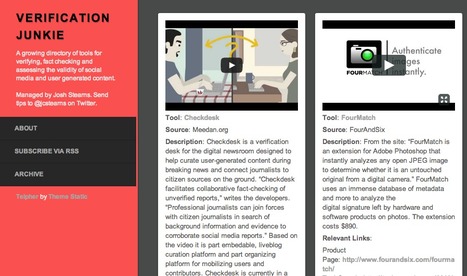







Makes sense to me.
Curating - how to manage it. And curation experts already exist - they're called Librarians!