

Maybe the way the Internet of Things really grows isn't by letting you control your thermostat with your smartphone; it's by helping businesses profit.


|
Scooped by
Judy Curtis / SIPR
onto Smart Cities & The Internet of Things (IoT) February 26, 2016 10:06 AM
|
 Scoop.it!
Maybe the way the Internet of Things really grows isn't by letting you control your thermostat with your smartphone; it's by helping businesses profit.
This week, Tom Siebel’s latest company, C3 Energy, changed its name to C3 IoT and branched out from its focus on energy utilities to commercial enterprises such as manufacturing, mining, transportation and health care.
His firm is not the only one betting the farm on the IoT, or Industrial IoT (IIot).Research firm IDC predicts that Internet of Things-related spending will reach $1.7 trillion by 2020, much of it coming from the commercial sector. There are already dozens of companies hoping to soak up some of that money by offering cloud platforms for the Internet of Things, including IBM, Microsoft, Amazon and even General Electric.
Siebel hopes that C3 will have an edge over its competition because it’s already proven itself as ready for large-scale industrial use through its work in the energy sector.

 Your new post is loading...
 Your new post is loading...
Your new post is loading...
Scoop.it!

The new connectivity revolution has already started. Libelium publishes a compilation of 50 cutting edge Internet of Things applications grouped by vertical markets.

Paco Prieto's curator insight,
April 5, 2013 9:15 AM
Muy interesante. !! Fantásticas aplicaciones en el mundo del agua !! @juanpaespi 
roberto gilli's curator insight,
September 25, 2013 4:41 AM
Great list of applications of sensors grids.
Scoop.it!
The education and skills programme aims to bring a broader range of people into the conversation about new technologies through interactive workshops, hands-on activities and online resources.
Judy Curtis / SIPR's insight:
Dublin has a range of cutting-edge technology projects underway, but the one that Smart City Program Manager Jamie Cudden is particularly excited about is the Academy of the Near Future. The education and skills programme, a collaboration between CONNECT at Trinity College Dublin, Dublin City Council and the Smart Docklands testbed, aims to bring a broader range of people into the conversation about new technologies through interactive workshops, hands-on activities and online resources. “There’s all this technology and it’s moving so fast, but we need to educate people in the public sector and citizens about the potential of these technologies, what the risks are and how we can make the most of new tools,” Cudden says. While there are a growing number of academic courses about smart cities and data, Cudden saw a gap for practical sessions based on real-life implementations and experience. Through the Academy, local authority staff and secondary school students get the chance to see sensors in action, understand how they work and prototype their own solutions.
Scoop.it!

By 2050, there will be 2.5 billion more people living in cities than today. How is rapid urbanization set to impact investors and the global economy?
Judy Curtis / SIPR's insight:
A Global ShiftOver the coming decades, the large-scale role of cities will become even more amplified as rapid urbanization spills over to the rest of the world.Billions of people — especially in Asia and Africa — will be seeking opportunities in cities over the coming decades. Between 2018 and 2050, the global urban population will increase from 55% to 68%, adding another 2.5 billion people to cities around the world. Rank Country Urban population growth (2018-2050) #1 India 416 million people #2 China 255 million people #3 Nigeria 189 million people
Nearly 90% of this growth will be in Africa and Asia, with India alone adding 416 million new people to its cities — more than any other country in the world over this timeframe.
Scoop.it!

Many modern urban areas have been built around cars, with huge amounts of space set aside for roads and parking. But what happens when you take them out of the equation?
Judy Curtis / SIPR's insight:
Not all cities can be as car-free as Venice - but all city planners can bring pedestrians and cyclists to the forefront #smartcities #IoT
Scoop.it!

The Internet of Things continues its brisk and steady rise, and many trends that started in previous years will continue or even accelerate for the foreseeable future. However, a recent McKinsey study, "What separates leaders from laggards in the Internet of Things," found that only around one sixth of the world's largest companies adopting IoT are seeing any kind of significant return on investment.
Judy Curtis / SIPR's insight:
New trends and business models for the IoT are emerging, and the way we plan, envision, and discuss the IoT will likely change in 2019. More Human-IoT Interaction Sensor data is a core component of IoT technology, but most sensors in use today monitor machinery or tech infrastructure. Employees can be expected to interact more with IoT technology, according to a recent McKinsey study.
Scoop.it!
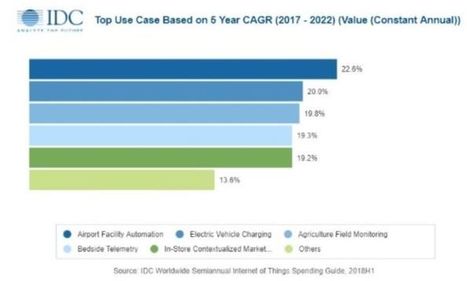
Les dépenses mondiales liées à l’Internet des objets devraient atteindre 745 milliards de dollars en 2019, en progression de 15,4% par rapport aux 646 milliards investis en 2018, selon IDC. Tiré par la demande dans les secteurs de la fabrication, du grand public, des transports et des réseaux d’énergie, le marché de l’IoT devrait connaître une croissance annuelle … Via Cluster #IoT - CITC
Scoop.it!

Officials in several countries are getting the message: Cities are about people, not cars.
Judy Curtis / SIPR's insight:
A walking city is a smart city, where you can leave the car out of the equation and lose the noise and pollution. It's possible, even in large capital cities. "...and all urban design should think first about the only transit equipment that comes factory-standard for the average human being — our feet."
Scoop.it!
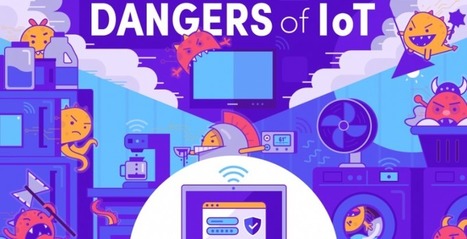
In September 2015, the FBI released an official warning to the public about the dangers of the Internet of Things (IoT) ㄧ Have our devices become any safer since?
Judy Curtis / SIPR's insight:
In September 2015, the FBI released an official warning to the public about the dangers of the Internet of Things (IoT) ㄧ Have our devices become any safer since?
Scoop.it!

From
www

At Sensors Expo in San Jose, two panels of experts reflected on the current state of IoT adoption and provided advice on how to overcome common challenges.
Judy Curtis / SIPR's insight:
One challenge is that many companies deploying IoT PoCs give short shrift to security until they are focused on rolling it out to the production scale. Nevertheless, interest in IoT cybersecurity is building given a growing number of hacks with an IoT component. But addressing the problem isn’t easy. Like IoT itself, there are few one-size-fits-all solutions when it comes to IoT security.

Vezta & Co.'s curator insight,
September 30, 2018 4:00 PM
One challenge is that many companies deploying IoT PoCs give short shrift to security until they are focused on rolling it out to the production scale. Nevertheless, interest in IoT cybersecurity is building given a growing number of hacks with an IoT component. But addressing the problem isn’t easy. Like IoT itself, there are few one-size-fits-all solutions when it comes to IoT security.
Scoop.it!

A top Spanish vineyard is using the Internet of Things to improve grape cultivation and save money.
Judy Curtis / SIPR's insight:
The project aims to obtain predictive behavior patterns in the vineyard relating to grape quality, production, biological cycles, potential pests, and plant diseases. The IoT technology has been provided by Libelium, a Zaragoza company created by Alicia Asín and David Gascón in 2006, which sells a hardware and software platform to "connect any sensor to any cloud using any wireless technology", including industrial protocols such as CAN bus.

Richard Platt's curator insight,
May 4, 2018 5:46 AM
"It was a necessity," says the vineyard's agronomist, Julio Prieto. "I make a number of in-situ measurements. Coupling them with data provided by stations and soil sensors can help us obtain crucial information to make early decisions for greater efficiency and lower production costs," he tells ZDNet. Working with remOT Technologies, a spin-off of the University of Zaragoza in northeast Spain specializing in agricultural measurement, Pago Aylés has embarked on an IoT project to "model the future", as Prieto says. The project aims to obtain predictive behavior patterns in the vineyard relating to grape quality, production, biological cycles, potential pests, and plant diseases. The IoT technology has been provided by Libelium, a Zaragoza company created by Alicia Asín and David Gascón in 2006, which sells a hardware and software platform to "connect any sensor to any cloud using any wireless technology", including industrial protocols such as CAN bus.
Scoop.it!
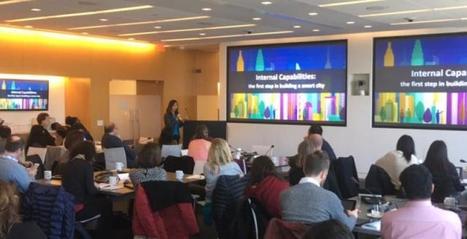
Karen Tay, Singapore's Smart Nation director, was recently in Washington D.C. to run a workshop for the World Bank on how to develop “smart cities." She says: “'Smart cities' is honestly a buzzword... when I get invited to speak, most people expect me to start with cool tech like AR, VR, AI, modeling and simulation, blockchain and the like. The fact is that cities are complex ecosystems with very established ways of operating. If we want to disrupt them with technology in a way that benefits the masses (i.e. not just the upper middle class), we need dedicated work from the ground-up, coupled with political commitment." Karen Tay's five tips for smart city efforts come from conversations and projects with smart city leaders around the world.
Judy Curtis / SIPR's insight:
Building a smart city is ultimately about creating momentum throughout society to deploy tech for public good.
Scoop.it!
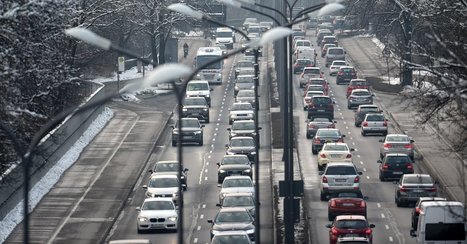
The country’s highest administrative court ruled that diesel vehicles may be banned from city streets as part of efforts to improve air quality.
Judy Curtis / SIPR's insight:
The case before the Federal Administrative Court has dominated public discussion in Germany because of its potential to deal a severe blow to the country’s auto industry three years after it was found to have lied about the pollution levels emitted by its cherished diesel technology.
Deutsche Umwelthilfe, an environmental and consumer rights organization, set the lawsuits in motion after German automakers bet their futures on diesel technology they billed as environmentally friendly, even while rigging software in their cars to pass stringent emissions tests. Frustrated with the lack of progress in improving air quality in about 70 of the country’s most polluted cities, Deutsche Umwelthilfe brought lawsuits against the local governments, demanding that they uphold the air quality standards set by the European Union and ban certain vehicles, mostly ones that use diesel. “The days of flooding the inner cities with poisonous diesel emissions are over,” said Jürgen Resch, managing director of Deutsche Umwelthilfe. “These vehicles have no place in our cities anymore.”
Scoop.it!

"It may be time for the U.S. government to step in to coordinate security standards across all the players that participate in creating the internet of things, Frost & Sullivan says."
Judy Curtis / SIPR's insight:
It may be time for the U.S. government to step in to coordinate security standards across all the players that participate in creating the internet of things, Frost & Sullivan says...
|
Scoop.it!
Judy Curtis / SIPR's insight:
Gloria Lomana interviews Alicia Asin, Libelium CEO in a very interesting place-- the Zaragoza aquarium, where Libelium IoT technology monitors water quality, temperature and a host of other factors in Europe's largest aquarium. Inspiration, technology, work-life balance, Smart Cities and the concept of "datacratization" are covered here. Listen and learn!
Scoop.it!

Libelium is calling for cities with severe levels of air pollution and extreme meteorological conditions to take part in a test of its new air quality measurement technology.
Judy Curtis / SIPR's insight:
Here's a solution to help urban air management: IoT technology manufacturer Libelium is offering to install for free its Air Quality Station air pollution analysis metrology devices in cities that meet its set of criteria.
The new Air Quality Station is based on machine learning algorithms and statistical data analysis. The device learns and improves its accuracy as it acquires data that is compared and analysed with those recorded by official reference stations.
“With this new platform, Libelium helps smart cities to add capillarity to their urban air measurement network,” said Alicia Asin, CEO of Libelium.
“Many cities have a single device with high metrological capacity that costs hundreds of thousands of euros so they can only measure pollution levels in a certain location. With IoT technology, more measurement points can be added with quality and precision devices that reduce the required investment to a tenth of the cost.”
Libelium reports it has tested the new technology at five sites with different weather conditions and different pollution levels to feed the artificial intelligence (AI) of the device and provide continuous improvement in the accuracy of the device.
Scoop.it!
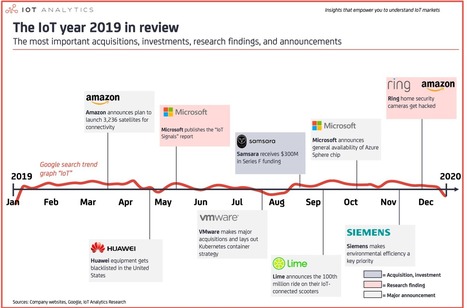
Most controversial IoT story: Huawei 5G equipment ban
Judy Curtis / SIPR's insight:
Here's a look at what made headlines in the IoT in 2019; the most important acquisitions, investments, research findings, and announcements.
Scoop.it!
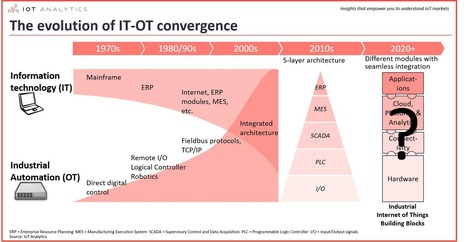
5 Key Industrial Connectivity trends on emerging architectures, components and protocols being deployed to create ind. data collectio
Scoop.it!

While 2018 was filled with a number of successful smart city deployments, it also revealed significant challenges that will only intensify in years to come. The most pressing challenge to be addressed throughout 2019 is earning the public’s trust in smart city projects. Towards the end of 2018, we saw major data privacy concerns emerge from citizens. From these concerns a heated, but healthy discourse between citizens, local governments, and private sector companies rose to mainstream media prominence. Citizens’ expectations of privacy have begun to challenge the murky data privacy policies described by many in the private sector. 2019 will be the year of the smart city for the citizen.
Scoop.it!
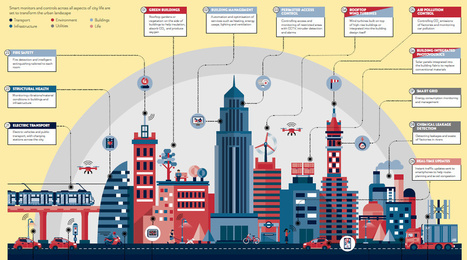
The city will remain the centerpiece of economic growth in the 21st century. Here's how we're using smart city technology to optimize them even further.
Judy Curtis / SIPR's insight:
Smart city solutions will fall into six broad categories, transforming the urban landscape: 1. Infrastructure 2. Buildings 3. Utilities 4. Transport 5. Environment 6. Life

Guy Lagaeysse's curator insight,
January 18, 2019 9:14 AM
La population des villes est en constante augmentation (55 % de la population mondiale vit dans des villes).
Les villes sont amenées à devenir un moteur encore plus important de l'économie mondiale et de la richesse; Elles doivent se transformer pour améliorer la qualité, la performance et l'interactivité des ses services, réduire les coûts et la consommation de ressources et accroître les contacts entre les citoyens et le gouvernement.
Scoop.it!

"Connecting objects and devices through the Internet of Things (IoT) can help solve the greatest challenges of our time, from cutting emissions to feeding a growing population," believes Alicia Asín, CEO and co-founder of Spanish technology company Libelium which makes IoT hardware. Asín was the second-place winner of the 2018 EU Prize for Women Innovators.
Judy Curtis / SIPR's insight:
How do you think IoT is changing cities and society? ‘The IoT is creating a data culture by introducing the concept of measure, think, and then make a decision. If you’re the mayor of a city and decide to implement a congestion charge or restrict access to diesel vehicles but you cannot demonstrate the levels of pollution, citizens will think the decision came down to political or ideological reasons. But if you can back up the decision with data, then that’s working towards more transparency.’ - Alicia Asin, CEO & co-founder, Libelium
Scoop.it!
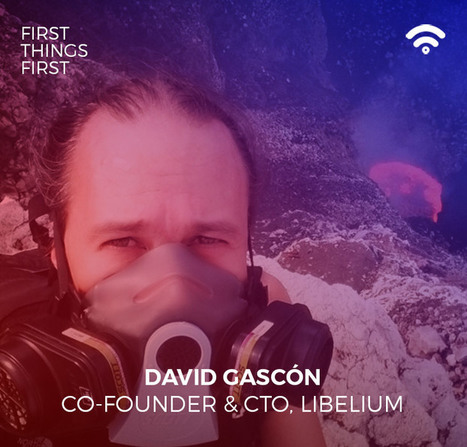
Libelium Works with Other Organizations to Develop a Life-Saving IoT Application
Judy Curtis / SIPR's insight:
David Gascón of Libelium brings us one of the most exciting IoT stories out there about collecting data from inside a volcano. He discusses the process of designing and testing an application built for one of earth’s most volatile environments and offers his advice on choosing the right sensors for your IoT application.
Scoop.it!

The city announced agreements with Verizon, AT&T and Mobilite that are intended to expand broadband infrastructure deployment in San Jose.
Judy Curtis / SIPR's insight:
San Jose, in the heart of Silicon Valley, is upgrading its broadband infrastructure and laying the groundwork for the future deployment of 5G service. According to officials, the San Jose agreements with the three carriers represent the largest small cell deployment of any U.S. city. In all, about 4,000 city-owned light polls will get the cells.
Scoop.it!

Your boss wants to start an IoT project—what next?
Judy Curtis / SIPR's insight:
So how does a management team decide what it wants from the IoT? For Stacey Higginbotham, writing in IEEE Spectrum, there are two paths here. The first is to start small with a project that can offer a short-term return on investment (ROI). In a factory, this could mean installing cameras and sensors on a manufacturing line to replace human spot-checkers. The second path is a bit more visionary: Build a platform or product that can change your entire business model. For example, in 2015 Emerson Climate Technologies launched a new connected product in its HVAC business. With US $100 worth of sensors per home, the HVAC installer and Emerson could guarantee a period of time that a customer’s heating or cooling system would operate before needing repairs.
Vezta & Co.'s curator insight,
August 30, 2018 10:46 AM
So how does a management team decide what it wants from the IoT? For Stacey Higginbotham, writing in IEEE Spectrum, there are two paths here. The first is to start small with a project that can offer a short-term return on investment (ROI). In a factory, this could mean installing cameras and sensors on a manufacturing line to replace human spot-checkers. The second path is a bit more visionary: Build a platform or product that can change your entire business model. For example, in 2015 Emerson Climate Technologies launched a new connected product in its HVAC business. With US $100 worth of sensors per home, the HVAC installer and Emerson could guarantee a period of time that a customer’s heating or cooling system would operate before needing repairs.
Scoop.it!

Judy Curtis / SIPR's insight:
Il n'était pas trop tôt...
Scoop.it!

New research advances techniques for finding and exploiting known vulnerabilities in IoT devices automatically.
Judy Curtis / SIPR's insight:
The threat of automated IoT vulnerability finders is a genuine concern. "Absolutely it is coming," says Anders Fogh, a malware analyst for the German security firm GData. "We are waiting for the vendors to realize that security is relevant. They need a dose of bitter medicine." Other researchers are beginning to work on large scale IoT firmware analysis and automatic n-day mining projects as well, acknowledging a future in which attackers can fully exploit IoT vulnerability.
Scoop.it!

Economics don't allow all internet of things devices to have baked-in security, so it has to be addressed elsewhere.
|








This week, Tom Siebel’s latest company, C3 Energy, changed its name to C3 IoT and branched out from its focus on energy utilities to commercial enterprises such as manufacturing, mining, transportation and health care.
His firm is not the only one betting the farm on the IoT, or Industrial IoT (IIot).Research firm IDC predicts that Internet of Things-related spending will reach $1.7 trillion by 2020, much of it coming from the commercial sector. There are already dozens of companies hoping to soak up some of that money by offering cloud platforms for the Internet of Things, including IBM, Microsoft, Amazon and even General Electric.
Siebel hopes that C3 will have an edge over its competition because it’s already proven itself as ready for large-scale industrial use through its work in the energy sector.