 Your new post is loading...

|
Scooped by
Gust MEES
February 12, 2015 6:48 AM
|
|
|
Scooped by
Gust MEES
February 12, 2015 6:04 AM
|
|
|
Scooped by
Gust MEES
February 11, 2015 2:30 PM
|
Drei Studenten aus Saarbrücken haben etwa 40.000 ungesicherte Unternehmensdatenbanken mit Millionen von Daten im Internet entdeckt. Die Datenbanken arbeiten ohne jegliche Sicherheitsmechanismen und sollen Namen, Adressen, Emails und Kreditkartennummern beinhalten.
|
|
Scooped by
Gust MEES
February 9, 2015 3:57 AM
|
While many cybercriminals are out to simply steal our information, satisfied with creating havoc for individuals or businesses, the majority do it for the money.
The underground economy in which hackers operate is laden with forums, chat rooms, websites and other communities designed to facilitate, streamline, and industrialize cybercrime. Taking a look at what gets sold and traded in these communities can give us a pretty good understanding of what’s most valuable to hackers — and what we need to focus on protecting.
Learn more:
- http://www.scoop.it/t/securite-pc-et-internet/?tag=cybercrime
- http://www.scoop.it/t/securite-pc-et-internet/?tag=Black+Market
|
|
Scooped by
Gust MEES
February 7, 2015 11:50 AM
|
|
|
Scooped by
Gust MEES
February 7, 2015 6:41 AM
|
A malware program designed for Linux systems, including embedded devices with ARM architecture, uses a sophisticated kernel rootkit that’s custom built for each infection.
The malware, known as XOR.DDoS, was first spotted in September by security research outfit Malware Must Die. However, it has since evolved and new versions were seen in the wild as recently as Jan. 20, according to a new report Thursday from security firm FireEye, which analyzed the threat in detail.
XOR.DDoS is installed on targeted systems via SSH (Secure Shell) brute-force attacks launched primarily from Internet Protocol (IP) addresses registered to a Hong Kong-based company called Hee Thai Limited.
The attacks attempt to guess the password for the root account by using different dictionary-based techniques and password lists from past data breaches. FireEye observed well over 20,000 SSH login attempts per targeted server within a 24-hour period and more than 1 million per server between mid-November and end of January.
Learn more:
- http://www.scoop.it/t/securite-pc-et-internet/?tag=Linux
|
|
Scooped by
Gust MEES
February 7, 2015 6:05 AM
|
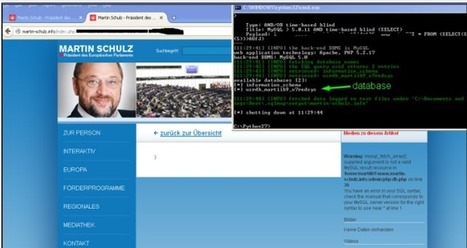
The security portal secnews.gr revealed that Anonymous has taken over the website of the German politician Martin Schulz and has stolen sensitive data.
|
|
Scooped by
Gust MEES
February 5, 2015 8:33 AM
|
|
|
Scooped by
Gust MEES
February 5, 2015 6:52 AM
|
|
|
Rescooped by
Gust MEES
from Cybercrime and Cybersecurity
February 3, 2015 8:47 AM
|
|
|
Scooped by
Gust MEES
February 3, 2015 8:21 AM
|
About.com has a huge security problem, but it's likely worse for the over 98 million monthly visitors to the About Group's various topic-specific subdomains.
A security researcher disclosed Monday that "at least 99.88%" of all topic links and all domains related to About.com are vulnerable to open XSS (Cross Site Scripting) and Iframe Injection (Cross Frame Scripting, XFS) attacks.
According to the researcher's findings and proof-of-concept results, all subdomains of About.com are affected.
Learn more:
- http://www.scoop.it/t/securite-pc-et-internet/?tag=iFrame-Injection
- http://www.scoop.it/t/securite-pc-et-internet/?tag=XSS
|
|
Scooped by
Gust MEES
February 3, 2015 6:12 AM
|
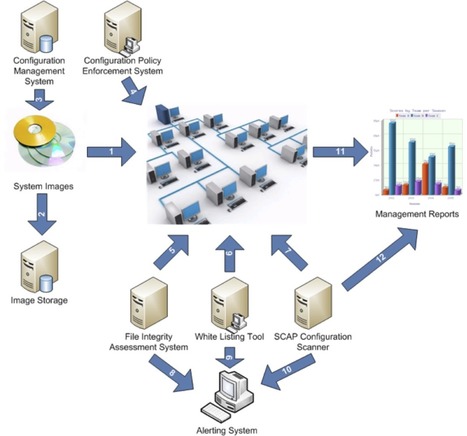
Establish, implement, and actively manage (track, report on, correct) the security configuration of laptops, servers, and workstations using a rigorous configuration management and change control process in order to prevent attackers from exploiting vulnerable services and settings.
|
|
Scooped by
Gust MEES
February 3, 2015 5:52 AM
|
Anlässlich der vom 16. bis 20. März 2015 stattfindenden IT-Messe Cebit stellt Kaspersky Lab zwei Security-Ratgeber der Dummy-Serie als kostenlosen PDF-Download bereit.
|
|
|
Scooped by
Gust MEES
February 12, 2015 6:08 AM
|
Une étude menée aux Etats-Unis par la division sécurité d’IBM révèle que 60% des applications mobiles de rencontres les plus populaires sont potentiellement vulnérables à différentes cyber-attaques, ce qui fait courir un risque aux données personnelles des utilisateurs et aux données sensibles de l’entreprise.
L’étude IBM révèle que nombre de ces applications de rencontres permettent un accès à des fonctionnalités supplémentaires sur les appareils mobiles (tels que l’appareil photo, le microphone, le stockage, la localisation GPS et les informations de facturation du portefeuille mobile) qui, associées aux vulnérabilités, peuvent être exploitées par les pirates. IBM a également révélé que près de 50% des entreprises comptent au moins une application de rencontres connue, installée par un employé sur son appareil mobile qu’il utilise pour accéder à des informations confidentielles de l’entreprise.
|
|
Scooped by
Gust MEES
February 11, 2015 3:52 PM
|
|
|
Scooped by
Gust MEES
February 11, 2015 11:22 AM
|
Unsicheres Sicherheits-Tool: Das BürgerCERT des Bundesamtes für Sicherheit in der Informationstechnik (BSI) warnt aktuell vor einer Sicherheitslücke in dem Virenscanner von AVG. Der Fehler soll den Systemzugriff auf Windows ohne Anmeldung aus lokalen Netzen erlauben. Betroffen sind die Software-Versionen AVG Internet Security 2013 bis einschließlich 2013.3495 sowie AVG Internet Security 2015 bis einschließlich 2015.5315 unter Windows.
|
|
Scooped by
Gust MEES
February 9, 2015 3:37 AM
|
Security researchers with Russian anti-virus company Doctor Web have examined a complex, multi-purpose backdoor for Linux. This malicious program can execute various commands issued by intruders such as to mount DDoS attacks and to perform a wide range of other malicious tasks.
Learn more:
- http://www.scoop.it/t/securite-pc-et-internet/?tag=Linux
|
|
Scooped by
Gust MEES
February 7, 2015 7:20 AM
|
The mass surveillance of the Internet conducted by the Government Communications Headquarters (GCHQ), a British intelligence and security organization, was unlawful, according to a ruling by the Investigatory Powers Tribunal (IPT), a secretive court that was created to monitor Britain’s intelligence agencies.
According to the IPT ruling, GCHQ’s access to information, intercepted by the U.S. National Security Agency (NSA), violated Article 8 of the European Convention on Human Rights, which protects the right to a private and family life. In addition, the GCHQ spying also breached the rights to a fair trial, The Independent reported, adding that the latest court ruling could eventually allow people to ask GCHQ to delete any information.
Learn more:
- https://gustmees.wordpress.com/2013/12/21/privacy-in-the-digital-world-shouldnt-we-talk-about-it/
|
|
Scooped by
Gust MEES
February 7, 2015 6:11 AM
|
|
|
Scooped by
Gust MEES
February 6, 2015 1:56 PM
|
|
|
Scooped by
Gust MEES
February 5, 2015 7:09 AM
|
|
|
Scooped by
Gust MEES
February 4, 2015 8:40 AM
|
|
|
Rescooped by
Gust MEES
from 21st Century Learning and Teaching
February 3, 2015 8:28 AM
|
|
|
Scooped by
Gust MEES
February 3, 2015 6:22 AM
|
Die ENISA hat einen Meta-Rahmen sowie ein Online-Tool veröffentlicht. Beides soll Firmen helfen, das Thema Security, bei der Auswahl eines Cloud-Service angemessen zu berücksichtigen. Das CCSM genannte Framework formuliert Mindestanforderungen an Cloud-Dienste. Daran müssen sich nun alle Cloud-Zertifizierer in Europa messen.
Das Cloud Certification Schemes Metaframework, kurz CCSM, von ENISA (European Union Ageny for Network and Information Security) soll europaweit Mindeststandards für Zertifizierungsprogramme für Cloud-Angebote festschreiben. Neben dem Framework startet ENISA auch ein Online-Tool, das sich an Anwenderunternehmen richtet und die Auswahl eines Cloud-Services erleichtern soll.
In dem Framework sind Sicherheitsanforderungen zusammengefasst, die für Zertifizierungen im öffentlichen Sektor der EU-Mitgliedsländer erforderlich sind. Die Anforderungen werden von den zahlreichen Anbietern von Zertifikaten bereits geprüft. In Deutschland ist das die Cloud-Gruppe des Branchenverbands eco.
|
|
Scooped by
Gust MEES
February 3, 2015 6:01 AM
|
Der Internet Explorer 11 unter Windows 7 und 8.1 hat eine Sicherheitslücke die Cross-Site Scripting erlaubt. Dies soll unter anderem ermöglichen, die Sicherheitsfunktionen des Browsers zu umgehen.
Im Internet Explorer gibt es eine größere ungepatchte Schwachstelle, die Angreifern erlaubt, beliebigen Schadcode aus einer (nicht vertrauenswürdigen) externen Domäne auf einer Webseite einer anderen (vertrauenswürdigen) Domäne auszuführen. Betroffen sind mindestens Windows 7 und 8.1 mit dem Internet Explorer 11.
|





























Securing the Internet of Things | CyberSecurity | Privacy | pdf
Learn more:
- http://www.scoop.it/t/securite-pc-et-internet/?tag=smart-TV
- http://www.scoop.it/t/21st-century-learning-and-teaching/?tag=Internet+of+Things
- http://www.scoop.it/t/securite-pc-et-internet/?tag=Internet+of+things
- http://globaleducationandsocialmedia.wordpress.com/2014/01/21/why-is-it-a-must-to-have-basics-knowledge-of-cyber-security-in-a-connected-technology-world/