




A Trojan horse has been spammed out across the net, posing as zipped-up bikini images inside a screensaver.
Seriously, think for one minute before opening emails like this or face the consequenc...

 Your new post is loading...
 Scoop.it! A Trojan horse has been spammed out across the net, posing as zipped-up bikini images inside a screensaver. 
No comment yet.
Sign up to comment
Scoop.it!
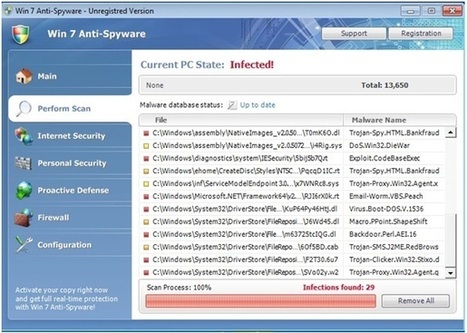
Compromised websites have been an attractive target for cyber-criminals. These websites distribute different malwares designed to steal valuable information from the victim’s machine. McAfee has recently encountered a compromised website which distributes malicious .jar file and Fake AV.
Via Gust MEES

Gust MEES's curator insight,
December 24, 2012 2:55 PM
As with e-Learning, m-Learning and BYOD (Bring Your Own Device) every one is visiting websites, so this should be of interest to anyone! Especially Education, Teachers, Educators, Instructors, Professors SHOULD be aware of this and accept the fact that Learning and Teaching basics of Cyber-Security in 21st Century is a MUST!
===> Be AWARE of the MALWARE! <=== Check also my other FREE courses here: -http://gustmees.wordpress.com/category/get-smart-with-5-minutes-tutorials/
Scoop.it!

Graham Cluley jumps in his TARDIS, and takes us on a trip through time to see Christmas-related malware from 1987 to present.
Gust MEES's insight:
===> Be AWARE of the MALWARE! <===
Check also my other FREE courses here:
- http://gustmees.wordpress.com/category/get-smart-with-5-minutes-tutorials/
Scoop.it!
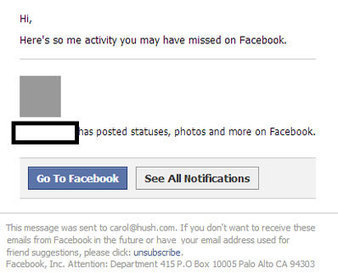
Due to the huge popularity of Facebook and its one billion active users, bogus emails impersonating the social network are constantly hitting users' inboxes.
Read more, a MUST: http://www.net-security.org/malware_news.php?id=2333
Scoop.it!

When we write Naked Security articles about Mac malware, we often end up creating a bit of a stir.
Read more, a MUST:
Scoop.it!

Recently Trusteer discovered the first Tatanga-based man in the mobile (MITMO) attack as well as new SPITMO configurations which are targeting Android mobile banking users in Germany, the Netherlands, Portugal and Spain.
With nearly 60 percent of the market and a reputation for weak app security, it’s no surprise that Android has become the preferred target for financial malware.
Read more: http://www.net-security.org/malware_news.php?id=2183
Scoop.it!

This week saw Flame hit the headlines. The most complex piece of malware ever discovered, it appears to have been designed as an espionage tool deployed against Iran and other countries ...
Read more:
Scoop.it!
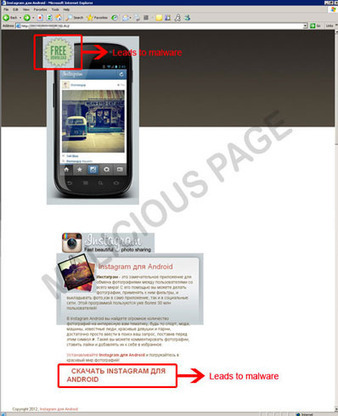
Instagram, the popular free photo sharing app for iOS devices, is now available for download for Android users on Google Play and Instagram's website.
Unfortunately, a rogue malicious version of it is also being pushed onto Russian Android users, offered from a webpage that mimics the legitimate one:
read more...
Scoop.it!

Anewer variant of LaNa malware can gain root access to Android devices by leveraging the GingerBreak exploit. Doing so removes the need for user interaction and opens the victim pool to anyone not patched against the vulnerability.
Scoop.it!
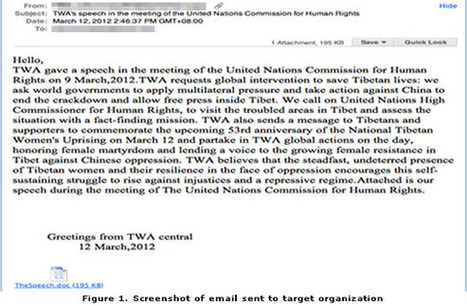
According to a newly published data, Mac OS X users are just as susceptible to targeted attacks, as Windows users are!!!
===> Nobody is perfect!!! <===
Scoop.it!

In late January 2012 and earlier this month, hundreds and perhaps thousands of ===> WordPress-based domains <===were compromised in a series of automated attacks. Though there was no official number given, the reason for the compromises has made itself known. They are being used as the final stage in a spam run, likely from the Cutwail botnet, to spread malware.
Exploit kits are looking to serve the Cridex Trojan, which harvests information such as cookies, FTP credentials and email accounts.
Scoop.it!

Security researchers from Sophos, have intercepted a currently circulating Mac OS X malware variant of the OSX/Imuler trojan horse.
Upon execution the malware will delete the original infection file and only leave an image file of Irina Shayk. It will also open a backdoor on the infected host, transferring private information from the infected host to a remote Web server.
===> End and corporate users are advised to turn on “Show all filename extensions” option in Finder in order to differentiate between different file types and avoid interacting with malicious applications. <===
Scoop.it!

Hacker und andere Cyber-Kriminelle lassen sich immer neue Methoden einfallen, um Schaden anzurichten. Wir verraten, welche Gefahren im Laufe des Jahres 2012 noch auf Sie lauern.
|
Scoop.it!

A data stealer designed to collect users personally identifiable information from point of sale systems has been detected.
Scoop.it!
Iran, the cyber shooting range, new malware detected
The malware wipes disk partitions and user profile directories avoiding ordinary anti-virus software detection, Maher advisory provided the list of components of the malware:
Scoop.it!

2012 saw some of the biggest malware discoveries in the history of information security. AlienVault has crafted this unique slideshow that proves modern malware never dies, it just morphs and reappears.
Scoop.it!
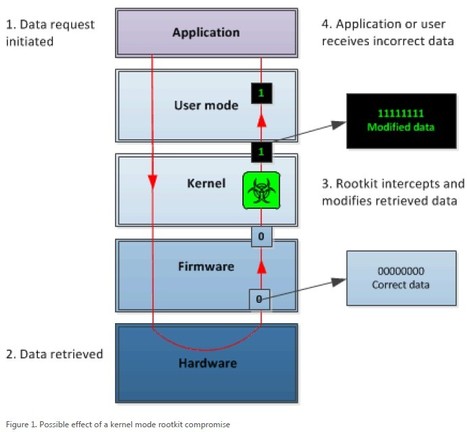
Of the many weapons and tricks in an attacker’s arsenal, none is more dangerous or insidious than the ability to hide and continuously compromise a system from within.
This is the role of a rootkit. Malware uses rootkits, or rootkit functionality, in order to hide their presence on an affected computer and thus impede their removal.
===> Once compromised by a rootkit, any information returned by an affected system can no longer be trusted and must be regarded as suspect (which is exactly how they hide themselves and their components from you - by modifying requests for information that might give them away). <===
===> Know your enemy and protect yourself by learning about these threats. <===
You can download the paper here [PDF]:
Read more:
Scoop.it!

Report shows U.S.has eighth-highest PC malware rate among developed countries, examines new 'ransomware' that hijacks Web cams...
Thirty percent of computers in the United States are infected with some form of malware, putting America among the top 10 most malware-infected countries in the OECD (Organization for Economic Cooperation and Development). If it's any consolation, South Korea has the dubious honor of topping that list with a malware infection rate of over 57 percent.
Gust MEES: it's good being on the Top worlwide, but NOT on this list! How could that get resolved to get better results? Education can play a major role here, check my free courses and learn How-To get protected by easy to learn steps here:
- http://gustmees.wordpress.com/2012/07/11/cyberhygiene-hygiene-for-ict-in-education-and-business/
- http://gustmees.wordpress.com/2012/07/07/bring-your-own-device-advantages-dangers-and-risks/
- http://gustmees.wordpress.com/2012/05/28/not-only-rights-but-also-responsibility/
- http://gustmees.wordpress.com/2012/05/03/update-your-third-party-applications/
- http://gustmees.wordpress.com/2012/05/27/visual-it-securityteachers-worksheet-part1/
- http://gustmeesen.wordpress.com/2012/03/16/beginners-it-security-guide/
Compare also with Europe to find out how they act for a better security, learn from others:
- Lowest Malware infections in EU: http://www.scoop.it/t/luxembourg-europe?tag=Lowest+Malware+Infections+in+EU
===> Don't have a good memory and being a "bad organizer"? Don't worry and check any Friday my specially created Hashtag on Twitter #FSCD where I remeber YOU what to take care about ;) Stay tuned and get valuable and necessary information... <===

Diego Cruz-Savinon's curator insight,
April 10, 2014 2:06 PM
When I read this article, I didn't think it was possible for 30 percent of U.S computers were infected by some form of Malware. This is just the thing that motivates more to work on computer security.
Scoop.it!

L’éditeur Trend Micro anticipe une importante croissance des malwares sur Android et avertit que la situation pourrait devenir pandémique d’ici à la fin de l’année.
L’éditeur japonais affirme que le nombre d’applications malicieuses sur plates-formes Android est passé de 10 000 à 20 000 en seulement un mois et que des centaines de milliers de périphériques ont été infectés par des applications que l’on peut trouver sur la plate-forme GooglePlay. L’éditeur indique que 17 applications contenant un malware ont été téléchargées à plus de 700 000 reprises avant d’être supprimées par Google. Durant les trois premiers mois de l’année, plus de 5000 applications destinées à infecter les téléphones Android ont été découvertes, soit une multiplication par quatre et les chiffres continuent à augmenter.
Pour le troisième trimestre, le nombre pourrait atteindre 38 000 malwares et … 130 000 au cours du 4ème trimestre, ce qui permet de qualifier la situation de pandémie.
$$$$$$$$$$$$$$$$$$$$$$$$$$$
En savoir plus :
Scoop.it!

One in every five Mac computers is harbouring some kind of malware, a new study from the experts at Sophos has revealed.
Read more...
Via Gust MEES
Scoop.it!

The investigation into the Duqu Trojan is into its sixth month, and March brought further progress as we were able to establish which language was used for its Framework code.
Read more...
Scoop.it!

In the face of new threats aimed at OS X, a security expert has warned that Mac users may be even more vulnerable than Windows users.
Because Windows users are more likely to be running up-to-date anti-virus programs, Graham Cluley of Sophos says that many Mac users are missing a "valuable safety net".
In the face of several new threats targeting Mac OS X that have been discovered in recent weeks, Mac users should make sure that they have some form of protection, Cluley said. However, keeping your computer safe from cybercriminals isn't just a case of having anti-virus programs installed - it's about making sensible choices as well.
As we have seen on the Windows platform, the majority of the attacks do not exploit any weakness in the operating system but instead take advantage of the bug in people's brains.
===> Mac users can be just as easily duped as their Windows cousins into making poor choices, and could end up infected as a result, Cluley told Macworld. <===
Use antivirus programs! Via Gust MEES
Scoop.it!

The Flashback Trojan's latest iterations have evolved to infect Macs in different ways, but there are methods to detect and remove them. Read this blog post by Topher Kessler on MacFixIt.
Scoop.it!

While Jeff Schmidt, the CEO of JAS Global Advisors, was surfing the Web on his new Android smartphone (his first Android phone) earlier this year, what appeared to be an ad popped up on his screen.
On a smartphone, drive-by downloads work differently, says Johnson, who is also a senior instructor with the SANS Technology Institute. "With an iPhone, I can't browse to a Website and have it install an app on my iPhone. The iPhone is not capable of doing that, which is good," he says. "The problem is that the drive-by download model has changed to take that into account."
So instead of dumping an app onto your smartphone's OS, the infected Website exploits a vulnerability in,
say, ===> the Safari browser and runs commands or packages within the phone's operating system to change the way it works, says Johnson. <===
Scoop.it!

These days, a Web app can be malware. Here’s what you need to know about this emerging threat, and what to watch for.
Tim Keanini, CTO of nCircle, says cyberattackers are talented, creative developers who are motivated to find innovative ways to part you from your money or information.
Typically, a malicious Web app is a form of Trojan horse: The app claims to be something else--and it may in fact run some legitimate utility or application--but once you click it, it runs malicious code in the background that may compromise your system or secretly download other malicious payloads from the Internet.
===> Don't assume that you're safe if you avoid Microsoft Windows. Web apps do frequently target specific vulnerabilities, and Windows is often a primary focus, but Web apps--both benign and malicious--are fundamentally platform-agnostic. <===
Gust MEES: check out also my #itsecurity #tutorials (FREE courses) here
- http://gustmeesen.wordpress.com/2012/03/16/beginners-it-security-guide/
- http://gustmeesen.wordpress.com/2012/02/13/why-ict-security-why-the-need-to-secure-a-computer/
- http://gustmeesen.wordpress.com/2012/01/05/pc-security-howto-secure-my-pc/
Via Gust MEES
|





===> Be AWARE of the MALWARE! <===