ICT Security-Sécurité PC et Internet
114.2K views | +0 today
ICT Security-Sécurité PC et Internet
ICT Security + Privacy + Piracy + Data Protection - Censorship - Des cours et infos gratuites sur la"Sécurité PC et Internet" pour usage non-commercial... (FR, EN+DE)...
Curated by Gust MEES
Your new post is loading...
Scooped by Gust MEES
May 29, 2015 3:39 PM
Scoop.it!

Deutsche Forscher finden 56 Millionen ungeschützt Datensätze in Cloud-Datenbanken | CyberSecurity | Apps

Deutsche Forscher finden 56 Millionen ungeschützt Datensätze in Cloud-Datenbanken | CyberSecurity | Apps | ICT Security-Sécurité PC et Internet | Scoop.it
Entdeckt haben sie Wissenschaftler der Technischen Universität Darmstadt und Experten des Fraunhofer-Institut für Sichere Informationstechnologie SIT. Die Daten landeten dort – etwa in Facebooks Parse und Amazons AWS - weil App-Entwickler Authentifizierungen für Cloud Services falsch verwenden. Betroffen sind E-Mail-Adressen, Passwörter, Gesundheitsdaten und andere persönliche Informationen von App-Nutzern.


Wissenschaftler der Technischen Universität Darmstadt und das Fraunhofer-Institut für Sichere Informationstechnologie SIT haben mehrere Cloud-Datenbanken untersucht und dabei rund 56 Millionen ungeschützte Datensätze gefunden. Dazu gehören neben E-Mail-Adressen auch Passwörter, Gesundheitsdaten und andere persönliche Informationen. Den Experten zufolge sind dadurch viele Nutzerkonten durch Identitätsdiebstahl und andere Internetverbrechen bedroht.


Gust MEES's insight:
Entdeckt haben sie Wissenschaftler der Technischen Universität Darmstadt und Experten des Fraunhofer-Institut für Sichere Informationstechnologie SIT. Die Daten landeten dort – etwa in Facebooks Parse und Amazons AWS - weil App-Entwickler Authentifizierungen für Cloud Services falsch verwenden. Betroffen sind E-Mail-Adressen, Passwörter, Gesundheitsdaten und andere persönliche Informationen von App-Nutzern.


Wissenschaftler der Technischen Universität Darmstadt und das Fraunhofer-Institut für Sichere Informationstechnologie SIT haben mehrere Cloud-Datenbanken untersucht und dabei rund 56 Millionen ungeschützte Datensätze gefunden. Dazu gehören neben E-Mail-Adressen auch Passwörter, Gesundheitsdaten und andere persönliche Informationen. Den Experten zufolge sind dadurch viele Nutzerkonten durch Identitätsdiebstahl und andere Internetverbrechen bedroht.


No comment yet.
Scooped by Gust MEES
May 27, 2015 4:46 PM
Scoop.it!

Meet 'Tox': Ransomware for the Rest of Us | ICT | CyberSecurity | eSkills

Meet 'Tox': Ransomware for the Rest of Us | ICT | CyberSecurity | eSkills | ICT Security-Sécurité PC et Internet | Scoop.it
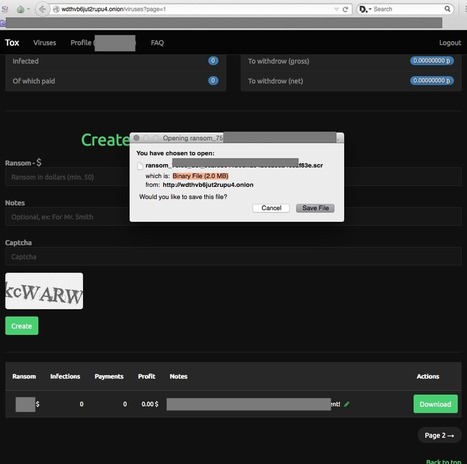
Similar to other threats, ransomware has now appeared in an easy-to-deploy cybercrime kit. The malware is called Tox, and it's free.


Learn more:


- http://www.scoop.it/t/securite-pc-et-internet/?tag=TOR


Gust MEES's insight:
Similar to other threats, ransomware has now appeared in an easy-to-deploy cybercrime kit. The malware is called Tox, and it's free.


Learn more:


- http://www.scoop.it/t/securite-pc-et-internet/?tag=TOR


No comment yet.
Scooped by Gust MEES
May 26, 2015 9:41 AM
Scoop.it!

Moose - the router worm with an appetite for social networks

Moose - the router worm with an appetite for social networks | ICT Security-Sécurité PC et Internet | Scoop.it
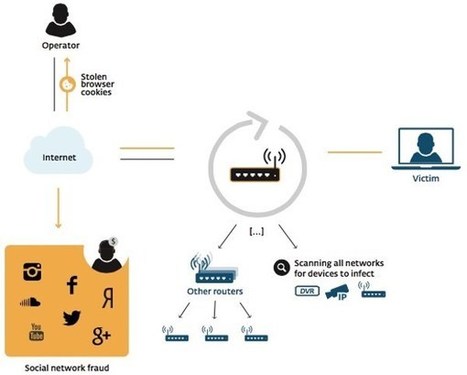
ESET researchers have issued a technical paper today, analysing a new worm that is infecting routers in order to commit social networking fraud, hijacking victims’ internet connections in order to “like” posts and pages, “view” videos and “follow” other accounts.


The malware, dubbed Linux/Moose by researchers Olivier Bilodeau and Thomas Dupuy, infects Linux-based routers and other Linux-based devices, eradicating existing malware infections it might find competing for the router’s limited resources, and automatically finding other routers to infect.


Learn more:


- http://www.scoop.it/t/securite-pc-et-internet/?tag=Router


Gust MEES's insight:

ESET researchers have issued a technical paper today, analysing a new worm that is infecting routers in order to commit social networking fraud, hijacking victims’ internet connections in order to “like” posts and pages, “view” videos and “follow” other accounts.

The malware, dubbed Linux/Moose by researchers Olivier Bilodeau and Thomas Dupuy, infects Linux-based routers and other Linux-based devices, eradicating existing malware infections it might find competing for the router’s limited resources, and automatically finding other routers to infect.

Learn more:


- http://www.scoop.it/t/securite-pc-et-internet/?tag=Router


No comment yet.
Rescooped by Gust MEES from 21st Century Learning and Teaching
May 20, 2015 9:18 AM
Scoop.it!

Gefährliche Lücke macht Millionen Router angreifbar | eSkills | ICT | CyberSecurity

Gefährliche Lücke macht Millionen Router angreifbar | eSkills | ICT | CyberSecurity | ICT Security-Sécurité PC et Internet | Scoop.it
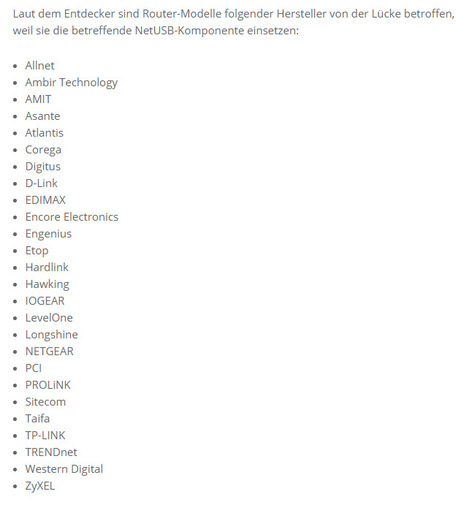
Experten warnen vor einer Sicherheitslücke in NetUSB, einer Komponente, die in Millionen Routern weltweit zum Einsatz kommt.


Mehr erfahren / Learn more:


- http://www.scoop.it/t/securite-pc-et-internet/?tag=Router


Gust MEES's insight:
Experten warnen vor einer Sicherheitslücke in NetUSB, einer Komponente, die in Millionen Routern weltweit zum Einsatz kommt.


Mehr erfahren / Learn more:


- http://www.scoop.it/t/securite-pc-et-internet/?tag=Router


Gust MEES's curator insight, May 20, 2015 9:16 AM

Experten warnen vor einer Sicherheitslücke in NetUSB, einer Komponente, die in Millionen Routern weltweit zum Einsatz kommt.


Mehr erfahren / Learn more:


- http://www.scoop.it/t/securite-pc-et-internet/?tag=Router


Scooped by Gust MEES
May 8, 2015 11:56 AM
Scoop.it!

95 Prozent der SAP-Installationen sind unsicher | Awareness | CyberSecurity

95 Prozent der SAP-Installationen sind unsicher | Awareness | CyberSecurity | ICT Security-Sécurité PC et Internet | Scoop.it
Rund 95 Prozent aller SAP-Installationen enthalten schwerwiegende Sicherheitslücken, die zum Verlust von Daten oder Unterbrechungen des Betriebs führen können. Zu diesem Ergebnis kommt eine Studie des auf SAP-Sicherheit spezialisierten Anbieters Onapsis.

SAP-Büro in den 80ern: Mitarbeiter von SAP arbeiten bereits in den achtziger Jahren an ERP-Software für Unternehmen.
(Quelle: SAP )SAP ist der erfolgreichste europäische Software-Hersteller. Seine Produkte werden von 250.000 Unternehmen weltweit eingesetzt. Nach Aussage von Mariano Nunez, CEO und Mitgründer von Onapsis, sind die meisten Patches für SAP jedoch keine Sicherheits-Updates, kommen zu spät oder führen zu neuen Risiken.
„Einbrüche passieren täglich, aber viele CISOs bekommen das gar nicht mit, weil sie keinen echten Einblick in ihre SAP-Anwendungen haben“, so Nunez.
Gust MEES's insight:

Rund 95 Prozent aller SAP-Installationen enthalten schwerwiegende Sicherheitslücken, die zum Verlust von Daten oder Unterbrechungen des Betriebs führen können. Zu diesem Ergebnis kommt eine Studie des auf SAP-Sicherheit spezialisierten Anbieters Onapsis.

SAP-Büro in den 80ern: Mitarbeiter von SAP arbeiten bereits in den achtziger Jahren an ERP-Software für Unternehmen.
(Quelle: SAP )SAP ist der erfolgreichste europäische Software-Hersteller. Seine Produkte werden von 250.000 Unternehmen weltweit eingesetzt. Nach Aussage von Mariano Nunez, CEO und Mitgründer von Onapsis, sind die meisten Patches für SAP jedoch keine Sicherheits-Updates, kommen zu spät oder führen zu neuen Risiken. 
„Einbrüche passieren täglich, aber viele CISOs bekommen das gar nicht mit, weil sie keinen echten Einblick in ihre SAP-Anwendungen haben“, so Nunez.


No comment yet.
Scooped by Gust MEES
May 8, 2015 7:18 AM
Scoop.it!

Surgical robots hacked by researchers to alter commands and disrupt functions | CyberSecurity

Surgical robots hacked by researchers to alter commands and disrupt functions | CyberSecurity | ICT Security-Sécurité PC et Internet | Scoop.it
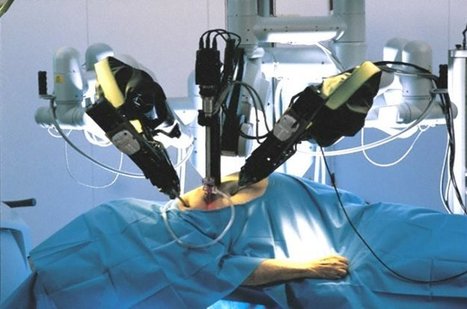
University of Washington researchers mount cyberattacks on surgical robot, exposing vulnerabilities.


Security vulnerabilities in surgical robots have been exposed by researchers, who hacked next generation systems to prove that they could be hijacked remotely.

Researchers from the University of Washington (UW) carried out a series of cyberattacks on teleoperated (remotely operated) surgical robots using non-private networks.

Various attack techniques were utilised, including a denial-of-service (DoS) attack that overloaded the robot with useless data and made it difficult to operate.

A "man in the middle" attack succeeded in altering the commands sent from the operator to the robot, disrupting a wide range of the machine's functions. 

Gust MEES's insight:

Security vulnerabilities in surgical robots have been exposed by researchers, who hacked next generation systems to prove that they could be hijacked remotely.

Researchers from the University of Washington (UW) carried out a series of cyberattacks on teleoperated (remotely operated) surgical robots using non-private networks.

Various attack techniques were utilised, including a denial-of-service (DoS) attack that overloaded the robot with useless data and made it difficult to operate.

A "man in the middle" attack succeeded in altering the commands sent from the operator to the robot, disrupting a wide range of the machine's functions. 

Scooped by Gust MEES
May 7, 2015 5:46 PM
Scoop.it!

NSA-Skandal: Gericht erklärt US-Telefonüberwachung für gesetzeswidrig | Privacy

NSA-Skandal: Gericht erklärt US-Telefonüberwachung für gesetzeswidrig | Privacy | ICT Security-Sécurité PC et Internet | Scoop.it
Ein US-Berufungsgericht hat entschieden, dass die Überwachung aller US-Telefonate nicht durch den dafür herangezogenen Patriot Act legitimiert ist. Wie sich die Entscheidung auf die derzeit verhandelte Verlängerung des Patriot Act auswirkt, ist unklar.


Learn more:


- http://www.scoop.it/t/securite-pc-et-internet/?tag=NSA


Gust MEES's insight:

Ein US-Berufungsgericht hat entschieden, dass die Überwachung aller US-Telefonate nicht durch den dafür herangezogenen Patriot Act legitimiert ist. Wie sich die Entscheidung auf die derzeit verhandelte Verlängerung des Patriot Act auswirkt, ist unklar.


Learn more:


- http://www.scoop.it/t/securite-pc-et-internet/?tag=NSA


No comment yet.
Rescooped by Gust MEES from 21st Century Learning and Teaching
April 13, 2015 8:17 AM
Scoop.it!

Simda botnet taken down in global operation

Simda botnet taken down in global operation | ICT Security-Sécurité PC et Internet | Scoop.it

The Simda botnet, believed to have infected more than 770,000 computers worldwide, has been targeted in a global operation.


In a series of simultaneous actions around the world, on Thursday 9 April, 10 command and control servers were seized in the Netherlands, with additional servers taken down in the US, Russia, Luxembourg and Poland.


The operation involved officers from the Dutch National High Tech Crime Unit (NHTCU) in the Netherlands, the Federal Bureau of Investigation (FBI) in the US, the Police Grand-Ducale Section Nouvelles Technologies in Luxembourg, and the Russian Ministry of the Interior’s Cybercrime Department “K” supported by the INTERPOL National Central Bureau in Moscow.


Learn more: 


- http://www.scoop.it/t/securite-pc-et-internet/?tag=Botnet


Gust MEES's insight:

The Simda botnet, believed to have infected more than 770,000 computers worldwide, has been targeted in a global operation.


In a series of simultaneous actions around the world, on Thursday 9 April, 10 command and control servers were seized in the Netherlands, with additional servers taken down in the US, Russia, Luxembourg and Poland.


The operation involved officers from the Dutch National High Tech Crime Unit (NHTCU) in the Netherlands, the Federal Bureau of Investigation (FBI) in the US, the Police Grand-Ducale Section Nouvelles Technologies in Luxembourg, and the Russian Ministry of the Interior’s Cybercrime Department “K” supported by the INTERPOL National Central Bureau in Moscow.


Learn more: 


- http://www.scoop.it/t/securite-pc-et-internet/?tag=Botnet


Gust MEES's curator insight, April 13, 2015 4:55 AM

The Simda botnet, believed to have infected more than 770,000 computers worldwide, has been targeted in a global operation.


In a series of simultaneous actions around the world, on Thursday 9 April, 10 command and control servers were seized in the Netherlands, with additional servers taken down in the US, Russia, Luxembourg and Poland.


The operation involved officers from the Dutch National High Tech Crime Unit (NHTCU) in the Netherlands, the Federal Bureau of Investigation (FBI) in the US, the Police Grand-Ducale Section Nouvelles Technologies in Luxembourg, and the Russian Ministry of the Interior’s Cybercrime Department “K” supported by the INTERPOL National Central Bureau in Moscow.


Learn more: 


- http://www.scoop.it/t/securite-pc-et-internet/?tag=Botnet


Scooped by Gust MEES
March 23, 2015 1:57 PM
Scoop.it!

BIOS-Rootkit LightEater | Selbst der Austausch der Festplatte hilft nicht!!!

BIOS-Rootkit LightEater | Selbst der Austausch der Festplatte hilft nicht!!! | ICT Security-Sécurité PC et Internet | Scoop.it
Ein Rootkit, das unabhängig vom Betriebssystem operiert, sämtlichen Speicher auslesen kann und durch den Tausch der Festplatte im System nicht gestoppt wird – was klingt wie eine IT-Gruselgeschichte haben zwei Forscher nun öffentlich präsentiert.
Gust MEES's insight:

Ein Rootkit, das unabhängig vom Betriebssystem operiert, sämtlichen Speicher auslesen kann und durch den Tausch der Festplatte im System nicht gestoppt wird – was klingt wie eine IT-Gruselgeschichte haben zwei Forscher nun öffentlich präsentiert.


No comment yet.
Scooped by Gust MEES
March 10, 2015 11:47 AM
Scoop.it!

Wikimedia Foundation Sues NSA Over Mass Surveillance | Privacy | Human Rights

Wikimedia Foundation Sues NSA Over Mass Surveillance | Privacy | Human Rights | ICT Security-Sécurité PC et Internet | Scoop.it
The Wikimedia Foundation is suing the NSA and the US Department of Justice over the NSA's mass surveillance program.
Gust MEES's insight:

The Wikimedia Foundation is suing the NSA and the US Department of Justice over the NSA's mass surveillance program.


CTD Institute's curator insight, March 10, 2015 12:36 PM

To keep digital communications free of government interference.

Scooped by Gust MEES
February 26, 2015 6:54 AM
Scoop.it!

Lenovo.com hijacking made possible by compromise of Webnic registrar | CyberSecurity

Lenovo.com hijacking made possible by compromise of Webnic registrar | CyberSecurity | ICT Security-Sécurité PC et Internet | Scoop.it
Lenovo simply can't catch a break. After the massive negative attention it received for their ill-advised decision to ship some of its notebooks with pre-installed adware that also uses MITM SSL certificates, for a short time on Wednesday their main domain - Lenovo.com - has been hijacked and effectively defaced by the hacker collective Lizard Squad.

The defaced page showed a slideshow of photos of two youngsters - according to Brian Krebs, they are Ryan King (aka “Starfall”) and Rory Andrew Godfrey (“KMS”), two former members of the hacker collective Hack The Planet - accompanied with music. The reason for the defacement is purportedly Lenovo's Superfish blunder.

The defaced page pointed to Lizard Squad's Twitter feed and served as an advertisement for its LizardStresser DoS service.

The hackers didn't compromise Lenovo's servers. Instead, they (apparently) compromised those of Web Commerce Communications (Webnic.cc), a popular Malaysia-based Internet registrar with whom the Lenovo domain is registered.


Learn more:


- http://www.scoop.it/t/21st-century-learning-and-teaching/?tag=LENOVO


- http://www.scoop.it/t/securite-pc-et-internet/?tag=LENOVO


Gust MEES's insight:

Learn more:


- http://www.scoop.it/t/21st-century-learning-and-teaching/?tag=LENOVO


- http://www.scoop.it/t/securite-pc-et-internet/?tag=LENOVO


No comment yet.
Scooped by Gust MEES
February 24, 2015 10:41 AM
Scoop.it!

Executive Cyber Intelligence Report: Februrary 23, 2015 | CyberSecurity

Executive Cyber Intelligence Report: Februrary 23, 2015 | CyberSecurity | ICT Security-Sécurité PC et Internet | Scoop.it

This report was prepared by INSS and CSFI to create better cyber situational awareness of the nature and scope of threats to national security worldwide in the domains of cyberspace and open source intelligence. It is provided to Federal, State, Local, Tribal, Territorial and private sector officials to aid in the identification and development of appropriate actions, priorities and follow-­up measures.


Gust MEES's insight:

This report was prepared by INSS and CSFI to create better cyber situational awareness of the nature and scope of threats to national security worldwide in the domains of cyberspace and open source intelligence. It is provided to Federal, State, Local, Tribal, Territorial and private sector officials to aid in the identification and development of appropriate actions, priorities and follow-­up measures.


Oksana Borukh's curator insight, March 6, 2015 1:46 AM

Quoted:

This report was prepared by The Institute for National Security Studies (INSS) and The Cyber Security Forum Initiative (CSFI) to create better cyber situational awareness (Cyber SA) of the nature and scope of threats and hazards to national security worldwide in the domains of cyberspace and open source intelligence. It is provided to Federal, State, Local, Tribal, Territorial and private sector officials to aid in the identification and development of appropriate actions, priorities and follow-­up measures.

Scooped by Gust MEES
February 22, 2015 2:23 PM
Scoop.it!

Symantec Intelligence Report January 2015 [pdf] | CyberSecurity

Symantec Intelligence Report January 2015 [pdf] | CyberSecurity

Gust MEES's insight:

Symantec Intelligence Report January 2015 [pdf] | CyberSecurity


No comment yet.
Scooped by Gust MEES
May 29, 2015 3:28 PM
Scoop.it!

Hacker haben bei Cyber-Angriff auf Bundestag Daten abgezogen | CyberAttacks | DataBreaches

Hacker haben bei Cyber-Angriff auf Bundestag Daten abgezogen | CyberAttacks | DataBreaches | ICT Security-Sécurité PC et Internet | Scoop.it
Daten aus dem Netzwerk des Bundestags sind bei dem vor zwei Wochen bekannt gewordenen Cyber-Angriff offenbar abgeflossen.
Gust MEES's insight:

Vor zwei Wochen war bekannt geworden, dass Bundestags-Computer Ziel einer bislang beispiellosen, mehrtägigen Attacke unbekannter Hacker geworden waren. Diese hatten Medienberichten zufolge Anfang Mai zunächst die Computer einer Fraktion mit einem Trojaner infiziert und sich so Zugang zu Administrator-Passwörtern verschafft. Damit sei es ihnen gelungen, ins gesamte Bundestags-Netzwerk einzudringen. Auch Computer von Regierungsmitgliedern sind von dem Angriff betroffen. (dpa) / (anw) 


No comment yet.
Scooped by Gust MEES
May 27, 2015 4:40 PM
Scoop.it!

Online-Dienst erstellt maßgeschneiderte Krypto-Trojaner | TOR | CyberSecurity | eSkills

Online-Dienst erstellt maßgeschneiderte Krypto-Trojaner | TOR | CyberSecurity | eSkills | ICT Security-Sécurité PC et Internet | Scoop.it
Die Einstiegshürde für angehende Online-Erpresser ist erneut gesunken: Ein Dienst im Tor-Netz erstellt nach wenigen Klicks den individuellen Erpressungs-Trojaner. Falls ein Opfer das geforderte Lösegeld zahlt, verdienen die Betreiber mit.


Die Einstiegshürde für angehende Online-Erpresser ist erneut gesunken: Ein Dienst im Tor-Netz erstellt nach wenigen Klicks den individuellen Erpressungs-Trojaner. Falls ein Opfer das geforderte Lösegeld zahlt, verdienen die Betreiber mit.


- http://www.scoop.it/t/securite-pc-et-internet/?tag=TOR


Gust MEES's insight:

Die Einstiegshürde für angehende Online-Erpresser ist erneut gesunken: Ein Dienst im Tor-Netz erstellt nach wenigen Klicks den individuellen Erpressungs-Trojaner. Falls ein Opfer das geforderte Lösegeld zahlt, verdienen die Betreiber mit.


- http://www.scoop.it/t/securite-pc-et-internet/?tag=TOR


No comment yet.
Scooped by Gust MEES
May 20, 2015 4:11 PM
Scoop.it!

Logjam-Attacke: Verschlüsselung von zehntausenden Servern gefährdet | CyberSecurity | InfoSec

Logjam-Attacke: Verschlüsselung von zehntausenden Servern gefährdet | CyberSecurity | InfoSec | ICT Security-Sécurité PC et Internet | Scoop.it
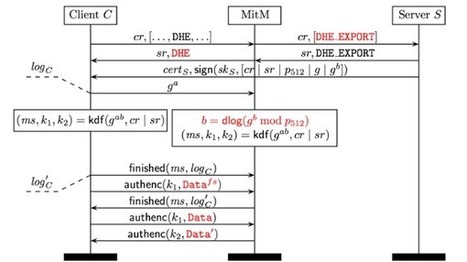
Unzählige Web-, Mail-, SSH- und VPN-Server sind durch einen neuen Angriff auf den Diffie-Hellmann-Schlüsseltausch verwundbar. Angreifer können so die Verschlüsselung aufbrechen. Vermeintlich vertrauenswürdig übertragene Daten wären dann nicht mehr sicher.
Gust MEES's insight:

Unzählige Web-, Mail-, SSH- und VPN-Server sind durch einen neuen Angriff auf den Diffie-Hellmann-Schlüsseltausch verwundbar. Angreifer können so die Verschlüsselung aufbrechen. Vermeintlich vertrauenswürdig übertragene Daten wären dann nicht mehr sicher.

No comment yet.
Scooped by Gust MEES
May 13, 2015 10:54 AM
Scoop.it!

Bigger than Heartbleed, 'Venom' security vulnerability threatens most datacenters | CyberSecurity

Bigger than Heartbleed, 'Venom' security vulnerability threatens most datacenters | CyberSecurity | ICT Security-Sécurité PC et Internet | Scoop.it

"Heartbleed lets an adversary look through the window of a house and gather information based on what they see," said Geffner, using an analogy. "Venom allows a person to break in to a house, but also every other house in the neighborhood as well."

Geffner said that the company worked with software makers to help patch the bug before it was publicly disclosed Wednesday. As many companies offer their own hardware and software, patches can be applied to thousands of affected customers without any downtime.

Now, he said, the big concern is companies that run systems that can't be automatically patched.

To take advantage of the flaw, a hacker would have to gain access to a virtual machine with high or "root" privileges of the system. Geffner warned that it would take little effort to rent a virtual machine from a cloud computing service to exploit the hypervisor from there.

"What an adversary does from that position is dependent on the network layout," said Geffner, indicating that a datacenter takeover was possible.

Gust MEES's insight:

Heartbleed lets an adversary look through the window of a house and gather information based on what they see," said Geffner, using an analogy. "Venom allows a person to break in to a house, but also every other house in the neighborhood as well."

Geffner said that the company worked with software makers to help patch the bug before it was publicly disclosed Wednesday. As many companies offer their own hardware and software, patches can be applied to thousands of affected customers without any downtime.

Now, he said, the big concern is companies that run systems that can't be automatically patched.

To take advantage of the flaw, a hacker would have to gain access to a virtual machine with high or "root" privileges of the system. Geffner warned that it would take little effort to rent a virtual machine from a cloud computing service to exploit the hypervisor from there.

"What an adversary does from that position is dependent on the network layout," said Geffner, indicating that a datacenter takeover was possible.


No comment yet.
Scooped by Gust MEES
May 8, 2015 11:49 AM
Scoop.it!

New Linux rootkit leverages graphics cards for stealth | Awareness | Nobody Is Perfect

New Linux rootkit leverages graphics cards for stealth | Awareness | Nobody Is Perfect | ICT Security-Sécurité PC et Internet | Scoop.it
The Jellyfish proof-of-concept rootkit uses the processing power of graphics cards and runs in their dedicated memory


A team of developers has created a rootkit for Linux systems that uses the processing power and memory of graphics cards instead of CPUs in order to remain hidden.


The rootkit, called Jellyfish, is a proof of concept designed to demonstrate that completely running malware on GPUs (graphics processing units) is a viable option. This is possible because dedicated graphics cards have their own processors and RAM.


Such threats could be more sinister than traditional malware programs, according to the Jellyfish developers. For one, there are no tools to analyze GPU malware, they said.


Learn more:


- http://www.scoop.it/t/securite-pc-et-internet/?tag=Linux


Gust MEES's insight:
The Jellyfish proof-of-concept rootkit uses the processing power of graphics cards and runs in their dedicated memory


A team of developers has created a rootkit for Linux systems that uses the processing power and memory of graphics cards instead of CPUs in order to remain hidden.


The rootkit, called Jellyfish, is a proof of concept designed to demonstrate that completely running malware on GPUs (graphics processing units) is a viable option. This is possible because dedicated graphics cards have their own processors and RAM.


Such threats could be more sinister than traditional malware programs, according to the Jellyfish developers. For one, there are no tools to analyze GPU malware, they said.


Learn more:


- http://www.scoop.it/t/securite-pc-et-internet/?tag=Linux


No comment yet.
Scooped by Gust MEES
May 7, 2015 5:49 PM
Scoop.it!

Court Rules that the NSA's Justification for Surveillance Is Bullshit | Privacy

Court Rules that the NSA's Justification for Surveillance Is Bullshit | Privacy | ICT Security-Sécurité PC et Internet | Scoop.it
Another flimsy justification for mass surveillance bites the dust— the Second Circuit court ruled today that Section 215 of the Patriot Act does not give the National Security Agency any authority to collect metadata. In other words: the NSA’s phone snooping program is straight-up unlawful.


Learn more:


- http://www.scoop.it/t/securite-pc-et-internet/?tag=NSA


Gust MEES's insight:

Another flimsy justification for mass surveillance bites the dust— the Second Circuit court ruled today that Section 215 of the Patriot Act does not give the National Security Agency any authority to collect metadata. In other words: the NSA’s phone snooping program is straight-up unlawful.


Learn more:


- http://www.scoop.it/t/securite-pc-et-internet/?tag=NSA


No comment yet.
Scooped by Gust MEES
May 1, 2015 8:10 AM
Scoop.it!

Revealed: The anti-virus vendor cheating in independent tests

Revealed: The anti-virus vendor cheating in independent tests | ICT Security-Sécurité PC et Internet | Scoop.it
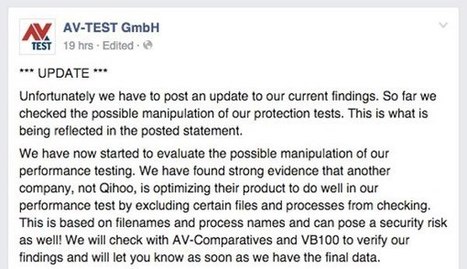
As one anti-virus vendor is named for cheating in independent detection tests, another is said to be in the spotlight for deliberately manipulating performance tests - and potentially introducing a security risk.
Gust MEES's insight:

As one anti-virus vendor is named for cheating in independent detection tests, another is said to be in the spotlight for deliberately manipulating performance tests - and potentially introducing a security risk.


No comment yet.
Scooped by Gust MEES
April 9, 2015 8:51 AM
Scoop.it!

Linux Australia gets pwned, rooted, RATted and botted

Linux Australia gets pwned, rooted, RATted and botted | ICT Security-Sécurité PC et Internet | Scoop.it
Linux Australia had a bit of a nightmare Easter Weekend.

While the rest of us were loafing at the beach, the Penguinistas from Down Under were owning up to a pretty extensive cyberintrusion.


Learn more:


- http://www.scoop.it/t/securite-pc-et-internet/?tag=Linux


Gust MEES's insight:
Linux Australia had a bit of a nightmare Easter Weekend.

While the rest of us were loafing at the beach, the Penguinistas from Down Under were owning up to a pretty extensive cyberintrusion.


Learn more:


- http://www.scoop.it/t/securite-pc-et-internet/?tag=Linux

No comment yet.
Scooped by Gust MEES
March 20, 2015 2:12 PM
Scoop.it!

Networked Healthcare and the Internet of Things | CyberSecurity Awareness | Privacy

Networked Healthcare and the Internet of Things | CyberSecurity Awareness | Privacy | ICT Security-Sécurité PC et Internet | Scoop.it
The Internet of Things (IoT) is upon us and it is not only moving into our homes through our networks and refrigerators, it is also moving into our bodies through networked medical devices. Wearable, temporarily ingested, or even embedded devices for medical treatment, medication and general health and wellness represent the future of healthcare. The advancements can come in the form of high-tech medical equipment like insulin pumps and pacemakers, but they can also be the Fitbits and other health monitoring devices commonly found on the wrists and in the pockets of the general public.


There is no doubt that networked healthcare offers numerous benefits, not only to the individuals involved, but to the healthcare industry as a whole — one estimate notes that these technologies could save $63 billion in healthcare costs over 15 years with a 15-to-30 percent reduction in hospital equipment costs. But if security is just an afterthought, and the technologies greatly outpace their protection, then we’ll be exposing the entire healthcare ecosystem to risks.


Mehr erfahren / Learn more / En savoir plus:


- http://www.scoop.it/t/21st-century-learning-and-teaching/?tag=wearables


- http://www.scoop.it/t/21st-century-learning-and-teaching/?tag=Internet+of+Things


- http://www.scoop.it/t/securite-pc-et-internet/?tag=Internet+of+things


- http://globaleducationandsocialmedia.wordpress.com/2014/01/21/why-is-it-a-must-to-have-basics-knowledge-of-cyber-security-in-a-connected-technology-world/


Gust MEES's insight:
The Internet of Things (IoT) is upon us and it is not only moving into our homes through our networks and refrigerators, it is also moving into our bodies through networked medical devices. Wearable, temporarily ingested, or even embedded devices for medical treatment, medication and general health and wellness represent the future of healthcare. The advancements can come in the form of high-tech medical equipment like insulin pumps and pacemakers, but they can also be the Fitbits and other health monitoring devices commonly found on the wrists and in the pockets of the general public.


There is no doubt that networked healthcare offers numerous benefits, not only to the individuals involved, but to the healthcare industry as a whole — one estimate notes that these technologies could save $63 billion in healthcare costs over 15 years with a 15-to-30 percent reduction in hospital equipment costs. But if security is just an afterthought, and the technologies greatly outpace their protection, then we’ll be exposing the entire healthcare ecosystem to risks.


Mehr erfahren / Learn more / En savoir plus:


- http://www.scoop.it/t/21st-century-learning-and-teaching/?tag=wearables


- http://www.scoop.it/t/21st-century-learning-and-teaching/?tag=Internet+of+Things


- http://www.scoop.it/t/securite-pc-et-internet/?tag=Internet+of+things


- http://globaleducationandsocialmedia.wordpress.com/2014/01/21/why-is-it-a-must-to-have-basics-knowledge-of-cyber-security-in-a-connected-technology-world/

No comment yet.
Scooped by Gust MEES
March 10, 2015 11:25 AM
Scoop.it!

Massenüberwachung: Wikipedia verklagt NSA | Privacy | Human Rights

Massenüberwachung: Wikipedia verklagt NSA | Privacy | Human Rights | ICT Security-Sécurité PC et Internet | Scoop.it
Die Bürgerrechtsorganisation American Civil Liberties Union (ACLU) hat im Namen der Wikimedia Foundation und weiteren US-Organisationen Klage gegen die NSA eingereicht. Die Bürgerrechtler bezweifeln, dass die massenhafte Speicherung von Kommunikationsdaten verfassungskonform ist.
Gust MEES's insight:

Die Bürgerrechtsorganisation American Civil Liberties Union (ACLU) hat im Namen der Wikimedia Foundation und weiteren US-Organisationen Klage gegen die NSA eingereicht. Die Bürgerrechtler bezweifeln, dass die massenhafte Speicherung von Kommunikationsdaten verfassungskonform ist.


No comment yet.
Scooped by Gust MEES
February 25, 2015 11:49 AM
Scoop.it!

3 million strong RAMNIT botnet taken down | CyberCrime | CyberSecurity

3 million strong RAMNIT botnet taken down | CyberCrime | CyberSecurity | ICT Security-Sécurité PC et Internet | Scoop.it
3 million strong RAMNIT botnet taken down
Posted on 25.02.2015
The National Crime Agency’s National Cyber Crime Unit (NCCU) worked with law enforcement colleagues in the Netherlands, Italy and Germany, co-ordinated through Europol’s European Cybercrime Centre (EC3), to shut down command and control servers used by the RAMNIT botnet.

RAMNIT spread malware via seemingly trustworthy links sent out on phishing emails or social networking websites. If users running Windows clicked on the links, the malware would be installed, infecting the computer. Infected computers would then be under the control of criminals, enabling them to access personal or banking information, steal passwords and disable antivirus protection.

Investigators believe that RAMNIT may have infected over three million computers worldwide, with around 33,000 of those being in the UK. It has so far largely been used to attempt to take money from bank accounts. Analysis is now taking place on the servers and an investigation is ongoing.
Gust MEES's insight:

3 million strong RAMNIT botnet taken down
Posted on 25.02.2015
The National Crime Agency’s National Cyber Crime Unit (NCCU) worked with law enforcement colleagues in the Netherlands, Italy and Germany, co-ordinated through Europol’s European Cybercrime Centre (EC3), to shut down command and control servers used by the RAMNIT botnet.

RAMNIT spread malware via seemingly trustworthy links sent out on phishing emails or social networking websites. If users running Windows clicked on the links, the malware would be installed, infecting the computer. Infected computers would then be under the control of criminals, enabling them to access personal or banking information, steal passwords and disable antivirus protection.

Investigators believe that RAMNIT may have infected over three million computers worldwide, with around 33,000 of those being in the UK. It has so far largely been used to attempt to take money from bank accounts. Analysis is now taking place on the servers and an investigation is ongoing.


No comment yet.
Scooped by Gust MEES
February 23, 2015 10:16 AM
Scoop.it!

CMS: Sicherheitslücke in Typo3 ===> Update asap!!! <=== | CyberSecurity | Awareness

CMS: Sicherheitslücke in Typo3 ===> Update asap!!! <=== | CyberSecurity | Awareness | ICT Security-Sécurité PC et Internet | Scoop.it

Über eine gravierende Sicherheitslücke in alten Versionen des CMS Typo3 kann sich jeder authentifizieren, der nur den Namen eines registrierten Benutzers kennt. Es gibt Updates und einen Patch.

Gust MEES's insight:

Über eine gravierende Sicherheitslücke in alten Versionen des CMS Typo3 kann sich jeder authentifizieren, der nur den Namen eines registrierten Benutzers kennt. Es gibt Updates und einen Patch.


No comment yet.