 Your new post is loading...

|
Scooped by
Gust MEES
September 29, 2015 2:37 PM
|
|
|
Scooped by
Gust MEES
September 28, 2015 10:30 AM
|
|
|
Scooped by
Gust MEES
September 24, 2015 9:14 AM
|
Bereits beim "Superfish-Gate" und dem Rootkit-BIOS kam der Hardware-Hersteller Lenovo nicht besonders gut weg. Dies verschärfte sich noch aufgrund der defensiven, intransparenten Kommunikation.
Heimlicher Sammler: Einmal am Tag läuft auf ThinkPads das "Lenovo Customer Feedback Program 64".
(Quelle: Computerworld USA )Nun ist es das "Lenovo Customer Feedback Program 64", das das Interesse von Computerworld-Autor Michael Horowitz erregte. Gemäß seinen Recherchen handelt es sich dabei um ein verstecktes Support-Werkzeug, welches auf ThinkPads, ThinkCentres und ThinkStations von Lenovo installiert ist.
Einmal pro Tag werden dort offenbar Daten aus dem Programm für Kundenrückmeldungen zu Lenovo geschickt - auch wenn der User gar keine Kundenrückmeldung zu versenden hat. Welche Daten die Software genau sammelt und dann verschickt, ist unklar.
Learn more / En savoir plus / Mehr erfahren:
http://www.scoop.it/t/securite-pc-et-internet/?tag=LENOVO
|
|
Scooped by
Gust MEES
September 24, 2015 8:00 AM
|
Es kommt noch dicker für die US-Bundespersonalbehörde OPM: Bei der massiven Hackerattacke wurde nicht nicht nur persönliche Daten von 22 Millionen Bediensteten, sondern auch Fingerabdrücke von 5,6 Millionen kompromittiert.
Eine China zugeschriebene Hacker-Attacke auf die US-Bundespersonalbehörde OPM war noch schwerer als ohnehin schon gedacht. Demnach verschafften sich die Cyber-Angreifer neben anderen persönlichen Daten von 22 Millionen Bediensteten auch die Fingerabdrücke von 5,6 Millionen Beschäftigten. Das teilte die Behörde am Mittwoch mit – einen Tag, bevor der chinesische Präsident Xi Jinping zu Gesprächen mit Präsident Barack Obama in Washington erwartet wurde.
Learn more / En savoir plus / Mehr erfahren:
http://www.scoop.it/t/securite-pc-et-internet/?tag=DATA-BREACHES
|
|
Scooped by
Gust MEES
September 23, 2015 9:19 AM
|
|
|
Scooped by
Gust MEES
September 21, 2015 9:29 AM
|
Starting on October 15, when its new privacy policy comes into effect, Czech AV maker AVG will start selling user activity information to online advertisers.
"We do not, and will not, sell personally identifiable data to anyone, including advertisers," the company noted. "[We] may share non-personal data with third parties and may publicly display aggregate or anonymous information."
What they will sell (to make money from their free offerings so they can keep them free): - The advertising ID associated with users' device,
- Users' browsing and search history, including meta data
- Information about the ISP or mobile network users' use to connect to AVG products
- Information regarding other applications users may have on their device and how they are used.
"Sometimes browsing history or search history contains terms that might identify you. If we become aware that part of your browsing history might identify you, we will treat that portion of your history as personal data, and will anonymize this information," they explained in the new privacy policy.
Learn more:
https://gustmees.wordpress.com/2013/12/21/privacy-in-the-digital-world-shouldnt-we-talk-about-it/
|
|
Scooped by
Gust MEES
September 14, 2015 11:34 AM
|
Die neue Malware-Generation für Bankautomaten Suceful liest nicht nur Daten von EC- und Kreditkarten aus, sondern zieht Karten auch ein. . Learn more / En savoir plus / Mehr erfahren: . http://www.scoop.it/t/securite-pc-et-internet
|
|
Scooped by
Gust MEES
September 10, 2015 11:30 AM
|
The latest ESET discovery of the first known lock-screen-type Android ransomware that spreads in the wild and sets the phone's PIN lock is examined.
Unfortunately, malware writers have stepped up their game, and with the new Android ransom-lockers, detected by ESET as Android/Lockerpin.A, users have no effective way of regaining access to their device without root privileges or without some other form of security management solution installed, apart from a factory reset that would also delete all their data. Moreover, this ransomware also uses a nasty trick to obtain and preserve Device Administrator privileges so as to prevent uninstallation. This is the first case in which we have observed this aggressive method in Android malware.
|
|
Scooped by
Gust MEES
September 7, 2015 8:59 AM
|
An attacker with access to security-sensitive information about the Firefox web browser went unnoticed for up to two years, putting hundreds of millions of users at risk.
The attacker was able to spy on highly sensitive information by gaining access to a privileged account on Bugzilla@Mozilla, the bug tracking software the Mozilla corporation uses to store information about flaws in its software.
The company behind the popular web browser has revealed details of the breach in an FAQ document. It explains that the attacker gained access to information about 185 non-public bugs, of which 53 were classed as severe vulnerabilities.
Ten of those severe vulnerabilities were not fixed when the attacker became aware of them, meaning that they could have been used to attack Firefox, and at least one of them was used in-the-wild.
The window of opportunity to successfully exploit that bug was less than 36 days, but three of the bugs were known to the attacker and un-patched for far longer; two for more than 130 days and one for almost a year.
In the face of such an open window of opportunity, Mozilla's boilerplate assurance that "there is no indication that any of the other bugs the attacker accessed have been exploited" isn't very reassuring - absence of evidence is not evidence of absence after all.
Mozilla's bug tracking system appears to have been infiltrated because of password reuse by one of its privileged users.
Learn more / Mehr erfahren:
https://gustmees.wordpress.com/2012/05/02/get-smart-with-5-minutes-tutorialsit-securitypart-1-browsers/
https://gustmeesde.wordpress.com/2014/12/16/browser-sind-das-einfallstor-fur-malware-sind-eure-browser-up-to-date/
|
|
Scooped by
Gust MEES
September 3, 2015 9:37 PM
|
|
|
Scooped by
Gust MEES
August 30, 2015 3:17 PM
|
Als Hilfe für das Absichern von Webanwendungen hat die Non-Profit-Organisation OWASP ein Handbuch für Entwickler herausgebracht, das bislang wenig beachtete Angriffe beschreibt.
Sollte man mal genauer ansehen!
|
|
Scooped by
Gust MEES
August 27, 2015 8:16 AM
|
|
|
Scooped by
Gust MEES
August 26, 2015 6:56 PM
|
|
|
|
Scooped by
Gust MEES
September 29, 2015 11:14 AM
|
A new malvertising campaign uses the Blue Screen of Death to scam users into handing over their money and potentially their identity.
Online search engines are used daily by millions of web users. In order to support the vast amounts of requests these search engines receive and process, search engine providers -- such as Google, Yahoo and Microsoft -- offer advertising platforms and packages for businesses. Users view sponsored links placed high up on a search results page, businesses gain more exposure and the search engine generates revenue.
However, search engine advertising is also a place ripe for exploit and is being used by cyberattackers in order to generate their own revenue. One of the most commonly-known techniques include setting up malicious domains which deliver malware payloads to victim machines -- resulting in slave systems, compromised PCs and data theft. Some attackers also set up fraudulent domains which appear legitimate in order to lure victims to input their account information.
|
|
Scooped by
Gust MEES
September 25, 2015 6:39 AM
|
|
|
Scooped by
Gust MEES
September 24, 2015 8:04 AM
|
|
|
Scooped by
Gust MEES
September 23, 2015 1:45 PM
|
WHEN HACKERS STEAL your password, you change it. When hackers steal your fingerprints, they’ve got an unchangeable credential that lets them spoof your identity for life. When they steal 5.6 million of those irrevocable biometric identifiers from U.S. federal employees—many with secret clearances—well, that’s very bad
Learn more:
http://www.scoop.it/t/securite-pc-et-internet/?tag=DATA-BREACHES
|
|
Scooped by
Gust MEES
September 22, 2015 6:35 AM
|
Attackers have installed malicious firmware on nearly 200 Cisco routers used by businesses from over 30 countries.
|
|
Scooped by
Gust MEES
September 15, 2015 5:28 PM
|
|
|
Scooped by
Gust MEES
September 10, 2015 11:39 AM
|
2015 soll es bisher deutlich mehr Hackattacken als noch im Vorjahr gegeben haben. Die Zahl der dabei kompromittierten Daten sank aber massiv, trotzdem waren besonders Hacker im Auftrag der Regierung sehr erfolgreich.
Learn more / En savoir plus / Mehr erfahren:
http://www.scoop.it/t/securite-pc-et-internet/?tag=DATA-BREACHES
|
|
Scooped by
Gust MEES
September 7, 2015 9:06 AM
|
|
|
Scooped by
Gust MEES
September 6, 2015 9:13 AM
|
|
|
Scooped by
Gust MEES
August 31, 2015 12:26 PM
|
The draft guide provides detailed example solutions using multiple products that achieve the same result, and instructions for implementers and security engineers, including examples of all the necessary components and installation, configuration and integration.
NIST notes that the draft guide also maps security characteristics to guidance and best practices from NIST and other standards organizations, and to North American Electric Reliability Corporation’s Critical Infrastructure Protection standards. The guide is modular and suitable for organizations of all sizes, including corporate and regional business offices, power generation plants and substations. They can adopt this solution or one that adheres to these guidelines in whole, or use the guide as a starting point for tailoring and implementing parts of a solution.
The draft guide can be found on the NCCoE Web site.
Learn more:
https://nccoe.nist.gov/projects/use_cases/idam
|
|
Scooped by
Gust MEES
August 30, 2015 8:40 AM
|
Picture the scene: you've had to hire a data protection officer, you've got a strict plan in place to notify all of your customers about breaches as soon as they happen, all of your data is encrypted and your company now has an insurance plan to help guard against data fines. This scene is in stark contrast to the security and compliance measures that many businesses currently operate under, yet this is expected to become standard practice, and the deadline to comply is fast approaching.
The European Union's Global Data Protection Regulation (EU GDPR) is expected to come into effect in 2017 and will transform how businesses approach compliance and data security. This newly proposed legislation will impact all organisations that process the personal data of EU citizens. So what does the compliant organisation of the not-so-distant future look like, and how can organisations ensure they meet these standards in time?
Mehr erfahren / En savoir plus / Learn more:
http://www.scoop.it/t/securite-pc-et-internet
|
|
Scooped by
Gust MEES
August 27, 2015 7:19 AM
|
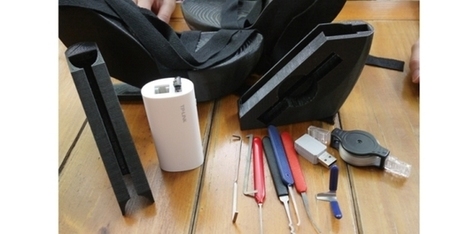
Eine Hackerin namens SexyCyborg hat Schuhe entwickelt, in denen Hacker-Utensilien versteckt werden können.
|




























Learn more / En savoir plus / Mehr erfahren:
http://www.scoop.it/t/securite-pc-et-internet/?tag=SHODAN+Search+Engine
http://www.scoop.it/t/21st-century-learning-and-teaching/?tag=Internet+of+Things
http://www.scoop.it/t/securite-pc-et-internet/?tag=smart-TV
http://www.scoop.it/t/securite-pc-et-internet/?tag=Internet+of+things
http://globaleducationandsocialmedia.wordpress.com/2014/01/21/why-is-it-a-must-to-have-basics-knowledge-of-cyber-security-in-a-connected-technology-world/
http://www.scoop.it/t/securite-pc-et-internet/?tag=Cars