


US-Sicherheitsexperten und frühere NSA-Mitarbeiter befinden die Software, die Unbekannte am Wochenende veröffentlichten, als echt.
Learn more / En savoir plus / Mehr erfahren:
http://www.scoop.it/t/securite-pc-et-internet/?tag=NSA

 Your new post is loading...
 Scoop.it! US-Sicherheitsexperten und frühere NSA-Mitarbeiter befinden die Software, die Unbekannte am Wochenende veröffentlichten, als echt.
Learn more / En savoir plus / Mehr erfahren:
http://www.scoop.it/t/securite-pc-et-internet/?tag=NSA
No comment yet.
Sign up to comment
Scoop.it!

An anonymous group claims to have stolen hacking tools that might belong to the NSA and is auctioning them off to the highest bidder.
Learn more / En savoir plus / Mehr erfahren:
http://www.scoop.it/t/securite-pc-et-internet/
Gust MEES's insight:
An anonymous group claims to have stolen hacking tools that might belong to the NSA and is auctioning them off to the highest bidder.
Learn more / En savoir plus / Mehr erfahren:
http://www.scoop.it/t/securite-pc-et-internet/
Scoop.it!

Your Instagram account could have been spiced up by spammers.
Learn more / En savoir plus / Mehr erfahren:
http://www.scoop.it/t/securite-pc-et-internet/?tag=Instagram
Gust MEES's insight:
Your Instagram account could have been spiced up by spammers.
Learn more / En savoir plus / Mehr erfahren:
http://www.scoop.it/t/securite-pc-et-internet/?tag=Instagram
Scoop.it!
Ein Supertrojaner blieb fünf Jahre lang unentdeckt | #CyberSecurity #Cyberespionage #Strider #Remsec
Sicherheitsexperten haben eine Malware entdeckt, die sich offenbar schon seit mindestens fünf Jahren auf bestimmten Computersystemen befindet. Die perfekte Tarnung der Schadsoftware spricht für eine staatlich sanktionierte Entwicklung auf höchstem Niveau. Auch nach der Entdeckung bleiben Virenscanner dabei praktisch machtlos.
Learn more / En savoir plus / Mehr erfahren:
http://www.scoop.it/t/securite-pc-et-internet/?tag=Remsec
Gust MEES's insight:
Sicherheitsexperten haben eine Malware entdeckt, die sich offenbar schon seit mindestens fünf Jahren auf bestimmten Computersystemen befindet. Die perfekte Tarnung der Schadsoftware spricht für eine staatlich sanktionierte Entwicklung auf höchstem Niveau. Auch nach der Entdeckung bleiben Virenscanner dabei praktisch machtlos.
Learn more / En savoir plus / Mehr erfahren:
http://www.scoop.it/t/securite-pc-et-internet/?tag=Remsec
Scoop.it!

Mit einem Arduino und Hardware im Wert von 40 US-Dollar lassen sich fast alle Modelle der VW-Gruppe aus den vergangenen 15 Jahren öffnen - sagen Sicherheitsforscher. Das Unternehmen hat die Lücke eingeräumt. 14 weitere Autohersteller sind betroffen. Eine Gruppe von Sicherheitsforschern will im Laufe der Woche einen Hack vorstellen, mit dem sich die Türen von mehr als 100 Millionen Volkswagen öffnen lassen sollen, wie Wired berichtet. Der Hack basiert auf einer Arduino-Plattform, die benötigte Hardware soll sich für rund 40 US-Dollar einkaufen lassen.
Nach Angaben der Forscher sind folgende Modelle betroffen: Audi: A1, Q3, R8, S3, TT, VW: Amarok, New Beetle, Bora, Caddy, Crafter, e-Up, Eos, Fox, Golf 4, Golf 5, Golf 6, Golf Plus, Jetta, Lupo, Passat, Polo, T4, T5, Scirocco, Sharan, Tiguan, Touran, Up, Seat: Alhambra, Altea, Arosa, Cordoba, Ibiza, Leon, MII, Toledo und von Skoda: City Go, Roomster, Fabia 1, Fabia 2, Octavia, SuperB, Yeti. Neben der Schwäche bei Autos der Volkswagen-Gruppe fanden die Forscher auch Probleme mit der Hitag-2-Technologie. Dieser wird von zahlreichen Herstellern eingesetzt. Der Zulieferer NXP sagte Wired, dass das verwendete Hitag-2-Kryptosystem einen alten Algorithmus verwende und das Unternehmen Kunden empfohlen habe, ein Upgrade durchzuführen.
Betroffen sind unter anderem die Autobauer Alfa Romeo, Citroën, Dacia, Fiat, Ford, Lancia, Mitsubishi, Nissan, Opel, Peugeot und Renault.
Learn more / En savoir plus / Mehr erfahren:
http://www.scoop.it/t/securite-pc-et-internet/?tag=Cars
Gust MEES's insight:
Mit einem Arduino und Hardware im Wert von 40 US-Dollar lassen sich fast alle Modelle der VW-Gruppe aus den vergangenen 15 Jahren öffnen - sagen Sicherheitsforscher. Das Unternehmen hat die Lücke eingeräumt. 14 weitere Autohersteller sind betroffen. Eine Gruppe von Sicherheitsforschern will im Laufe der Woche einen Hack vorstellen, mit dem sich die Türen von mehr als 100 Millionen Volkswagen öffnen lassen sollen, wie Wired berichtet. Der Hack basiert auf einer Arduino-Plattform, die benötigte Hardware soll sich für rund 40 US-Dollar einkaufen lassen.
Nach Angaben der Forscher sind folgende Modelle betroffen: Audi: A1, Q3, R8, S3, TT, VW: Amarok, New Beetle, Bora, Caddy, Crafter, e-Up, Eos, Fox, Golf 4, Golf 5, Golf 6, Golf Plus, Jetta, Lupo, Passat, Polo, T4, T5, Scirocco, Sharan, Tiguan, Touran, Up, Seat: Alhambra, Altea, Arosa, Cordoba, Ibiza, Leon, MII, Toledo und von Skoda: City Go, Roomster, Fabia 1, Fabia 2, Octavia, SuperB, Yeti. Neben der Schwäche bei Autos der Volkswagen-Gruppe fanden die Forscher auch Probleme mit der Hitag-2-Technologie. Dieser wird von zahlreichen Herstellern eingesetzt. Der Zulieferer NXP sagte Wired, dass das verwendete Hitag-2-Kryptosystem einen alten Algorithmus verwende und das Unternehmen Kunden empfohlen habe, ein Upgrade durchzuführen.
Betroffen sind unter anderem die Autobauer Alfa Romeo, Citroën, Dacia, Fiat, Ford, Lancia, Mitsubishi, Nissan, Opel, Peugeot und Renault.
Learn more / En savoir plus / Mehr erfahren:
http://www.scoop.it/t/securite-pc-et-internet/?tag=Cars
Scoop.it!

Hacker haben die Bitcoin-Tauschplattform Bitfinex gekapert und offenbar Beträge im Wert von 58 Millionen Euro entwendet. In der Folge brach der Kurs der Krypto-Währung stark ein.
Learn more / En savoir plus / Mehr erfahren:
http://www.scoop.it/t/21st-century-learning-and-teaching/?tag=Ethereum
http://www.wired.com/2016/06/50-million-hack-just-showed-dao-human/
http://www.scoop.it/t/luxembourg-europe/?tag=Bitcoin
http://www.scoop.it/t/21st-century-learning-and-teaching/?tag=blockchain
http://www.scoop.it/t/securite-pc-et-internet/?tag=Phishing
Gust MEES's insight:
Hacker haben die Bitcoin-Tauschplattform Bitfinex gekapert und offenbar Beträge im Wert von 58 Millionen Euro entwendet. In der Folge brach der Kurs der Krypto-Währung stark ein.
Learn more / En savoir plus / Mehr erfahren:
http://www.scoop.it/t/21st-century-learning-and-teaching/?tag=Ethereum
http://www.wired.com/2016/06/50-million-hack-just-showed-dao-human/
http://www.scoop.it/t/luxembourg-europe/?tag=Bitcoin
http://www.scoop.it/t/21st-century-learning-and-teaching/?tag=blockchain
http://www.scoop.it/t/securite-pc-et-internet/?tag=Phishing
Scoop.it!

The number of distributed denial of service (DDoS) attacks carried out by Linux botnets almost doubled from the first quarter to 70% of the total in the second quarter, a report reveals.
Learn more / En savoir plus / Mehr erfahren:
http://www.scoop.it/t/securite-pc-et-internet/?tag=Linux
http://www.scoop.it/t/securite-pc-et-internet/?tag=DDos...
http://www.scoop.it/t/securite-pc-et-internet/?tag=Botnet
Gust MEES's insight:
The number of distributed denial of service (DDoS) attacks carried out by Linux botnets almost doubled from the first quarter to 70% of the total in the second quarter, a report reveals.
Learn more / En savoir plus / Mehr erfahren:
http://www.scoop.it/t/securite-pc-et-internet/?tag=Linux
http://www.scoop.it/t/securite-pc-et-internet/?tag=DDos...
http://www.scoop.it/t/securite-pc-et-internet/?tag=Botnet
Scoop.it!

The DAO stands for the “Distributed Autonomous Organization,” and while that could very well refer to anything from a blockchain car-share app to a hive of honey bees, this rather boring title stands for something truly remarkable: the first unmanned investment portfolio. It is a proof of concept for what many believe will be the future of finance, with software organizing and overseeing an investment strategy developed through semi-democratic input from the collected investors. It’s secured by the much-ballyhooed Ethereum platform, using a cryptocurrency called Ether as its trading currency, and at first everything seemed to be proceeding according to plan. It was a confirmation of the promise of the blockchain, and proof that the future really is near at hand!
Learn more / En savoir plus / Mehr erfahren:
http://www.scoop.it/t/21st-century-learning-and-teaching/?tag=Ethereum
http://www.wired.com/2016/06/50-million-hack-just-showed-dao-human/
http://www.scoop.it/t/luxembourg-europe/?tag=Bitcoin
http://www.scoop.it/t/21st-century-learning-and-teaching/?tag=blockchain
http://www.scoop.it/t/securite-pc-et-internet/?tag=Phishing
Gust MEES's insight:
The DAO stands for the “Distributed Autonomous Organization,” and while that could very well refer to anything from a blockchain car-share app to a hive of honey bees, this rather boring title stands for something truly remarkable: the first unmanned investment portfolio. It is a proof of concept for what many believe will be the future of finance, with software organizing and overseeing an investment strategy developed through semi-democratic input from the collected investors. It’s secured by the much-ballyhooed Ethereum platform, using a cryptocurrency called Ether as its trading currency, and at first everything seemed to be proceeding according to plan. It was a confirmation of the promise of the blockchain, and proof that the future really is near at hand!
Learn more / En savoir plus / Mehr erfahren:
http://www.scoop.it/t/21st-century-learning-and-teaching/?tag=Ethereum
http://www.wired.com/2016/06/50-million-hack-just-showed-dao-human/
http://www.scoop.it/t/luxembourg-europe/?tag=Bitcoin
http://www.scoop.it/t/21st-century-learning-and-teaching/?tag=blockchain
http://www.scoop.it/t/securite-pc-et-internet/?tag=Phishing
Scoop.it!

Anonym und unerkannt surfen – das ist im Darknet möglich. Doch welche Gefahren verbergen sich dahinter? Hier erfahren Sie es.
Learn more / En savoir plus / Mehr erfahren:
http://www.scoop.it/t/securite-pc-et-internet?q=darknet
Gust MEES's insight:
Anonym und unerkannt surfen – das ist im Darknet möglich. Doch welche Gefahren verbergen sich dahinter? Hier erfahren Sie es.
Learn more / En savoir plus / Mehr erfahren:
http://www.scoop.it/t/securite-pc-et-internet?q=darknet
Scoop.it!

The creators of the widespread Locky ransomware have added a fallback mechanism in the latest version of their program for situations where the malware can't reach their command-and-control servers.
Learn more / En savoir plus / Mehr erfahren:
http://www.scoop.it/t/ict-security-tools/?tag=Ransomware
http://www.scoop.it/t/securite-pc-et-internet/?tag=RANSOMWARE
Gust MEES's insight:
The creators of the widespread Locky ransomware have added a fallback mechanism in the latest version of their program for situations where the malware can't reach their command-and-control servers.
Learn more / En savoir plus / Mehr erfahren:
http://www.scoop.it/t/ict-security-tools/?tag=Ransomware
http://www.scoop.it/t/securite-pc-et-internet/?tag=RANSOMWARE
Scoop.it!

„Friss, oder stirb“ – nach diesem Motto ist die Datenschutzrichtlinie gestaltet. Entweder Sie lassen es sich gefallen, dass Ihre Daten wichtiger als deren Schutz sind, oder Sie spielen das Spiel nicht. Haben Sie sich bereits angemeldet, haben Sie Pech, denn Ihre Daten werden munter weiterverwendet – irgendwo auf diesem Planeten.
Learn more / En savoir plus / Mehr erfahren:
https://gustmees.wordpress.com/2014/11/25/digital-citizenship-social-media-and-privacy/
http://www.scoop.it/t/la-realite-augmentee-augmented-reality-ar
http://www.scoop.it/t/21st-century-learning-and-teaching/?tag=Pok%C3%A9mon+Go
http://www.scoop.it/t/securite-pc-et-internet/?tag=Pok%C3%A9mon+Go
Gust MEES's insight:
„Friss, oder stirb“ – nach diesem Motto ist die Datenschutzrichtlinie gestaltet. Entweder Sie lassen es sich gefallen, dass Ihre Daten wichtiger als deren Schutz sind, oder Sie spielen das Spiel nicht. Haben Sie sich bereits angemeldet, haben Sie Pech, denn Ihre Daten werden munter weiterverwendet – irgendwo auf diesem Planeten.
Learn more / En savoir plus / Mehr erfahren:
https://gustmees.wordpress.com/2014/11/25/digital-citizenship-social-media-and-privacy/
http://www.scoop.it/t/la-realite-augmentee-augmented-reality-ar
http://www.scoop.it/t/21st-century-learning-and-teaching/?tag=Pok%C3%A9mon+Go
http://www.scoop.it/t/securite-pc-et-internet/?tag=Pok%C3%A9mon+Go
Scoop.it!

The company that builds Ubuntu, a popular Linux distribution, has said that its forums were hacked on Thursday. Learn more / En savoir plus / Mehr erfahren:
http://www.scoop.it/t/securite-pc-et-internet/?tag=Linux
Gust MEES's insight:
The company that builds Ubuntu, a popular Linux distribution, has said that its forums were hacked on Thursday. Learn more / En savoir plus / Mehr erfahren:
http://www.scoop.it/t/securite-pc-et-internet/?tag=Linux
Scoop.it!

From
www

Die EU-Kommission will sich im Kampf gegen Cyberkriminalität besser rüsten und in die Grundlagenforschung investieren. Mehr als hundert Unternehmen wollen sich an dem Programm beteiligen. Es gehe um zivile Anwendungen, heißt es.
Gust MEES's insight:
Die EU-Kommission will sich im Kampf gegen Cyberkriminalität besser rüsten und in die Grundlagenforschung investieren. Mehr als hundert Unternehmen wollen sich an dem Programm beteiligen. Es gehe um zivile Anwendungen, heißt es.
|
Scoop.it!

Hackers going by the name Shadow Brokers said on Monday they will auction stolen surveillance tools they say were used by a cyber group linked to the U.S. National Security Agency.
Learn more / En savoir plus / Mehr erfahren:
http://www.scoop.it/t/securite-pc-et-internet/?tag=NSA
Gust MEES's insight:
Hackers going by the name Shadow Brokers said on Monday they will auction stolen surveillance tools they say were used by a cyber group linked to the U.S. National Security Agency.
Learn more / En savoir plus / Mehr erfahren:
http://www.scoop.it/t/securite-pc-et-internet/?tag=NSA
Scoop.it!
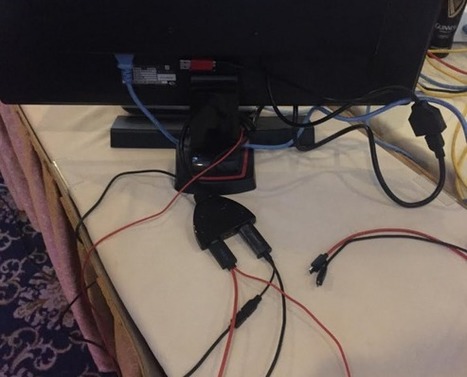
A little-known feature of many modern smartphones is their ability to duplicate video on the device’s screen so that it also shows up on a much larger display — like a TV. However, new research shows that this feature may quietly expose users to a simple and cheap new form of digital eavesdropping.
Learn more / En savoir plus / Mehr erfahren:
http://www.scoop.it/t/securite-pc-et-internet/?tag=USB
Gust MEES's insight:
A little-known feature of many modern smartphones is their ability to duplicate video on the device’s screen so that it also shows up on a much larger display — like a TV. However, new research shows that this feature may quietly expose users to a simple and cheap new form of digital eavesdropping.
Learn more / En savoir plus / Mehr erfahren:
http://www.scoop.it/t/securite-pc-et-internet/?tag=USB
Scoop.it!

Cybersecurity researchers at Symantec have discovered a previously-unknown hacker group they have dubbed 'Strider', which has been infecting organisations and individuals that would be of potential interest to a nation state's intelligence services.
Learn more / En savoir plus / Mehr erfahren:
http://www.scoop.it/t/securite-pc-et-internet/?tag=Remsec
Gust MEES's insight:
Cybersecurity researchers at Symantec have discovered a previously-unknown hacker group they have dubbed 'Strider', which has been infecting organisations and individuals that would be of potential interest to a nation state's intelligence services.
Learn more / En savoir plus / Mehr erfahren:
http://www.scoop.it/t/securite-pc-et-internet/?tag=Remsec
Scoop.it!

Some days you can't win for losing. In 2012, Linux implemented a new TCP/IP networking standard, RFC 5961, Improving TCP's Robustness to Blind In-Window Attacks, to improve security. In the process, they opened up a heretofore unknown security hole. Ironically, other operating systems that lagged in implementing this new "security" mechanism -- such as FreeBSD, macOS, and Windows -- are immune to this new attack vector.
This is potentially a big deal because it can be used to break, or even hijack, Internet connections between Linux and Android systems. So, for example, if an Android smartphone connected to USA Today, the connection could be interrupted. The same attack, however, would fail if it were made on a link between a Windows PC and USA Today.
The problem exists in any operating system running Linux kernel 3.6 or newer. Linux 3.6 was introduced in 2012. The vulnerability allows an attacker from anywhere on the Internet to search for connections between a client and a server. Once such a network connection is found, the attacker can invade it, cause connection termination, and perform data injection attacks.
How bad is it? The discoverers say that the attack is fast and reliable, takes less than a minute, and works about 90 percent of the time.
Learn more / En savoir plus / Mehr erfahren:
http://www.scoop.it/t/securite-pc-et-internet/?tag=Linux
Gust MEES's insight:
Some days you can't win for losing. In 2012, Linux implemented a new TCP/IP networking standard, RFC 5961, Improving TCP's Robustness to Blind In-Window Attacks, to improve security. In the process, they opened up a heretofore unknown security hole. Ironically, other operating systems that lagged in implementing this new "security" mechanism -- such as FreeBSD, macOS, and Windows -- are immune to this new attack vector.
This is potentially a big deal because it can be used to break, or even hijack, Internet connections between Linux and Android systems. So, for example, if an Android smartphone connected to USA Today, the connection could be interrupted. The same attack, however, would fail if it were made on a link between a Windows PC and USA Today.
The problem exists in any operating system running Linux kernel 3.6 or newer. Linux 3.6 was introduced in 2012. The vulnerability allows an attacker from anywhere on the Internet to search for connections between a client and a server. Once such a network connection is found, the attacker can invade it, cause connection termination, and perform data injection attacks.
How bad is it? The discoverers say that the attack is fast and reliable, takes less than a minute, and works about 90 percent of the time.
Learn more / En savoir plus / Mehr erfahren:
http://www.scoop.it/t/securite-pc-et-internet/?tag=Linux
Scoop.it!

The number of high-profile hacks demonstrates that a silent cyberwar is already ongoing among countries in the cyberspace.
Learn more / En savoir plus / Mehr erfahren:
http://www.scoop.it/t/securite-pc-et-internet/?tag=cyberwar
Gust MEES's insight:
The number of high-profile hacks demonstrates that a silent cyberwar is already ongoing among countries in the cyberspace.
Learn more / En savoir plus / Mehr erfahren:
http://www.scoop.it/t/securite-pc-et-internet/?tag=cyberwar
Scoop.it!

Hackers have compromised the Bitcoin exchange Bitfinex, the company announced today, withdrawing roughly $61 million from various consumer accounts. The causes of the breach are still unclear, but the attackers appear to have bypassed Bitfinex’s mandated limits on withdrawals.
If you had a Bitcoin wallet with Bitfinex I imagine you would be quite worried right now. In fact, if you had a Bitcoin wallet anywhere else you probably shouldn't be feeling too smug. Security Week reports that the value of Bitcoin has dropped by more than 20% since the incident.
Learn more / En savoir plus / Mehr erfahren:
http://www.scoop.it/t/21st-century-learning-and-teaching/?tag=Ethereum
http://www.wired.com/2016/06/50-million-hack-just-showed-dao-human/
http://www.scoop.it/t/luxembourg-europe/?tag=Bitcoin
http://www.scoop.it/t/21st-century-learning-and-teaching/?tag=blockchain
http://www.scoop.it/t/securite-pc-et-internet/?tag=Phishing
Gust MEES's insight:
Hackers have compromised the Bitcoin exchange Bitfinex, the company announced today, withdrawing roughly $61 million from various consumer accounts. The causes of the breach are still unclear, but the attackers appear to have bypassed Bitfinex’s mandated limits on withdrawals.
If you had a Bitcoin wallet with Bitfinex I imagine you would be quite worried right now. In fact, if you had a Bitcoin wallet anywhere else you probably shouldn't be feeling too smug. Security Week reports that the value of Bitcoin has dropped by more than 20% since the incident.
Learn more / En savoir plus / Mehr erfahren:
http://www.scoop.it/t/21st-century-learning-and-teaching/?tag=Ethereum
http://www.wired.com/2016/06/50-million-hack-just-showed-dao-human/
http://www.scoop.it/t/luxembourg-europe/?tag=Bitcoin
http://www.scoop.it/t/21st-century-learning-and-teaching/?tag=blockchain
http://www.scoop.it/t/securite-pc-et-internet/?tag=Phishing
Scoop.it!
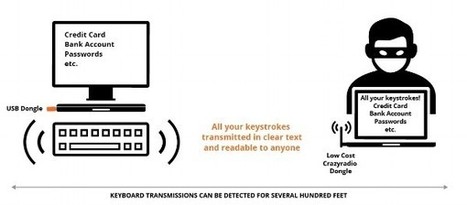
Millionen kabellose Tastaturen senden Daten im Klartext.
Kabellose Tastaturen sollten eigentlich so gebaut sein, dass die darauf getippten Informationen nur verschlüsselt übertragen werden. Millionen Geräte von mindestens acht großen Herstellern patzen dabei aber heftig, wie Forscher entdeckt haben. Selbst Laien werden vermutlich verständnislos mit dem Kopf schütteln, wenn Marc Newlin kommende Woche auf der Defcon-Konferenz in Las Vegas seinen neuen Angriff gegen regulär im Handel erhältliche Funktastaturen präsentiert. Der Mitarbeiter der IT-Sicherheitsfirma Bastille Networks und sein Team haben nach eigenen Angaben herausgefunden, dass preisgünstige kabellose Keyboards von mindestens acht großen Herstellern sämtliche auf ihnen getippten Informationen unverschlüsselt an ihren USB-Dongle senden.
Learn more / En savoir plus / Mehr erfahren:
http://www.scoop.it/t/securite-pc-et-internet?q=cyberespionage
http://www.scoop.it/t/securite-pc-et-internet/?tag=Wireless+Mice+and+Keyboards+vulnerability
Gust MEES's insight:
Millionen kabellose Tastaturen senden Daten im Klartext.
Kabellose Tastaturen sollten eigentlich so gebaut sein, dass die darauf getippten Informationen nur verschlüsselt übertragen werden. Millionen Geräte von mindestens acht großen Herstellern patzen dabei aber heftig, wie Forscher entdeckt haben. Selbst Laien werden vermutlich verständnislos mit dem Kopf schütteln, wenn Marc Newlin kommende Woche auf der Defcon-Konferenz in Las Vegas seinen neuen Angriff gegen regulär im Handel erhältliche Funktastaturen präsentiert. Der Mitarbeiter der IT-Sicherheitsfirma Bastille Networks und sein Team haben nach eigenen Angaben herausgefunden, dass preisgünstige kabellose Keyboards von mindestens acht großen Herstellern sämtliche auf ihnen getippten Informationen unverschlüsselt an ihren USB-Dongle senden.
Learn more / En savoir plus / Mehr erfahren:
http://www.scoop.it/t/securite-pc-et-internet?q=cyberespionage
http://www.scoop.it/t/securite-pc-et-internet/?tag=Wireless+Mice+and+Keyboards+vulnerability
Scoop.it!

Tor, or “The Onion Router” as it was originally known, is used around the world as an anonymity network. It provides a private method of communication for journalists, those living under authoritarian governments, and people who are just up to some shady stuff. While Tor is still the most robust form of online anonymity we have, it’s not bulletproof as the repeated takedown of The Silk Road and other law enforcement actions have shown. Now, two computer scientists say they’ve uncovered snoops inside the Tor network that may be listening in on what you’re doing.
Learn more / En savoir plus / Mehr erfahren:
http://www.scoop.it/t/securite-pc-et-internet?q=tor
Gust MEES's insight:
Tor, or “The Onion Router” as it was originally known, is used around the world as an anonymity network. It provides a private method of communication for journalists, those living under authoritarian governments, and people who are just up to some shady stuff. While Tor is still the most robust form of online anonymity we have, it’s not bulletproof as the repeated takedown of The Silk Road and other law enforcement actions have shown. Now, two computer scientists say they’ve uncovered snoops inside the Tor network that may be listening in on what you’re doing.
Learn more / En savoir plus / Mehr erfahren:
http://www.scoop.it/t/securite-pc-et-internet?q=tor
Scoop.it!

Nach dem Weggang von Jacob Appelbaum erneuert das Torprojekt alle Direktoren. Unter anderen ersetzt der renommierte Kryptologe und Sicherheitsforscher Bruce Schneier zwei...
Learn more / En savoir plus / Mehr erfahren:
http://www.scoop.it/t/securite-pc-et-internet/?tag=TOR
Gust MEES's insight:
Nach dem Weggang von Jacob Appelbaum erneuert das Torprojekt alle Direktoren. Unter anderen ersetzt der renommierte Kryptologe und Sicherheitsforscher Bruce Schneier zwei...
Learn more / En savoir plus / Mehr erfahren:
http://www.scoop.it/t/securite-pc-et-internet/?tag=TOR
Scoop.it!

In response to the disclosure of vulnerabilities in Tor's design, researchers at MIT have created Riffle, a system that allegedly provides better security and uses bandwidth more efficiently.
Gust MEES's insight:
In response to the disclosure of vulnerabilities in Tor's design, researchers at MIT have created Riffle, a system that allegedly provides better security and uses bandwidth more efficiently.
Scoop.it!

Zwei Sicherheitsforscher hatten Zugriff auf die Steuerungs-Systeme verschiedener Wasserwerke aus Deutschland. Dabei hätten sie die Anlagen sabotieren können. Einzelfälle seien das nicht.
Gust MEES's insight:
Zwei Sicherheitsforscher hatten Zugriff auf die Steuerungs-Systeme verschiedener Wasserwerke aus Deutschland. Dabei hätten sie die Anlagen sabotieren können. Einzelfälle seien das nicht.
Scoop.it!
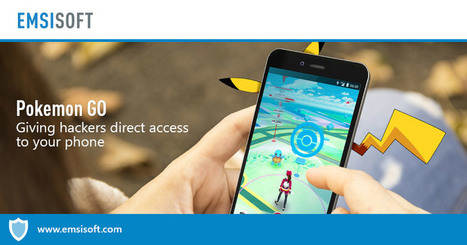
Pokemon Go hat ganze Städte weltweit in seinen Bann gezogen. Aber hat es auch Hackern ermöglicht, auf Ihr Telefon zuzugreifen? |






Learn more / En savoir plus / Mehr erfahren:
http://www.scoop.it/t/securite-pc-et-internet/?tag=NSA