 Your new post is loading...

|
Scooped by
Gust MEES
August 14, 2017 12:26 PM
|
Electronic Frontier Foundation demande à la Cour suprême américaine d'annuler une décision de cour d'appel, fondée sur des emails récupérés par la NSA. Pour la fondation, la collecte d'emails d'un Américain, sans mandat, viole le Quatrième Amendement de la Constitution.
Nouveau front contre la surveillance outre-Atlantique. Le 10 août, l'Electronic Frontier Foundation, le Center for Democracy & Technology et le New America's Open Technology Institute ont annoncé la saisine de la Cour suprême. Les organisations demandent à la plus haute juridiction du pays d'invalider une décision d'une cour d'appel, datée de décembre 2016, basée sur des communications obtenues via le programme PRISM de la NSA.
La Cour d'appel des États-Unis pour le neuvième circuit, dans le procès de Mohamed Osman Mohamud, qui a tenté de commettre un attentat à Portland en 2010, a estimé que les emails utilisés dans son procès ont été récupérés conformément à la Constitution. Une vision que contredisent directement les nouveaux plaignants. Learn more / En savoir plus / Mehr erfahren: http://www.scoop.it/t/securite-pc-et-internet/?&tag=NSA http://www.scoop.it/t/securite-pc-et-internet/?&tag=Cyberespionage
|
|
Scooped by
Gust MEES
August 10, 2017 1:36 PM
|
|
|
Scooped by
Gust MEES
August 3, 2017 12:51 PM
|
Un pirate informatique infiltre le site Internet dédié aux prises de rendez-vous avec un médecin, Digitale Wachtkamer. Plus de 500 000 patients concernés.
Le site Data Security Breach revient sur l’infiltration d’un espace numérique appartenant au portail de santé Digitale Wachtkamer. Ce web belge permet aux sujets du royaume de prendre un rendez-vous chez un médecin. Un pirate informatique a trouvé le moyen d’infiltrer la zone de prise de contact et a mis la main sur, au moins, 500 000 utilisateurs. Un chantage ! Le malveillant a réclamé 85 000 euros en bitcoins afin de ne pas divulguer sur la toile sa découverte et les données volées. L’entreprise a déposé plainte et n’a pas payé. Comme le rappelle DataSecurityBreach.fr, le site était faillible depuis plusieurs années. Une alerte avait même été communiquée à Digitale Wachtkamer sans qu’elle ne soit prise en compte. Un alerte au sujet d’une vulnérabilité datant de … 2013 ! Learn more / En savoir plus / Mehr erfahren: http://www.scoop.it/t/securite-pc-et-internet/?&tag=DATA-BREACHES
|
|
Scooped by
Gust MEES
July 21, 2017 11:11 AM
|
An advanced hacking and cyberespionage campaign against high-value targets has returned.
The so-called 'DarkHotel' group has been active for over a decade, with a signature brand of cybercrime that targets business travellers with malware attacks, using the Wi-Fi in luxury hotels across the globe.
Hotel Wi-Fi hotspots are compromised in order to help deliver the payload to the selected pool of victims. The exact methods of compromise remain uncertain, but cybersecurity experts believe it involves attackers remotely exploiting vulnerabilities in server software or infiltrating the hotel and gaining physical access to the machines. Learn more / En savoir plus / Mehr erfahren: https://gustmees.wordpress.com/2013/05/27/dangers-of-wifi-in-public-places/ http://www.scoop.it/t/securite-pc-et-internet/?&tag=WiFi
|
|
Scooped by
Gust MEES
July 20, 2017 11:51 AM
|
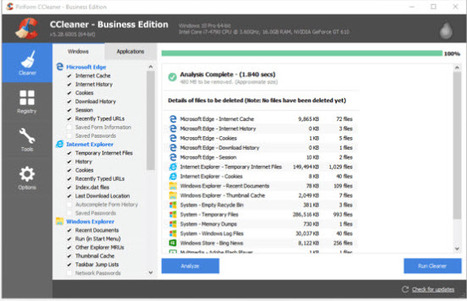
Avast s’offre Piriform, l’éditeur de CCleaner
L’éditeur de sécurité tchèque s’offre Piriform, qui édite le très connu outil de nettoyage CCleaner, mais aussi d’autres logiciels comme Recuva ou Defraggler.
CCleaner est le produit emblématique de l’éditeur Piriform, un éditeur de logiciels de sécurité britannique. Cet utilitaire de nettoyage des ordinateurs est utilisé par environ 130 millions de personnes à travers le monde, dont 15 millions sur mobiles. Sa simplicité a fait de lui un incontournable, tant pour les particuliers que pour les entreprises qui sont aussi nombreuses à utiliser la version professionnelle et/ou la version cloud. Learn more / En savoir plus / Mehr erfahren: http://www.scoop.it/t/securite-pc-et-internet/?&tag=acquisitions
|
|
Scooped by
Gust MEES
July 18, 2017 8:38 AM
|
A hacker has made off with roughly $7.4 million in virtual currency after pouncing during an ethereum ICO.
As reported my Motherboard, the hacker took the opportunity to disrupt the Initial Coin Offering (ICO) of CoinDash, a trading platform for cryptocurrencies.
On Monday, CoinDash held its Token Sale event, in which investors were meant to be able to fund apps in development with virtual currency in return for a stake in such applications in an event similar to a crowdfunding campaign.
The CoinDash ICO, like many others in which cryptocurrency "tokens" (CDT) were exchanged for shares in a project, was keenly anticipated by investors.
However, this time, something went terribly wrong.
Learn more / En savoir plus / Mehr erfahren: http://www.scoop.it/t/securite-pc-et-internet/?&tag=ETHEREUM http://www.scoop.it/t/securite-pc-et-internet/?&tag=crypto-currency
|
|
Scooped by
Gust MEES
July 12, 2017 8:06 AM
|
Donald Trump may know more about hacking than he’s letting on.
That’s because it has been revealed that the US president’s family-run hotel business has once again been hit by hackers, who have stolen the payment card information from guests at 14 different Trump properties.
A letter posted on the Trump Hotels corporate website explained that the hackers broke into Sabre Hospitality Solutions, a reservation service used by Trump Hotels, to steal data: Learn more / En savoir plus / Mehr erfahren: http://www.scoop.it/t/securite-pc-et-internet/?&tag=DATA-BREACHES
|
|
Scooped by
Gust MEES
July 11, 2017 11:11 AM
|
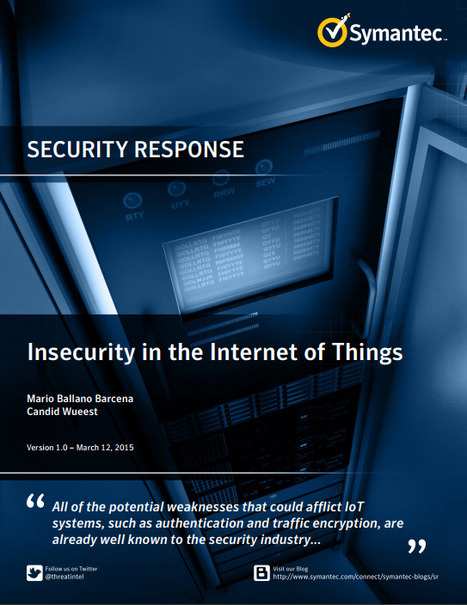
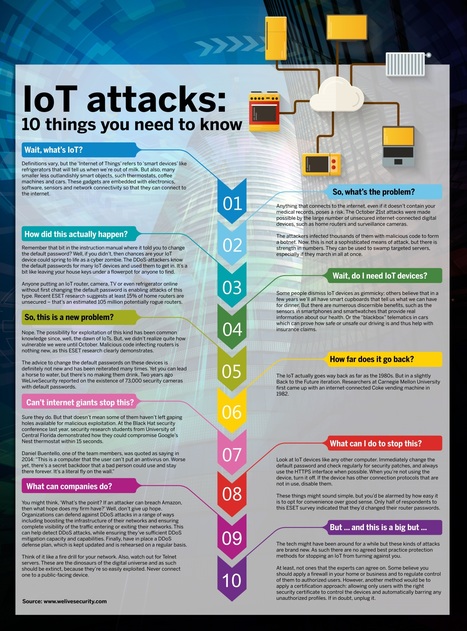
The Internet of Things (IoT) market has begun to take off. Consumers can buy connected versions of nearly every household appliance available. However, despite its increasing acceptance by consumers, recent studies of IoT devices seem to agree that “security” is not a word that gets associated with this category of devices, leaving consumers potentially exposed.
To find out for ourselves how IoT devices fare when it comes to security, we analyzed 50 smart home devices that are available today. We found that none of the devices enforced strong passwords, used mutual authentication, or protected accounts against brute-force attacks. Almost two out of ten of the mobile apps used to control the tested IoT devices did not use Secure Sockets Layer (SSL) to encrypt communications to the cloud. The tested IoT technology also contained many common ulnerabilities.
All of the potential weaknesses that could afflict IoT systems, such as authentication and traffic encryption, are already well known to the security industry, but despite this, known mitigation techniques are often neglected on these devices. IoT vendors need to do a better job on security before their devices become ubiquitous in every home, leaving millions of people at risk of cyberattacks. Learn more / En savoir plus / Mehr erfahren: http://www.scoop.it/t/securite-pc-et-internet/?&tag=Internet+of+things
|
|
Scooped by
Gust MEES
July 8, 2017 7:56 AM
|
A newly uncovered form of Android malware aims to steal data from over 40 popular apps including Facebook, WhatsApp, Skype and Firefox - and the trojan has been actively engaging in in this illicit activity for almost two years.
Dubbed SpyDealer by the Palo Alto Networks researchers who discovered it, the malware harvests vast accounts of personal information about compromised users, including phone numbers, messages, contacts, call history, connected wi-fi information and even the location of the device.
The espionage capabilities of the trojan also enable it to record phone calls and videos, along with surrounding audio and video, take photos with both front and rear cameras, take screenshots of sensitive information and monitor the devices location at all times.
Described as an advanced form of Android malware, SpyDealer is able to open a backdoor onto compromised devices by abusing a commercially available Android accessibility service feature in order to root phones into providing superuser privileges.
Samples of the malware analysed by researchers suggests that the malware reuses root exploits used by commercial rooting app "Baidu Easy Root" in order to maintain itself on the compromised device while it harvests personal information and spies on communications from the apps with root privilege. According to the researchers, SpyDealer attempts to steal data from apps including WeChat, Facebook, WhatsApp, Skype, Line, Viber, QQ, Tango, Telegram, Sina Weibo, Tencent Weibo, Android Native Browser, Firefox Browser, Oupeng Brower, QQ Mail, NetEase Mail, Taobao, and Baidu Net Disk. Learn more / En savoir plus / Mehr erfahren: http://www.scoop.it/t/securite-pc-et-internet/?&tag=Android
|
|
Scooped by
Gust MEES
July 7, 2017 5:46 PM
|
Google’s July 2017 security fixes for Android are out.
As far as we can see, there are 138 bugs listed, each with its own CVE number, of which 18 are listed with the tag “RCE”.
RCE stands for Remote Code Execution, and denotes the sort of vulnerability that could be abused by a crook to run some sort of program sent in from outside – without any user interaction.
Generally speaking, RCE bugs give outsiders a sneaky chance to trigger the sort of insecure behaviour that would usually either pop up an obvious “Are you sure?” warning, or be blocked outright by the operating system.
In other words, RCEs can typically be used for so-called “drive-by” attacks, where just visiting a web page or looking at an email might leave you silently infected with malware.
Learn more / En savoir plus / Mehr erfahren: http://www.scoop.it/t/securite-pc-et-internet/?&tag=Android
|
|
Scooped by
Gust MEES
July 6, 2017 11:30 AM
|
Entwarnung aufgrund sinkender Malware-Zahlen? Weit gefehlt. Denn die Formel der 2016 neu entwickelten Angriffsstrategien lautet: Klasse statt Masse! Ob mit immer ausgefeilterer Ransomware wie WannaCry oder aktuell Petya sowie Banking-Trojanern oder durch gezielte Attacken auf das quasi ungeschützte Internet der Dinge: Cyberkriminelle sind technisch auf Höhe der Zeit – und im Bereich IoT sogar deutlich weiter. Learn more / En savoir plus / Mehr erfahren: http://www.scoop.it/t/securite-pc-et-internet/
|
|
Scooped by
Gust MEES
June 28, 2017 11:46 AM
|
Ein riesiger Ausbruch eines weiteren Erpressungstrojaners hält die Welt in Atem. Wie kam es zu dem Angriff, wer profitiert davon und was kann ich unternehmen, um mich zu schützen? Wir haben den aktuellen Wissensstand zusammengetragen.
Keine zwei Monate nach der aufsehenerregenden Attacke des Erpressungstrojaners WannaCry rollt eine zweite Ransomware-Welle um den halben Globus. Dabei scheint es sich, wenigstens dem Anschein nach, um eine neue Version des Trojaners Petya zu handeln. Ziemlich schnell wurde Sicherheitsforschern, die den Ausbruch untersuchten, allerdings klar, dass es sich bei den Angreifern diesmal wohl nicht um einfache Erpresser handelt. Die neue Petya-Variante scheint Erpressung nur als Vorwand zu verwenden – eigentlich geht es wohl darum, möglichst viel Chaos zu erzeugen und Firmen lahmzulegen. Alles deutet auf eine politisch motivierte Cyberattacke hin. Bei dem neuen Angriff scheint es sich allerdings gar nicht um Petya zu handeln. Vielmehr sieht alles nach einem ganz neuen Trojaner aus, der nur den Anschein erweckt, er sei mit Petya, Mischa und Goldeneye verwandt. Kaspersky bezeichnet die neue Malware deswegen explizit als NotPetya und auch andere Sicherheitsforscher sind mittlerweile dazu übergegangen. Learn more / En savoir plus / Mehr erfahren: http://www.scoop.it/t/securite-pc-et-internet/?&tag=RANSOMWARE http://www.scoop.it/t/securite-pc-et-internet/?&tag=Petya http://www.scoop.it/t/securite-pc-et-internet/?&tag=NotPetya
|
|
Scooped by
Gust MEES
June 27, 2017 5:12 PM
|
A new strain of the Petya ransomware started propagating on June 27, 2017, infecting many organizations. Similar to WannaCry, Petya uses the Eternal Blue exploit to propagate itself.
Am I protected from the Petya Ransomware?
Symantec Endpoint Protection (SEP) and Norton products proactively protect customers against attempts to spread Petya using Eternal Blue. SONAR behavior detection technology also proactively protects against Petya infections.
Symantec products also detect Petya components as Ransom.Petya.
What is Petya?
Petya has been in existence since 2016. It differs from typical ransomware as it doesn’t just encrypt files, it also overwrites and encrypts the master boot record (MBR).
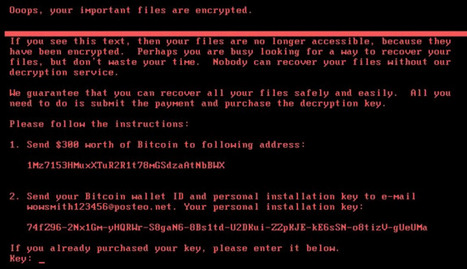
In this latest attack, the following ransom note is displayed on infected machines, demanding that $300 in bitcoins be paid to recover files: Learn more / En savoir plus / Mehr erfahren: http://www.scoop.it/t/securite-pc-et-internet/?&tag=RANSOMWARE http://www.scoop.it/t/securite-pc-et-internet/?&tag=Petya
|
|
|
Scooped by
Gust MEES
August 10, 2017 4:19 PM
|
Die Elcomsoft-Software "Distributed Password Recovery" verspricht Ungeheueres: In der neuen Version 3.40 soll das Tool nun in der Lage sein, die bekannten Passwort-Manager 1Password, KeePass, LastPass und Dashlane zu knacken. Learn more / En savoir plus / Mehr erfahren: http://www.scoop.it/t/securite-pc-et-internet/?&tag=Passwords
|
|
Scooped by
Gust MEES
August 5, 2017 10:56 AM
|
|
|
Scooped by
Gust MEES
July 23, 2017 12:27 PM
|
Since the US Government has passed the bill that vows to effectively shake up the internet privacy rules, the web users are left with no choice other than doing something on their own to protect their online privacy and keeping their online data safe from the prying eyes. With the emergence of best free VPN services in the market, it’s high time users paid attention to conceal their online privacy from the invaders.
Internet Privacy Rule Repealed
The US House of Representatives has unabashedly repealed the internet privacy law in the US, causing users to become worried about their online security. The repercussions of internet privacy law revocation might not go down well for the users because this revocation allows internet service providers and internet giants to collect, share, or even sell their personal data to other marketing agencies to gain profits. Learn more / En savoir plus / Mehr erfahren: https://gustmees.wordpress.com/2013/05/27/dangers-of-wifi-in-public-places/ http://www.scoop.it/t/21st-century-learning-and-teaching/?&tag=VPN http://www.scoop.it/t/securite-pc-et-internet/?&tag=VPN
|
|
Scooped by
Gust MEES
July 21, 2017 7:38 AM
|
|
|
Scooped by
Gust MEES
July 19, 2017 6:16 PM
|
|
|
Scooped by
Gust MEES
July 12, 2017 3:21 PM
|
Security experts are warning that millions of Verizon customer accounts could still be at risk after a data exposure by an Israeli company working for the phone giant.
Chris Vickery, director of cyber risk research at security firm UpGuard, found as many as 14 million customer records for the past six months on an exposed and unprotected Amazon S3 cloud server in late June.
This sensitive data includes millions of individual customer names, phone numbers, and their account PIN, which we confirmed is all that can be needed by an attacker to access a person's account. That can lead to phone number hijacking and account takeovers, which could allow hackers to break into a person's email and social media accounts protected even by two-factor authentication, according to security experts briefed on the exposure prior to publication.
Verizon said that an investigation determined that "no other external party accessed the data," but did not say how it came to that conclusion. The logic goes that if a security researcher found the data, there's no telling who else might have done. Learn more / En savoir plus / Mehr erfahren: http://www.scoop.it/t/securite-pc-et-internet/?&tag=DATA-BREACHES
|
|
Scooped by
Gust MEES
July 12, 2017 7:55 AM
|
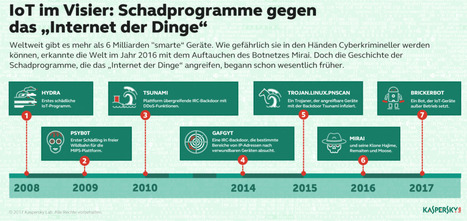
Im Jahr 2016 wurden einige Ereignisse publik, die das Interesse an dem Thema Sicherheit so genannter intelligenter Geräte spürbar verstärkt haben. Zu diesen Ereignissen zählten beispielsweise die bezüglich ihrer Durchschlagskraft rekordverdächtigen DDoS-Attacken auf das französiche Hosting-Unternehmen OVH und den amerikanische DNS-Provider Dyn. Es ist bekannt, dass sie mit Hilfe eines beeindruckenden Botnetzes aus Routern, IP-Kameras, Druckern und anderen Geräten durchgeführt wurden. Außerdem erfuhr die Welt Ende letzten Jahres von einem gigantischen Botnet (fast fünf Millionen Geräte), das sich aus Routern zusammensetzte. Mit dem Hack von Routern musste sich auch die Deutsche Telekom herumschlagen, deren Nutzergeräte mit dem Schädling Mirai infiziert waren. Die Angelegenheit beschränkt sich aber nicht ausschließlich auf Netzwerkausrüstung: Sicherheitsprobleme wurden auch in „intelligenten“ Geschirrspülern von Miele und in AGA-Kochherden gefunden. Den Vogel abgeschossen hat allerdings BrickerBot, der im Gegensatz zu seinen „Kollegen“ angreifbare Geräte nicht nur infizierte, sondern diese auch noch komplett außer Betrieb setzte. Learn more / En savoir plus / Mehr erfahren: http://www.scoop.it/t/securite-pc-et-internet/?&tag=Internet+of+things
|
|
Scooped by
Gust MEES
July 11, 2017 8:48 AM
|
|
|
Scooped by
Gust MEES
July 8, 2017 7:23 AM
|
Unidentified hackers have been targeting the networks of companies responsible for operating nuclear power plants in the US for the last two months, according to The New York Times. Citing a joint report issued by both the Department of Homeland Security and the FBI some time last week, The Times’ story identifies one target as the Wolf Creek Nuclear Operating Corporation, a facility responsible for overseeing the operation of a nuclear power plant outside Burlington, Kansas. The report also states that energy companies and manufacturing plants are also being targeted, yet none are identified by name. Learn more / En savoir plus / Mehr erfahren: http://www.scoop.it/t/securite-pc-et-internet/?&tag=Cyberattacks
|
|
Scooped by
Gust MEES
July 6, 2017 2:40 PM
|
Chinese researchers have discovered a way to rapidly decrypt satellite phone communications -- within a fraction of a second in some cases.
The paper, published this week, expands on previous research by German academics in 2012 by rapidly speeding up the attack and showing that the encryption used in popular Inmarsat satellite phones can be cracked in "real time."
Satellite phones are used by those in desolate environments, including high altitudes and at sea, where traditional cell service isn't available. Modern satellite phones encrypt voice traffic to prevent eavesdropping. It's that modern GMR-2 algorithm that was the focus of the research, given that it's used in most satellite phones today.
The researchers tried "to reverse the encryption procedure to deduce the encryption-key from the output keystream directly," rather than using the German researchers' method of recovering an encryption key using a known-plaintext attack. Learn more / En savoir plus / Mehr erfahren: http://www.scoop.it/t/securite-pc-et-internet/
|
|
Scooped by
Gust MEES
June 28, 2017 11:56 AM
|
|
|
Scooped by
Gust MEES
June 27, 2017 5:18 PM
|
An outbreak of a particularly nasty ransomware family is making its way across the globe. And while the current outbreak has similarities with last month’s WannaCry epidemic, security researchers warn that the current campaign is much more professional, and potentially much worse for companies.
F-Secure Labs has confirmed that the ransomware being used this time around is the Petya ransomware family, and that it is behaving like a network worm, spreading through the same SMB vulnerability (using the EternalBlue exploit developed by the NSA) as WannaCry.
F-Secure Labs’ Jarkko described Petya as ransomware with an evil twist in a blog post he wrote in 2016. Rather than just encrypt files, it locks the entire disk, making it basically unusable until the infection is removed. Learn more / En savoir plus / Mehr erfahren: http://www.scoop.it/t/securite-pc-et-internet/?&tag=RANSOMWARE http://www.scoop.it/t/securite-pc-et-internet/?&tag=Petya
|























Learn more / En savoir plus / Mehr erfahren:
http://www.scoop.it/t/securite-pc-et-internet/?&tag=NSA
http://www.scoop.it/t/securite-pc-et-internet/?&tag=Cyberespionage