Your new post is loading...

|
Scooped by
Gust MEES
October 7, 2011 7:44 AM
|
Apache beseitigt neue Lücke in seinen Webservern Ein Sicherheits-Dienstleister fand eine neue Möglichkeit, Security-Funktionen von Reverse Proxies in Apache-Server-Umgebungen zu umgehen. 6. Oktober 2011 von Manfred Kohlen 0 Nach einem Bericht von Context Information Security sind mehrere Versionen des Apache-Servers von einer Sicherheitslücke betroffen, die es Angreifern erlaubt, eigenen Code einzuschleusen und auszuführen. Das Problem betreffe unsicher konfigurierte Reverse-Web-Proxies. Um einen Patch bereitzustellen, der solche ausnutzbaren Fehlkonfigurationen reduziert, hat Context mit der Apache Foundation zusammengearbeitet.
|
|
Scooped by
Gust MEES
October 7, 2011 6:35 AM
|
Apache Issues Patch To Stop Reverse-Proxy Bypass Attack Other Web platforms also potentially susceptible to attack exploiting a misconfigured file to hack into databases, network devices
|
|
Scooped by
Gust MEES
October 7, 2011 3:22 AM
|
La technologie Wifi est de plus en plus présente dans notre quotidien, non seulement à votre domicile, mais aussi dans votre espace de travail, votre café du coin, dans les hôtels, certains lieux publics, etc… S’il est facile de se connecter sans fil à ces points d’accès, il s’avère qu’il est aussi très facile d’empêcher les connexions à un point d’accès Wifi grâce à un nouveau type d’attaque !
|
|
Scooped by
Gust MEES
October 7, 2011 2:48 AM
|
A new survey of American teenagers and young adults has discovered that three out of every 10 have had their Facebook, Twitter or MySpace accounts broken into for the purposes of snooping or impersonation.
|
|
Scooped by
Gust MEES
October 7, 2011 2:03 AM
|
KOCHI: Two months after the city police began steps to monitor the activities of cyber cafes in Kochi, more measures are on the ca..
|
|
Scooped by
Gust MEES
October 7, 2011 1:33 AM
|
After a relatively quiet Patch Tuesday in September, Microsoft is releasing fixes for 23 separate vulnerabilities in its security update for October 2011.
|
|
Scooped by
Gust MEES
October 6, 2011 4:52 PM
|
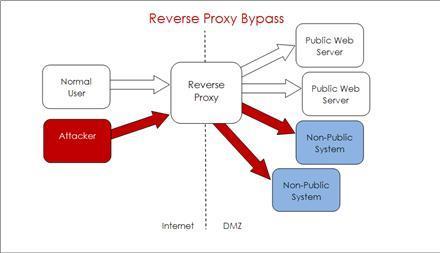
Maintainers of the open-source Apache webserver are warning that their HTTP daemon is vulnerable to exploits that expose internal servers to remote attackers who embed special commands in website addresses. The weakness in 1.3 and all 2.x versions of the Apache HTTP Server can be exploited only under certain conditions. For one, they must be running in reverse proxy mode, a setting often used to perform load balancing or to separate static content from dynamic content. And even then, internal systems are susceptible to unauthorized access only when certain types of reverse proxy rewrite rules are used.
|
|
Scooped by
Gust MEES
October 6, 2011 3:11 PM
|
OK, that title must have been used before. But it's more than usually apposite, in the context of a fascinating World Policy Journal interview with Maj. Gen. Jonathan Shaw, who has the unenviable responsibility for future warfare management in the U.K. – “international security, global issues, and especially cyberwar – or as he prefers to call it, unrestricted warfare.”
Inevitably, discussions of cyberwar and cybercrime tend to center on technology, and, of course, that's how it has to be in terms of short-term response and counter-response. However, Shaw quite rightly goes back to first principles with a quotation from Clausewitz: “If there must be war, victory lies not in defeating an army, but in securing the willing submission of a populace. Stability, not a passing triumph of arms, is the test.”
|
|
Scooped by
Gust MEES
October 6, 2011 2:40 PM
|
Dark Reading is the premier online resource helping information security professionals manage the balance between protection and access.
|
|
Scooped by
Gust MEES
October 6, 2011 12:29 PM
|
Ukrainian gang stole millions from online accounts... October 06, 2011 — CSO — The most complex cybercrime investigation ever undertaken by UK police has resulted in another member of a gang that used the Zeus Trojan to raid online bank accounts being sentenced to two years behind bars. Latvian Karina Kostromina was originally arrested as part of Operation Lath in September 2010 along with 19 other mostly Ukrainian and Belarussians nationals, 13 of whom were eventually charged with offences. Found guilty of money laundering for the gang, Kostromina was also married to alleged gang ringleader, Yevhen Kulibaba, who has still to be sentenced.
|
|
Scooped by
Gust MEES
October 6, 2011 12:24 PM
|
/PRNewswire-USNewswire/ -- The National Cyber Security Alliance (NCSA) tomorrow will launch the 8th annual National Cyber Security Awareness Month (NCSAM) with an event in Ypsilanti, Michigan that will be available worldwide on Facebook Live,...
|
|
Scooped by
Gust MEES
October 6, 2011 11:43 AM
|
Tired of regulators from three or four federal agencies auditing your network security compliance every year? A congressional task force recommends a super-standard that would cut the number of annual audits back to just one.
|
|
Scooped by
Gust MEES
October 6, 2011 11:37 AM
|
Facebook vulnérable: restriction contournable...
|
|
|
Scooped by
Gust MEES
October 7, 2011 7:40 AM
|
There’s a new batch of malware making the rounds, this time directed at spreading banking malware through children’s games.
|
|
Scooped by
Gust MEES
October 7, 2011 6:27 AM
|
Each year, for the past four, Norton has delved deeper into the far-reaching negative affects of cybercrime on real people as well as tried to get a pulse on how the security implications of new emerging technologies and trends are shaping the way people use the internet. The study continues to be groundbreaking on a variety of levels and further exposes the truly devastating emotional and economic impact of cybercrime. This year the study is the most comprehensive to date as Norton has expanded its research to represent 24 countries, up from 14 last year. It has connected with 20,000 people around the world to gain an understanding of how cybercrime affects real people in real ways and how the adoption of new technologies, such as mobile, will affect people’s security. The costs of cybercrime are criminal: 388 billion USD lost in just 12 months. While half the world is in recession, cybercrime bucks the trend as a growth industry.
|
|
Scooped by
Gust MEES
October 7, 2011 3:10 AM
|
|
|
Scooped by
Gust MEES
October 7, 2011 2:22 AM
|
Absent forward slash leaves a gaping hole. The Apache Software Foundation has squashed a reverse proxy flaw affecting its servers in which little more than a missing forward slash had exposed untold numbers of network devices and information to hackers. Reverse proxies route external HTTP and HTTPS web requests to an internal web server. It is used in load balancing and to make multiple web servers at different paths appear as a single web interface.
|
|
Scooped by
Gust MEES
October 7, 2011 1:58 AM
|
Hackers have impersonated the people who own the profiles, or spy on them, by sifting through messages - and most of the time the victims know who has logged on as them.
|
|
Scooped by
Gust MEES
October 6, 2011 6:19 PM
|
October 6th 2011 - The Apache Software Foundation yesterday issued an advisory to all of its customers following the identification by researchers at...
|
|
Scooped by
Gust MEES
October 6, 2011 3:31 PM
|
Le groupe de hackers vient de lancer sa branche de recherche en sécurité, appelée Anon Analytics, et s'en sert pour étaler...
|
|
Scooped by
Gust MEES
October 6, 2011 3:02 PM
|
Criminals, security researchers, vendors and even investors are now taking mobile security more seriously.
|
|
Scooped by
Gust MEES
October 6, 2011 1:04 PM
|
In an inevitable turn of events, cybercriminals were found leveraging the death of Apple co-founder Steve Jobs through Facebook scams.
|
|
Scooped by
Gust MEES
October 6, 2011 12:25 PM
|
|
|
Scooped by
Gust MEES
October 6, 2011 12:06 PM
|
Skeleton template searches lead to malware...
|
|
Scooped by
Gust MEES
October 6, 2011 11:40 AM
|
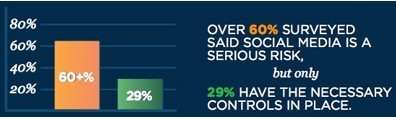
63 percent of more than 4,000 respondents in a new Ponemon Institute survey said that social media in the workplace represents a serious security risk — yet only 29 percent report having the necessary security controls in place to mitigate it. More than 50 percent of respondents report an increase in malware due to social media use.
|