 Your new post is loading...

|
Scooped by
Gust MEES
September 27, 2017 8:37 AM
|
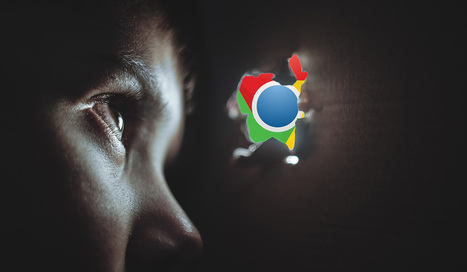
Das Bundesamt für Sicherheit in der Informationstechnik (BSI) warnt vor drei Sicherheitslücken in Googles Chrome-Browser. Auch die Open-Source-Variante Chromium soll betroffen sein.
Zwei der Schwachstellen sind als kritisch eingestuft. Sie ermöglichen es Hackern, beliebigen Code auszuführen.
Nutzern, die noch nicht auf die aktuellen Versionen (jeweils 61.0.3163.100) umgestiegen sind, wird dringend angeraten, das Browser-Update durchzuführen. Betroffen von der Schwachstelle sind Systeme mit Windows (ab Windows XP), Macintosh (Mac OS X und macOS Sierra) sowie Linux und Chrome OS. Bei Letzterem ist der Browser integraler Bestandteil.
Laut BSI ermöglichen die Lücken "einem entfernten, nicht authentifizierten Angreifer" das Ausführen von beliebigem Code. So könnte etwa ein Denial-of-Service (DoS)- Angriff durchgeführt werden.
Learn more / En savoir plus / Mehr erfahren: https://gustmees.wordpress.com/2012/05/02/get-smart-with-5-minutes-tutorialsit-securitypart-1-browsers/ https://gustmeesde.wordpress.com/2014/12/16/browser-sind-das-einfallstor-fur-malware-sind-eure-browser-up-to-date/
|
|
Scooped by
Gust MEES
June 1, 2017 11:50 AM
|
|
|
Scooped by
Gust MEES
January 24, 2017 12:58 PM
|
|
|
Scooped by
Gust MEES
December 15, 2016 5:22 AM
|
|
|
Scooped by
Gust MEES
August 31, 2016 7:09 AM
|
|
|
Scooped by
Gust MEES
April 6, 2016 7:43 AM
|
Google has banned the popular Better History Chrome extension after users complained that it hijacked their browsing sessions.
Looks like it was a money-making scheme. The extension was redirecting users’ HTTP traffic through a proxy service before taking them to their desired destinations, showing them an extra page with ads in 50% of the kidnapped sessions.
Not only did that garner advertising revenue for the extension’s owners; it also allowed them to snoop on users’ web traffic, collecting analytics that could later be sold to online advertisers.
Learn more / En savoir plus / Mehr erfahren: https://gustmees.wordpress.com/2012/05/02/get-smart-with-5-minutes-tutorialsit-securitypart-1-browsers/
|
|
Scooped by
Gust MEES
September 7, 2015 9:06 AM
|
|
|
Scooped by
Gust MEES
June 10, 2014 6:24 PM
|
Mozilla today officially launched Firefox 30 for Windows, Mac, Linux, and Android. Additions include a button for direct access to sidebars (social, bookma
|
|
Scooped by
Gust MEES
March 13, 2014 5:43 PM
|
Despite huge leaps in secure code, nothing is immune when hackers are motivated.
The first day of this year's Pwn2Own 2014and the companion contest that ran concurrently stuck with much the same theme, with successful hacks of the Internet Explorer, Firefox, and Safari browsers and Adobe's Flash and Reader applications.
But as long as there's a strong enough incentive—say, in the form of financial gain or the ability to acquire valuable national security or industry intelligence—exploits like the ones delivered at Pwn2Own won't just be possible. They'll be inevitable.
|
|
Scooped by
Gust MEES
November 11, 2013 10:36 AM
|
Eine neue Schadsoftware ist entdeckt worden, die keine Datenspuren auf dem befallenen Rechner hinterlässt. Das trojanische Pferd nistet sich direkt im Arbeitsspeicher ein. Die Schadsoftware wird über eine prominente Webseite verteilt und nutzt eine Sicherheitslücke im Internet Explorer.
|
|
Rescooped by
Gust MEES
from 21st Century Learning and Teaching
October 31, 2013 9:35 AM
|
Google today announced Chrome is getting automatic download blocking for malware the company detects. The feature has already been added to the latest build of Chrome Canary.
Chrome ...
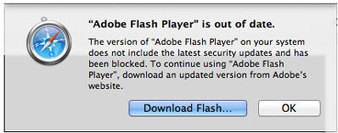
A little over a month ago, Mozilla has announced that Firefox will be preventing all plug-ins except the current version of Flash from loading automatically, requiring users who explicitly want to use them to start them themselves.
Last week, Apple has decided to do the same with older versions of the Adobe Flash Player plug-in.
Via Gust MEES
|
|
|
Scooped by
Gust MEES
June 3, 2017 11:16 AM
|
|
|
Scooped by
Gust MEES
March 8, 2017 10:18 AM
|
|
|
Scooped by
Gust MEES
January 13, 2017 12:45 PM
|
|
|
Scooped by
Gust MEES
October 2, 2016 11:56 AM
|
To protect users from cryptographic attacks that can compromise secure web connections, the popular Firefox browser will block access to HTTPS servers that use weak Diffie-Hellman keys.
Diffie-Hellman is a key exchange protocol that is slowly replacing the widely used RSA key agreement for the TLS (Transport Layer Security) protocol. Unlike RSA, Diffie-Hellman can be used with TLS's ephemeral modes, which provide forward secrecy -- a property that prevents the decryption of previously captured traffic if the key is cracked at a later time. Learn more / En savoir plus / Mehr erfahren: http://www.scoop.it/t/securite-pc-et-internet
|
|
Scooped by
Gust MEES
August 29, 2016 4:57 PM
|
Opera has confirmed that an unknown hacker managed to gain access to its Opera sync system, potentially compromising the data of about 1.7 million active users. In response to the breach of Opera's web sync feature, which allows users to synchronise their browser data and settings across multiple platforms, the company has issued a forced password reset for all Sync users. Learn more / En savoir plus / Mehr erfahren: http://www.scoop.it/t/securite-pc-et-internet
|
|
Scooped by
Gust MEES
April 6, 2016 5:47 AM
|
|
|
Scooped by
Gust MEES
September 7, 2015 8:59 AM
|
An attacker with access to security-sensitive information about the Firefox web browser went unnoticed for up to two years, putting hundreds of millions of users at risk.
The attacker was able to spy on highly sensitive information by gaining access to a privileged account on Bugzilla@Mozilla, the bug tracking software the Mozilla corporation uses to store information about flaws in its software.
The company behind the popular web browser has revealed details of the breach in an FAQ document. It explains that the attacker gained access to information about 185 non-public bugs, of which 53 were classed as severe vulnerabilities.
Ten of those severe vulnerabilities were not fixed when the attacker became aware of them, meaning that they could have been used to attack Firefox, and at least one of them was used in-the-wild.
The window of opportunity to successfully exploit that bug was less than 36 days, but three of the bugs were known to the attacker and un-patched for far longer; two for more than 130 days and one for almost a year.
In the face of such an open window of opportunity, Mozilla's boilerplate assurance that "there is no indication that any of the other bugs the attacker accessed have been exploited" isn't very reassuring - absence of evidence is not evidence of absence after all.
Mozilla's bug tracking system appears to have been infiltrated because of password reuse by one of its privileged users.
Learn more / Mehr erfahren:
https://gustmees.wordpress.com/2012/05/02/get-smart-with-5-minutes-tutorialsit-securitypart-1-browsers/
https://gustmeesde.wordpress.com/2014/12/16/browser-sind-das-einfallstor-fur-malware-sind-eure-browser-up-to-date/
|
|
Scooped by
Gust MEES
April 4, 2014 11:48 AM
|
Security researchers at Incapsula discovered a DDoS attack on a video site that used a persistent XSS vulnerability and malicious Javascript.
|
|
Scooped by
Gust MEES
February 8, 2014 9:28 AM
|
Mozilla released Firefox 27 on Tuesday, including 13 patches, four of which address critical vulnerabilities that could allow an attacker to take over a targeted computer.
===> UPDATE asap!!! <=== .
|
|
Scooped by
Gust MEES
November 9, 2013 9:59 AM
|
Security company FireEye has found a zero-day exploit in Internet Explorer hosted on a breached web site in the United States. EMET may be used to mitigate.
|
|
Scooped by
Gust MEES
March 5, 2013 4:11 AM
|
6 High-Severity Vulnerabilities Fixed with the Release of Chrome 25.0.1364.152
|




























Nutzern, die noch nicht auf die aktuellen Versionen (jeweils 61.0.3163.100) umgestiegen sind, wird dringend angeraten, das Browser-Update durchzuführen. Betroffen von der Schwachstelle sind Systeme mit Windows (ab Windows XP), Macintosh (Mac OS X und macOS Sierra) sowie Linux und Chrome OS. Bei Letzterem ist der Browser integraler Bestandteil.
Laut BSI ermöglichen die Lücken "einem entfernten, nicht authentifizierten Angreifer" das Ausführen von beliebigem Code. So könnte etwa ein Denial-of-Service (DoS)- Angriff durchgeführt werden.
Learn more / En savoir plus / Mehr erfahren:
https://gustmees.wordpress.com/2012/05/02/get-smart-with-5-minutes-tutorialsit-securitypart-1-browsers/
https://gustmeesde.wordpress.com/2014/12/16/browser-sind-das-einfallstor-fur-malware-sind-eure-browser-up-to-date/