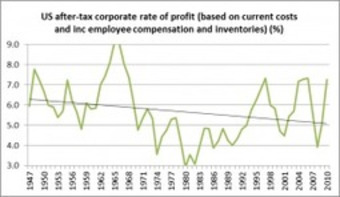
Was there a rise in the rate of profit from 1982 to 2009, suggesting a different era for US capitalism and suggesting that the rate of profit is not a key cause of the recessions of 1990-1, 2001 or the Great Recession? Many say yes, presumably including BJ. AK says no (or at least he says there was not a significant rise). I say there was a significant rise from 1982 to 1997, but since then US profitability has been in a down phase right up to now. Both AK and I conclude that Marx’s law of profitability is the underlying (not proximate) cause of capitalist crises and I think the empirical evidence for the US economy goes a long way to confirm that.
It’s the old “chicken and the egg” game. Our world is one of increasing inequality and social injustice. That parts no game. Was it caused by greedy and dysfunctional capitalism, or a corrupt and broken democracy that allowed itself to be captured by the interests of the 1%? Which came first, which is to blame? In truth it’s both, but what is clear is that Wall Street interests are not going to voluntarily quit the contest. Someone is going to have to make them. And that someone has to be government in some way, shape, or form. The current incarnation, or the next. Probably the next, because to remove the money that has corrupted our government may mean a revolution in the classic sense of the word.
Protesters gather for a fourth straight day in Bucharest and other Romanian cities to demonstrate against government austerity measures. (Another revolution in the works for #romania?
"Michael W. Foley and Bob Edwards attempt to dissect Putnam's argument on civil society and the benefits to civic engagement. Unfortunately, they explain that the effects of the smaller groups, clubs and leagues are less effective for active, civic engagement. They explain that organizations tied to politics stimulate more critical debate, which in turn shapes our political and state society."
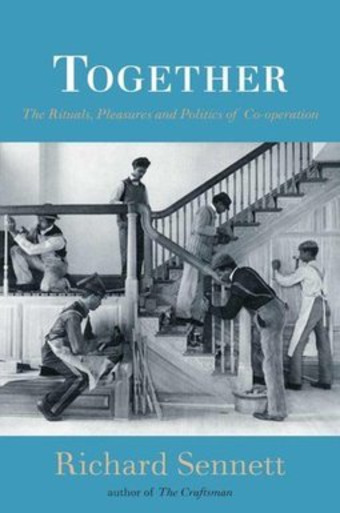
Available in: NOOK Book (eBook), Hardcover. Living with people who differ—racially, ethnically, religiously, or economically—is the most urgent challenge facing civil society today.
the proletarianisation of the lower salaried bourgeoisie is accompanied at the opposite extreme by the irrationally high remuneration of top managers and bankers....
The pragmatic commitment to growth that one sees in Asia and other emerging markets today stands in contrast to the West’s misguided policies, which, driven by ideology and vested interests, almost seem to reflect a commitment not to grow.
RT on Twitter twitter.com RT on Facebook www.facebook.com Pinning its hopes on the sole support of the US, Israel risks a collapse if it is ever withdrawn -...
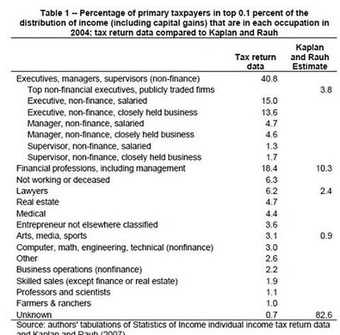
The Times has a piece today showing, correctly, that the top 1 percent of the income distribution is a fairly diverse group. But what that mainly reflects is the fact that the slogan “we are the 99 percent” sets the cut too low. A large part of the rising share of the top 1 — about 60 percent, according to the Piketty-Saez data — is actually attributable to the top 0.1 percent. And that’s not a diverse group at all...
In tough times, some of us see protecting the climate as a luxury, but that's an outdated 20th-century worldview from a time when we thought industrialization was the end goal, waste was growth, and wealth meant a thick haze of air pollution.
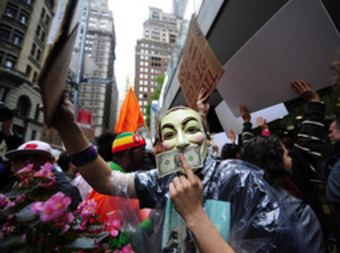
It came to prominence when demonstrators vowing to represent the 99 percent condemned corporate malfeasance, lopsided executive salaries and the distribution of wealth from the middle to the top.
On a trip to Ghana, one of Africa's great development success stories, Observer editor John Mulholland speaks to leading economist Jeffrey Sachs and U2's lead singer Bono about the politics and economics of aid (RT @guardian: Bono + Jeffrey Sachs ...
A personalized newspaper built from articles, blog posts, videos and photos selected by Occupy Manhattan. (RT @OccupyManhattan: The Occupy Wall Street Press is out!
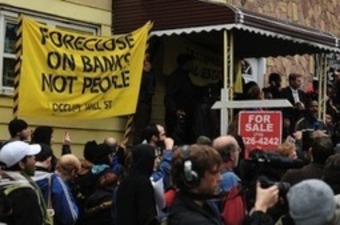
In 2008, we discovered bankers and speculators had been gambling with our most valuable asset, our homes. Now, because of the foreclosure crisis Wall Street banks created with their lies and greed, millions of Americans have lost their homes. 15 million Americans owe more on their mortgages than their homes are worth. Worldwide people are uniting to occupy and reclaim new spaces as home while others can hardly keep their “real” homes whether they have to pay rent, a mortgage or are just having a hard time.
He tells the protestors, "I've admired you from afar." (RT @ruleiro: Alan Moore comes face-to-mask with Occupy protestors http://t.co/0v8rH3T3 via @zite...)...
For the girls and women who lives in poverty, for them education is not only the key to a brighter future it is also a key to survival.Using education as a primary strategy, theGirls’ & Women’s Education Initiative aims to harness the potential of girls and women to learn, lead and act on their vision of change for themselves, their families, and their communities.Why gender is considered an issue in education?. Gender refers to attitudes, beliefs and values we have about being male or female.
http://storyofcitizensunited.org ---- Season Two launches on March 1st with The Story of Citizens United v. FEC, an exploration of the inordinate power that ...
Prof. Franz Hörmann is Assistant Professor and Lecturer at the department for Business Taxation and Tax Planning, of the Department for Accounting at the Uni...
To get content containing either thought or leadership enter:
To get content containing both thought and leadership enter:
To get content containing the expression thought leadership enter:
You can enter several keywords and you can refine them whenever you want. Our suggestion engine uses more signals but entering a few keywords here will rapidly give you great content to curate.


 Your new post is loading...