


As President Obama prepares to outline a deficit-reduction plan that includes tax increases, as well as cuts to programs such as Medicare and Medicaid, anthropologist David Graeber proposes a radical solution: cancel the debt of the nation’s poor.

 Your new post is loading...
 Scoop.it! As President Obama prepares to outline a deficit-reduction plan that includes tax increases, as well as cuts to programs such as Medicare and Medicaid, anthropologist David Graeber proposes a radical solution: cancel the debt of the nation’s poor. 
No comment yet.
Sign up to comment
Scoop.it!
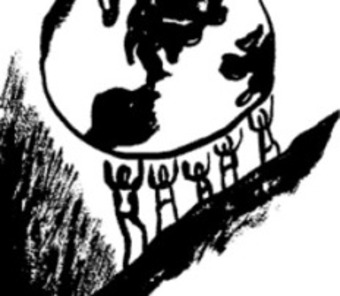
For many years a huge Manila garbage dump known as Smokey Mountain was a favorite media symbol of Third World poverty.
Scoop.it!

"We obviously have a deep economic crisis. The moral crisis is that we are not taking the economic crisis seriously and we are not taking seriously the lives that are impaired, the suffering that is real in this country, and the fact that we have a country that has such wealth, such capacity, but seemingly so little taste to solve problems right now. I regard that as a moral crisis. So the moral crisis is really the gap between what we can do and what we are doing right now and the lack of seriousness with which we are confronting these problems."
Scoop.it!

Protesters at the Occupy London camp outside St Paul's cathedral have lost their High Court battle to continue their demonstration against corporate (Occupy London protesters lose St Paul's cathedral eviction battle
Scoop.it!

Mr Justice Lindblom due to decide whether anti-bank campaigners should be evicted from St Paul's churchyard (Occupy London – judge to rule on St Paul's camp eviction – live http://t.co/b4J0D8Ql...
Scoop.it!

"From the glory days of American radicalism, which was the American Revolution, I think that Madison's view on government is still unequaled," he tells me during the three days I spend with him as he settles into his new location in England. "That people determined to be in a democracy, to be their own governments, must have the power that knowledge will bring – because knowledge will always rule ignorance. You can either be informed and your own rulers, or you can be ignorant and have someone else, who is not ignorant, rule over you. The question is, where has the United States betrayed Madison and Jefferson, betrayed these basic values on how you keep a democracy? I think that the U.S. military-industrial complex and the majority of politicians in Congress have betrayed those values."
Scoop.it!
The leading tagline of the Occupy Wall Street movement reads: “Protest for World Revolution.” This is an ambitious claim, to be sure. And in most respects it seems to ring quite true: the movement has successfully taken root not only in cities and towns throughout the United States but also in major urban centers around the world. On October 15, Occupy Wall Street’s success inspired a broad wave of coordinated occupations across Europe. I was a founding participant in the one that began in London.
Scoop.it!
"Young people have no conception of the conspiracy’s strategy of pressure from above and pressure from below…. They have no idea that they are playing into the hands of the Establishment they claim to hate. The radicals think they’re fighting the forces of the super rich, like Rockefeller and Ford, and they don’t realise that it is precisely such forces which are behind their own revolution, financing it, and using it for their own purposes…"
Scoop.it!

This is the final installment in a four part series, written by Arely Zimmerman and Sangita Shreshtova from the USC Civic Paths Project, concerning the young activists who are supporting the Dream Act.
Scoop.it!

The difference is that the SCAF's fall from grace is occurring at an accelerated pace, propelled by the new faith in participatory politics unleashed by the January uprising and the army's own bungling.
Scoop.it!
India is poised and best positioned to lead the emerging world in the third industrial revolution, which will base itself on democratizing energy, according to noted American economist Jeremy Rifkin. However, this is possible provided the country channelizes its rich renewable resource base and its vibrant democracy in the right direction.
Scoop.it!
My last post got a bit hijacked by my attempt to write a digression on the origin of Modern Monetary Theory (MMT), which has also been called Chartalism, neo-Chartalism, the Kansas City approach, and soft currency ...
Scoop.it!
Menger imagines a world without money. In this world, people exchange goods for goods in spot transactions (barter). What happens when person A wants a good from person B, but the latter does not want the goods the former has to trade? This is the famous problem of the double coincidence of wants.
Scoop.it!
Ludwig von Mises's The Theory of Money and Credit (2009 [1953]) is his major treatise on money. On pp. 30–34, Mises gives us an account of the origin of money (see also Mises 1998 [1949]: 402–404). Mises distinguishes ...
Scoop.it!

We are living in difficult times. The ongoing economic crisis started by the 2008 Sub-Prime Mortgage Scandal has all of us thinking about our future. We are vulnerable to unethical appeals to our anxiety in the form of quick fixes and easy profits. The promise of "Ethical Oil" is the worst of these appeals. We have to resist. Even more, we have to take decisive actions that the current leadership will not. To quote a famous man, we have an ordeal before us of the most grievous kind and we need a new generation of leadership to tackle it. We need the next Great Generation.
Scoop.it!
The protest movement that began in Tunisia in January, subsequently spreading to Egypt, and then to Spain, has now become global, with the protests engulfing Wall Street and cities across America. Globalization and modern technology now enables social movements to transcend borders as rapidly as ideas can. And social protest has found fertile ground everywhere: a sense that the “system” has failed, and the conviction that even in a democracy, the electoral process will not set things right – at least not without strong pressure from the street.
Scoop.it!
"Having just returned from Australia, there is a similarity to Canada in that both countries are resource rich in a world of diminishing resources. Both countries' economic futures are guaranteed for decades to come, and the question I would ask is whether or not these countries will use their blessings to lead the world."
Scoop.it!

"How the largest movement in the world came into being, and why no one saw it coming. Paul Hawken has spent over a decade researching organizations dedicated to restoring the environment and fostering social justice.
Scoop.it!

Let’s begin with the startling part. Class of 2009: you are going to have to figure out what it means to be a human being on earth at a time when every living system is declining, and the rate of decline is accelerating. Kind of a mind-boggling situation… but not one peer-reviewed paper published in the last thirty years can refute that statement. Basically, civilization needs a new operating system, you are the programmers, and we need it within a few decades.
Scoop.it!
This article explores how behavioural economics can be applied to energy and climate policy. We present an overview of main concepts of behavioural economics and discuss how they differ from the assumptions of ...
Scoop.it!

If you’re a woman applying for a job in a male dominated sector, you want to be interviewed by a man with low confidence.
Scoop.it!
Boris Kagarlitsky: Young people are joining the movement but left is divided and weak...
Scoop.it!

About progressive-economy@tasc. TASC - the think tank for action on social change - has established progressive-economy@tasc to provide a forum for progressive economists and others commenting on the Irish economy.
Scoop.it!

Evolutionary anthropologist Robin Dunbar tells Aleks Krotoski why even Facebook cannot expand our true social circle: our brains just aren't big enough to cope
Scoop.it!
Watch the latest breaking news, politics, entertainment and offbeat videos everyone is talking about at CNN.com. Get informed now!
|

Curated by jean lievens
Economist, specialized in political economy and peer-to-peer dynamics; core member of the P2P Foundation
Other Topics

Anders en beter
Met P2P voorbij markt en staat: voor een progressieve coalitie rond de commons. Met nieuws over op p2p gebaseerde praktijken en hoe de overheid, de politiek en de zakenwereld ermee (kunnen) omgaan...

money money money
on money and what it is

music-all
From the Great White Way to the West-End and beyond

Peer2Politics
on peer-to-peer dynamics in politics, the economy and organizations

real utopias
Not TINA (There Is No Alternative) but TAPAS: THERE ARE PLENTY OF ALTERNATIVES
|




