


Time Warner owns the rights to a Guy Fawkes mask and is paid a licensing fee with the sale of each mask worn by members of the hacker group Anonymous.

 Your new post is loading...
 Scoop.it! Time Warner owns the rights to a Guy Fawkes mask and is paid a licensing fee with the sale of each mask worn by members of the hacker group Anonymous. 
No comment yet.
Sign up to comment
Scoop.it!

Twelve months ago, a young man in Tunisia ignited himself and triggered a revolution that spread across northern Africa. A year later, correspondent Alexander Smoltczyk set out in a new series on a journey to assess the changes the tumultuous Maghreb region has undergone -- from Morocco to Egypt.
Scoop.it!
RT @VehlaComrade: Why was Marx right Terry Eagleton Alex Callinicos Nina Power: http://t.co/H7dc8VBe via @youtube...
Scoop.it!
There have been two foundational themes in Antonio Negri's work over the years. The first is an abiding faith in the capacities of the working class or the multitude (redefined as "the party of the poor" and therefore, according to Spinoza, the only "true subject of democracy") to use their immanent powers of laboring to construct an alternative to the world given by capital. They can do so, Negri believes, by way of autonomous and nonhierarchically organized self-management. The second theme arises out of a deeply held belief that Spinoza's philosophical works provide a framework of radical thought capable of illuminating not only how the world is but also how it ought to be and can be. Wedding the immanent powers of the multitude with a neo-Spinozan theoretical armature, Negri grounds a theory of revolution and a redefinition of what real communism might be about.
Scoop.it!
In this sixth video in the series "Peak Oil and a Changing Climate" from The Nation and On The Earth Productions, linguist, philosopher and political activis...
Scoop.it!

But as South Carolina's Republican presidential primary approaches, Occupy Wall Street - a grassroots movement protesting income inequality and corporate influence in US politics - is seemingly everywhere in the state: demonstrating at Republican debates in Myrtle Beach and Charleston, arguing with Mitt Romney at town hall events - and holding rallies at the state house in Columbia.
Scoop.it!

One of the most surprising and alarming issues in the climate and energy arena is the fact that the fossil fuels causing global warming continue to receive substantial government support, making them artificially cheap and encouraging more of them to be consumed. It's a form of madness that my colleague Damian Carrington put his finger on recently when he wrote that "the house is ablaze and we are throwing bucket after bucket at it – buckets of petrol."
Scoop.it!
A majority of Americans no longer believe in the inevitability of the American Dream. RT talks to people on the streets of Washington to hear what they think...
Scoop.it!

Revolution 2.0 is a turn-by-turn account of the events that lead to that decisive evening and the many that followed it. The text jogs through the myriad phases of the protest as well as the online campaigns devised by Ghonim to keep up engagement. The curation of his Facebook page is treated in particular detail. Narrative text is interspersed with important posts, annotated with their respective number of likes and comments. At first, this treatment is jarring, bordering on gimmickry. But as the numbers below each post grow and the events that generated them -- the swell that lead to mass action -- become more dramatic, the effect comes off. Ghonim has managed to construct a compelling historical narrative out of tweets and status updates.
Scoop.it!

Global Entrepreneurship Is On The RiseHuffington PostThe annual survey polled 140000 adults ages 18 to 64 from 54 different economies.
Scoop.it!

''The truth is that science, technology, innovation and creativity are providing the tools for us to win the battle against hunger,'' observed former Nigerian president (and farmer) Olusegun Obasanjo in an article this week. ''What is needed now is to put the products of these scientific advances, together with the necessary financial and non-financial support, into the hands of farmers.''
Scoop.it!

Today’s best teams and companies are more than simple “carrot and stick”, task based operations. Success requires an engaged workforce that can think creatively, drive innovation, and exert discretionary effort as though they are owners. That requires a strategy that’s appeals to more than just the pocketbook, or bucket of carrots as the case may be.
Scoop.it!
Michael Albert is an American activist, economist, speaker, and writer. Here he talks about Venezuela and the alternative Latin America trading bloc, ALBA or Bolivarian Alliance for the Peoples of the Americas.
Scoop.it!
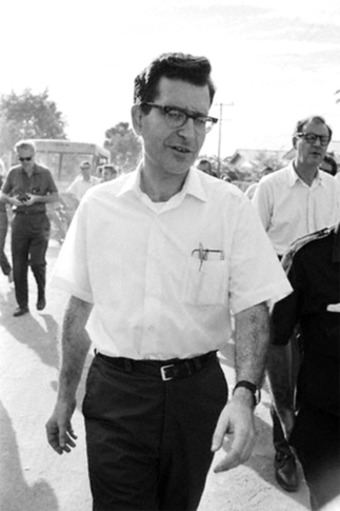
"In 1976, looking a bit like Buddy Holly, Noam Chomsky gave Peter Jay what I think may be his most extensive interview regarding what a desirable society might look like. I believe the views he offered are still dear to him as well as to many other anarchists. They are dear to me, as well, and have influenced my own commitments, albeit with some changes."
Scoop.it!

Is a Pakistani Spring on the cards? Analysts contemplate the possibility of radical political change. (A spring needs a vision and a team ?
Scoop.it!

The Occupy Movement, far from having no programme, has revolutionized our sense of self. The Citizen of the World adopts a panoramic view of society and takes the interests of others all over the world to be as important as her or his self interest.
Scoop.it!
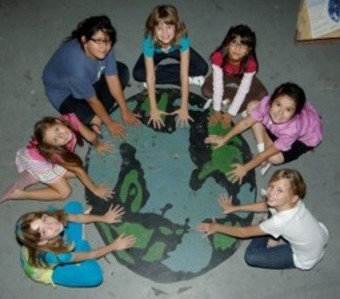
The planet would likely be fine and beautiful without humans on it—so that may or may not be the issue. But going about life as we know it, constructing buildings and cities as though the people were incidental is not SMART. One thing that makes Thom so successful in his field is that he consistently puts the people he works with first, rather than the properties they are buying or selling.
Scoop.it!

Occupy London protesters say they have taken over a fifth site in the City - an abandoned office block in the Barbican area.
Scoop.it!

It's funny most people really aren't happy. All kinds of scientific research has gone in to finding out why the people of our culture are so depressed. I personally think the problem is our culture itself.
Scoop.it!
About the Speaker: Steve Keen is Associate Professor of Economics & Finance at the University of Western Sydney. His main academic research interest is in de...
Scoop.it!

In January 2011 we asked Arab writers, including Tamim Al-Barghouti, Hisham Matar and Mourid Barghouti, to react to the uprisings – now they return to reflect on an extraordinary year (Revolution in the Arab world
Scoop.it!
David McNally teaches political science at York University in Toronto and is active in many social justice movements in that city. On Sept. 24, 2011, McNally spoke at the Mondragon Bookstore and Coffee Shop as a featured presenter at Winnipeg Radical Bookfair and DYI Fest. His topic: Global Crisis – Global Resistance.
Scoop.it!

The occupations now underway still involve only a small fraction, indeed a tiny fraction, of the people in pain and angry about it.
Scoop.it!
Every occupier knows the 1% are on top by virtue of owning productive property. Most people watching and learning from the occupations also know this, or can come to know it, and the 1% label won’t obstruct that from happening.
Scoop.it!
"The International Sociological Association is currently led by Michael Burawoy. He is engaged in a particular approach to sociology called "Public Sociology" which encourages the discipline to engage in "explicitly public and political ways with issues stimulated by debates over public policy, political activism, the purposes of social movements, and the institutions of civil society". (*)
|

Curated by jean lievens
Economist, specialized in political economy and peer-to-peer dynamics; core member of the P2P Foundation
Other Topics

Anders en beter
Met P2P voorbij markt en staat: voor een progressieve coalitie rond de commons. Met nieuws over op p2p gebaseerde praktijken en hoe de overheid, de politiek en de zakenwereld ermee (kunnen) omgaan...

money money money
on money and what it is

music-all
From the Great White Way to the West-End and beyond

Peer2Politics
on peer-to-peer dynamics in politics, the economy and organizations

real utopias
Not TINA (There Is No Alternative) but TAPAS: THERE ARE PLENTY OF ALTERNATIVES
|




