But even in Greece, the protest movement displays the limits of self-organisation: protesters sustain a space of egalitarian freedom with no central authority to regulate it, a public space where all are allotted the same amount of time to speak and so on. When the protesters started to debate what to do next, how to move beyond mere protest, the majority consensus was that what was needed was not a new party or a direct attempt to take state power, but a movement whose aim is to exert pressure on political parties. This is clearly not enough to impose a reorganisation of social life. To do that, one needs a strong body able to reach quick decisions and to implement them with all necessary harshness.
What we have witnessed in our own time is the death of universities as centres of critique. Since Margaret Thatcher, the role of academia has been to service the status quo, not challenge it in the name of justice, tradition, imagination, human welfare, the free play of the mind or alternative visions of the future. We will not change this simply by increasing state funding of the humanities as opposed to slashing it to nothing. We will change it by insisting that a critical reflection on human values and principles should be central to everything that goes on in universities, not just to the study of Rembrandt or Rimbaud."
In this video from a European Central Bank press-conference in Ireland, journalist Vincent Browne demands that the ECB representative explain why the ECB required the Irish people to bail out a bank's uninsured creditors. The bureaucrat mouths bland reassurances, then asserts (despite all appearances to the contrary) that the question has been resolved. Browne doesn't let up. It's quite a stirring spectacle.
"The corporate barbarians are through the gate of American democracy. Not satisfied with their all-pervasive influence on our culture, economy and legislative processes, they want more. They want it all."
"The global political crisis -- a natural outcome of the continuing economic crisis -- finally made it to Russia in December before getting derailed by the country's traditional hibernation in early January. Nothing ever happens in Russia between December 31 and January 13 -- and particularly not a revolution. While the organisers of the protest demonstrations headed for swanky resorts in Mexico and other sunny spots, their grassroots supporters were stuck in cold, dreary Russia. They retired to their cramped apartments to drink vodka and discuss the country's uncertain fate."
The rapid increase in the number of cities home to more than 10 million people will bring huge challenges … and opportunities ("How the rise of the megacity is changing the way we live" - http://t.co/IXK16bRv...
In Europe, once a critical number of member states have ratified stricter fiscal and budget rules – thus becoming more like America's member states, which are each required to balance their state's budget – look for the deployment of eurobonds or a debt assumption role for the ECB or some other form of debt sharing, as well as targeted stimulus of some kind for the struggling periphery. The final form may have to wait until the 2013 elections and a change in Germany's government, but it surely is coming.
Many people think the lines on the map no longer matter, but Parag Khanna says they do. Using maps of the past and present, he explains the root causes of border conflicts worldwide and proposes simple yet cunning solutions for each.
Funded by the Leverhulme Trust, Professor John Holloway spent some time as a visiting professor at the School of Geography, University of Leeds in 2011 and is teaching at the MA in Activism and Social Change. He gave four public lectures; the first one in May 2011 and the next 3 as part of a series titled “Rage against the Rule of Money”. You can watch them all here"
“In the space of twenty years, in a throwback to eighty years ago, millions believe the racist, chauvinist ‘ideas’ of the 1930’s.” writes Attila Csernok in Népszava, a Hungarian liberal daily. Is the situation in present day Hungary that critical? Does the election of the Fidesz government in April 2010 by a two thirds majority mean a return to the horrors of 1930’s Hungary?"
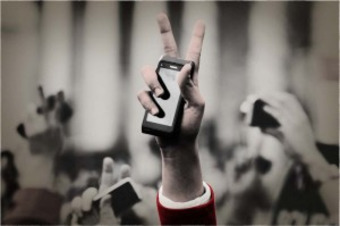
"What I believe is that this is going to be the nature of the new era. Businesses are becoming more and more decentralized, media is becoming decentralized... As we progress, we are maturing in a way that is good for the people. But I think what matters is actually not the tools, but the people. There are a lot of youth empowered, more educated, more willing to take risks. These young people have shown bravery and passion and have managed to achieve what was thought to be impossible for years. I think it's very important to focus on the human element."
Jeffrey Sachs talks about Common Wealth: Economics for a Crowded Planet. Economist Sachs offers a clear and vivid map of the road to sustainable and equitable gl...
Sachs, a professor of economics at Columbia University, is one of the world's foremost experts on poverty reduction. He explains how mobile phones are decreasing economic isolation in Africa, and why we could be halfway to achieving an important goal in 2020: the end of extreme poverty.
The Strange Non-Death of Neo-Liberalism looks at the prospects of neo-liberalism (which Crouch sees as claiming that “optimal outcomes will be achieved if the demand and supply for goods and services are allowed to adjust to each other through the price mechanism, without interference by government or other forces”) post-2008, and argues that they are pretty good. Even if neoliberalism should have been discredited, it is emerging more powerfully than ever, as states cut back welfare and public spending in the wake of the crisis. Crouch argues that neoliberalism, despite its claims, is effectively “devoted to the dominance of public life by the giant corporation.”
By the end of 1932, Germany was in upheaval. The unemployment rate soared to 43%. As the Nazis rose to power, new ideas emerged; new words were introduced; old words were discarded and others changed.
Called the world's most important psychologist, Daniel Kahneman inspired the trend for pop-psychology books, won a Nobel in economics and has devoted his life to studying the logic of irrationality
According to shocking research done by the IMF, the global elite are holding a total of 18 trillion dollars in offshore banks. And that figure does not even count any money being held in Switzerland.
Deliverology destroys service: Professor John Seddon addresses the faculty of California State University thesystemsthinkingreview (This (39min) video will help you see the a gap between what ministers think happens & what actually happens.)...
The institutions of modern developed societies, whether governments or companies, are not prepared for this new social power. People are changing faster than companies.
To get content containing either thought or leadership enter:
To get content containing both thought and leadership enter:
To get content containing the expression thought leadership enter:
You can enter several keywords and you can refine them whenever you want. Our suggestion engine uses more signals but entering a few keywords here will rapidly give you great content to curate.


 Your new post is loading...