Pearltrees is a place to collect, organize and share everything you like on the web.

 Your new post is loading...
 Scoop.it! Pearltrees is a place to collect, organize and share everything you like on the web. 
No comment yet.
Sign up to comment
Scoop.it!

Who are the global 1%? What companies do they run? How do they escape accountability? Check out TNI's powerful infographic displays that expose the social and environmental costs of global corporate power.
Scoop.it!
Falling labour force participation masks an even worse global unemployment situation. In the world as a whole, there were nearly 29 million fewer people in the labour force in 2011 than expected based on pre-crisis trends, with 6.4 million fewer youth and 22.3 million fewer adults. This is equal to nearly 1 per cent of the actual global labour force in 2011, and nearly 15 per cent of the total number of unemployed in the world. If all of these potential workers were available to work and sought work, the number of unemployed would swell to over 225 million, or to a rate of 6.9 per cent, versus the actual rate of 6 per cent. Globally, the employment-to-population ratio declined sharply during the crisis, from 61.2 per cent in 2007 to 60.2 per cent in 2010. This represents the largest such decline on record (since 1991).
Scoop.it!

According to Västerbottens Folkblad sources, the president of the trade union IF Metall, Stefan Löfven has been asked and accepted. Another daily newspaper, Allehanda has confirmed the information in an interview with Löfven’s mother.
Scoop.it!

With the world still shaking from the global economic earthquake, and suffering daily aftershocks from Europe, it is not surprising that the topic at Davos is whether capitalism is dead.
Scoop.it!

As Egyptians prepare to mark the first anniversary of the revolution that toppled Hosni Mubarak but left them under the rule of his top generals, two activists explained in interviews with The Lede on Tuesdau that they plan to protest, not celebrate.
Scoop.it!

Occupy Wall Street protesters get arrested a lot, and for many different charges. Sometimes those charges are just plain silly.
Scoop.it!

"Ukrainian billionaire Victor Pinchuk wants to talk about income inequality. So does Irish billionaire Denis O’Brien and Indian billionaire Vikas Oberoi. The three are among a contingent of at least 70 billionaires who are joining more than 2,500 business and political leaders at the World Economic Forum’s annual meeting in Davos, Switzerland, this week, according to a list of attendees and promotional materials obtained by Bloomberg News. A half-dozen of the richest participants, interviewed in advance of the conference, say economic disparity needs to be addressed."
Scoop.it!

The Occupy movement is clearly affecting political rhetoric ... but what about real action?
Scoop.it!
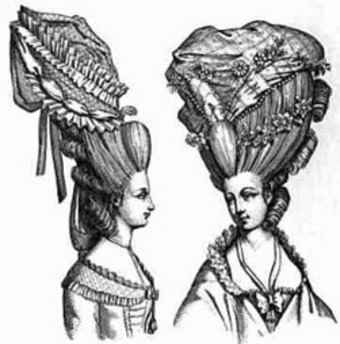
Sennett starts out with the question: What happened to public life? In a word, his answer is: self. “To know oneself has become an end, instead of a means through which to know the world” (4). His book is going to trace out exactly how that change occurred.
Scoop.it!
Roughly three-quarters of the public (77%) say that they think there is too much power in the hands of a few rich people and large corporations in the United States. About nine-in-ten (91%) Democrats and eight-in-ten (80%) of independents hold this view; a much narrower majority (53%) of Republicans do as well. For historical perspective, six-in-ten (60%) Americans expressed this view in a 1941 Gallup poll.
Scoop.it!
A free press -- papers, magazines, radio, TV, blogs -- is the backbone of any true democracy (and a vital watchdog on business).
Scoop.it!
Les petits reporters des sciences
Scoop.it!

It isn’t the horror of the time at hand but the unimaginable sameness of the time ahead that makes prisons unendurable for their inmates. The inmates on death row in Texas are called men in “timeless time,” because they alone aren’t serving time: they aren’t waiting out five years or a decade or a lifetime. The basic reality of American prisons is not that of the lock and key but that of the lock and clock.
Scoop.it!

And that is the essence of class consciousness. Marx thought such class consciousness would inevitably lead to revolution. In 2012 America, it has led instead to a consciousness among the Occupy protesters against a one-sided system of financial exploitation, which in its own way is quite revolutionary.
Scoop.it!
A centrally planned economy is an economic system where the factors of production (resources) are controlled by the state.
Scoop.it!
Someone once likened the political positions of the extreme left with a broken clock that never shows the right time. But as everyone knows, a broken clock shows the correct time with astronomical precision twice every 24 hours, something a functioning clock can never do because it is always at least a little bit fast or slow.
Scoop.it!
About Me. My Photo · Jean Lievens: Brussels. View my complete profile. My Blog List. Michael Roberts Blog · From Private Eye: Greece will miss target. 3 hours ago. hussonet portail Michel Husson · Le capitalisme à bout de ...
Scoop.it!

On May 1, 50,000 people from all over the world will flock to Chicago, set up tents, kitchens, peaceful barricades and #OCCUPYCHICAGO for a month. With a bit of luck, we’ll pull off the biggest multinational occupation of a summit meeting the world has ever seen.
Scoop.it!

Many economists once believed that as technology improved, boosting workers' productivity, people would choose to bank these benefits by working fewer hours and enjoying more leisure. Instead, working hours have got longer in many countries. The UK has the longest working week of any major European economy.
Scoop.it!

For all of these reasons, the current economic order tends to mismeasure the earth and human welfare. Capitalism, in many respects, has become a failed system in terms of the ecology, economy, and world stability. It can hardly be said to deliver the goods in any substantive sense, and yet in its process of unrestrained acquisition it is undermining the long-term prospects of humanity and the earth.32
Scoop.it!

It was not Facebook, Twitter or YouTube that brought down Hosny Mubarak. The Egyptian people did that. But this does not mean that social media and internet‐based technologies played no role, or that their role was insignificant, as some have alleged. Rather, events in Egypt and countries across the Middle East and North Africa have shown in the ‘Arab Spring’that internet platforms and technologies should be seen for what they are: effective tools for the conduct of political campaigns in authoritarian contexts.
|

Curated by jean lievens
Economist, specialized in political economy and peer-to-peer dynamics; core member of the P2P Foundation
Other Topics

Anders en beter
Met P2P voorbij markt en staat: voor een progressieve coalitie rond de commons. Met nieuws over op p2p gebaseerde praktijken en hoe de overheid, de politiek en de zakenwereld ermee (kunnen) omgaan...

money money money
on money and what it is

music-all
From the Great White Way to the West-End and beyond

Peer2Politics
on peer-to-peer dynamics in politics, the economy and organizations

real utopias
Not TINA (There Is No Alternative) but TAPAS: THERE ARE PLENTY OF ALTERNATIVES
|