


The legitimacy of rule by giant corporations and Wall Street banks is crumbling.

 Your new post is loading...
 Scoop.it! The legitimacy of rule by giant corporations and Wall Street banks is crumbling. 
No comment yet.
Sign up to comment
Scoop.it!
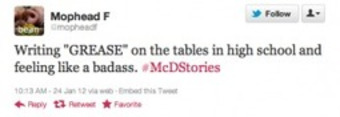
When McDonald’s tried to launch the #McDStories Twitter campaign, they clearly envisioned a bunch of fond memories from Big Mac lovers, interspersed with behind-the-scenes glimpses into the McDonald’s “food”-making process. (They kicked it off with a link to “some of the hard-working people dedicated to providing McDs with quality food every day.”) Unfortunately, they really, really misunderstood social media. Result: #McDStories was quickly overrun with the grossest, weirdest McDonald’s non-appreciation its non-fans could come up with.
Scoop.it!
The general strike is back, retooled for an era of deep budget cuts, extreme anti-immigrant racism, and massive predatory financial speculation. In 2011, the number of unionized workers in the US stood at 11.8%, or approximately 14.8 million people.
Scoop.it!
This is interesting. Kader Arif, the "rapporteur" for ACTA, has quit that role in disgust over the process behind getting the EU to sign onto ACTA. A rapporteur is a person "appointed by a deliberative body to investigate an issue." However, it appears his investigation of ACTA didn't make him very pleased:
Scoop.it!
It's an old cliché to say that technology in itself is neither good nor bad, but that all depends on how you use it. In the case of Information and Communications Technologies, and their out-of-control problem child, the internet, that has so revolutionised the world, today we seem to be at a key crossroads where all seems to hang on which path mankind finally treads.
Scoop.it!

As US capitalism suffers from a crisis now in its fifth year with no end in sight, the Republican presidential candidates and Obama endlessly repeat cheerleading for the system as if it were, as usual, beyond question or criticism. Obama's State of the Union Speech at least found campaign fodder in referring to income inequality.
Scoop.it!
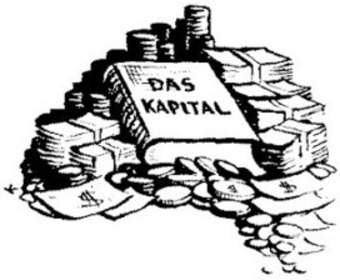
The Failure of Capitalist Production is essential reading for all Marxists and lefts interested in what caused the Great Recession. It debunks the fads and fashionable arguments of neoliberalism, underconsumption and inequality with a battery of facts. It restores Marx’s law of profitability to the centre of any explanation of capitalist crisis with compelling evidence and searching analysis. It must be read.
Scoop.it!

The global political crisis — a natural outcome of the continuing economic crisis — finally made it to Russia in December before getting derailed by the country's traditional hibernation in early January. Nothing ever happens in Russia between Dec. 31 and Jan. 13 — and particularly not a revolution. While the organizers of the protest demonstrations headed for swanky resorts in Mexico and other sunny spots, their grassroot supporters were stuck in cold, dreary Russia. They retired to their cramped apartments to drink vodka and discuss the country's uncertain fate. The Moscow Times
Scoop.it!

From Occupy to Workers Control Panel: Video 1 of 4. From Occupy to Workers Control Panel: Video 2 of 4. From Occupy to Workers Control Panel: Video 3 of 4. From Occupy to Workers Control Panel: Video 4 of 4.
Scoop.it!

When people make life decisions they do not sufficiently ask: What would I actually experience and how long will I experience it? They tend to neglect duration and they tend not to think of experience, just the memories they will be left with later.”
Scoop.it!

We have learned a lot on the Web. We've learned a lot about sort of what happens when you democratize the tools of production. In the case of the Web, democratizing the tools, the publishing, the broadcasting and communications. We saw what happens. First of all, more things are made and more people make them. You end up with a long tail of products and different ways to engage and we learn a lot about who we are and what we want.
Scoop.it!

"There are reasons for hope. From one survey: A staggering 92 per cent of millennials (those born after 1981) believe that a company's purpose should be measured by social purpose not just profit. This contrasts starkly with CEOs who believe that profit maximization is the goal of business. So if corporations want to attract and retain the best and brightest employees as baby boomers begin retiring en masse, they will have to focus on the social good to ensure their social license to operate. A large number of the participants at WEF are highly idealistic. One such group is the WEF's Young Global Leaders."
Scoop.it!

My You Can’t Read This Book: Censorship in an Age of Freedom is out this week. As the title says, it's about freedom of speech, a subject that has come to mean more and more to me as I have watched religious zealots intimidate liberals into silence, and the libel laws and omerta of City hierarchies stop investigations into a catastrophic financial system when they might have made a difference.
Scoop.it!

Billed flashily as the “Socrates of the modern era,” the eminent Marxist and cultural critic Slavoj Zizek took the stage across İstanbul this weekend to address eager audiences in venues as far afield as a student-packed lecture hall at Mimar Sinan University and a bizarre talk on the fundamentals of marketing at the International Advertising Cup.
Scoop.it!
The Ignorance Of Chicken - A Talk at Princeton (10/10/05) Zizek talks and Cornel West listens and responds a little. A short Q+A follows.
Scoop.it!

A good rule of thumb for many things in life holds that things take longer to happen than you think they will, and then happen faster than you thought they could. Think, for example, of the widespread use of the e-book, or the coming home to roost of debt problems around the industrialized world. Here is a bet and a hope that the next quarter century will see more change in higher education than the last three combined.
Scoop.it!
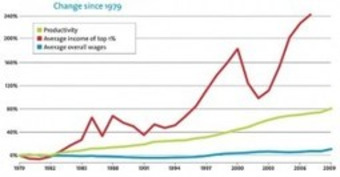
When examining hours worked, what jumps out is that lower income people work just as hard, if not harder, when there is work to be had, and not so much when they can’t find a job (duh…). For instance, take a look at this chart courtesy of the Economic Policy Institute:
Scoop.it!

Karl Marx, the founder of communism, thought there was a higher and lower form of communism[10]. Engels and Lenin called the lower form of communism, socialism. Socialism is not egalitarian. Egalitarianism means everything is shared equally. Marx described socialism like this:
Scoop.it!

The Syrian regime is fighting for its survival. I have no sympathy for it, and will welcome its consumption in a revolutionary overthrow. The struggle in Syria is fundamentally - not exclusively, and not in a crude, unmediated fashion - a class struggle. It is an open war of movement between, for the most part, the most advanced sections of the popular classes and a narrow state capitalist oligopoly which has always dealt with the surplus of political opposition by jailing it or killing it. In that struggle, inasmuch as it matters what I think, I situate myself on the side of the popular opposition. Not in an undifferentiated manner, and not without confronting the political problems (of eg sectarianism, pro-imperialism etc) that will tend to recur amid sections of the opposition to any of these regimes. But without conditions or prevarication.
Scoop.it!

Today, three years later, it is worth reflecting on how far Iceland―a country of just 320,000 people―has come since those dark days back in 2008. Growth has returned to the economy, and new jobs are being created: unemployment, although still unacceptably high for a country used to near-full employment, has dropped below 7 percent of the work force. In June this year, the government successfully issued a $1 billion sovereign bond, marking a return to international financial markets.
Scoop.it!

Big News on Occupy Wall Street. Includes blogs, news, and community conversations about Occupy Wall Street (@garonsen we're splashing your piece on our OWS page!
Scoop.it!

In the aftermath of the recession, we have the opportunity to truly change the system. From replacing outsourcing with insourcing to untying well-being from GDP, here is what the economy of the future might look like.
Scoop.it!

For more than three decades, Jeffrey D. Sachs has been at the forefront of international economic problem solving. But Sachs turns his attention back home in The Price of Civilization, a book that is essential reading for every American.
Scoop.it!

Crisis and austerity have exposed the insanity of our global system. Billions have been given to the banks, while billions across the planet face hunger, poverty, climate catastrophes and war. We used to be told capitalism meant prosperity and democracy. Not any more. Now it means austerity for the 99% and rule by the markets.
Scoop.it!
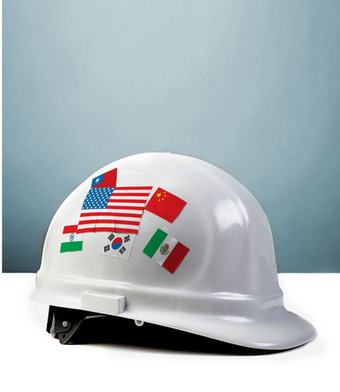
The jobs are coming home. American companies that shipped work abroad now are starting to bring manufacturing jobs back to this country: Several hundred thousand manufacturing positions are expected to open in the United States in the next decade.
|

Curated by jean lievens
Economist, specialized in political economy and peer-to-peer dynamics; core member of the P2P Foundation
Other Topics

Anders en beter
Met P2P voorbij markt en staat: voor een progressieve coalitie rond de commons. Met nieuws over op p2p gebaseerde praktijken en hoe de overheid, de politiek en de zakenwereld ermee (kunnen) omgaan...

money money money
on money and what it is

music-all
From the Great White Way to the West-End and beyond

Peer2Politics
on peer-to-peer dynamics in politics, the economy and organizations

real utopias
Not TINA (There Is No Alternative) but TAPAS: THERE ARE PLENTY OF ALTERNATIVES
|




