


InterOccupy.org provides channels of communications between GAs, Work Groups and Occupiers across the Occupy movement. More →

 Your new post is loading...
 Scoop.it! InterOccupy.org provides channels of communications between GAs, Work Groups and Occupiers across the Occupy movement. More → 
No comment yet.
Sign up to comment
Scoop.it!
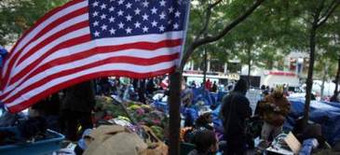
'The Occupy Wall Street movement may be less visible in the depths of winter, but it has already awakened a long dormant energy in many of us, an energy that has not been felt and expressed in this country since the 70's.
Scoop.it!
The Deutsches Haus at New York University presents SLAVOJ ZIZEK: Negativity in Hegel and Freud Part 1: Introduction October 28, 2011...
Scoop.it!
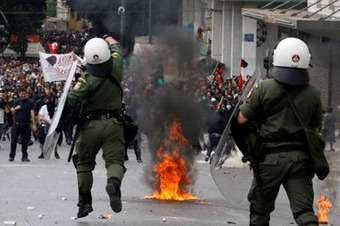
The global financial crisis laid waste to balance sheets and pushed activists onto the streets. Paul Mason examines why disparate bands of protesters have managed to topple established hierarchies.
Scoop.it!

Click to enlarge: Source: A Social Media Revolution - China's Answer to Social Networking by G+, November 2011 (RT @Suzywonton: China's Answer to Social Media - infographic http://t.co/S4cJXzGy...)...
Scoop.it!

Local activists have vowed to continue the fight through Game Day, so it’ll be interesting to see what happens in and around Lucas Oil Stadium this Sunday. It’s hard to imagine network TV covering a protest, but it may be more eventful that Madonna’s half-time show.
Scoop.it!
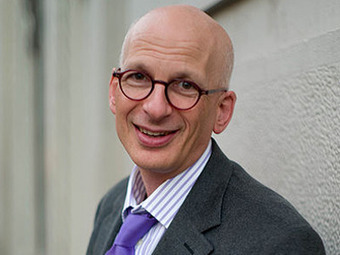
According to the founder of Squidoo.com and author of 13 books, the current "recession is a forever recession" because it's the end of the industrial age, which also means the end of the average worker.
Scoop.it!

At the moment, it looks like most social democratic parties are struggling to break out of the system they have operated in for almost two decades. But they have to gather the courage to change onto a new course or their political future will look even bleaker. In a nutshell, social democratic parties need to become more transformative and values-based in their political approach – more like Steve Jobs was in business – and move beyond the rational choice textbook approach they have been too wedded to.
Scoop.it!

It’s helpful to start with some facts, and the big one is that inequality of opportunity and inequality of incomes (or, more generally) outcomes are strongly positively correlated. The US and UK are notable as being highly unequal societies in both respects. More precisely, as would be expected on the basis of even momentary thinking about the ways in which parents try to help their children, highly unequal outcomes in one generation are negatively correlated with intergenerational mobility in the next.
Scoop.it!

Sustainable development means achieving economic growth that is widely shared and that protects the earth’s vital resources. Our current global economy, however, is not sustainable, with more than one billion people left behind by economic progress and the earth’s environment suffering terrible damage from human activity. Sustainable development requires mobilizing new technologies that are guided by shared social values.
Scoop.it!

This is the synergy that underpins Rifkin’s case that we’re on the cusp of the Third Industrial Revolution. Efficiency, renewables, storage and smart grids will add up to an energy revolution. All the constituent parts are already out there, or ‘in emergence’. But, Rifkin argues, the full impact will only be felt when the whole system is transformed into a new kind of “energy internet”, through peer-to-peer networks.
Scoop.it!
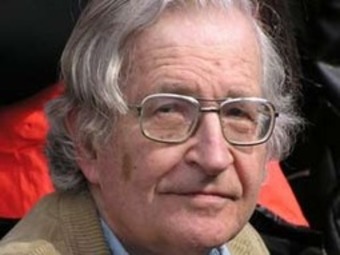
American linguist Noam Chomsky, Princeton University professor Cornell West and 221 other foreign scholars have urged Thailand's prime minister to revise laws that shield the country's monarchy from criticism, lending their voice to a controversial campaign.
Scoop.it!

Mitt Romney has said that his comments about not caring about the very poor were taken out of context. But the more context you give them, the worse it gets.
Scoop.it!

While Europe is not yet at the stage where lives are being lost on the battlefield, euro zone leaders meeting in Brussels this week resumed their confident march towards the precipice.
Scoop.it!
WASHINGTON — Roseanne Barr said Thursday she's running for the Green Party's presidential nomination – and it's no joke.
Scoop.it!

We’re hovering on the cusp of substantial progress for equality, but too many hearts and minds are still stuck in the dark ages of ignorance and hate. It is my devout hope that Americans will one day look back at the roots of the marriage equality story—just as they view the story of Roots—and feel the same sense of incredulity and disgust that we ever could have countenanced those who would wrap their intolerance and homophobia in the cloak of Christianity, to withhold from their fellow citizens the same rights they themselves take for granted and enjoy.
Scoop.it!
The idea of a Global Labour Charter Movement (GLC) is to develop a charter, declaration or manifesto on labour, relevant to all working people, under the conditions of a 21st century, globalised, networked, informatised, financial and services capitalism (a GNC).
Scoop.it!
Prof Colin Crouch, Governance & Public Management Fellow, Warwick Business School, talks at The University of Warwick's Critical Governance conference about his forthcoming book 'The Strange Non-Death of Neoliberalism'.
Scoop.it!
Dean Starkman has written a lengthy piece in the Columbia Journalism Review, assessing the writings of a group of us he calls the “Future of News” movement. That essay, Confidence Game, focusses principally on Jay Rosen and me, both of NYU’s Carter Institute, and Jeff Jarvis of CUNY, though noting some similarity of vision with Emily Bell of Columbia, Dan Gillmor of Arizona, and John Paton, publisher of the Journal-Register Company. (Unmentioned fellow travelers include, mutatis mutandis, Steve Yelvington, Chris Anderson, Amanda Michel, Steve Buttry, Jonathan Stray, and Alan Mutter.)
Scoop.it!
By Socialist Project, www.socialistproject.ca...
Scoop.it!

How many strangers have you met today? Did you meet your 5-a-day stranger target? In an orchestra or dance-troup made up of a team of egos, how do they eventually perform to a high standard night after night?
Scoop.it!
Paul Mason is Economics Editor of BBC2’s Newsnight. This week sees the launch of his new book Why it’s Kicking Off Everywhere. Based on a blogpost that went viral in February 2011, Mason explores the global revolutionary social movements of the past couple of years. In this interview he discusses some of the major themes of the book with NLP co-editor, Maeve McKeown.
Scoop.it!
"I actually think that human beings want to live this connected life – that’s where Marx was right in 1848 - they want to live a connected life, that’s their natural thing to do. He asked the right question. But now, actually only ten, fifteen years into the information revolution we are prepared to construct leaky personas, leaky selves, we’re prepared to share quite a lot of our inner thoughts out there in a trusting social environment on the internet. I just think that is a fascinating glimpse of what kind of life people would like to live if they could free themselves of all constraints of necessity."
Scoop.it!

I’d been hoping that it would be the Henry J. Kaiser Convention Center from the beginning. This is a beautiful, historic building on the lake’s south shore, whose only reason for vacancy is former mayor Jerry Brown’s unsuccessful attempt to sell it. Occupy Oakland’s taking Henry J. Kaiser would have changed the landscape of the city, and would have highlighted the so poorly concealed rift between the needs of the city, and the ability of the city to meet them. That in itself would have been a worthy statement. If only it had worked out that way.
Scoop.it!
From
fora

Some of the best minds in Silicon Valley discuss the future of technology, from cool flat-surface displays to self-organizing social media and proliferation of...
|

Curated by jean lievens
Economist, specialized in political economy and peer-to-peer dynamics; core member of the P2P Foundation
Other Topics

Anders en beter
Met P2P voorbij markt en staat: voor een progressieve coalitie rond de commons. Met nieuws over op p2p gebaseerde praktijken en hoe de overheid, de politiek en de zakenwereld ermee (kunnen) omgaan...

money money money
on money and what it is

music-all
From the Great White Way to the West-End and beyond

Peer2Politics
on peer-to-peer dynamics in politics, the economy and organizations

real utopias
Not TINA (There Is No Alternative) but TAPAS: THERE ARE PLENTY OF ALTERNATIVES
|




