


Aging alone causes us to lose brain cells and mental processing speed, but there are several other causes that you have more control over.

 Your new post is loading...
 Scoop.it! Aging alone causes us to lose brain cells and mental processing speed, but there are several other causes that you have more control over. 
No comment yet.
Sign up to comment
Scoop.it!

Capitalism will end when oil runs out, according to Fleeing Vesuvius, a collection of essays first published in Ireland in 2010. The US and New Zealand editions came out in mid-2011. The basic theme of Fleeing Vesuvius, which is aimed at the growing sustainability movement, is TEOTWAWI (The End of the World as We Know It). The title refers to the volcano that destroyed Pompeii in 79 AD, specifically the large number of residents who failed to save themselves, despite weeks of earthquakes, gaseous clouds and other obvious signs that an eruption was imminent. For more than a decade, a growing body of evidence suggests that the planet is on the verge of economic and ecological collapse. Yet the vast majority of us do absolutely nothing to prepare for the stark conditions ahead.
Scoop.it!

Noam Chomsky has advice for the Occupy movement, whose encampments all over the country are being swept away by police. The occupations were a "brilliant" idea, he says, but now it's time to "move on to the next stage" in tactics. He suggests political organizing in the neighborhoods.
Scoop.it!

The unemployment report was genuinely good, but there’s a downside: the calls to stop focusing on job creation.
Scoop.it!

Saturday's mayhem may have helped energize the national Occupy movement. Occupiers in dozens of cities held rallies in solidarity with Occupy Oakland the next day, and have shrugged off a call by Mayor Quan to reject the Oakland contingent for its embrace of property destruction. Still, Occupy Oakland's "diversity of tactics" may take its toll on the diversity of its supporters. On Twitter and on Bay Area radio shows, many Oaklanders were as critical of the protesters as they were of the police. "The Occupy people have totally lost a sort of one-direction focus of economic equality," said Ken, a self-described middle-class resident and one-time Occupy supporter, on a Monday morning Public Radio call-in program. "They are trashing my city and bankrupting my city, and to the fellow who said these marches are a direct result of the OPD, I'm just saying, 'What? Where did that come from?'"
Scoop.it!
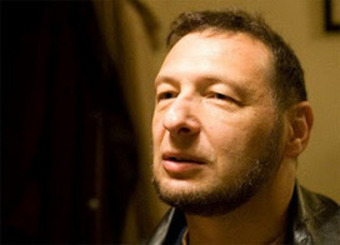
In this volume Kagarlitsky examines the decline of the trade union movement in the West and the rapid growth of unions in the developing world en new industrial countries. He also analyses the left in its broad sense, from the post-modernists to the Zapatistas in Mexico.
Scoop.it!
“The existing system is a catastrophe for humankind!” - John Holloway: “break up capitalism!” http://youtu.be/QNkNGHmUx1U de// Das gegenwärtige System ist eine Katastrophe für die Menschheit! John...
Scoop.it!
Barry Schwartz is the Dorwin Cartwright Professor of Social Theory and Social Action in the psychology department at Swarthmore College, Swarthmore, Pennsylvania, where he has taught for thirty years. He is the author of several leading textbooks on the psychology of learning and memory, as well as a penetrating look at contemporary life, The Battle for Human Nature: Science, Morality, and Modern Life.
Scoop.it!

The world economy remains in a precarious state after the global recession. Jeffrey Sachs will discuss why we must – and how we can– change our entire economic culture in the time of crisis.
Scoop.it!

Health workers in Kilkis, Greece, have occupied their local hospital and have issued a statement saying it is now fully under workers control.
Scoop.it!
From
ht

The Second Industrial Revolution, powered by oil and other fossil fuels, is spiralling into a dangerous endgame: prices are climbing, unemployment remains high, debt is soaring and the recovery is slowing. Worse, climate change from fossil-fuel-based industrial activity looms. Facing a collapse of the global economy, humanity is desperate for a new vision to take us into the future.
Scoop.it!
April 2010 Chomsky puts out the call to progressives for a movement like the teaparty. A year and a half later, with a scripted message from the likes of http://www.vanityfair.com/society/features/2011/05/top-one-percent-201105 Joseph Stiglitz http://www.youtube.com/watch?v=ruvXKgEbsKs , fronted through Adbusters and Tides, Occupy Wall Street, is born. With many branches to this coalition, SEIU really provides the structure and expertise to make this happen. Stephen Lerner of SEIU, is planning action well in advance of any protests Fairly SHOCKING AUIDO http://www.youtube.com/watch?v=F5NNGq_BxdU
Scoop.it!

The half-century habits of Franco-German condominium die hard. It is a painful
Scoop.it!
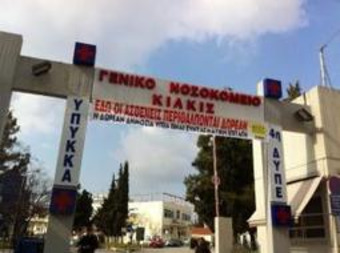
RT @libcomorg: Greek doctors, nurses and support staff takeover hospital from management and put it under control of a workers'...
Scoop.it!
There is no Plan B, we only have this world to save: Jeremy RifkinBusiness StandardAmerican economist Jeremy Rifkin's book, 'The Third Industrial Revolution', promises to change the world in a collaborative, democratic manner.
Scoop.it!

Chilean students question the education system as commercial and elitist because it reproduces existing social inequities and makes them worse. But they are not just asking questions: They are practicing the kind of education they have spent years dreaming about and struggling to obtain.
Scoop.it!

October 27, 2011 -- Green Left Weekly/Links International Journal of Socialist Renewal -- Annie Leonard is the creator of the Story of Stuff project, a series of animated films that discuss our pressing social, environmental and ...
Scoop.it!

... The Pirate Bay declares 3D printed “physibles” as the next frontier of piracy | ExtremeTech | Occupy http://t.co/Z2TXznEy 1 week ago; The Case For A 21-Hour Work Week | Occupy P2P Alternatives 2012 http://t.co/ESrpcn5c ...
Scoop.it!
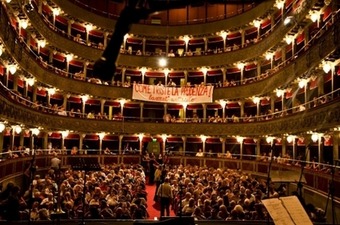
Throughout Europe, we are witnessing massive transfers of resources from the public to the private sphere. The political responses to the crises are defined by austerity measures and by cuts to social spending, driving Europe further into recession.
Scoop.it!

Dr. Freud attacks communism, i.e. Marxist ideology, on the basis that it is an "illusion", given the propensity of humans to be aggressive. He maintains that humans are by nature aggressive and that there is no solution to this ...
Scoop.it!

The GuardianOccupy Wall Street: 'There's a militant animosity bred by direct action'The GuardianBefore the evening was through, the 25-year-old known for documenting Occupy Wall Street became a story himself.
Scoop.it!
Although this is seen as “Blairite” it is also consistent with a more radical leftist tradition of scepticism about big government is a longstanding tradition on the left such as guild socialism, anarchism, market socialism or Marxism ...
Scoop.it!
The Committee on Globalization and Social Change will launch with a special lecture by philosopher and critic Slavoj Zizek who will speak on "The Situation (Slavoj Zizek: Catastrophic But Not Serious
Scoop.it!
In less than a few decades the “abundance stage” in the US evolved to the “apathy stage”. Citizens claimed they had no time to get involved in politics. No time to attend a political event featuring a speech by a candidate in the flesh. Many citizens even excused themselves for missing elections because they had no time to vote. College students, who had the lowest voter turnout statistics, spent only a fraction as much time studying as students did in 1960. Most of their time was spent socializing and recreating-most of it at the end of a digital tether. As digital opportunities perfected individualism, the civic organizations that did the hard work of nurturing democratic institutions ran out of volunteers. Did abundance and apathy damage political discourse and participatory democracy? Absolutely!
Scoop.it!

An open course consisting of a close reading of the text of Karl Marx's Capital Volume I in 13 video lectures by Professor David Harvey.
|

Curated by jean lievens
Economist, specialized in political economy and peer-to-peer dynamics; core member of the P2P Foundation
Other Topics

Anders en beter
Met P2P voorbij markt en staat: voor een progressieve coalitie rond de commons. Met nieuws over op p2p gebaseerde praktijken en hoe de overheid, de politiek en de zakenwereld ermee (kunnen) omgaan...

money money money
on money and what it is

music-all
From the Great White Way to the West-End and beyond

Peer2Politics
on peer-to-peer dynamics in politics, the economy and organizations

real utopias
Not TINA (There Is No Alternative) but TAPAS: THERE ARE PLENTY OF ALTERNATIVES
|





