


The new poll, carried out by Public Issue for daily Kathimerini, showed ND to have inched forward to 31%, consolidating its growing popularity, while PASOK continues to languish in fifth place with 8%. The poll, carried out on a sample of 1,002 people last week, showed the Communist Party (KKE) and the Coalition of the Radical Left (SYRIZA) to be holding firm at 12.5% and 12% respectively. But the Democratic Left has surged in popularity, garnering 18% of the public vote (up 4.5% since last month).

real utopias
36.8K views |
+2 today
Not TINA (There Is No Alternative) but TAPAS: THERE ARE PLENTY OF ALTERNATIVES
Curated by
jean lievens
 Your new post is loading...
 Scoop.it! 
The lesson of the Great Crash was that unequal enrichment provokes asset bubbles, excessive demand for debt and, finally, economic failure. 
Scoop.it!
|


|
Scooped by
jean lievens
February 9, 2012 11:30 PM
|
Scoop.it!
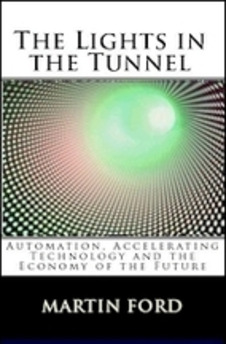
Will the future be filled with cool technologies and endless opportunities or will our own creations lead to eventual doom? I tend to think the former. Technology has seemingly endless ability to improve the health, freedom, and happiness of our lives. Even optimistic futurists like Ray Kurzweil and James Canton admit, however, that the road to advancing technology is fraught with dangers.
|
|
Scooped by
jean lievens
February 9, 2012 11:29 PM
|
Scoop.it!

On February 7, 2002 -- ten years ago to the day, tomorrow -- President George W. Bush signed a brief memorandum titled "Humane Treatment of Taliban and al Qaeda Detainees." The caption was a cruel irony, an Orwellian bit of business, because what the memo authorized and directed was the formal abandonment of America's commitment to key provisions of the Geneva Convention. This was the day, a milestone on the road to Abu Ghraib: that marked our descent into torture -- the day, many would still say, that we lost part of our soul.
|
|
Scooped by
jean lievens
February 9, 2012 11:17 PM
|
Scoop.it!
While the protests in Zuccoti Park are presently on hiatus, members of the 99% movement continue to engage in protests and other forms of activism around the country. Police, for their part, continue to maintain a visible presence at movement events, while episodically engaging in more repressive actions, such as clearing protest sites and arresting demonstrators.
|
|
Scooped by
jean lievens
February 9, 2012 11:06 PM
|
Scoop.it!
Over the past two hundred years, poor countries have become faster at adopting the technologies of rich countries. So why is it, the economist asks, that poor countries have remained poor, by and large? The answer, Diego Comin says, is that poor countries use technologies less intensely: fewer people use less advanced computers less often. To find out why – finance, institutions, geography? – Diego amasses data to measure the diffusion of technologies over two centuries. Compiling a big data set to study the drivers of technology adoption – this is new economic thinking.
|
|
Scooped by
jean lievens
February 9, 2012 4:15 PM
|
Scoop.it!

New research goes beyond the New York Times to show just how disturbing labor conditions at Foxconn, the "Chinese hell factory," really are.
|
|
Scooped by
jean lievens
February 9, 2012 2:09 PM
|
Scoop.it!

Occupy Eugene has moved back in to downtown Eugene once again, but now with a different purpose as medical staff with the movement have created a new weekly, free medical clinic.
|
|
Scooped by
jean lievens
February 9, 2012 12:39 PM
|
Scoop.it!
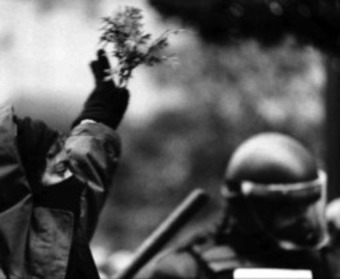
I am writing this on the premise that you are a well-meaning person who wishes Occupy Wall Street to succeed. I am also writing as someone who was deeply involved in the early stages of planning Occupy in New York.
|
|
Scooped by
jean lievens
February 9, 2012 12:36 PM
|
Scoop.it!
You're So Predictable. Daniel Kahneman and the Science of Human Fallibility | Think Tank | Big Think

I will never know if my vocation as a psychologist was a result of my early exposure to interesting gossip, or whether my interest in gossip was an indication of a budding vocation. Like many other Jews, I suppose, I grew up in a world that consisted exclusively of people and words, and most of the words were about people. . . . the people my mother liked to talk about with her friends and with my father were fascinating in their complexity. Some people were better than others, but the best were far from perfect and no one was simply bad.
|
|
Scooped by
jean lievens
February 9, 2012 12:33 PM
|
Scoop.it!

Chomsky, a professor emeritus at Massachusetts Institute of Technology, participated in a news conference about investments Tuesday. He says the University of Arizona should divest itself of investments in Motorola and Caterpillar corporations.
|
|
Scooped by
jean lievens
February 9, 2012 6:41 AM
|
Scoop.it!
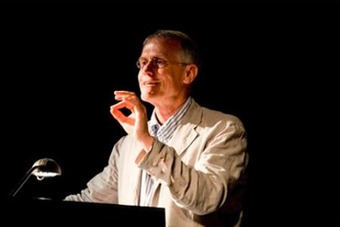
Basically, the earth needs a new operating system, you are the programmers, and we need it within a few decades.
|
|
Scooped by
jean lievens
February 9, 2012 6:40 AM
|
Scoop.it!
David Harvey the Deutscher Prize Lecture 2011 http://t.co/rCGIybT9...
|
|
Scooped by
jean lievens
February 9, 2012 6:37 AM
|
Scoop.it!
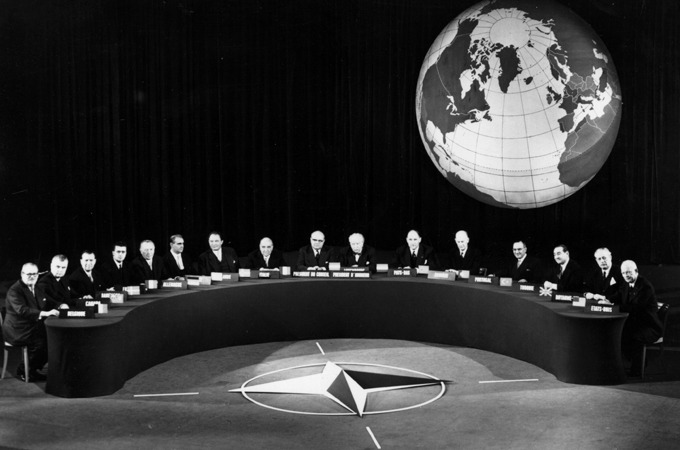
Noam Chomsky explains how the global order of power has been created and describes the mechanisms behind its continuity. (Noam Chomsky: Is the World Too Big to fail?
|
|
Scooped by
jean lievens
February 9, 2012 6:34 AM
|
Scoop.it!

If Occupy Wall Street is to become the embodiment of public conscience, it will have to pose similar questions that defy moral evasiveness and make people urgently ask, for example, what degree of inequality and what forms of corporate influence on government will be tolerated. The problem for protesters is that while severely limiting corporate power in government is a worthy goal, it’s morally abstract, with little visceral impact. And economic justice is a vague and sweeping term that invites both personal grievances and broad interpretation. Economic equality and economic justice can reasonably be seen as two different matters.
|
|
Scooped by
jean lievens
February 9, 2012 6:19 AM
|
Scoop.it!

The Committee to Protect Journalists has just marked its thirtieth anniversary, in a year notable for the breadth of international protest movements and the expansion of digital technology for the collection and distribution of information. Facebook, Twitter, and YouTube have become embedded in the dissemination of events as they take place and have impacted the definition of news in fundamental respects. In ways unimagined a decade ago, the streets are filled with amateurs. Their efforts at working around the repressive techniques of authoritarian governments have made a significant difference in newsgathering. Trained journalists and the "citizen" reporters who supply so much of the raw material for them are at the forefront of upheaval, with consequences that are as dangerous as they are illuminating.
|
|
Scooped by
jean lievens
February 9, 2012 6:15 AM
|
Scoop.it!
I will continue to support local shops and I may even spend some Bristol Pounds. But the kind of localism I want is an inclusive, open one, in which local wealth leaks out to wherever it will do good, and we look out to wherever good is to be found.
|
|
Scooped by
jean lievens
February 9, 2012 6:09 AM
|
Scoop.it!

Last week, on Feb. 2nd, I drove up to London, Ontario, to shoot some film footage of the locked-out workers picketing outside the Electro-Motive Diesel plant for a documentary I am working on. The company, the only one to make locomotives in Canada, is owned by Caterpillar Inc., the world's largest equipment manufacturer. They had locked out the entire workforce of 450 workers on New Year's Day after demanding wage cuts as high as 50 per cent.
|
|
Scooped by
jean lievens
February 9, 2012 6:08 AM
|
Scoop.it!
Speaker: Dr Steve Keen - Associate Professor, University of Western Sydney, and well known economist.economist Steve Keen looks at the rising national debts in Australia and the United States, paying particular attention to their historical relationship with recessions, growth and unemployment.
|
|
Scooped by
jean lievens
February 9, 2012 3:23 AM
|
Scoop.it!

If we could see the world with a particularly illuminating set of spectacles, one of its most prominent features at the moment would be a giant carbon bubble, whose bursting someday will make the housing bubble of 2007 look like a lark. As yet -- as we shall see -- it’s unfortunately largely invisible to us.
|
|
Scooped by
jean lievens
February 8, 2012 6:05 AM
|
Scoop.it!
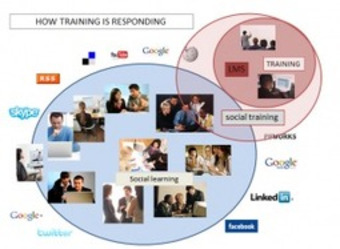
These are my extended notes for a series of presentations I will be giving on the Social Learning Revolution, where I will be lookng at how social media is impacting our working and learning lives, and what this means for the Learning & Development department.
|
|
Scooped by
jean lievens
February 8, 2012 2:30 AM
|
Scoop.it!

The Occupy movement challenged cities’ attachment to mobile capital by making place central to its worldview. In establishing flimsy tent-cities in actual urban spaces and refusing to leave, the Occupy protests mocked the idea of mobility peddled by urban officials. More than that, they implicitly advocated the notion that urban areas are places bound up with the identity of local communities, rather than disposable products in a global marketplace.
|
|
Scooped by
jean lievens
February 8, 2012 2:29 AM
|
Scoop.it!

Charles Dickens, the anniversary of whose birth we mark this year, was present at the making of modern Britain. When he began to write, stagecoaches were still the most familiar form of transport; by the time of his later novels, the railways had arrived. Capitalists in the early Dickens are either villains out of Victorian melodrama or generous-hearted paternalists; in the later novels they are faceless functionaries, part of an anonymous system which governs them as much as they govern it.

Curated by jean lievens
Economist, specialized in political economy and peer-to-peer dynamics; core member of the P2P Foundation
Other Topics

Anders en beter
Met P2P voorbij markt en staat: voor een progressieve coalitie rond de commons. Met nieuws over op p2p gebaseerde praktijken en hoe de overheid, de politiek en de zakenwereld ermee (kunnen) omgaan...

money money money
on money and what it is

music-all
From the Great White Way to the West-End and beyond

Peer2Politics
on peer-to-peer dynamics in politics, the economy and organizations

real utopias
Not TINA (There Is No Alternative) but TAPAS: THERE ARE PLENTY OF ALTERNATIVES




