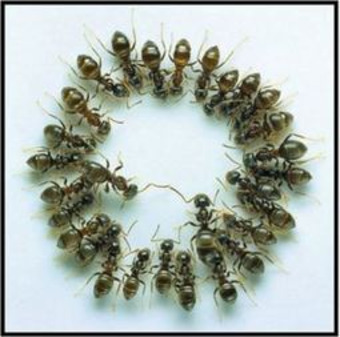
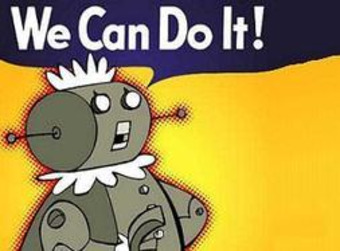
Anyone interested in emergent self organising processes that occur when diverse individuals assemble for a common cause, cannot fail to be impressed by how the Occupy movement has demonstrated a capacity for well structured engagement through the working group protocol. Combining the use of such online platforms to share grassroot practices, such as shown here at How to Occupy and the in-person General Assemblies, helps co-ordinate the competencies of Occupiers into pragmatic groups.
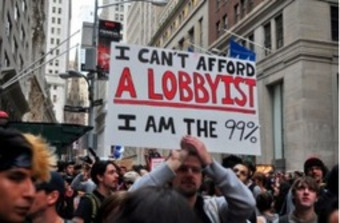
The Occupy strategy of using sit-ins and mass demonstrations promoted via the internet and social media has been extremely effective at gaining attention. Now Occupy is moving on into stage two, and I would suggest that this stage is one that implements solutions to the problems we have identified on local levels and then shares that information with other localities for them to modify and implement as well. We have occupied the problems; now let us occupy the solutions!
For the last couple of months I have joined in a variety of peaceful protests, celebrations and collaborative enterprises along with millions of other Occupiers rising up across the globe to usher in a new world. Passers by, media analysts and pundits, invariably asked us what was this new world we all wanted… And of course you know as well as I, the answers remained elusive, confounded those on the right and many on the left! While our demands have been directed towards rooting out political corruption and Corporatocracy - more broadly we have laid claim to occupying everything, everywhere, and as a consequence our demands have become limitless.
An electronic privacy group has a word of warning: watch what you tweet. Oh, and keep a close eye on your Facebook wall. Why? Well, the Department of Homeland Security might soon be watching--monitoring social media sites like Twitter and Facebook.
Like language, a political culture is in constant flux; meanings continuously change and attitudes are refined through the continuous exchange of ideas. Jeffrey C. Goldfarb argues that this constant reinvention of political culture produces societal transformation, but Joel Suss concludes that although an attractive argument, the author does not provide readers with enough evidence for it to be convincing.
With encampments largely gone, the challenge is to keep the Occupy cause alive through methods like strikes and protests, which risk alienating people rather than galvanizing them.
International rights organisation, Human Rights Watch releases a report on violations of freedom of expression in post-revolution Egypt. Below is the full text of the report and related communique
On Friday, January 20, Professors Elaine Bernard and Immanuel Ness spoke at Encuentro Cinco, a community organizing space in Chinatown, as part of the Howard Zinn Memorial Lecture Series. The series is coordinated by Free School University – a working group of Occupy Boston – and has featured professors from universities across the East Coast in the last four months, including Noam Chomsky and Bruno Bosteels among many others. Bernard and Ness came to discuss the possibility of the Occupy Movement moving from encampments to workers taking power.
Don't Make Me Repeat Myself (PDF) is a facilitator’s guide to a workshop for youth peer trainers. This detailed guide concentrates on workshops around gender based violence within an anti-oppression framework. Created by Metrac (Metropolitan Action Committee on Violence Against Woman and Children), the manual has a great basic agenda, complete with introductions, ice breakers and forming a safer space. It uses community dynamics and personal experiences within the group to introduce anti-oppression concepts, like how to be an ally.
Ross Ashcroft from Renegade Economist speaks with Steve Keen whilst he was in London to launch his new book ' Debunking Economics: The Emperor Dethroned?'
David Weinberger has a new book out entitled Too Big to Know in which he argues that one of the implications of a comprehensively networked society is that the nature of knowledge itself is changing. "As knowledge becomes networked," he writes, "the smartest person in the room isn't the person standing at the front lecturing us, and isn't the collective wisdom of those in the room. The smartest person in the room is the room itself: the network that joins the people and ideas in the room, and connects to those outside of it... Knowledge is becoming inextricable from – literally unthinkable without – the network that enables it."
Modern radical thinker Slavoj Žižek spoke on the 1st July as part of the 'Great Minds' series, and affirmed his status as a great mind of modern philosophy and social, cultural and political theory. Starbucks, social solidarity and self-commodification were among the varied and enlightening topics touched upon by Žižek, all grounded by his interpretation of ideology and its continuing importance.
Slavoj Žižek is widely acknowledged to be one of the most creative and vibrant inter-disciplinary philosophers today. He has written more than 30 books covering topics ranging from cultural theories and film criticism to political philosophy, theology and psycho-analysis. Some of his more popular and accessible works include Violence: Six Sideways Glances, How To Read Lacan and First As Tragedy, Then As Farce.
The increase in inequality means the distance between social classes is growing greater. I'd say the issue for Britain is the same for a lot of ethnically layered societies. What you get is indifference as a way of managing difference. People keep to their own turf, not a complex social tapestry that mixes people together.
In times where trade unions plead for more solidarity within the EU, a system of European minimum wages is the way to create solidarity among workers. Minimum wages are not an objective in themselves. They are only an instrument to fight rising inequalities and increased precarious work. The European trade union movement should find a rapid agreement on the principles and standards for a system of European minimum wages. These principles must define, in our view, the standards for national minimum wages, determined either by law or a national collective agreement.
On her CNN Newsroom morning show (Feb 7), Kyra Phillips set up a segment about college courses on OWS saying that OWS “is not just in the streets but in the classrooms” and that “kids are writing papers about it.” She interviews Roosevelt University professor of political science, Jeff Edwards and a graduate student in his course, Ameshia Cross. Edwards, who is a social movement scholar, says it is worth having a course about the Occupy movement because it has changed the discourse of American politics and has “staying power.”
These questions are not new. But their urgency is heightened by the present crisis. Of all the social sciences, economics has proven itself to be the most politically useful – some might say politically malleable – but its lack of realism has become a critical issue with serious economic and political consequences. ‘Uneconomics’ is needed to explore alternative forms of expertise and advice, and an alternative basis for public economic debate.
Those are the things we should be maximizing. I agree it’s a harder thing to quantify than profit, but to think that with our current AI algorithms, computational power, and data that it would be too difficult to estimate the quality of life of a nation, I think it’s highly irrational.
Deep within a filling cabinet I keep a copy of the 1998 Marxism Today special that just said "Wrong" on a cover adorned by Tony Blair. I thought of it while reading David Miliband in last week's New Statesman. In it David proclaimed that Labour should say "loud and clear where we
To get content containing either thought or leadership enter:
To get content containing both thought and leadership enter:
To get content containing the expression thought leadership enter:
You can enter several keywords and you can refine them whenever you want. Our suggestion engine uses more signals but entering a few keywords here will rapidly give you great content to curate.


 Your new post is loading...