


The beginning of any understanding of macroeconomics is the realization that what’s good from a micro point of view can often be irrelevant or even harmful from a macro point of view when the economy is depressed. But that hard-won insight has now been willfully forgotten.

real utopias
36.8K views |
+0 today
Not TINA (There Is No Alternative) but TAPAS: THERE ARE PLENTY OF ALTERNATIVES
Curated by
jean lievens
 Your new post is loading...
 Scoop.it! 
THIS SPACE IS DEDICATED TO THE PROPOSITION THAT WE NEED TO KNOW THE HISTORY OF THE STRUGGLES ON THE LEFT AND OF EARLIER PROGRESSIVE MOVEMENTS HERE AND WORLD-WIDE. IF WE CAN LEARN FROM THE MISTAKES MADE IN THE PAST (AS WELL AS WHAT WENT RIGHT) WE CAN MOVE FORWARD IN THE FUTURE TO CREATE A MORE JUST AND EQUITABLE SOCIETY. I WILL BE REVIEWING BOOKS, CDS, AND MOVIES I BELIEVE EVERYONE NEEDS TO READ, HEAR AND LOOK AT AS WELL AS MAKING COMMENTARY FROM TIME TO TIME. 
Scoop.it!

Keller and others in the press focus on the mass of material absorbed into the secrecy system, and react with alarm when the government takes steps to make the information harder to get. The government focuses on how quickly information is ejected, and reacts with alarm when the press takes steps to cull this information. These two sides have been competing, with hyperbolic claims by both, since the founding of our nation. The phenomenon is difficult if not impossible to measure. My sense of the competition is that the government is obviously able to classify more than ever because of its sheer size and because of the unthinkable amounts of information generated and stored by modern technologies; but that the government also, at the same time, has a harder time than ever keeping important secrets related to national security.
Scoop.it!

As we approach the #shiftsxsw event in just a few weeks, while preparing for our panels I discovered a powerful video exploring how society influences the potential use and direction of technology. This shift is largely influenced by personal empowerment: the power people are gaining over their environment—media consumption, politics, education and healthcare.
Scoop.it!
In this article I'm going to look at how participatory democracy is practised within Occupy and related movements, show some of the problems that often come up, and suggest some improvements. I'm also going to talk more ...
Scoop.it!

Occupying Wall Street, the first thorough book about OWS, is a must-read for anyone interested in understanding the movement.
Scoop.it!

By Jerome Roos On February 22, 2012 Heather Marsh, spokesperson for The Global Square, appeared on BBC radio to discuss the ongoing effort of building a secure, decentralized social network.
Scoop.it!
The 99%ers are a cosmopolitan group functioning within the tradition of the World Social Forum and participatory-democratic philosophy - it is a new way of thinking. A way of thinking that must trust wide participation in the democratic process (not simply a process based on voting), and one that must trust the chaos of that process, and the uncertainty of that process. In the end, I suspect if we follow this approach through, we may end up with plans that support the majority rather than the minority of the population.
Scoop.it!

Britain's credit rating took a knock this week, when Moody's expressed a 'negative outlook' for the national economy. But who are the mysterious agencies who take it upon themselves to grade everything from countries to corporations – and how much power do they really wield?
Scoop.it!

It’s a common refrain in the green world, and one that I have used myself in my good-for-the-world branding work. It has some truth to it too. Every time someone chooses a green energy provider over a traditional utility, picks the vegan option at the pizza place, or signs up for community-supported beer, they are sending a message to the markets about the world they would like to see.
Scoop.it!

It was an important part of his identity even before his state erupted in protest against a governor who'd gone a step too far stripped collective bargaining rights away from his state's workers. But the pride in the veteran political reporter's voice when he talks about his state now is impossible to miss.
Scoop.it!
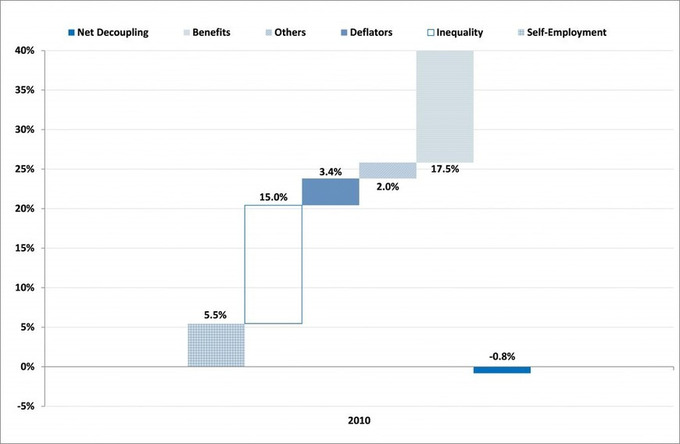
João Paulo Pessoa and John van Reenen discuss new research into the apparently loose relationship between wage growth and productivity growth in the UK and the US. They find that workers as a whole are not missing out, but increasing non-wage costs and rising wage inequalities have restricted gains.
Scoop.it!

(Reuters) - Workers at an idled ArcelorMittal (ISPA.AS) steel plant in northeast France occupied the site Monday, seeking to put their plight on the political map ahead of a presidential election where industrial decline is a central theme.
Scoop.it!

Co-ordinated protests are planned in some 60 cities later this month against a right wing group which activists say has an unfair hand in writing state legislation that favours corporate interests.
Scoop.it!

Evolutionary anthropologist Robin Dunbar tells Aleks Krotoski why even Facebook cannot expand our true social circle: our brains just aren't big enough to cope (Robin Dunbar: We can only ever have 150 friends at most…
Scoop.it!

Juliet B. Schor, sociologist and economist, discusses her book, Plenitude: The New Economics of True Wealth. (What if you had less money & stuff, but more time & community?
Scoop.it!

Together is not always an easy read. It is curiously organised and sometimes repetitive (there are three different sections titled "The Workshop"). Sennett says some of this is deliberate: he wanted to produce a "dialogic" rather than "dialectical" book that would turn reading into a co-operative enterprise.
Scoop.it!
Significant anniversaries are solemnly commemorated — Japan's attack on the U.S. naval base at Pearl Harbor, for example. Others are ignored, and we can often learn valuable lessons from them about what is likely to lie ahead.
Scoop.it!
The first volley was fired with the launch of SixDegrees.com in 1997. But it would be another decade before online networking would take on the mantle of a true revolution.
Scoop.it!

Women around the world fed up with long lines for the ladies' restroom have a new folk hero: a Beijing college student leading her own version of an "occupy" movement in southern China.
Scoop.it!

New approaches to manufacturing are set to take hold in Scotland over the coming decade, approaches that challenge the basic assumptions of production through the application of new affordable manufacturing technologies & ways of working.
Scoop.it!

Even in an Occupy world, most Americans don’t know exactly how the 1% does what it does. The mainstream media hasn’t explained it, and the 1% likes things that way.
Scoop.it!

Even in an Occupy world, most Americans don’t know exactly how the 1% does what it does. The mainstream media hasn’t explained it, and the 1% likes things that way.
Scoop.it!
There’s been a big debate on my blog about what is the correct way to value capital accumulation when trying to measure the rate of profit in a capitalist economy. This debate has been around a long time, but kicked off again following my generally favourable review of Andrew Kliman’s (AK) new book, The failure of capitalist production (see my posts, Andrew Kliman and The Failure of Capitalist Production, 8 December 2011 and The rate of profit: the devil in the detail, 15 January 2012). The issues are important for Marxist economists precisely because Marx considered his law of the tendency of the rate of profit to fall as the most important of all the laws of motion of capitalism. So how you measure the rate of profit is obviously key to reaching any conclusions on what is happening in a capitalist economy.
Scoop.it!

The almost nightly dose of television horror about Greece is hard to watch, and must be nearly unbearable for Greeks themselves — but it is going to get even worse. Even if the current ‘bailout’ package is approved by the troika (EU/ECB/IMF), Greece is headed towards serious conflict and possibly even a military coup.
|

Curated by jean lievens
Economist, specialized in political economy and peer-to-peer dynamics; core member of the P2P Foundation
Other Topics

Anders en beter
Met P2P voorbij markt en staat: voor een progressieve coalitie rond de commons. Met nieuws over op p2p gebaseerde praktijken en hoe de overheid, de politiek en de zakenwereld ermee (kunnen) omgaan...

money money money
on money and what it is

music-all
From the Great White Way to the West-End and beyond

Peer2Politics
on peer-to-peer dynamics in politics, the economy and organizations

real utopias
Not TINA (There Is No Alternative) but TAPAS: THERE ARE PLENTY OF ALTERNATIVES
|




