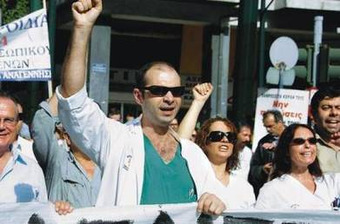
However the resistance to the troika has brought about not only fierce resistance but innovative forms of social organisation. The occupation of a hospital in Greece by health workers who have placed it under workers control, is a significant step forward. As rather than being helpless victims of the economic crisis, democracy is being born anew in Greek workers taking control of their own destiny by refusing to comply with the authority of auserity.
The Arab Spring and the Occupy Wall Street movement have become prominent expressions of the desire for democracy held by peoples throughout the world. In recent years, increasing numbers of activists around the globe have begun advocating for a participatory democracy that provides people with a meaningful voice in all of the major decisions that impact their lives. But what exactly is a participatory democracy? Is it attainable under capitalism? And if not, what sort of social transformation would be required to achieve it?
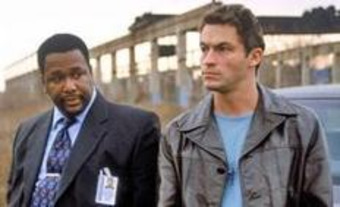
Last week, Slavoj Žižek—the clown prince of contemporary Marxist philosophy, star of The Pervert's Guide to Cinema, scene-stealer of Examined Life, and subject of the celebrated documentary Žižek!—spoke at the Birkbeck Institute for the Humanities on a subject he was born to tackle: The Wire. The audio of the lecture is now online, and if, like me, you enjoy not only discussion of The Wire but listening to Žižek ramble grandiloquently in his wonderful Slovenian accent, it makes for an amusing and occasionally provocative hour and a half of intellectual entertainment.
So in a social media ecosystem, what exactly works? Here’s the real good news: quality works. If your editors and writers are smart and creative and original, they can produce stories and photos and lists and charts and interviews that are so compelling that readers are eager to share the content with others. Then you get to harvest the rewards: More Facebook Likes, more tweets, more juice with the Reddit community. More readers.
From composer Philip Glass to punk’s Joe Keithley, musicians have been on-side with Occupy, as have actors (Alec Baldwin, Susan Sarandon), filmmakers (Michael Moore, Paul Haggis) and other artists. But if Occupy feels so 2011, guess again: Creative types are among those keeping the spirit of the protest alive – including calls to action starting Friday.
The Occupy Wall Street movement may be losing its spotlight in the United States, but it's gaining attention in Iran, where a handful of American professors recently traveled to attend a conference focusing on the anti-capitalist protests.
Accusations of elitism against environmentalists are nothing new. But whose interests do they serve? (Discussing the US "Know Your Farmer" initiative: Since When Was Creating Jobs & Building Community Elitism?
A Book Talk with "Mr. Public Citizen," Ralph Nader, was held on Friday evening, Dec. 16, 2011, at Busboys & Poets in Washington, D.C. His latest tome is enti...
By Scott Barclay In the politics of marriage equality, there are six important indicators that the tide has turned for lesbian and gay rights around this issue.
Richard D Wolff February 2012 economic update includes, foreclosure crisis, Obama budget, entitlement, role of government, control of money, Greece economic flashpoint, unemployment.
Orangutans across the world may soon join the ranks of millions of humans as proud owners of new iPads. As strange as that may sound, a conservation group is testing its "Apps for Apes" program, allowing orangutans to communicate with each other remotely via the iPad's video chat technology.
It is becoming increasingly clear that the age of revolutions is not over. It's becoming equally clear that the global revolutionary movement in the twenty first century, will be one that traces its origins less to the tradition of Marxism, or even of socialism narrowly defined, but of anarchism.
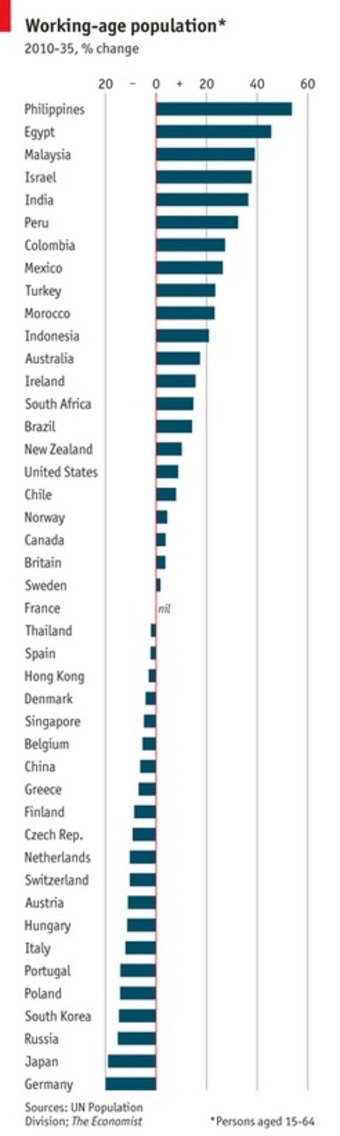
HAVING argued last year that demography is the key factor in the pensions issue, I'm struck at how relatively little attention is paid to the issue with regard to long-term economic prospects.
From across the ocean, of course we've been watching the eviction of Occupy London from St Paul's. I was sorry that the City of London tore down an oasis of political speech. I hated it that the lumpy tarpaulins and tents, each as individual and careworn as somebody's suit – and also familiar from New York and Oakland and Vancouver and Frankfurt as billboards pointing out the impoverishment of our citizenries under neoliberal leadership – got turned into trash, when these tents were also people's homes. But one thing I regretted, individually, is that I couldn't see the village of the occupation as Londoners or Britons could see it. The local Occupy encampments, as they are shaped by the popular mind of each country and place, often put what's very best in a people's history on display in symbolic form – right under our noses.
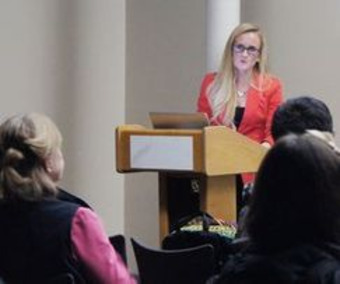
Independent journalist and social media researcher Anna Day addressed a crowded Red Gym yesterday about how social media gives countries in peril an outlet to organize and speak out, as well as her personal experiences living in the Middle East.
Ed Miliband held high-level talks with French presidential candidate Francois Hollande today, in a meeting which could start a distinct new phase for the European left.
September 17, 2011, Wall Street (USA), Zucotti Park (renamed Liberty Park by occupiers), hundreds heeded ADBUSTER’S call to Occupy Wall Street. Why? In Short, the stated reasons can be summed up with the goal of ending corporate greed’s death-lock on our democracy. When will it stop? Nobody knows. Did you think they would make it through the winter? Who is running this Occupy show? Nobody knows. With no top-down command system everything that we see is truly spontaneous. In fact, decisions are made according to varying degrees of consensus and direct democracy at occupy centers. Is mainstream even covering this anymore? Not really. Here is why the movement is still important.
We tend to think of consumers as rational beings with stable preferences. But recent research shows that it just isn’t so. Small changes in things like environment or messaging can change consumers’ goals and mindsets (and ultimately their purchasing behavior) in ways that are both predictable and profound. As marketers learn to embrace this new, multi-dimensional model of consumer behavior, they can continue to discover new and more effective ways of influencing the decision making process.
The Department of Homeland Security feared that the Occupy Wall Street demonstrations would turn violent during their height last year, according to a leaked document obtained by Rolling Stone Magazine.
NEW YORK -- Thousands of U.S. college students will walk out of class Thursday in a coordinated day of protest against what may be another year of significant higher education budget cuts by state legislatures.
It isn’t every day that a reporter gets to sit in on a high-stakes policy meeting in New York’s financial district, but that’s exactly what I did on a balmy evening in late February at 60 Wall Street, the U.S. headquarters of Deutsche Bank AG.
The 2012 Green Transition Scoreboard® (GTS) report finds Asia, Europe and Latin America catching up with the USA in total non-government investments and commitments for all facets of green markets. 2011 ended with a GTS total of $3,306,051,439,680, starting from 2007. Given the many studies indicating that investing $1 trillion annually until 2020 will accelerate the Green Transition worldwide and the over 100 research reports and articles referenced in this years’ update, the “Green Transition Scoreboard® 2012: From Expanding Cleantech Sectors to Emerging Trends in Biomimicry” definitively shows green investments are becoming the norm.
In a new paper, Ricardo and Robert Fernholz have updated research on the distribution of global household wealth (Wealth distribution without redistribution, 27 February 2012, www.voxeu.org). I have reported on this in several previous posts (Inequality: rich and poor, 10 January 2010 and 1% versus 99%, 21 October 2011). And the Fernholzs look again at global household wealth.
My father was a Republican for the first 78 years of his life. For the last twenty, he’s been a Democrat (he just celebrated his 98th.) What happened? “They lost me,” he says.
To get content containing either thought or leadership enter:
To get content containing both thought and leadership enter:
To get content containing the expression thought leadership enter:
You can enter several keywords and you can refine them whenever you want. Our suggestion engine uses more signals but entering a few keywords here will rapidly give you great content to curate.


 Your new post is loading...